Boulder City, Idaho, is a crumbling radium-rush ghost town near the Montana border that most road trippers never find. You’ll start on paved roads, then shift to rough terrain requiring a high-clearance or four-wheel-drive vehicle. Visit between June and October for the best access, and don’t skip the cemetery a mile past town. Stop by the Bonners Ferry Ranger District for maps before heading out — there’s far more to this forgotten settlement than first appears.
Key Takeaways
- Boulder City, Idaho, sits in Boundary County near the Montana border and Kaniksu National Forest, making it a remote but rewarding destination.
- Visit between June and October for reliable road access and favorable weather; winter snow and spring mud often block routes.
- The final approach requires high-clearance or four-wheel-drive vehicles; ATVs, horseback riding, or hiking are viable alternatives.
- Stop at the Bonners Ferry Ranger District office for maps, current road conditions, and local historical insights before heading out.
- Explore remaining ruins, the intact schoolhouse, and a nearby cemetery located about one mile beyond the town boundary.
What Is Boulder City, Idaho’s Forgotten Ghost Town?
Tucked within Boundary County, Idaho, near the Montana border and the Kaniksu National Forest, Boulder City is a ghost town that most road-trippers have never heard of — and that’s exactly what makes it worth finding.
Once known by names like Ruby City and Boulder, this former mining settlement drew prospectors and families chasing radium, gold, and ruby claims starting around 1881.
Before it became a ghost town, Boulder City went by Ruby City — a name that hinted at the riches prospectors hoped to find.
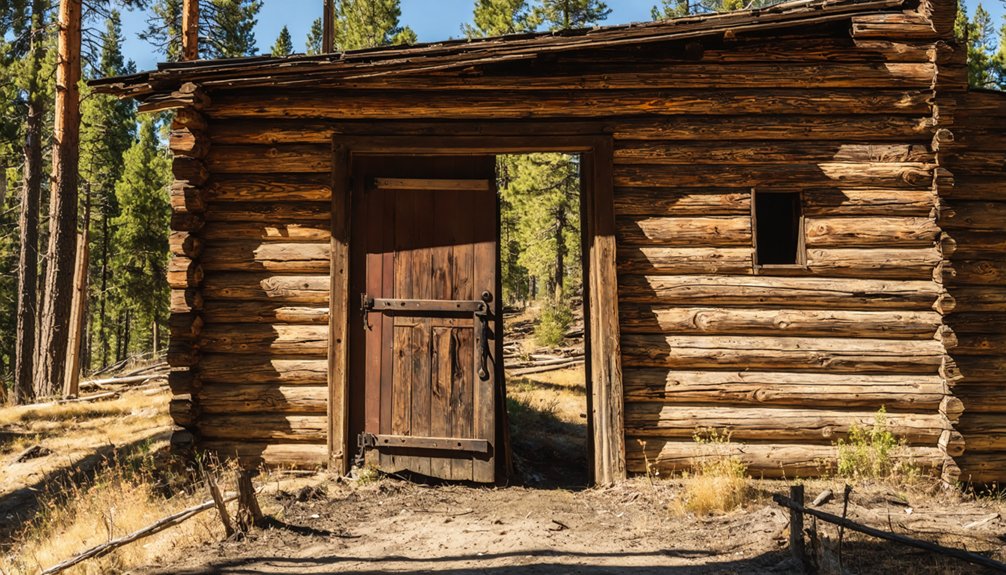
At its peak, roughly 150 people lived here among 35 cabins, a schoolhouse, cookhouse, and blacksmith shop.
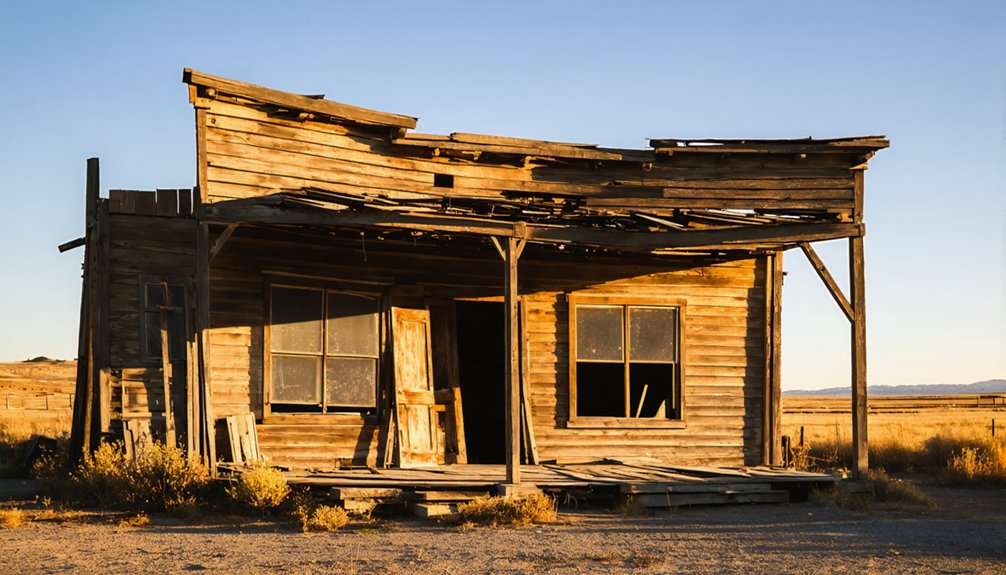
Now, foundations and ruins are all that remain.
You’ll share the landscape with local wildlife and navigate shifting weather conditions depending on the season you visit.
This isn’t a polished attraction — it’s raw Idaho history waiting for you to walk through it.
The Mining Boom That Built and Buried Boulder City
When you trace Boulder City’s origins, you land squarely on J. M. Schnatterly, the promoter who swept into the Boulder Creek area around 1908 and convinced investors that a radium vein threaded beneath the Idaho hillsides. He rebranded the venture more than once — first the Idaho Gold and Radium Mining Company, then the Idaho Gold and Ruby Mining Company — chasing whatever story the market would buy.
Radium Dreams And Schemes
Few boom-and-bust stories carry as much spectacle as Boulder City’s, where a single promoter’s radium dreams briefly transformed a remote Idaho creek into a bustling mining camp.
J. M. Schnatterly launched his Idaho Gold and Radium Mining Company around 1908, fueling radium speculation with bold claims about a rich vein threading through the Idaho wilderness. Mining legends grew fast. Families arrived, cabins went up, and a full camp took shape almost overnight.
But Schnatterly’s promises couldn’t survive contact with geological reality. When radium failed to materialize in profitable quantities, he rebranded toward gold and rubies — another swing, another miss.
Boom Fades To Silence
At its peak, Boulder City looked like it might actually last. Around 150 people filled roughly 35 cabins, and the settlement hummed with a cookhouse, blacksmith shop, sawmill, and school.
Mining techniques evolved as operators chased both gold and the infamous radium vein that Schnatterly had promised would make everyone rich.
It didn’t. By the 1930s, the promises had collapsed alongside the profits, and families quietly packed out.
What remained hardened into local legends — stories of the radium dream, the company men, the children who once attended that little schoolhouse.
When you walk the site today, you’re stepping through that silence. The boom didn’t end dramatically. It just faded, cabin by cabin, until the forest started reclaiming everything Schnatterly’s ambition had built.
What’s Still Standing at the Boulder City Ruins
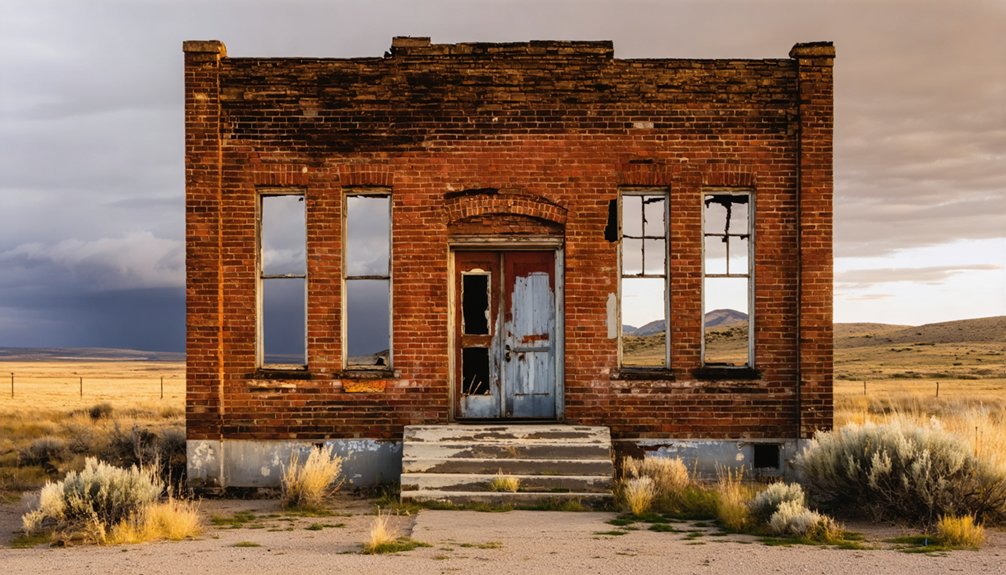
Though Boulder City once housed roughly 60 buildings—cabins, a cookhouse, a blacksmith shop, a sawmill, and even a school—you’ll find precious little of that world left standing today. Vandalism and souvenir hunting have gutted much of what weather and time spared. What survives are crumbling foundations, spectral walls, and one structure still holding its shape: the old schoolhouse.
Artifacts preservation matters here, so resist the urge to pocket anything you find. Visitor safety matters too—deteriorating structures can shift without warning, so keep your footing careful.
About a mile past the main ruins, a cemetery waits quietly among the trees. Don’t skip it. Those weathered gravestones carry the weight of real lives, and they’re often the most affecting stop on the entire visit.
The Road Into Boulder City: Paved, Then Rough
The drive to Boulder City starts easily enough on paved road, but you’ll feel the trip shift beneath you as the surface gives way to gravel and then rougher rocky terrain.
That final stretch demands higher clearance than most sedans can handle, so you’ll want a four-wheel-drive vehicle, or you can swap to an ATV, horseback, or your own boots.
Plan the shift point into your timing, because the road’s changing character isn’t just a driving detail—it’s your first signal that Boulder City never was easy to reach.
Road Surface Changes Ahead
Once you leave the paved road behind, Boulder City stops meeting you halfway. The gravel takes over fast, and the road narrows into something that demands your full attention. You’ll need higher clearance here — this isn’t a route that forgives low-riding vehicles or half-hearted preparation.
That roughness isn’t accidental. These tracks follow old mining-road corridors, worn down by decades of ore wagons and long since reclaimed by weather and neglect. The preservation challenges facing Boulder City begin before you even arrive — erosion, isolation, and limited oversight have shaped both the road and the ruins waiting at the end of it.
Push through anyway. The historical artifacts scattered across this site reward the drivers willing to earn the approach on their own terms.
Final Stretch Requires Clearance
Pavement gives way to gravel before you’ve fully committed to the drive, and that shift marks the moment Boulder City starts asking something of you. The final stretch demands real clearance — rocky, uneven terrain that turns back low-slung vehicles and rewards those who came prepared.
Four-wheel drive isn’t a suggestion here; it’s the price of admission. Ghost town preservation depends partly on limiting careless access, and the road itself does some of that filtering naturally. You’ll want to park where the terrain dictates and continue on foot.
Visitor safety means reading the road honestly — don’t push a vehicle past its limits for a shortcut. The ruins waited over a century. Walking the last stretch keeps both you and what remains intact.
What Vehicle You Need to Reach the Site
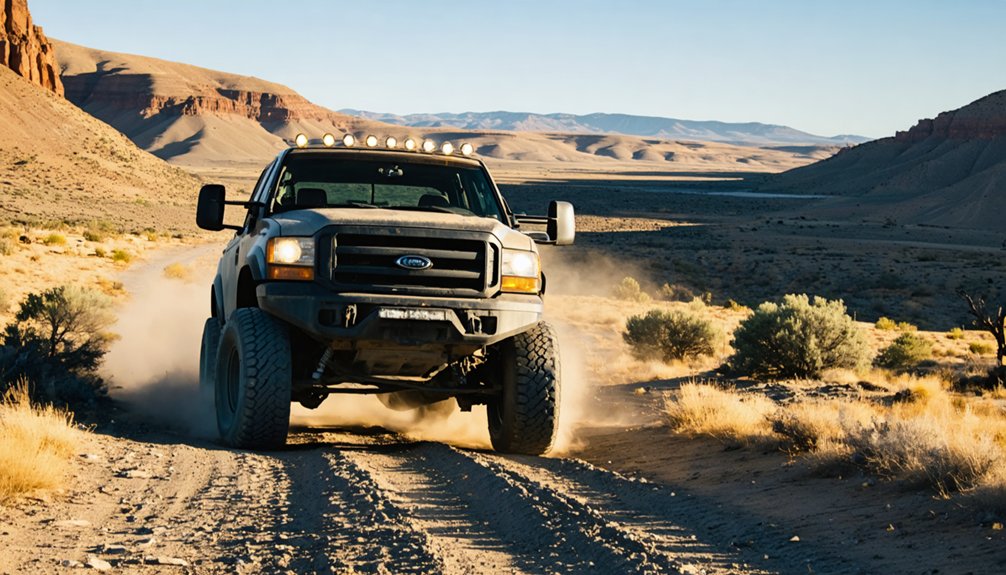
Getting to Boulder City means trading smooth pavement for gravel, then gravel for something rougher still. Four-wheel drive isn’t a luxury here — it’s your ticket past the final stretch where the road stops being polite. Off road tires handle the loose rock and ruts that would strand a standard sedan.
The road to Boulder City doesn’t ease you in — it earns your arrival one rough mile at a time.
Stay current on vehicle maintenance before you leave; a breakdown this deep into the Kaniksu backcountry means a long walk out.
Your best options for reaching the site:
- Four-wheel-drive truck or SUV with adequate ground clearance
- ATV, which lets you navigate the roughest sections freely
- Horseback or hiking, if you prefer arriving the way miners once did
Summer and fall offer the most reliable road conditions.
When to Visit Boulder City for the Best Access
Timing your visit shapes everything about what you’ll find when you arrive. Summer and early fall open the roads and let you move freely through the basin, tracing the same routes miners once hauled equipment along.
Seasonal closures hit hard in winter, when snowpack buries access roads and cuts you off entirely. Spring thaw brings mud that can strand even capable vehicles.
If you’re chasing local legends about the radium vein or the families who built those 35 cabins, arrive between June and October when the site breathes easiest.
Early morning visits reward you with stillness and better light across the ruins.
Check current road conditions with the Bonners Ferry Ranger District before you leave — conditions shift fast, and no ghost town is worth a stranded truck.
The Cemetery a Mile Past Town Is Worth the Walk
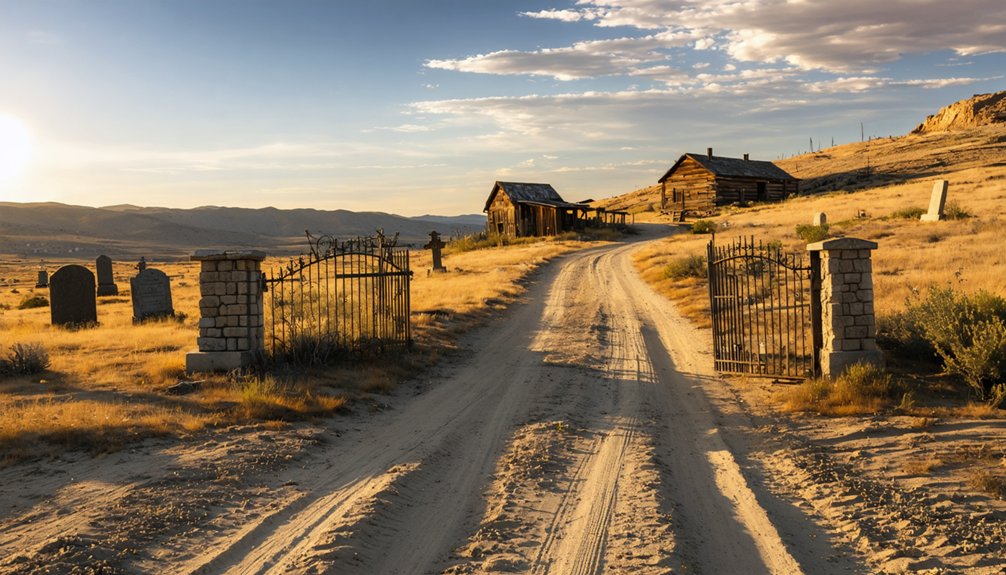
Once you’ve walked the ruins and read the settlement as best you can, don’t turn back at the town boundary. A cemetery sits roughly one mile further down the road, and it rewards the extra effort. Gravestones mark lives tied to failed promises of radium and gold. Local legends cling to these markers the way lichen does — quietly, persistently. Preservation efforts here remain minimal, which means what you see is raw and unfiltered history.
- Bring water; the mile each way adds up under summer sun
- Photograph headstones carefully — details fade faster than you’d expect
- Read each marker slowly; names and dates anchor the human cost of speculation
The cemetery turns a ruin visit into something that actually stays with you.
Get Maps and Site Info From the Bonners Ferry Ranger District
Before you chase down any gravel road toward Boulder City, stop by the Bonners Ferry Ranger District office and pick up a map. The rangers there know the terrain, the access conditions, and which roads will swallow an unprepared vehicle whole.
They can also fill in gaps that no travel blog captures — local folklore about Schnatterly’s radium dreams, the families who wintered in those 35 cabins, and the preservation efforts keeping what little remains from disappearing entirely.
You’re heading into country where the past is fragile and the roads don’t forgive guesswork. A conversation at the ranger station costs nothing and could save your trip.
Go informed, go prepared, and you’ll move through Boulder City’s ruins with real understanding rather than just curiosity.
Frequently Asked Questions
Can You Camp Overnight Near the Boulder City Ghost Town Site?
You’ll want to check camping regulations with the Bonners Ferry Ranger District before bedding down near these haunted ruins. Overnight safety matters in this remote forest, but freedom awaits those who plan ahead.
Are There Guided Tours Available for the Boulder City Ruins?
No guided tours exist here—you’ll explore Boulder City’s haunting ruins on your own terms. Walk freely among historical preservation efforts and quiet restoration work, letting the ghost town’s raw, unmediated history speak directly to your adventurous spirit.
Is Boulder City Ghost Town on Private or Public Land?
You’ll find Boulder City’s ghost town resting on public land within Kaniksu National Forest, where land ownership supports historic preservation—letting you roam freely through crumbling ruins, absorbing echoes of Idaho’s forgotten mining past without restriction.
Are Pets Allowed When Visiting the Boulder City Ghost Town Area?
The knowledge doesn’t specify pet policies or animal restrictions, but since you’re exploring public forest land, you can likely bring leashed pets as you wander ruins, trace history, and breathe freedom into every step.
Has Boulder City Ever Appeared in Films or Documentary Productions?
The available records don’t confirm any film appearances for Boulder City. Yet its historical significance runs deep—you’ll find its crumbling ruins, spectral walls, and forgotten cemetery evoke a cinematic freedom that no documentary’s yet fully captured.
References
- https://bonnersferryherald.com/news/2016/nov/17/boulder-city-shadows-of-a-mining-marvel-11/
- https://minespotter.com/boulder-city-ghost-town-ketchum-id/
- https://www.reddit.com/r/Jeep/comments/pe6vlu/boulder_city_ghost_town_north_of_ketchum_idaho/
- https://www.fs.usda.gov/r01/idahopanhandle/recreation/idaho-gold-and-ruby-mine-boulder-city-ghost-town
- https://www.ghosttowns.com/states/id/bouldercity.html
- https://miningconnection.com/surface/featured_stories/article/idahos_mining_ghost_town_is_destination_for_hardy_adventurers
- https://www.facebook.com/groups/425056734950713/posts/1550438339079208/
- https://www.sandpointonline.com/sandpointmag/sms00/bouldercity.htm