Planning a road trip to Riceville, Maine means heading deep into Hancock County’s wilderness, where logging roads replace highways and cell service disappears fast. This genuine ghost town once thrived on leather production, peaking at 136 residents in 1890 before a devastating 1906 fire wiped out its industrial core. Today, you’ll find only stone foundations, overgrown clearings, and eerie silence. If you’re curious about what really happened here, there’s much more to uncover.
Key Takeaways
- Riceville, Maine, is a remote ghost town in Hancock County, once a leather-producing village that was abandoned by 1910 after a devastating fire.
- Access requires navigating unpaved logging roads east of Greenfield toward Nickatous Lake; download offline maps before departing due to no cell service.
- A high-clearance vehicle is strongly recommended, particularly after rainfall, as road conditions can become difficult and unpredictable.
- Expect only foundation stones, overgrown clearings, and ruins; there are no restored buildings, signs, or curated visitor amenities on-site.
- Pack water, wear sturdy footwear, avoid disturbing artifacts, and research the site thoroughly before visiting this undeveloped, informal location.
What Was Riceville, Maine?
Deep in Hancock County, Maine, a small industrial village once hummed with the acrid smell of hemlock bark and the rhythmic clatter of tannery machinery. You’d have found Riceville nestled along Buffalo Stream, east of Greenfield and west of Nickatous Lake — a classic company town built entirely around leather production.
Deep in Maine’s wilderness, Riceville once reeked of hemlock bark and echoed with the clatter of tannery machines.
Workers processed buffalo hides for New England’s shoe industry, and at its peak in 1890, 136 people called this remote settlement home.
Today, it’s a ghost town layered with folklore legends about mysterious disappearances and overnight abandonment. While historical artifacts and scarce records fuel those myths, the real story involves fire and economic collapse.
If you crave off-the-beaten-path exploration, Riceville offers a compelling mix of industrial history and genuine mystery.
How Did Riceville Go From Boom Town to Ghost Town?
What started as a promising industrial venture unraveled surprisingly fast. Riceville’s tannery drove everything — jobs, housing, the school, the store. When a devastating fire tore through the facility around 1905–1906, igniting from a lantern explosion in the roll house, it wiped out the industrial core almost overnight.
Industrial decline followed immediately. Without the tannery, there was simply no reason to stay, and by 1910, census records confirmed zero residents remaining.
You’ll encounter folklore myths if you dig into Riceville’s story — tales of plague, cholera, and mysterious mass disappearances. They make for gripping campfire stories, but historians trace the abandonment to fire and economic collapse, not tragedy.
Scarce records let those legends grow, which honestly makes Riceville an even more compelling stop on your ghost town road trip.
How to Get to Riceville, Maine?
Knowing the story makes you want to see it yourself, and getting to Riceville takes some planning since it sits in a genuinely remote stretch of Hancock County, Maine.
Riceville doesn’t reveal itself easily — reaching it requires real planning, real maps, and genuine respect for Hancock County’s remote terrain.
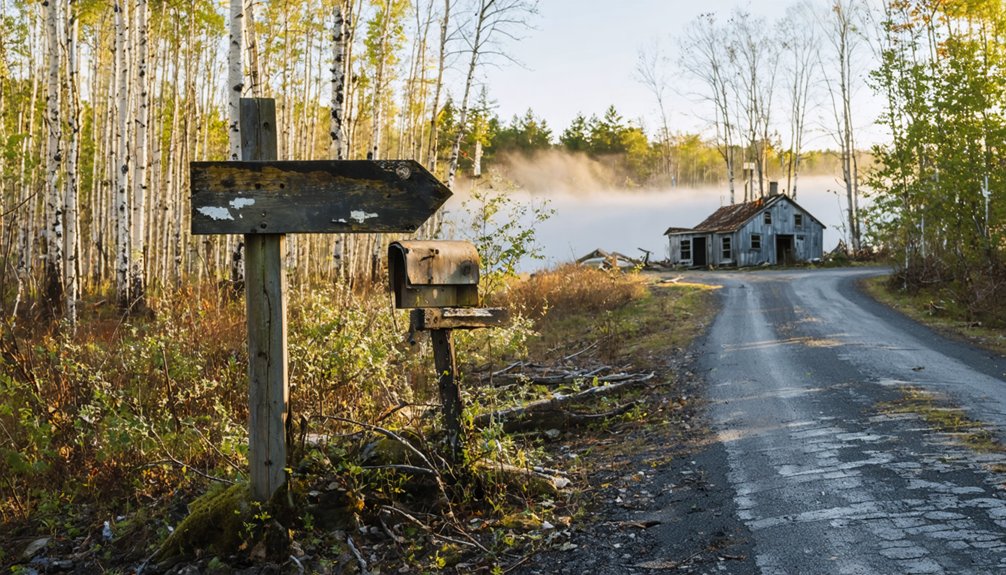
You’ll want to head east of Greenfield toward Nickatous Lake, charting unpaved logging roads that don’t forgive poor preparation. Bring a detailed map or downloaded offline GPS data because cell service disappears fast out here.
A high-clearance vehicle makes the drive considerably easier, especially after rain. You won’t find roadside signs pointing toward historic landmarks or marking spots tied to local legends, so research your route before leaving home.
Pack supplies, tell someone your plans, and give yourself extra daylight. The isolation that erased Riceville’s population is the same isolation you’ll feel driving in.
What’s Left to See at Riceville Today?
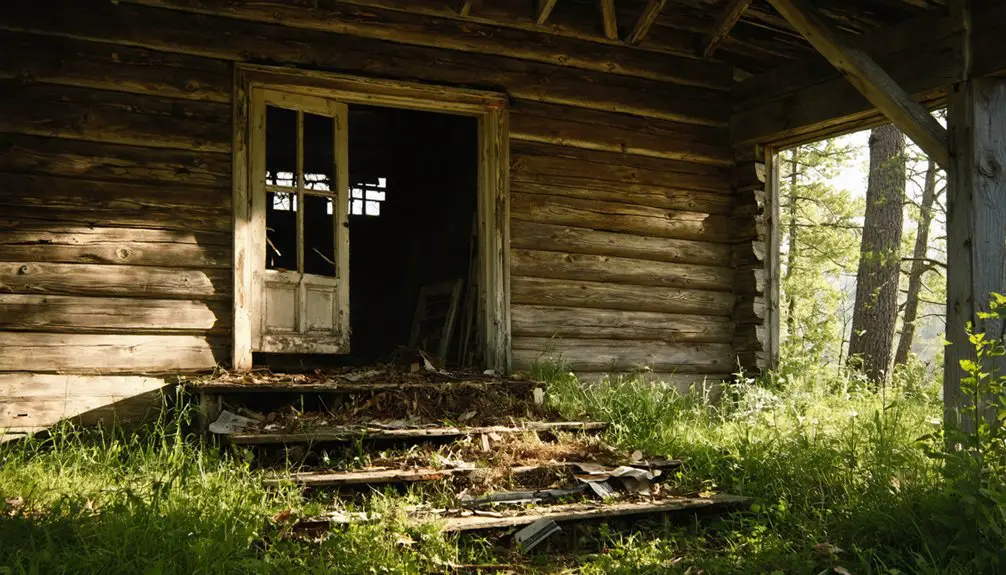
Once you arrive, don’t expect restored buildings, interpretive signs, or anything resembling a preserved historic site. Riceville gives you raw wilderness, not curated history.
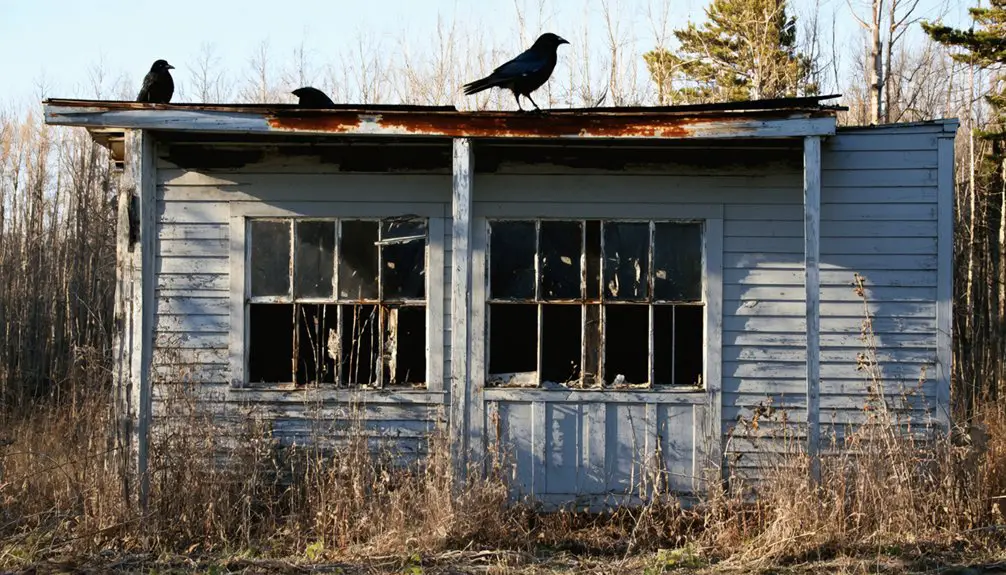
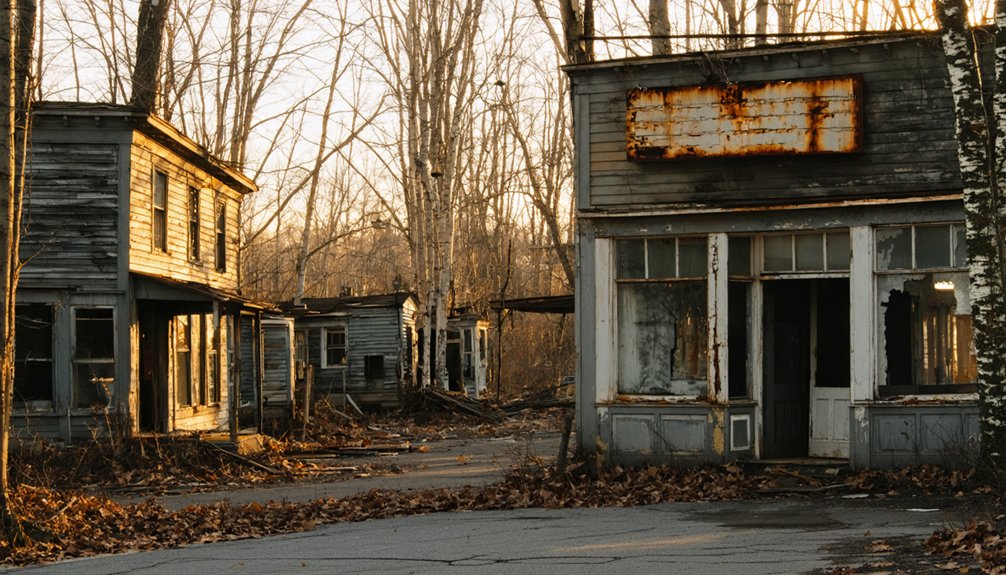
The store and boarding house survived the 1906 fire, but decades of abandonment have reduced whatever remained to foundation stones, overgrown clearings, and silence.
That absence is part of the draw. You’re standing where 136 people once lived, worked, and disappeared — and almost nothing marks it.
Local folklore fills the gaps that records can’t, spinning historical myths about plague and overnight vanishing. None of it holds up to scrutiny, but the legends stick because the evidence is so thin.
Bring curiosity, solid footwear, and realistic expectations. The land itself is the exhibit now.
What to Know Before Visiting Riceville?
Heading out to a site with no infrastructure, no cell service, and no marked trails means preparation isn’t optional — it’s the difference between a good trip and a miserable one. Download offline maps before you leave, pack water, and wear boots built for wet, uneven terrain. Maine’s interior is unforgiving when you’re unprepared.
Respect the land while you’re there. Riceville sits in a fragile historical space where preservation efforts, however informal, depend on visitors not disturbing what little remains. Don’t remove anything.
Do your homework on local folklore before arriving. Knowing which stories are legend versus documented history makes the experience sharper and more honest. You’ll appreciate the site differently when you understand what actually happened versus what people invented to fill the silence.
Frequently Asked Questions
What Other Ghost Towns Are Near Riceville in Hancock County, Maine?
The knowledge doesn’t detail nearby ghost towns, but you’ll find abandoned structures and historic architecture scattered across Hancock County’s wilderness. Explore Franklin, Mariaville, and surrounding townships — they’re waiting for your adventurous spirit to uncover their forgotten stories.
Are There Guided Tours Available Specifically for Riceville or Nearby Ghost Towns?
No guided tours exist, yet you’ll uncover rich historical preservation efforts and local legends independently. You’re free to explore Riceville’s haunting silence against its vibrant past, charting your own untamed path through Hancock County’s forgotten wilderness.
What Is the Best Time of Year to Visit Riceville?
You’ll find the most favorable visiting months are June through September, when seasonal weather keeps trails accessible and daylight plentiful. Crisp autumn days also reward explorers craving that eerie, atmospheric energy perfectly suited for uncovering Riceville’s haunting, forgotten history.
Did Any Riceville Residents Relocate Together to a Nearby Town?
Records don’t confirm residents relocating together, but you’ll find historical preservation efforts and resident stories suggest families scattered individually, seeking new work, new towns, and new beginnings after Riceville’s devastating 1906 fire erased their shared community overnight.
Are There Any Museums Preserving Artifacts From Riceville’s Tannery Era?
No confirmed museum currently houses a dedicated Riceville artifact collection, but you’ll find historical preservation efforts scattered across Hancock County’s local historical societies, where tannery-era tools and regional leather industry relics occasionally surface for enthusiastic explorers like you.
References
- https://www.facebook.com/groups/forgottenmaine/posts/1201212400842769/
- https://strangenewengland.com/podcast/the-lost-village-of-riceville-maine/
- https://www.goodreads.com/author_blog_posts/9867666-riceville-a-real-maine-ghost-town
- https://www.youtube.com/watch?v=-QTjvtK8UlI
- https://podcasts.apple.com/us/podcast/riceville-maine-the-ghost-town-whose-plague-never-happened/id1286571494?i=1000758390120
- https://www.youtube.com/watch?v=CKKw4yTwbkM
- https://b985.fm/maines-ghost-town-the-story-of-riceville/
- https://en.wikipedia.org/wiki/Riceville
- https://www.youtube.com/watch?v=NP1pGuDZhgQ
- https://podcasts.apple.com/us/podcast/riceville-maine-the-ghost-town-whose-plague-never-happened/id1286571494?i=1000758390120&l=zh-Hans-CN