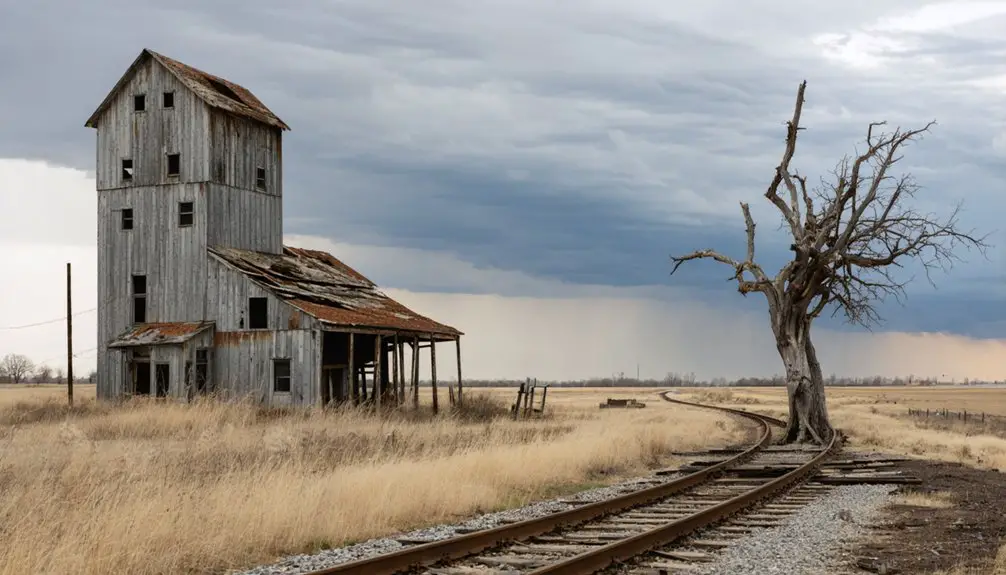
Planning a ghost town road trip to Bruce, Minnesota means visiting a cornfield where a once-promising railroad town stood. Platted in 1888, Bruce vanished after the Sioux City and Northern Railroad bypassed it in 1890, sending businesses and residents fleeing to Hills. Today, nothing remains — no markers, no foundations, just open farmland at 43°31′25″N, 96°23′55″W. Since it’s private property, you’ll need landowner permission before stepping foot on-site. There’s much more to know before you go.
Key Takeaways
- Bruce, Minnesota, a vanished 1888 railroad town, is now a cornfield located at coordinates 43°31′25″N, 96°23′55″W in Martin Township.
- The site is privately owned farmland; contact Rock County authorities to identify the landowner and request access permission before visiting.
- Visit during late April–May or September–October for optimal weather, visibility, and photography of the flat, open landscape.
- No structures, markers, or foundations remain; the town disappeared by the early 1970s after railroad abandonment and resident relocation.
- Extend your trip by visiting nearby ghost towns Lismore, Magnolia, and Hardwick for a richer regional historical experience.
What Was Bruce, Minnesota?
Once a small but ambitious settlement in Rock County, Minnesota, Bruce was platted in May 1888 with plans for 16 city blocks and a future that looked promising.
Built around an Illinois Central Railroad station, the town’s historical significance lies in how quickly it rose and fell based entirely on rail access.
Bruce rose and fell on the promise of rail — a town defined entirely by the tracks that served it.
When the Sioux City and Northern Railroad extension bypassed Bruce in 1890, railroad decline triggered a swift exodus.
Businesses and residents relocated to Hills, leaving Bruce hollowed out.
Its post office hung on until 1936, and the last buildings disappeared in the early 1970s.
Today, you’ll find a cornfield where those 16 blocks once stood.
Bruce is a vivid reminder that freedom to build doesn’t guarantee permanence.
Is the Bruce Townsite on Private Property?
Before you pack the car and head out to find Bruce’s forgotten footprint, there’s a practical question worth answering: can you actually set foot on the site? The short answer is: maybe not freely.
The former townsite now functions as a farmer’s cornfield, meaning land ownership determines your access. This isn’t public land preserved for historical preservation purposes — it’s active agricultural property belonging to a private individual.
Before visiting, check local records or contact Rock County authorities to identify the current landowner and request permission. Trespassing on working farmland isn’t just legally risky — it’s disrespectful to the people who now work that soil.
A quick call before your road trip keeps your adventure legal, respectful, and worth repeating.
How to Find the Bruce, Minnesota Townsite
To find the Bruce townsite, plug the coordinates 43°31′25″N, 96°23′55″W into your GPS and route toward Rock County in southwestern Minnesota.
Since the land is now an active agricultural field, you’ll want to confirm whether it’s private property before you pull off the road and start exploring.
Contacting the local county office ahead of your trip can save you from an awkward run-in with a landowner.
Coordinates And Route Planning
Bruce sits in southwestern Minnesota’s Martin Township, making it a natural stop if you’re already exploring the region’s ghost-town corridor.
From Hills, Minnesota, you’re only a short drive away, which makes pairing both locations smart route planning.
Arrive during spring or fall for the best photography opportunities — flat agricultural light over a former cornfield carries its own quiet story.
Always confirm whether the land is privately owned before stepping off the road.
Private Property Access Tips
Since the Bruce townsite sits on what’s now a working farmer’s cornfield, you’ll want to verify land ownership before you leave the car. Trespassing on private agricultural land carries real legal considerations, including fines and removal by local authorities.
Start by contacting Rock County’s assessor office to identify the current landowner. Once you know who owns the parcel, reach out directly to request property permissions before visiting. Most farmers appreciate respectful contact and may grant access willingly.
When you do get permission, stay on field edges to avoid damaging crops, and bring documentation of any agreement.
Ghost-town exploration rewards preparation, and a simple phone call can be the difference between a memorable roadside discovery and an uncomfortable legal confrontation you’d rather avoid.
Why There’s Nothing Left to See at Bruce Today
When you arrive at the former townsite of Bruce, you’ll find nothing but open farmland — and that’s no accident. The town’s collapse followed a familiar pattern of urban decay: once the Illinois Central Railroad stopped serving Bruce, businesses relocated to Hills, residents left, and the structures followed.
Without historical preservation efforts, nothing anchored the buildings in place. The post office closed in 1936, and by the early 1970s, the last remaining buildings were removed entirely.
Workers pulled up the old Illinois Central tracks in 1982, erasing the final physical evidence of Bruce’s railroad identity. Today, a farmer’s cornfield covers the entire townsite.
You’re basically standing inside a vanished community — one that left no foundation, no marker, and no visible footprint behind.
When Should You Visit Bruce, Minnesota?

Knowing there’s nothing left standing at Bruce actually makes timing your visit more important, not less. You’re visiting an open agricultural field, so seasonal weather directly shapes your experience.
Spring and fall offer the ideal timing — mild temperatures, low humidity, and clearer sightlines across the flat Rock County landscape. Summer heat can make roadside stops uncomfortable, and standing in a cornfield during peak growing season limits your view of the surrounding terrain entirely.
Winter brings harsh southwestern Minnesota conditions that make rural exploration unnecessarily difficult. Aim for late April through May or September through October.
You’ll move freely, photograph the surrounding land easily, and spend time with the historical context rather than fighting the elements.
Check land access before you go, since the site may be on private property.
Why Bruce Still Makes a Worthwhile Ghost Town Stop
Even though nothing stands at Bruce today, the site delivers something most intact small towns can’t — a direct, unfiltered look at how completely a railroad decision could erase a community.
Nothing stands at Bruce today — and that absence is exactly what makes it one of the most honest ghost towns you’ll ever visit.
You’re standing where 16 city blocks were once platted, where a post office ran for nearly five decades, and where families built lives that quietly disappeared when the trains stopped coming.
That historical significance hits differently when you’re looking at a cornfield knowing what it once was.
You’ll also find real photographic opportunities here — wide open agricultural land, flat southwestern Minnesota sky, and the kind of emptiness that tells a story without a single structure.
Bruce rewards curious travelers who bring context, not just cameras.
Ghost Towns Near Bruce Worth Adding to Your Route
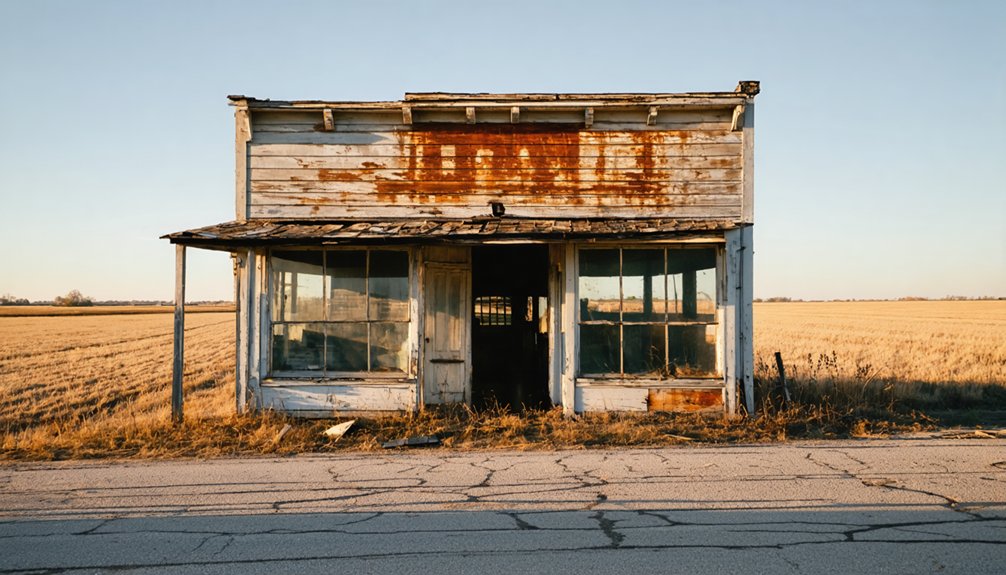
Since Bruce sits in southwestern Minnesota’s Rock County, you’re already positioned in a region that saw dozens of railroad-dependent towns rise and fall within a few decades of each other. Extending your route means richer historical preservation context and unexpected wildlife encounters across open prairie landscapes.
Add these stops to maximize your trip:
- Lismore, Minnesota – Another Rock County ghost town where railroad bypasses erased a once-promising settlement, leaving only scattered historical markers.
- Magnolia, Minnesota – A nearby small town with preserved structures offering genuine historical preservation value and surrounding wetlands ideal for wildlife encounters.
- Hardwick, Minnesota – A quietly fading community where you’ll find authentic remnants of southwestern Minnesota’s railroad era still visible along forgotten roads.
Each stop deepens your understanding of how swiftly infrastructure decisions shaped—and erased—entire communities.
Frequently Asked Questions
What Railroad Company Originally Served the Bruce, Minnesota Town Station?
Like a lifeline through the prairie, the Illinois Central Railroad originally served Bruce’s station. As you explore ghost town preservation and historical railroads, you’ll find this rail connection shaped — and ultimately doomed — Bruce’s existence.
How Many City Blocks Was Bruce Originally Platted to Include?
When you’re exploring ghost town history, you’ll find Bruce was originally platted to include 16 city blocks! It’s one of those fascinating historic landmarks that’ll ignite your spirit of freedom and adventure in southwestern Minnesota.
When Was Bruce, Minnesota’s Post Office Finally Closed Permanently?
Like a flickering flame finally extinguished, Bruce’s post office closed permanently in 1936, sealing its ghost town history. You’ll find abandoned towns like Bruce surrendered their last civic heartbeat quietly, long after residents had already moved on.
Who Took the Last Known Aerial Photograph of Bruce in 1936?
The U.S. Department of Agriculture captured that fascinating ghost town history snapshot in 1936, using aerial photography techniques that let you glimpse Bruce’s final standing structures before they vanished into southwestern Minnesota’s agricultural landscape forever.
What Year Were the Illinois Central Railroad Tracks at Bruce Removed?
After 94 years of service, workers removed the Illinois Central Railroad tracks in 1982, erasing a key piece of historical preservation. You won’t find typical tourist attractions here—just freedom, open fields, and raw, untamed history beneath your feet.
References
- https://kids.kiddle.co/Bruce
- https://en.wikipedia.org/wiki/Category:Ghost_towns_in_Minnesota
- http://wikimapia.org/13644661/Bruce-Minnesota-Ghost-Town-site
- https://en.wikipedia-on-ipfs.org/wiki/List_of_ghost_towns_in_Minnesota
- https://en.wikipedia.org/wiki/List_of_ghost_towns_in_Minnesota
- https://kids.kiddle.co/List_of_ghost_towns_in_Minnesota
- https://ghost-towns.close-to-me.com/states/minnesota/
- https://www.youtube.com/watch?v=5bCG6B2rzZY
- https://www.geocaching.com/geocache/GC39XXB