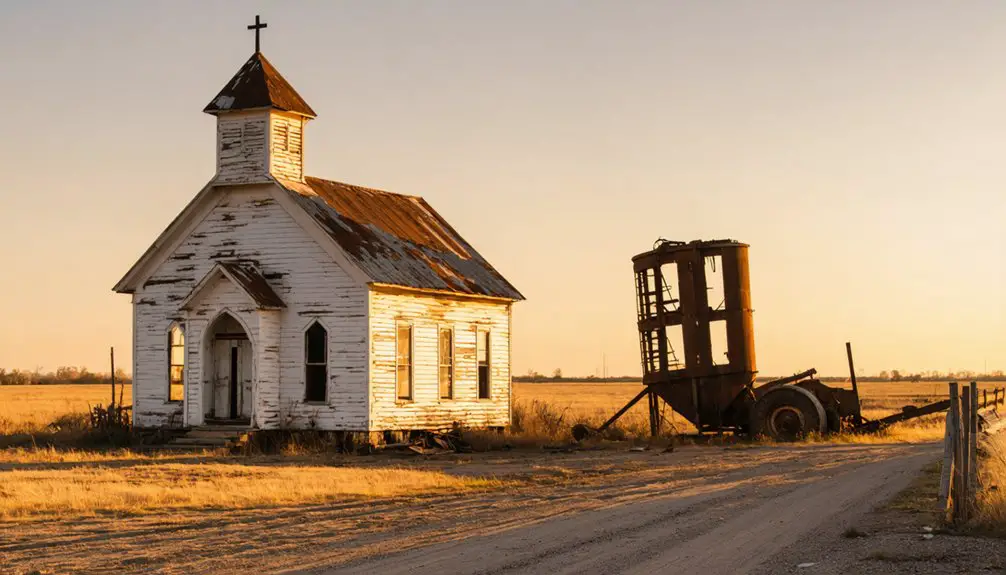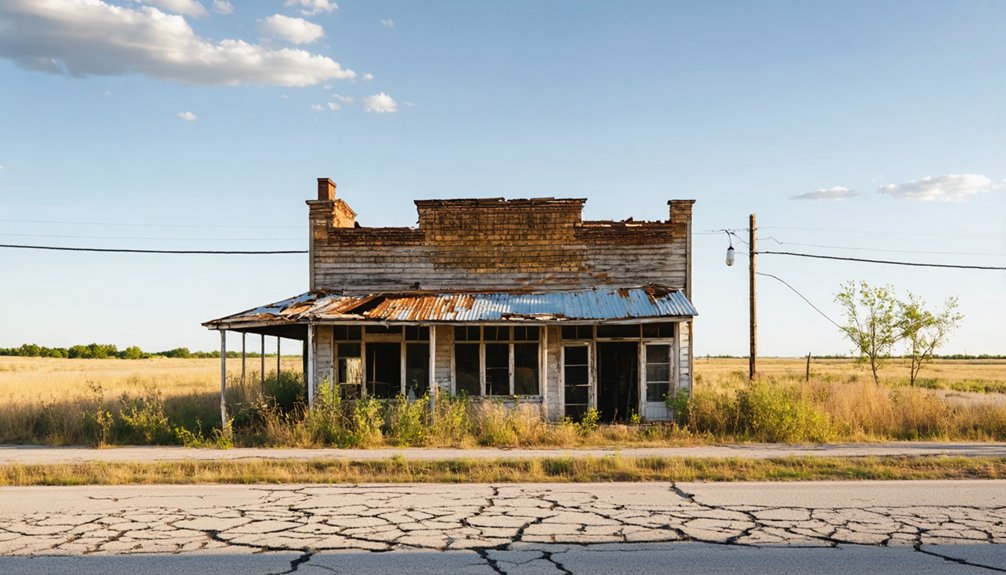
Planning a ghost town road trip to Kibby, Oklahoma starts in Buffalo, about 7 miles away, where you’ll head south on Hwy 64 and Hwy 183 before winding through rural Harper County roads. Kibby’s been abandoned since the 1920s, but Pleasant Hill Cemetery and scattered foundations still mark where this frontier settlement once stood. Spring and fall offer the best conditions for exploring. Stick around, and you’ll uncover everything you need to make this trip count.
Key Takeaways
- Kibby, Oklahoma, located in Harper County, was founded in 1901 and abandoned by 1920, making it a compelling ghost town destination.
- The main remnants include Pleasant Hill Cemetery and scattered foundations, offering glimpses into frontier life and early settler history.
- Begin your route from Buffalo, Oklahoma, approximately 7 miles away, traveling south on Hwy 64 and Hwy 183 toward the site.
- Visit during spring or fall for cooler temperatures, softer light, and more manageable unpaved road conditions throughout Harper County.
- Combine Kibby with nearby ghost towns like Doby Springs and May, Oklahoma, for a full-day regional road trip experience.
What Is Kibby, Oklahoma?
Tucked into the rural landscape of Harper County in northwestern Oklahoma, Kibby is a ghost town that once functioned as an active settlement before fading into history. Founded on October 31, 1901, it operated for nearly two decades before losing its incorporated status on April 15, 1920.
Kibby, founded in 1901, quietly thrived in Harper County before vanishing from Oklahoma’s map by 1920.
Its rural school stayed open until 1940, marking one of the last threads connecting the community to everyday life. Today, you’ll find the Pleasant Hill Cemetery, also known as Kibby Cemetery, along with scattered foundations as the primary remnants.
Local legends tied to early Oklahoma settlement patterns add storytelling depth to any visit. Preservation challenges are real here — without active stewardship, these traces could disappear entirely.
Kibby represents one of an estimated two thousand Oklahoma ghost towns shaped by economic shifts and changing times.
Kibby’s Rise and Fall: From 1901 Settlement to Ghost Town
When you trace Kibby’s origins, you land on October 31, 1901, the date settlers established this small Harper County community during Oklahoma’s early homesteading era.
The town grew modestly, supporting a rural school that stayed active until 1940, but economic shifts and population loss steadily eroded its foundation.
Settlement Origins In 1901
On October 31, 1901, Kibby came to life in the rolling plains of Harper County, northwestern Oklahoma, joining a wave of small settlements that hopeful homesteaders carved out of the region during the early-1900s land rush. Settlers arrived chasing opportunity, staking claims across open grassland and building a community from scratch.
Kibby’s historical significance lies in what it represents — the raw ambition of people who shaped a territory into a state. The town supported a school, a cemetery, and enough residents to sustain daily rural life.
Decline And Abandonment
By 1920, Kibby had already run its course. On April 15th of that year, the town officially unincorporated, closing the chapter on a community that had lasted less than two decades. Its historical significance lies in how quickly frontier settlements could rise and collapse under economic pressure.
Three key factors drove Kibby’s abandonment:
- Loss of town government — once unincorporated, no civic structure remained to sustain growth.
- Rural school closure in 1940 — the last functioning institution finally shut its doors.
- Population migration — residents followed better opportunities elsewhere.
What you’ll find today reflects cultural preservation at its most stripped-down — a cemetery, scattered foundations, and open land. Kibby doesn’t ask for your sympathy. It simply stands as honest evidence of how the Oklahoma frontier really worked.
What’s Left at Kibby: The Cemetery and Foundations
Although Kibby quietly disappeared from Oklahoma’s maps after 1920, two tangible traces anchor the site to its past: Pleasant Hill Cemetery—also known as Kibby Cemetery—and scattered structural foundations. These remnants of historical architecture tell a quiet story of early settlers who carved lives from northwestern Oklahoma’s open plains.
When you visit, you’ll find the cemetery serving as the site’s most legible landmark, its headstones marking families who once built a functioning community here. The foundations nearby hint at homes, businesses, and shared spaces now reclaimed by prairie grass.
Local legends likely traveled with those families, fading alongside the town itself. Walk the grounds carefully, read the stones, and let the landscape speak. Kibby rewards curiosity with honest, unpolished history rather than manufactured charm.
Pleasant Hill Cemetery and What the Gravestones Reveal
Pleasant Hill Cemetery—locally known as Kibby Cemetery—holds the clearest record of who once called this stretch of Harper County home. Walk among the headstones and you’ll uncover layers of local legends, family names, and cemetery symbolism carved into stone generations ago.
Step into Pleasant Hill Cemetery and let the headstones tell Harper County’s story, one carved name at a time.
Look for these three details when you visit:
- Family surnames — recurring names reveal which homesteading families dominated the early settlement
- Gravestone symbols — hands, anchors, and floral carvings signal religious beliefs and fraternal ties common to 1901-era settlers
- Dates and age gaps — clusters of early deaths often reflect harsh frontier conditions or disease outbreaks
You don’t need a guide to read this landscape. The stones speak plainly, connecting you directly to lives lived and lost on Oklahoma’s open plains.
How to Reach Kibby From Buffalo, Oklahoma
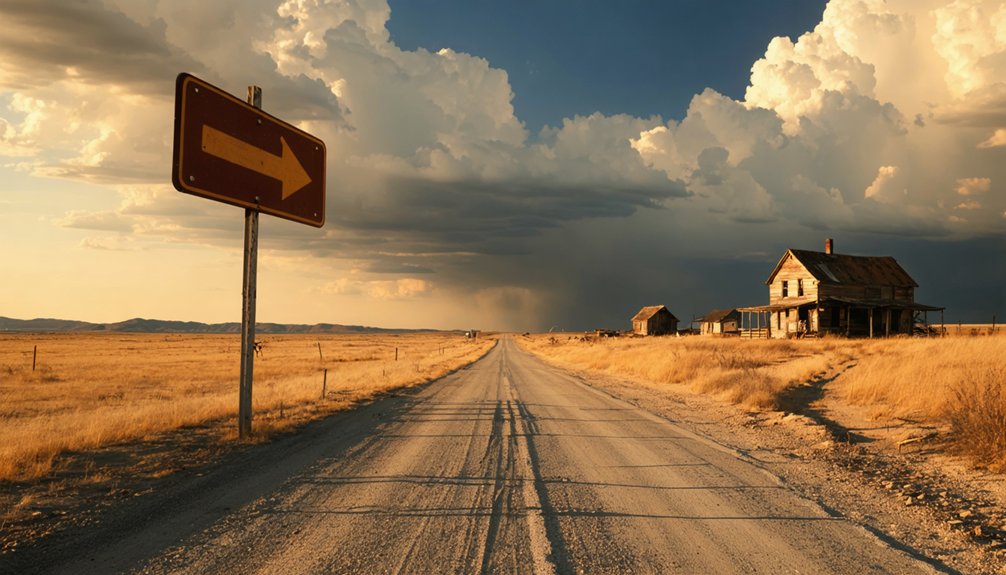
You’ll start your drive to Kibby from Buffalo, Oklahoma, the Harper County seat, which sits roughly 7 miles from the ghost town site.
Head south from the intersection of Hwy 64 and Hwy 183, then follow the county road turns east and south before making your final eastbound approach to the site.
The route travels over standard rural roads rated for 2WD access, so you won’t need a four-wheel-drive vehicle, though checking road conditions before you leave is always a smart move.
Starting Point In Buffalo
Since Buffalo serves as your launching point, you’re already close—Kibby sits just about 7 miles away, making this one of the shortest ghost-town road trips you can take in northwestern Oklahoma. Buffalo, the Harper County seat, gives you a solid base before you head out to explore a site rich in historical significance and local legends.
Before leaving Buffalo, handle these three essentials:
- Fill your tank — rural roads offer zero services beyond this point.
- Check county-road conditions — unpaved stretches can shift seasonally.
- Note your directions — head south and east from Hwy 64 and Hwy 183 toward Kibby.
Once you’re rolling, the flat northwestern Oklahoma landscape opens wide, and Kibby’s quiet remnants are only minutes ahead.
Route Turns And Mileage
Once you leave Buffalo behind, the actual turns come fast and simple—this route runs short, and knowing the sequence before you roll keeps you from second-guessing yourself on unmarked county roads. Head south from the junction of Hwy 64 and Hwy 183, then turn east, then south again before making your final eastbound push toward the site.
The whole drive covers roughly seven miles. You’ll arrive at a quiet patch of northwestern Oklahoma where historical significance still breathes through the Pleasant Hill Cemetery and scattered foundations. Preservation efforts haven’t transformed Kibby into a maintained landmark, so let the mileage work in your favor—less distance means more time exploring what’s actually there.
Keep your county-road directions written down, because cell signals thin out fast on these rural stretches.
Road Conditions And Access
Rural roads in northwestern Oklahoma don’t always forgive unprepared drivers, but the route to Kibby earns a 2WD rating—meaning you can make the trip in a standard passenger vehicle without worrying about rough terrain or high-clearance requirements.
Before you head out to explore the historical architecture remnants and local legends surrounding this forgotten settlement, keep these access tips in mind:
- Check road conditions after heavy rain, as rural county roads can soften quickly.
- Download offline maps before departing Buffalo, since cell coverage thins considerably along the route.
- Travel during daylight hours to navigate county-road intersections accurately and spot foundation remnants easily.
The grid rating of 1 confirms straightforward travel, making Kibby an accessible side trip without demanding specialized equipment or advanced off-road experience.
Driving to Kibby From Woodward or Fort Supply
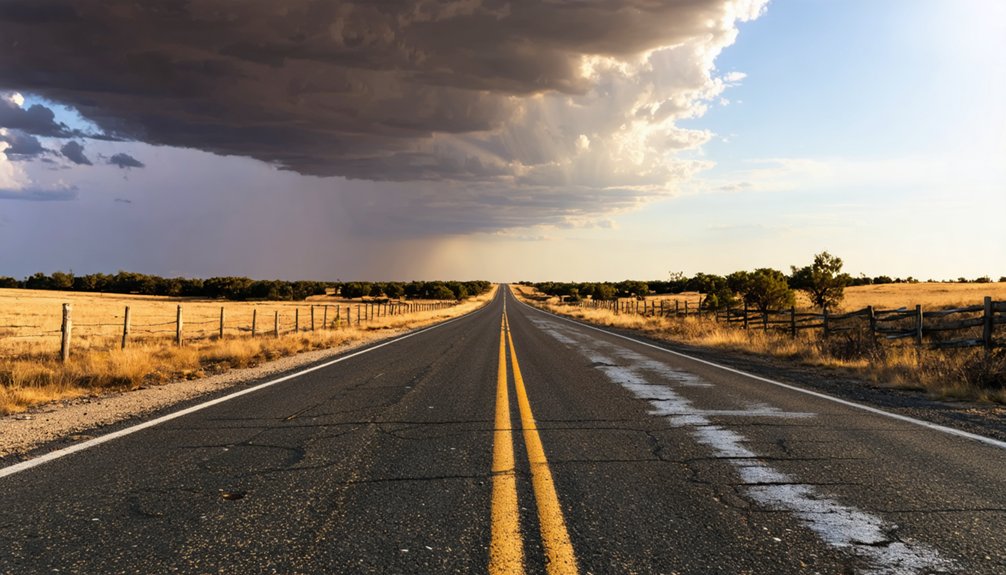
If you’re coming from Woodward or Fort Supply, Hwy 183 is your main artery north toward Harper County. Follow it until you reach the county roads that branch toward Kibby’s former townsite.
The route stays manageable on 2WD, so you won’t need a specialized vehicle to make the trip.
Once you arrive, the historical significance of this 1901 settlement becomes tangible through the Pleasant Hill Cemetery and scattered foundations still visible on the land. These remnants reflect quiet preservation efforts that keep Kibby’s story accessible to curious travelers.
Nobody’s maintaining a visitor center here — just open plains, weathered markers, and honest history. Come prepared with a county road map, check conditions before you leave, and give yourself time to absorb what remains.
Road Conditions on the Way to Kibby
Getting to Kibby means steering standard rural roads through Harper County, and the good news is that a 2WD vehicle handles the route without trouble. Before you head out, keep these local road safety tips in mind:
- Check seasonal road conditions — rain turns unpaved county roads muddy and slick, so verify conditions before departing.
- Watch for loose gravel and soft shoulders — rural Harper County roads shift with weather, and edges can crumble unexpectedly.
- Drive at reduced speeds on unmarked intersections — grid roads cross quietly out here, and signage is minimal.
The route stays manageable year-round, but spring and early winter bring the most unpredictable surfaces. Respect the land, move at your own pace, and you’ll reach Kibby’s remnants without complications.
The Best Time of Year to Visit Kibby
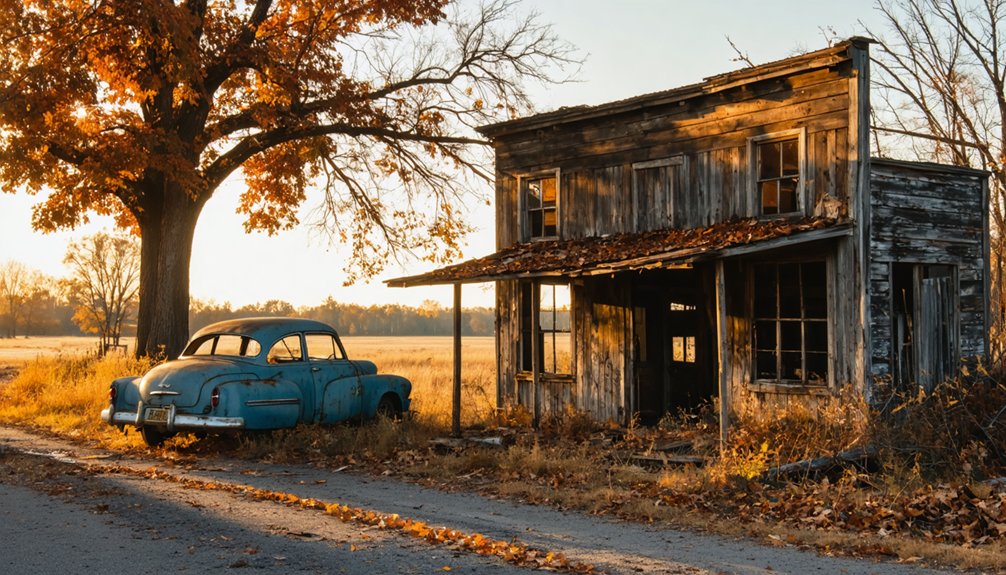
Kibby welcomes visitors year-round, and each season brings its own character to the Harper County landscape. Spring and fall offer cooler temperatures and softer light, making them ideal for photographing foundations and the Pleasant Hill Cemetery.
Every season reveals something new at Kibby, but spring and fall light the landscape beautifully.
Summer heat is manageable if you head out early, while winter strips the vegetation back and reveals structural traces that leafy growth otherwise hides.
Whatever season you choose, bring historical photographs to compare against what remains — the contrast between past and present sharpens your understanding of how quickly a thriving 1901 settlement can disappear.
Talk to locals before you go, since local legends about Kibby’s final years add depth that no road sign provides.
Every season offers something worth discovering at this quiet, uninhabited stretch of northwestern Oklahoma.
Ghost Towns Near Kibby Worth Adding to Your Route
Harper County sits inside one of Oklahoma’s richest ghost-town corridors, so you’d be shortchanging yourself by stopping at Kibby alone. The surrounding region offers abandoned landscapes perfect for artistic photography and stories steeped in local legends. Build a route that stretches your freedom across forgotten Oklahoma history:
- Doby Springs – A former resort community with a rich past and natural features that reward explorers seeking quiet, off-grid stops.
- Laverne – A diminished but historically layered town carrying railroad-era stories that connect deeply to Harper County’s boom-and-bust pattern.
- May, Oklahoma – Another faded settlement where foundations and cemetery markers create compelling visual and historical contrasts worth documenting.
String these stops together, and you’ll experience a full day of authentic, unfiltered Oklahoma history few travelers ever discover.
Planning a Full Harper County Ghost Town Day Trip
Once you’ve mapped out the ghost towns worth visiting, turning those individual stops into a single well-paced day trip takes just a bit of logistical thinking. Start early from Buffalo, using Hwy 64 and Hwy 183 as your backbone.
Kibby anchors the route well, offering the Pleasant Hill Cemetery and visible foundations where local legends still linger in the landscape.
Weave in nearby Harper County ghost towns between stops, keeping drives short on familiar county roads.
Bring water, a paper map, and a camera. You’ll want to document preservation efforts wherever foundations or cemeteries survive.
Mild weather makes any season workable, so you’re not locked into a narrow travel window.
Move at your own pace, follow curiosity, and let the open roads guide the day.
Frequently Asked Questions
Is There Cell Phone Service Available Near Kibby’s Remote Location?
Like a telegraph wire gone silent, cell phone coverage out here’s unreliable. You’ll want to plan your communication options before heading out — download offline maps and notify someone of your rural adventure first.
Are There Restroom Facilities Anywhere Close to the Kibby Site?
You won’t find restroom availability or nearby facilities at Kibby’s remote site. Plan ahead by stopping in Buffalo, about 7 miles away, where you’ll discover convenient options before venturing into Oklahoma’s open, untamed countryside.
Can You Legally Take Artifacts or Rocks Found at Kibby?
You’ll want to research artifact laws before pocketing anything at Kibby. Rock collection may be fine, but removing historical artifacts from ghost town sites can violate federal and state laws, so always verify first.
Is the Kibby Site on Private Land Requiring Permission to Visit?
The knowledge doesn’t confirm ownership details, so you’ll want to do your homework before venturing out. Always respect private land restrictions and check permission requirements locally to keep your freedom-loving adventure on the right side of the fence.
Are Pets Allowed When Visiting the Pleasant Hill Cemetery Grounds?
Specific pet policies and cemetery rules for Pleasant Hill aren’t documented in available sources. You’ll want to contact Harper County locals or officials before bringing your furry companion to make certain you’re respecting the grounds properly.
References
- https://www.ghosttowns.com/states/ok/kibby.html
- https://www.okhistory.org/publications/enc/entry?entry=GH002
- https://en.wikipedia.org/wiki/List_of_ghost_towns_in_Oklahoma
- https://www.travelok.com/articles/oklahomaghosttowns
- https://www.travelok.com/articles/harper-county-genealogy-resources
- https://okmag.com/blog/a-ghostly-site/
- https://gateway.okhistory.org/ark:/67531/metadc2031452/
- https://abandonedok.com/class/disappearing-town/
- https://iwr.msu.edu/kht/TrailSites/19a_Kibbie.html
- https://www.ghosttowns.com/states/ok/ok.html