Planning a ghost town road trip to Bullowville, Florida means stepping into the ruins of the largest sugar plantation in eastern Florida, burned to the ground in January 1836 during the Second Seminole War. You’ll explore coquina walls, crumbling foundations, and charred remnants that reveal a brutal history built on enslaved labor. Entry costs just $4 per vehicle, and guided weekend tours add deeper context. There’s far more to this collapsed empire than first meets the eye.
Key Takeaways
- Bulow Plantation Ruins State Park in Flagler County preserves the remains of Florida’s largest 19th-century sugar plantation, destroyed in January 1836.
- Entry costs $4 per vehicle; access via Old Kings Road from I-95 exit 284, with year-round visiting hours available.
- Self-guided tours are available daily; weekend guided tours provide deeper historical context about the plantation’s brutal past.
- Nearby ghost towns like Korona and Espanola can be connected via Old Kings Road for a fuller road trip experience.
- Pack water, sunscreen, insect repellent, closed-toe shoes, and a printed map, as cell service may be unreliable.
What Is Bullowville and Why Visit This Ghost Town?
Tucked away in Flagler County, Florida, Bullowville isn’t a town you’ll find on any modern map — it’s the ghost of what was once the largest sugar plantation in eastern Florida.
The Bulow Plantation Ruins Historic State Park preserves what remains of a plantation economy that once ran on sugarcane, cotton, rice, and indigo — and on the forced labor of hundreds of enslaved people.
Today, you’ll walk among coquina ruins, crumbling wells, and charred foundations — fragments of historical architecture frozen in 1836, when Seminole forces burned the settlement during the Second Seminole War.
If you’re drawn to places where history feels raw and unfiltered, Bullowville delivers.
It’s not a theme park — it’s a genuine remnant of a world that collapsed and was never rebuilt.
How Did Bullowville’s Sugar Plantation Rise to Dominate Eastern Florida?
When you trace Bullowville’s origins, you find that Major Charles Wilhelm Bulow purchased 4,675 acres of Florida wilderness in 1821 and quickly set to work transforming raw land into a working plantation.
He grew sugarcane, cotton, rice, and indigo, building an operation so vast it became the largest sugar plantation in eastern Florida.
Bulow’s 1821 Land Acquisition
In 1821, Major Charles Wilhelm Bulow purchased 4,675 acres of Florida wilderness, laying the foundation for what would become the largest sugar plantation in eastern Florida. He transformed raw land into a thriving plantation economy built on sugarcane, cotton, rice, and indigo.
As you explore this history, consider what shaped Bullowville’s rise:
- Historical architecture defined the compound — a mansion, sugar mill, barns, workshops, and dozens of worker cabins formed a self-contained world carved from untamed Florida.
- Bulow’s land acquisition represented one of the most ambitious agricultural ventures in the region’s early American period.
- The plantation’s growth depended entirely on enslaved labor, with 193 enslaved people recorded in the 1830 census alone.
This land purchase set everything — triumph and tragedy — into motion.
Crops Fueling Plantation Growth
Bulow’s ambitious land grab only tells half the story — what he planted on those 4,675 acres explains how Bullowville grew into eastern Florida’s agricultural powerhouse.
Historical farming here wasn’t modest or experimental — it was calculated and relentless. Bulow pushed the land hard, cultivating sugarcane, cotton, rice, and indigo across sprawling fields carved from Florida wilderness.
Sugarcane became the dominant force, earning Bullowville recognition as the largest sugar plantation in eastern Florida.
Crop cultivation at this scale required infrastructure, ambition, and brutal labor — a full complex of mills, barns, and workshops supported the operation.
When you walk the ruins today, you’re standing inside what was once a self-contained agricultural empire, built from raw land into regional dominance in just a few years.
Largest Eastern Florida Operation
Few plantations in eastern Florida could match what rose from Flagler County’s wilderness in just over a decade. By the 1830s, Bullowville had become the largest sugar plantation in eastern Florida, a staggering achievement built on stolen labor and ambition.
When you walk the ruins today, the plantation architecture and historical artifacts quietly tell that story:
- 193 enslaved people were recorded in the 1830 census, with estimates reaching 400
- 46 cabins housed the workforce that powered this dominant operation
- 4,675 acres of wilderness transformed into sugarcane, cotton, rice, and indigo fields
You’re standing where empire was built on bondage. Understanding that scale makes the ruins feel heavier, more honest, and ultimately more important to witness firsthand.
Who Were the Bulows and What Did They Build at the Plantation?
When Major Charles Wilhelm Bulow purchased 4,675 acres of Florida wilderness in 1821, he wasn’t acquiring a farm — he was laying the groundwork for what would become the largest sugar plantation in eastern Florida.
The Bulow family built an ambitious complex reflecting both historical architecture and a ruthless plantation economy. You’d have found a grand mansion, a working sugar mill, barns, workshops, and roughly 46 cabins housing enslaved laborers.
The operation grew sugarcane, cotton, rice, and indigo across thousands of acres. After Major Bulow’s death, his son John expanded the enterprise further.
What they constructed wasn’t just a homestead — it was an industrial operation carved from subtropical wilderness, built on the forced labor of between 150 and 400 enslaved people.
How the Second Seminole War Destroyed Bullowville in 1836
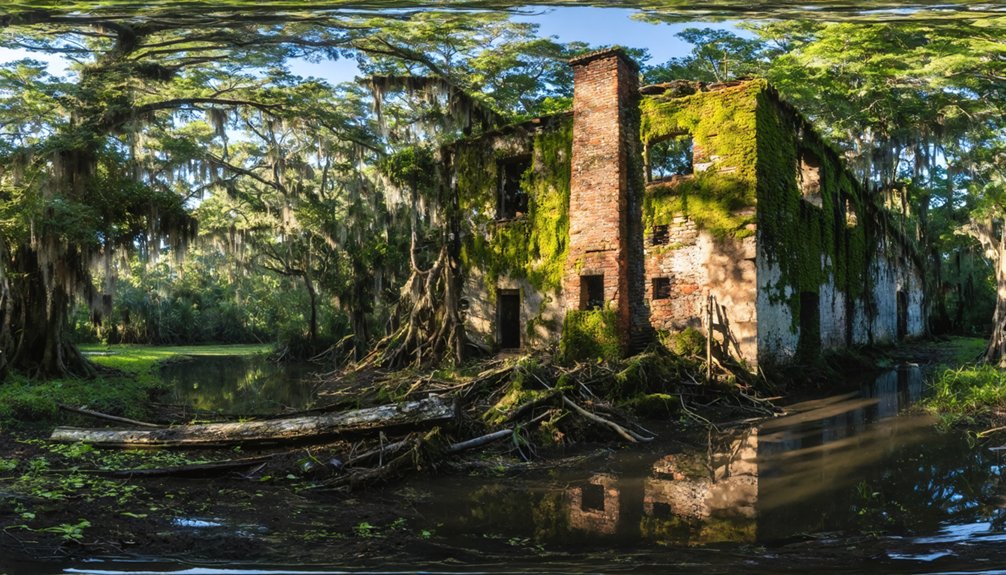
When the Second Seminole War swept through Florida, Bullowville found itself directly in the path of the conflict, and Seminole forces burned the plantation to the ground on January 11, 1836.
You can almost picture the scene: the largest sugar operation in eastern Florida reduced to charred ruins in a single day.
John Bulow never rebuilt, and the wilderness quickly reclaimed what had taken years to construct.
Seminole Conflict Reaches Bullowville
The Second Seminole War didn’t stay distant from Bullowville for long. Tensions escalated quickly, pulling this thriving sugar empire into violent conflict. The historical architecture you’ll walk among today tells a story of sudden, irreversible loss — one wrapped in local legends of betrayal and misunderstanding.
In January 1836, Seminole forces burned the plantation to the ground, ending its operation permanently. John Bulow never rebuilt.
Key moments that shaped Bullowville’s fate:
- Militia and military forces occupied the plantation before its destruction
- Seminoles burned the settlement following misunderstandings about Bulow’s loyalties
- January 11, 1836 marks the date the flames consumed everything
You’re standing where freedom and survival collided — where one family’s empire collapsed under the weight of a war that reshaped Florida forever.
January 1836 Burning
On January 11, 1836, fire consumed everything the Bulow family had built over fifteen years. Seminole warriors torched the complex, reducing the mansion, mill, barns, and worker cabins to ash and rubble. You can almost feel the heat standing among the ruins today — the plantation architecture that once dominated eastern Florida’s sugar industry collapsed in a single night.
No one rebuilt after the flames died. John Bulow was forced out, and the wilderness quickly reclaimed the land.
What survived became invaluable historical artifacts: coquina sugar mill walls, wells, a spring house, and the mansion’s foundation. The destruction ended not just a plantation but an entire way of life built on the forced labor of nearly 200 enslaved people. The land itself finally broke free.
Plantation Never Rebuilt
After the flames died on January 11, 1836, no one came back to rebuild. The plantation economy that once drove Bullowville simply collapsed, and the historical architecture crumbled into silence. John Bulow died in Paris just months later, leaving the land permanently abandoned.
What the fire couldn’t erase, time finished:
- The sugar mill’s coquina walls still stand, reminding you that forced labor built something meant to last forever
- The mansion’s foundation marks where wealth extracted from 193 enslaved people once justified itself
- The Second Seminole War effectively ended an exploitative system that freedom-seeking Seminoles refused to tolerate
You’re walking ground where an empire fell and stayed fallen. No reconstruction softened the story here — only ruins remain, honest and unvarnished.
What Can You Still See at Bulow Plantation Ruins?
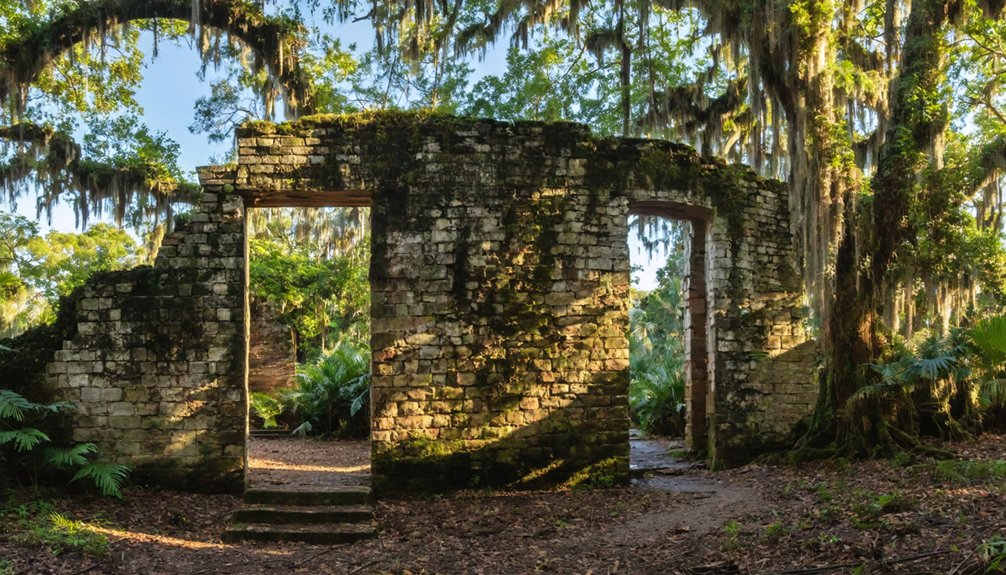
Although little stands above ground, what’s left at Bulow Plantation Ruins tells a haunting story. You’ll walk among coquina ruins of the sugar mill, one of the most striking historical artifacts surviving from Florida’s antebellum era. The stone walls still rise from the earth, weathered but defiant.
Beyond the mill, you’ll find wells, a spring house, and the mansion’s foundation — archaeological findings that outline a world both prosperous and brutal. Charred remnants hint at the violent end the plantation met in January 1836.
A self-guided tour lets you move at your own pace through the ruins year-round. On weekends, guided tours add deeper context. Admission runs just $4 per vehicle, making this a worthy stop on any road trip through Florida’s forgotten past.
How to Get to Bullowville, Florida
Once you arrive, you’ll find the historical architecture of the sugar mill ruins waiting quietly among the trees.
- From I-95: Take exit 284 and follow signs toward Flagler Beach.
- Landmark navigation: Watch for Old Kings Road, your direct path to the park entrance.
- Entry fee: Keep $4 per vehicle ready at the gate.
The park stays open year-round, so you can chart your own timeline and explore freely.
When Is Bulow Plantation Ruins State Park Open and What Does It Cost?
Bulow Plantation Ruins Historic State Park stays open year-round, so you can time your visit around any season without worrying about closures. Admission runs just $4 per vehicle, keeping this encounter with history affordable for anyone chasing freedom on the open road.
Self-guided tours let you explore historical artifacts and archaeological discoveries at your own pace, moving through the coquina sugar mill ruins, surviving wells, and the mansion’s foundation without a rigid schedule holding you back.
Roam the coquina ruins, ancient wells, and crumbled mansion foundation entirely on your own terms.
If you want deeper context, guided tours run on weekends, connecting you more directly to the stories embedded in these charred remnants.
Whether you’re drawn by the archaeology or the raw history, the park delivers a genuinely immersive experience without draining your travel budget.
Ghost Towns Near Bullowville to Add to Your Route
Flagler County’s ghost town circuit doesn’t stop at Bullowville, and smart road trippers string together several abandoned settlements into one satisfying run through Florida’s forgotten interior. Old Kings Road connects several crumbling waypoints where preservation efforts have protected historical artifacts from disappearing entirely.
- Korona: A vanished citrus community northeast of Bunnell where foundations and citrus groves hint at immigrant dreams.
- Espanola: A turpentine camp settlement deep in Flagler’s piney woods, where scattered remnants reward curious explorers.
- Palatka vicinity sites: Abandoned homesteads along the St. Johns River corridor offering compelling detours for those pushing west.
Map your route before leaving, fuel up near I-95 exit 284, and keep your schedule loose. Florida’s forgotten places reveal themselves to travelers willing to wander deliberately.
What to Wear and Pack for Walking the Plantation Ruins
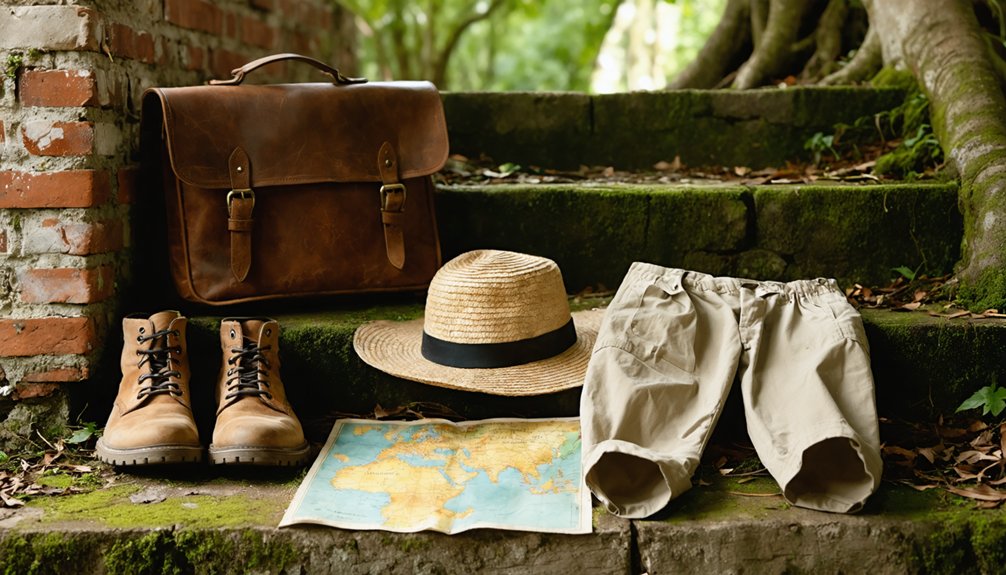
Walking the coquina ruins and creek-side trails at Bulow demands practical gear, not fashion. You’re stepping into a landscape shaped by a brutal plantation economy, where 193 enslaved people once worked the fields under Florida’s unforgiving sun. That same sun hits you today.
Wear closed-toe shoes with solid grip — the ground is uneven, roots break through the soil, and wet patches appear near the tidal creek.
Light, breathable clothing handles the humidity. Long sleeves help against insects, especially in warmer months.
Pack water, sunscreen, and insect repellent. Bring a camera — the historical architecture of the surviving coquina sugar mill rewards close study.
A printed trail map helps since cell service can drop. The ruins don’t ask much, but you’ll want to come prepared.
Frequently Asked Questions
Can You Bring Pets to Bulow Plantation Ruins Historic State Park?
The knowledge provided doesn’t confirm pet policies or animal restrictions for this park. You’ll want to contact Bulow Plantation Ruins Historic State Park directly to get accurate, current information before bringing your furry travel companion along!
Is Bulow Plantation Ruins Accessible for Visitors With Mobility Limitations?
Coincidentally, history’s ruins often reveal accessibility features you’d least expect! You’ll find wheelchair access available at Bulow Plantation Ruins, letting you freely explore coquina sugar mill remains, ancient wells, and charred foundations without barriers holding your adventurous spirit back.
Are There Restroom Facilities Available Inside the Park for Visitors?
The provided knowledge doesn’t confirm restroom facilities at the park. You’ll want to contact Bulow Plantation Ruins Historic State Park directly to verify available park amenities before you hit the open road toward this hauntingly beautiful ghost town destination.
Can Visitors Picnic or Eat Inside Bulow Plantation Ruins State Park?
Like a revitalizing gust, you can picnic here! Bulow’s grounds invite you to eat amid historical preservation efforts and wildlife observation opportunities, letting you freely savor both your meal and Florida’s untamed natural beauty.
Is Photography Permitted Throughout the Ruins and Park Grounds?
You’ll find photography rules here wonderfully liberating! Park regulations don’t restrict your lens—you’re free to capture the haunting coquina sugar mill ruins, crumbling foundations, and ancient wells throughout the evocative, atmosphere-drenched grounds of Bulow Plantation.
References
- https://www.visitflagler.com/blog/post/explore-this-eerie-ghost-town-in-palm-coast-and-the-flagler-beaches/
- https://www.ghosttowns.com/states/fl/bullowville.html
- https://floridatraveler.com/bulowville-ghost-town/
- https://en.wikipedia.org/wiki/List_of_ghost_towns_in_Florida
- https://www.floridastateparks.org/learn/history-bulowville
- https://archaeology.org/issues/online/off-the-grid/bulow-plantation-ruins-florida/
- https://abandonedfl.com/bulow-plantation-ruins/
- https://www.atlasobscura.com/places/bulow-plantation-ruins
- https://fpangoingpublic.blogspot.com/2021/12/sinking-sites-bulow-plantation.html
- https://southofseeds.com/blog/2020/5/23/the-peak-and-decay-of-bulow-plantation