Ruddock, Louisiana won’t greet you with storefronts or welcome signs — it’ll greet you with silence and swamp. You’ll find the town’s last monument at an Interstate 55 exit sign, where marshland has swallowed everything the 1915 hurricane destroyed. Wear waterproof boots, visit during daylight, and bring a healthy respect for what this place once was. Everything you need to plan your trip — and understand what was lost here — is just ahead.
Key Takeaways
- Ruddock, Louisiana, is accessible via Interstate 55; the exit sign serves as the town’s last remaining monument.
- The 1915 Category 4 hurricane destroyed Ruddock completely, killing dozens and permanently sealing the town’s fate.
- No structures remain; expect swampy, overgrown terrain with rotted pilings and submerged artifacts beneath sediment.
- Wear waterproof boots, visit during daylight, and research local legends like Julia Brown before arriving.
- Nearby Frenier shares similar haunted folklore and an abandoned cemetery with weathered markers and Spanish moss.
What Remains at Ruddock, Louisiana Today
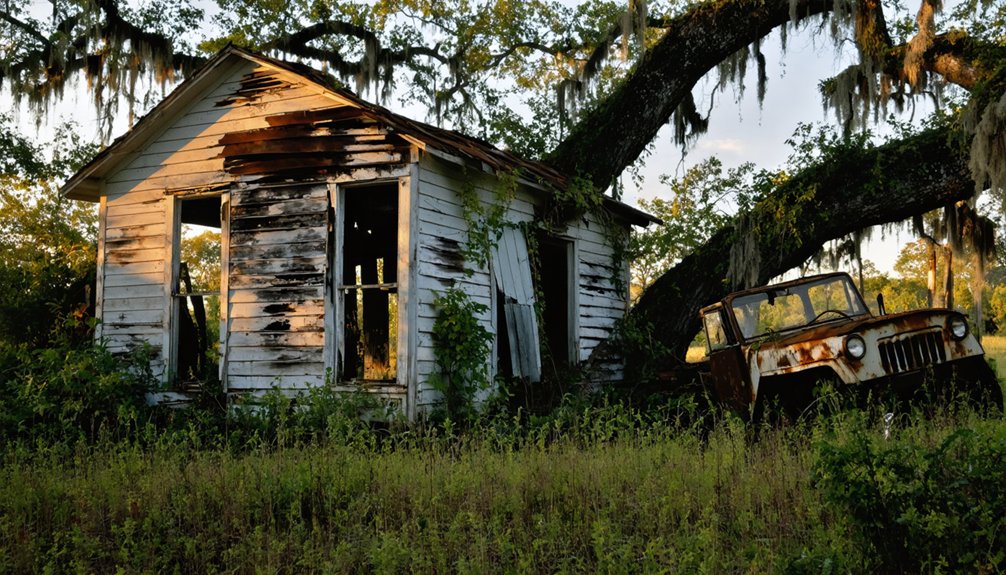
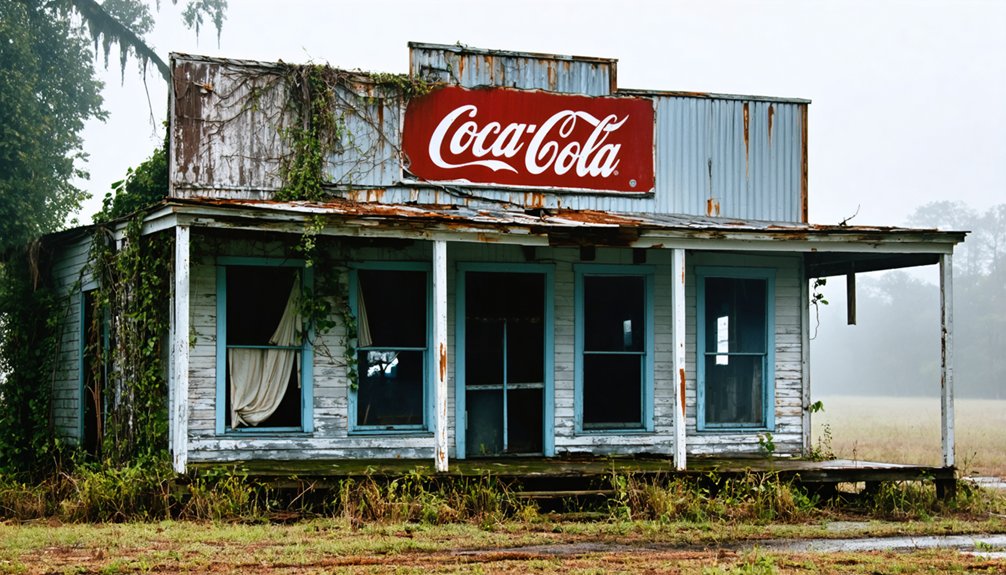
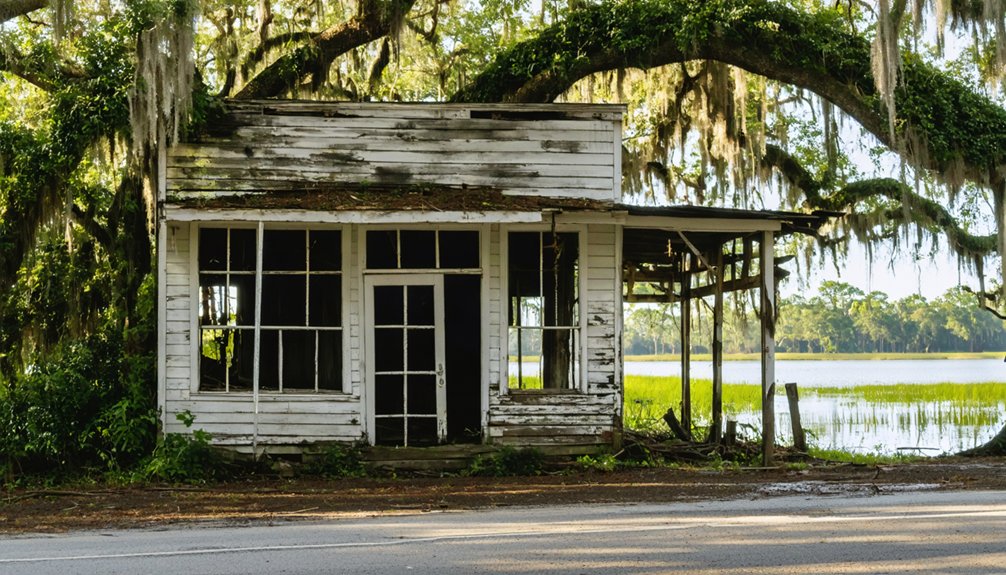
Where Ruddock once stood, you’ll find little more than swamp, silence, and the slow reclaim of nature. No buildings survive. No roads cut through. No foundations break the waterline. Vegetation overgrowth has consumed what the 1915 hurricane didn’t finish, pulling the old townsite back into the marsh with quiet permanence.
No buildings. No roads. No foundations. Just swamp, silence, and nature finishing what the hurricane started.
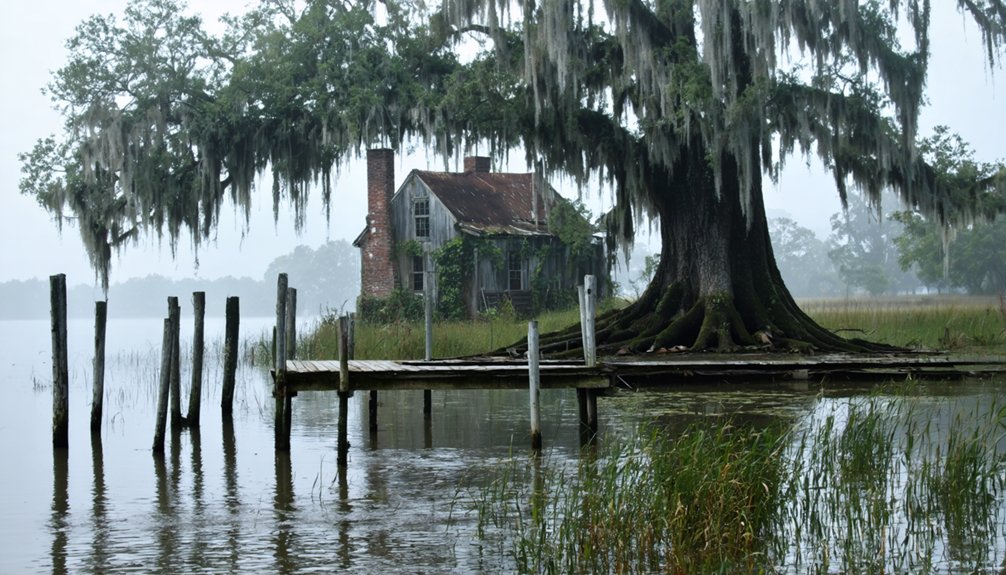
You won’t uncover historic artifacts lying in the open. Decayed wood and rotted pilings sit submerged beneath the lake edge, hidden under decades of sediment and root.
What was once a functioning community — depot, hotel, school, newspaper — now rests somewhere beneath the green tangle along Lake Maurepas.
That absence is the point. You’re standing where a town used to breathe, and nature has made sure you don’t forget who won.
The 1915 Hurricane That Destroyed Ruddock
Before September 1915, Ruddock was a living town — a depot, a hotel, a school, a newspaper, all threaded together by railroad iron and community. Then a historical storm changed everything.
The 1915 New Orleans Hurricane made direct landfall as a Category 4, carrying winds near 145 mph. It didn’t weaken Ruddock — it erased it. When the hurricane aftermath cleared, only one house remained standing.
Somewhere between 28 and 58 residents from Ruddock and neighboring Frenier lost their lives.
Workers rebuilt the railroad. Nobody rebuilt the town.
That decision sealed Ruddock’s fate permanently. What was once a thriving settlement surrendered to swamp and silence. You can still find the exit sign on Interstate 55 — but nothing behind it matches what once stood there.
How To Find the Ruddock Exit on Interstate 55
Finding what’s left of Ruddock starts with an exit that outlasted the town itself. Driving Interstate 55, you’ll spot the Ruddock sign standing where a thriving lumber community once hummed with life. That sign is fundamentally the town’s last monument — no buildings, no roads, just swamp reclaiming what the 1915 hurricane erased.
Follow these steps to make the most of your stop:
- Take the Ruddock exit and drive toward the boat launch — it’s your closest access point to the old townsite.
- Pause and look around — the overgrown lowlands hold rotted pilings and local legends stretching back generations.
- Research ghost stories beforehand, especially those tied to Julia Brown, so the landscape hits differently when you arrive.
What’s Worth Stopping For Near Ruddock
Once you’ve pulled off at the Ruddock exit, the surrounding area rewards a slower pace than most road-trippers expect. The nearby boat launch gives you a direct view of the swampy lake edge where the town once stood, and that stillness carries weight when you know what’s buried beneath it.
Frenier, just a short distance away, shares Ruddock’s hurricane history and its haunted folklore, including local legends surrounding Julia Brown, whose story still circulates among dark-tourism travelers.
The abandoned cemetery near the rebuilt railroad line is another stop worth making. Weathered markers, Spanish moss, and silence do more storytelling than any roadside plaque could. You won’t find buildings or foundations, but the landscape itself holds the memory of what the 1915 storm erased.
What To Know Before Visiting Ruddock
Ruddock doesn’t greet visitors the way most destinations do, so you’ll want to adjust your expectations before you leave the highway. There’s no welcome sign, no storefront, no paved path leading anywhere meaningful. What remains belongs to the swamp now.
Ruddock doesn’t welcome you. It simply waits, half-swallowed by swamp, indifferent to whether you arrive at all.
Before you go, keep these three things in mind:
- Wear waterproof boots — the terrain near the boat launch is soft, wet, and unforgiving.
- Bring your own research — local legends and folklore tales about Julia Brown add depth that no roadside marker will give you.
- Visit during daylight — the overgrowth closes in fast, and the light disappears earlier than you’d expect near the lake edge.
Ruddock rewards the prepared and punishes the careless.
Frequently Asked Questions
What Kind of Town Was Ruddock Before the Hurricane Destroyed It?
You’d find Ruddock was a thriving cypress lumber and railroad town, rich with historical architecture, a depot, hotel, school, and local legends — a freedom-filled frontier community destroyed by the catastrophic 1915 hurricane.
Who Was Julia Brown, and What Is Her Connection to Ruddock?
Julia Brown’s one of Ruddock’s most haunting historical figures — local community stories claim she cursed the town before dying, and the 1915 hurricane struck the very day of her funeral, cementing her eerie legend forever.
Which Parish Is the Ghost Town of Ruddock Located In?
You’ll find Ruddock’s remnants resting in St. John the Baptist Parish, Louisiana — where historical landmarks crumbled beneath storm and swamp. Roam freely through its haunting history, chasing local legends that still echo across this beautifully abandoned, forgotten frontier.
Was Ruddock Ever Rebuilt After the 1915 Hurricane Struck It?
No, Ruddock was never rebuilt after the Hurricane aftermath of 1915 claimed it. Town reconstruction simply never happened — the railroad rose again, but you’d find only swamp where that proud, thriving community once stood.
Are There Other Louisiana Ghost Towns Similar to Ruddock Worth Visiting?
You’ll find haunted legends and abandoned landmarks across Louisiana’s ghost towns. Explore nearby Frenier, forever tied to Ruddock’s tragic 1915 storm. Each forgotten settlement pulls you deeper into Louisiana’s hauntingly beautiful, historically-grounded past, offering true freedom of discovery.
References
- https://en.wikipedia.org/wiki/Ruddock
- https://hnoc.org/publishing/first-draft/julia-brown-curse-hoodoo-hurricanes-and-storm-swamped-ruddock
- https://lobservateur.com/2015/09/30/ruddock-washed-away-100-years-ago/
- https://www.youtube.com/watch?v=yxoiGQrwtas
- https://en.wikipedia.org/wiki/List_of_ghost_towns_in_Louisiana
- https://www.youtube.com/watch?v=tbfJ5o6dd1E
- https://darktourists.com/ruddock-louisiana-entire-town-destroyed-by-hurricane/
- https://www.youtube.com/watch?v=8PyqThDbJPM