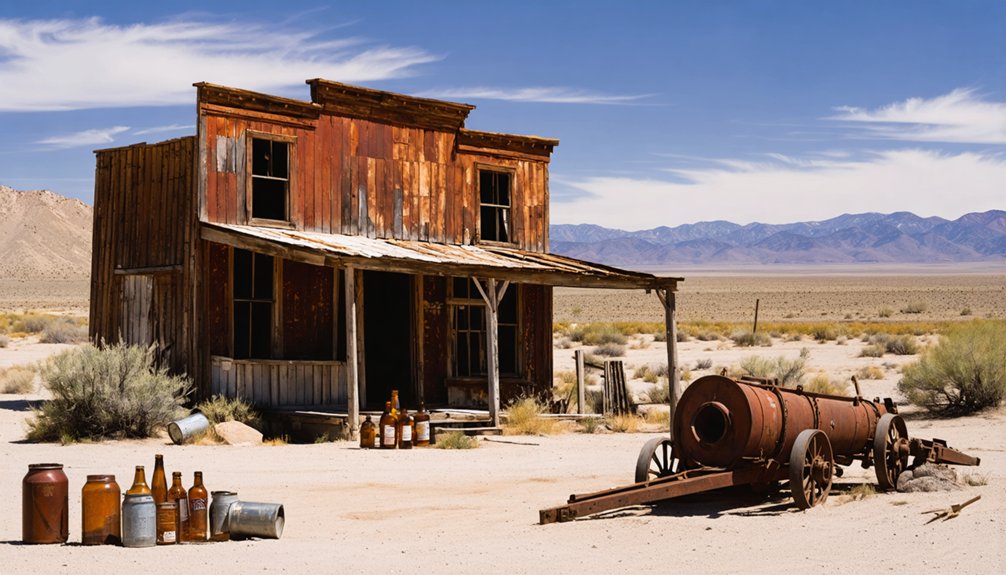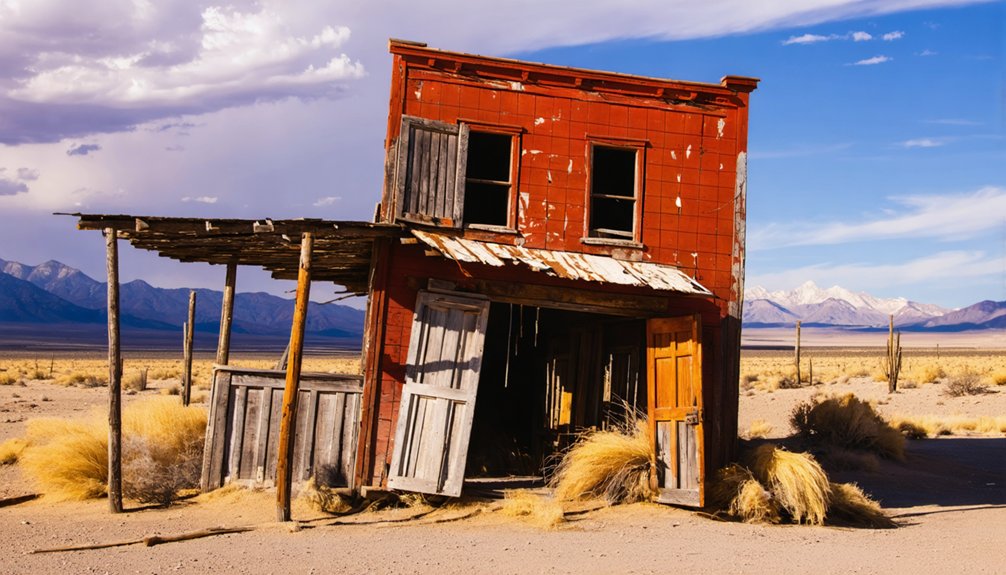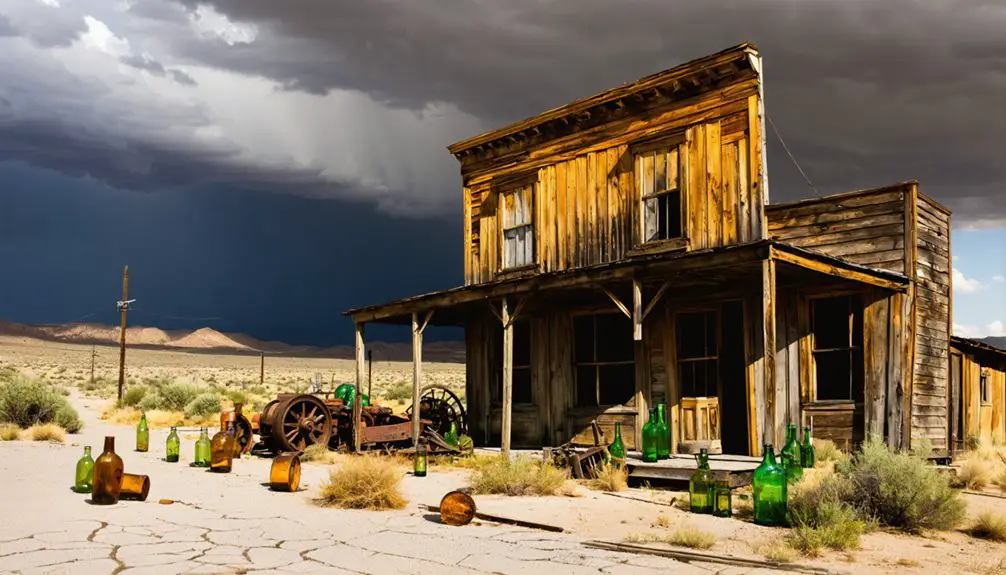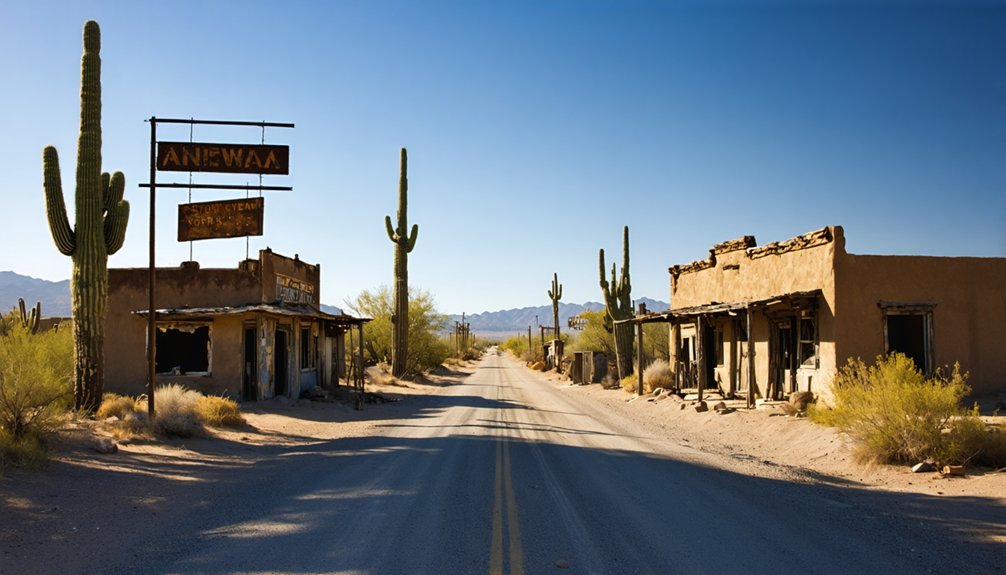
If you’re planning a ghost town road trip to Cactus Springs, Nevada, you’ll hit an immediate roadblock—it’s permanently sealed inside the Nellis Air Force Bombing and Gunnery Range. There are no tours, no permits, and absolutely no exceptions for civilians. Discovered in 1901 after a turquoise find on Cactus Peak, this forgotten mining hub represents Nevada’s classic boom-and-bust cycle. Stick around to uncover its full story, the military’s reasons for locking it down, and the best accessible ghost towns you can actually explore nearby.
Key Takeaways
- Cactus Springs is permanently inaccessible, located inside the Nellis Air Force Bombing and Gunnery Range with no tours, permits, or exceptions available.
- The site was discovered in 1901 following turquoise finds on Cactus Peak, with major silver mining operations emerging by 1904.
- Active military exercises, live bombing, and unexploded ordnance make unauthorized entry to Cactus Springs extremely dangerous for civilians.
- Alternative accessible Nevada ghost towns include Rhyolite, Belmont, Goldfield, and Berlin State Park, offering ruins and historical exploration opportunities.
- Nye County hosts more abandoned mining camps than most Nevada counties, reflecting a typical boom-and-bust frontier history shared by Cactus Springs.
Why Cactus Springs Is Nevada’s Most Restricted Ghost Town
Unlike most of Nevada’s ghost towns that you can freely wander through, Cactus Springs sits permanently off-limits inside the Nellis Air Force Bombing and Gunnery Range. The U.S. Air Force controls every inch of this restricted territory, using it for active bombing and gunnery training exercises.
Remote restrictions here aren’t bureaucratic red tape you can work around. You can’t obtain a visitor’s permit, join a guided tour, or talk your way past the perimeter. Military secrecy keeps the site completely sealed from public access, tourism, and recreational exploration under all circumstances.
What makes this ghost town uniquely frustrating is that its isolation preserves a mystery you’ll never personally solve. The history stays locked behind military fences, leaving you to appreciate Cactus Springs only from a distance.
The Mining Boom That Built and Abandoned Cactus Springs
Turquoise sparked everything. In 1901, prospectors discovered turquoise on Cactus Peak, triggering a rush that transformed this remote Nevada desert into a living, breathing community.
Turquoise hit the desert in 1901, and nothing in Cactus Peak was ever quiet again.
By 1904, they’d uncovered the Cactus Nevada Silver mine, the district’s largest operation, drawing workers and ambition into the barren landscape.
But the profits never matched the promise. Mining companies couldn’t sustain operations, and one by one, they pulled out.
The Gresham Gold Mining Company made the final attempt, working the land until 1927 before abandoning it permanently.
What remains today is silence. No mining memorabilia survives at the site, and ghost town preservation here is impossible since military restrictions keep everyone out.
The boom built this place, and the bust erased nearly every trace.
Can You Actually Visit Cactus Springs Today?
The short answer is no—you can’t visit Cactus Springs, and that’s not likely to change. The entire site sits locked inside the Nellis Air Force Bombing and Gunnery Range, where the U.S. Air Force conducts active training exercises. No public access exists, no tours run, and no exceptions apply.
Tourist safety plays a direct role here—live ordinance and military operations make the area genuinely dangerous. Preservation efforts are fundamentally irrelevant since no original structures remain standing anyway.
If you’re planning a Nevada ghost town road trip, redirect your energy toward accessible sites across Nye County. Cactus Springs exists today as a restricted memory, significant historically but permanently off-limits. Sometimes the most honest travel advice is knowing when a destination simply isn’t yours to explore.
Why the Air Force Keeps Cactus Springs Permanently Off-Limits
Even if you packed your four-wheel-drive and plotted the perfect desert route, you’d hit an immovable wall: the U.S. Air Force owns this land as part of the Nellis Air Force Bombing and Gunnery Range, and they’re not making exceptions.
The military actively uses the area for live bombing and gunnery training exercises, making unauthorized entry genuinely dangerous rather than just technically prohibited.
You won’t find a visitor’s gate, a permit process, or a workaround — the Air Force maintains strict perimeter control, and Cactus Springs stays permanently closed to the public.
Military Control Explained
While Cactus Springs holds real historical weight as a ghost town, you’ll never walk its grounds — and that’s entirely by design. The U.S. Air Force absorbed the site into the Nellis Air Force Bombing and Gunnery Range, turning a once-accessible mining district into a zone of military secrecy and restricted access.
The Air Force conducts live bombing and gunnery training exercises across this vast Nevada range, making civilian entry genuinely dangerous — not just bureaucratically inconvenient. No tourism exceptions exist. No special passes get issued. The perimeter stays locked down completely.
You value freedom, but this is one boundary that exists for real safety reasons. The military controls every inch of that land, and Cactus Springs remains permanently sealed inside it, untouchable by curious travelers.
Bombing Range Restrictions
Nellis Air Force Range doesn’t restrict access to Cactus Springs out of bureaucratic habit — it does so because the land actively serves as a live-fire training ground. Bombing and gunnery exercises happen regularly, making unauthorized entry genuinely life-threatening. You won’t find a workaround, a permit process, or a guided tour option.
The restrictions exist for several compounding reasons:
- Live ordnance testing occurs across the range without public warning
- Unexploded munitions remain scattered throughout the terrain
- Wildlife habitat and environmental preservation have become unintended benefits of exclusion
- The Air Force maintains zero tolerance for perimeter breaches
Freedom-seekers often romanticize restricted zones, but Cactus Springs represents a boundary worth respecting. The ghost town stays frozen in isolation — unreachable, unvisitable, and permanently claimed by the United States military.
No Public Access Allowed
The United States Air Force doesn’t keep Cactus Springs off-limits because of paperwork — it keeps it off-limits because the ground itself is dangerous. Active bombing and gunnery exercises happen across this range regularly, making unauthorized entry genuinely life-threatening. No permit, no petition, and no personal freedom argument will get you past that perimeter.
You won’t find an exception carved out for historical preservation enthusiasts or wildlife conservation advocates either. The military controls every access point with zero tolerance for civilian entry. Even the roads leading toward the site require clearance you simply can’t obtain as a private citizen.
Cactus Springs exists in a permanent state of isolation — untouched, unvisited, and unreachable. Sometimes the most compelling ghost towns are the ones you’ll never actually stand inside.
Accessible Ghost Towns Near Cactus Springs Worth Visiting Instead
Since Cactus Springs sits locked away inside a military bombing range with zero chance of public access, you’ll want to redirect your ghost town adventure toward Nevada’s many open and explorable alternatives. Nye County and surrounding regions offer incredible sites where you can walk freely among historical artifacts and mining remnants without restriction.
Cactus Springs hides behind military fences forever — Nevada’s other ghost towns welcome explorers with open, unrestricted access.
Consider these worthy destinations:
- Rhyolite – Stunning ruins with intact building shells and open exploration
- Belmont – A well-preserved courthouse and scattered mining remnants await discovery
- Goldfield – Historic downtown structures still standing along accessible streets
- Berlin – A state park ghost town protecting historical artifacts within walking trails
Each location delivers the authentic abandoned atmosphere you’re chasing, minus the military fence line keeping you permanently out.
Where Cactus Springs Fits in Nevada’s Ghost Town History
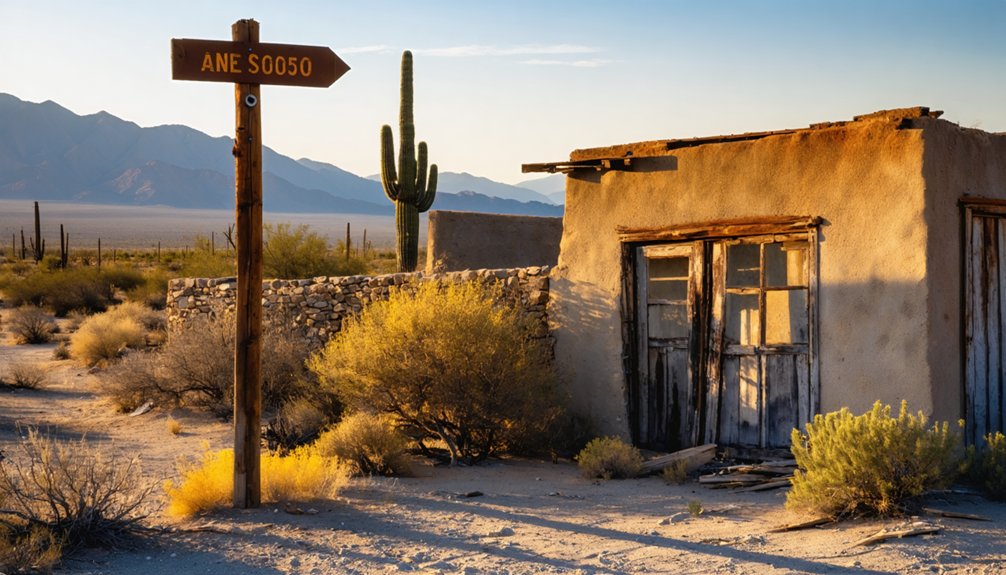
When you explore Nevada’s history, you’ll find that Cactus Springs fits squarely into the state’s pattern of mining boomtowns that rose quickly and collapsed just as fast.
Nye County alone holds dozens of ghost towns like Cactus Springs, each one a proof to the boom-and-bust cycle that defined the region’s 19th and early 20th century economy.
Understanding this broader legacy helps you appreciate why Cactus Springs, though inaccessible today, remains a historically significant piece of Nevada’s mining story.
Nevada’s Mining Boomtown Legacy
Nevada’s history is packed with mining boomtowns that blazed to life, drew thousands of hopeful prospectors, and then collapsed just as fast when the ore ran out. Cactus Springs fits squarely into this pattern, sharing DNA with dozens of abandoned Nevada communities.
You’ll find this legacy repeated across the state:
- Most towns rose and fell entirely around a single mineral discovery
- Historical artifacts from these sites reveal the human cost of boom-bust cycles
- Preservation efforts document these communities before time erases every trace
- Nye County alone contains multiple ghost towns reflecting identical decline patterns
Understanding this broader legacy helps you appreciate why Cactus Springs matters. It isn’t just an abandoned camp — it’s a frozen snapshot of ambition, risk, and the unforgiving economics that shaped the American West.
Nye County Ghost Town Context
Nye County serves as ground zero for Nevada’s ghost town story, holding more abandoned mining camps than almost any other county in the state. Cactus Springs fits naturally into this legacy, sharing its roots with dozens of similar towns that boomed, burned out, and disappeared when the ore ran dry.
You’ll find that the cultural significance of these sites runs deep — each one preserving a raw chapter of American frontier ambition. Towns like Lincoln Springs echo Cactus Springs’ mining-related decline, reminding you how quickly prosperity collapsed.
The environmental impact of decades of extraction still shapes the landscape across Nye County today. Understanding where Cactus Springs sits within this broader context transforms your road trip from simple sightseeing into a genuine encounter with Nevada’s unfiltered, independent history.
Frequently Asked Questions
What Climate Conditions Should I Prepare for When Exploring Nevada Ghost Towns?
You’ll face scorching desert survival extremes — blazing summers that’ll melt your boots and freezing winters! Always check weather forecasting apps before venturing out. Nevada’s arid ghost towns demand serious preparation for relentless heat, bone-chilling nights, and zero mercy.
Were Any Structures From Cactus Springs Ever Relocated Before Military Takeover?
You won’t find records of historical architecture being relocated before the military’s takeover. Ghost town legends suggest structures simply vanished over time, leaving you with no visible remains to discover at Cactus Springs today.
How Does Nye County Document and Preserve Its Ghost Town Heritage Officially?
Digging deep into history, Nye County’s official historic preservation efforts recognize ghost towns like Cactus Springs as significant sites. You’ll find tourism impact drives documentation through Nevada’s ghost town registry, keeping these abandoned communities’ stories alive for freedom-seeking explorers.
Did Cactus Springs Ever Have a Post Office or Official Town Designation?
The knowledge doesn’t confirm you’ll find postal service history for Cactus Springs, but its ghost town history shows it grew from mining roots, never quite establishing the official town designation needed to support a post office.
What Type of Turquoise Was Discovered at Cactus Peak in 1901?
The records don’t specify the exact turquoise type discovered at Cactus Peak. What’s fascinating is that this 1901 turquoise mining find sparked an entire district’s growth, proving mineral significance can reshape remote Nevada landscapes you’d love exploring.
References
- https://en.wikipedia.org/wiki/Cactus_Springs
- https://www.ghosttowns.com/states/nv/cactussprings.htm
- https://kids.kiddle.co/Cactus_Springs
- https://en.wikipedia.org/wiki/List_of_ghost_towns_in_Nevada
- https://www.youtube.com/watch?v=gT3l7cENHoA
- https://www.forgottennevada.org/sites/forbidden.html
- https://crystalwitnesseswonders.home.blog/2019/08/03/temple-of-goddess-spirituality-cactus-springs-nevada/
- https://www.ghosttowns.com/states/nv/nvalphabetical.html
- https://en.wikipedia.org/wiki/Category:Ghost_towns_in_Nye_County
- https://travelnevada.com/ghost-town/ghost-towns-near-las-vegas/