Planning a ghost town road trip to Cimarron, New Mexico means stepping into one of the West’s most authentically wild corners. You’ll explore bullet-scarred landmarks, walk streets where outlaws once roamed, and uncover the sprawling legacy of Lucien Maxwell’s 1.7 million-acre land grant. From Cimarron’s haunted St. James Hotel to the eerie silence of Dawson’s abandoned coal town ruins, there’s real frontier history waiting at every turn. Stick around to uncover everything this unforgettable route has to offer.
Key Takeaways
- Cimarron blends living history with frontier remnants, home to roughly 800 residents, and rich in outlaw lore and landmark architecture.
- The St. James Hotel features bullet-scarred ceilings, haunted legends, and over 26 recorded violent deaths, making it a must-visit stop.
- The Aztec Mill Museum, built in 1864 by Lucien Maxwell, preserves trade-era artifacts and regional history in a compact, informative exhibit.
- Nearby Dawson, about 17 miles east, offers a haunting ghost town experience centered around its National Register-listed cemetery.
- A two-day itinerary works well: explore Cimarron’s landmarks on day one, then drive to Dawson’s ruins and cemetery on day two.
What Makes Cimarron a Ghost Town Road Trip Worth Taking?
Though Cimarron isn’t a true ghost town, it punches well above its weight as a road trip destination, blending living history with the eerie remnants of the frontier era that once defined the American Southwest.
With a population of roughly 800 residents, it feels alive yet weathered, carrying centuries of frontier lore through its original buildings, storied landmarks, and outlaw history. You’ll find ghost town preservation woven into everyday life here — the kind of place where Kit Carson’s legacy and Lucien Maxwell’s massive 1.7-million-acre land grant still echo through every dusty street corner.
Add a side trip to the coal-era ruins of nearby Dawson, and you’ve got a road trip that delivers raw, unfiltered American history without the crowds or the tourist-trap polish.
Cimarron’s Must-See Historic Stops
When you arrive in Cimarron, three stops deserve your full attention: the St. James Hotel, the Aztec Mill Museum, and the town cemetery.
The St. James carries a bullet-scarred legacy of outlaws and frontier violence.
The 1864 Aztec Mill — built by Lucien Maxwell — now preserves the area’s trade-era history as a working museum.
The cemetery rounds out the visit by connecting you to the real human cost of Cimarron’s wild past.
St. James Hotel History
Few buildings in the American Southwest carry as much frontier mythology as the St. James Hotel. You’ll step into a space where outlaws, legends, and bullet holes still share the walls. Its historic architecture pulls you straight into the 1800s, and haunted legends keep the stories alive long after dark.
Here’s what makes the St. James worth your time:
- Over 26 men reportedly died violently within its walls
- Bullet holes remain visible in the tin ceiling of the saloon
- Figures like Jesse James and Wyatt Earp passed through its doors
- The hotel still operates, letting you sleep inside living history
- Staff and guests report unexplained activity, fueling its haunted legends
Don’t just photograph it — walk in, look up, and feel the weight of what happened there.
Aztec Mill Museum
Standing just steps from the St. James, the Aztec Mill is another landmark you can’t skip. Lucien Maxwell built this impressive stone structure in 1864, and its historical architecture still commands attention today.
The mill originally processed grain for the surrounding Maxwell Land Grant — a frontier empire stretching across roughly 1.7 million acres. Walking through it connects you directly to the raw ambition that shaped this corner of New Mexico.
Local legends tied to Maxwell and the broader Cimarron frontier era give the mill an almost mythic weight. Now operating as a museum, it houses artifacts and exhibits that flesh out the region’s trading post history.
It’s a compact visit, but it delivers real context for everything else you’ll explore in Cimarron.
Cimarron Cemetery Visit
No Cimarron visit wraps up properly without a stop at the town cemetery, where the headstones tell the frontier story more bluntly than any museum exhibit can. Its historical significance runs deep, connecting outlaws, settlers, and frontier figures whose names shaped this untamed region.
Cemetery preservation here keeps that raw history accessible and readable. Walk the grounds and you’ll find:
- Markers dating to Cimarron’s earliest settlement years
- Graves tied to gunfighters and frontier personalities
- Headstones reflecting the multicultural mix of Santa Fe Trail travelers
- Evidence of both violent and ordinary pioneer deaths
- Quiet context that sharpens everything else you’ve seen in town
Spend unhurried time here before moving on. The cemetery grounds ground you in exactly what Cimarron’s name promises — something wild and unfiltered.
The Outlaws, Land Grants, and Gunfights That Shaped Cimarron
Cimarron’s name means “wild” or “untamed” in Spanish, and the town lived up to it. This wild frontier settlement attracted outlaws, traders, and land barons who clashed violently over wealth and territory.
Lucien B. Maxwell controlled the Maxwell Land Grant, a staggering 1.7 million acres that made him one of the most powerful men in the American West. That power bred conflict.
Competing settlers, outlaw legends like those who drank at the St. James Hotel, and armed land disputes turned Cimarron into a flashpoint of frontier violence. Gunfights weren’t rare — they were routine.
As you walk these streets today, you’re standing where real battles over freedom, land, and survival played out. That history isn’t just colorful; it’s genuinely raw.
Driving From Cimarron to the Dawson Ghost Town
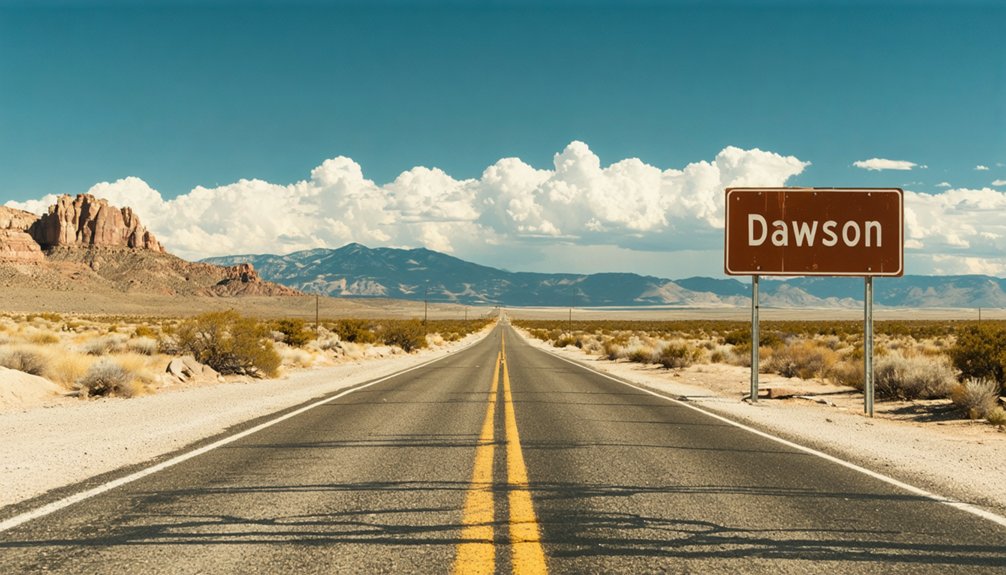
Once you’ve soaked in Cimarron’s frontier atmosphere, the ghost town of Dawson is only about 17 miles east — and the drive itself sets the tone. Head out on US-64, then turn onto A38, a dirt road that cuts through open ranch country with scenic viewpoints that feel genuinely untouched.
Before you leave Cimarron, grab some local cuisine — options are limited near Dawson itself.
Here’s what to keep in mind for the drive:
- A38 is a dirt road — check weather and your vehicle’s condition
- Watch for railroad tracks roughly 5 miles in
- Dawson is privately owned; respect posted boundaries
- The cemetery, listed on the National Register of Historic Places, is the primary accessible site
- No services exist beyond Cimarron, so fuel up first
What’s Left to See at Dawson Today?
Dawson today is more absence than presence — and that’s exactly what makes it so haunting. Most of the town was razed in 1950, so you won’t find rows of abandoned structures waiting to be explored.
What you *will* find is the cemetery, listed on the National Register of Historic Places, where rows of iron crosses mark the graves of miners killed in early 1900s disasters. It’s a sobering, powerful sight.
A few remaining artifacts and structural traces hint at the coal-boom community that once housed thousands. The Catholic Church also survived the town’s liquidation.
Keep in mind that Dawson sits on private ranch land, so access is limited. Approach the site respectfully, stay on public access points, and let the silence do the talking.
Your Two-Day Cimarron and Dawson Road Trip Plan
Two days is all you need to experience the full arc of Cimarron‘s living history and Dawson‘s haunting absence. Spend day one exploring town, and save day two for the dirt road leading to what coal and time left behind.
Day One – Cimarron:
- Walk the St. James Hotel and imagine the outlaws who passed through.
- Tour the Aztec Mill museum for Maxwell Land Grant context.
- Stop at the cemetery for frontier stories carved in stone.
- Sample local cuisine at one of Cimarron’s small, unpretentious spots.
- Catch scenic viewpoints along the canyon before sundown.
Day Two – Dawson:
- Drive NM-64 north, then turn onto A38.
- Check road conditions before heading out on the dirt stretch.
- Visit the National Register cemetery.
- Photograph the silence where 1,000 people once lived.
Frequently Asked Questions
Is Cimarron, New Mexico Safe to Visit for Solo Travelers?
Why wouldn’t you feel safe here? Cimarron’s a welcoming, small community where you’ll comfortably explore historical landmarks, enjoy local dining, and embrace the freedom of solo adventure in this charming, low-crime New Mexico destination.
Are There Camping Options Near Cimarron or Dawson?
You’ll find great camping options near Cimarron! Philmont Scout Ranch and Eagle Nest Lake offer stunning campsites with solid campsite amenities. Pack your camping gear and embrace the wild, untamed freedom this breathtaking New Mexico landscape delivers.
What Is the Best Time of Year to Visit Cimarron?
You’ll love visiting Cimarron’s historical landmarks in late spring or early fall. Seasonal weather stays mild, skies stay clear, and you’ll explore the St. James Hotel and Aztec Mill without summer crowds cramping your freedom.
Are Pets Allowed at Cimarron’s Historic Sites and Dawson Cemetery?
Before you pack up your pup, know this: pet policies and historic site regulations vary. You’ll want to check with each site directly, but Dawson Cemetery’s open terrain often welcomes leashed dogs.
Is Cell Service Reliable Along the Cimarron to Dawson Route?
Cell service along this remote route is unreliable, so don’t count on it for travel safety. You’ll want to download offline maps, charge your devices fully, and tell someone your plans before heading out.
References
- https://www.newmexico.org/places-to-visit/ghost-towns/
- http://www.ghosttowngallery.com/htme/cimarron.htm
- http://www.cimarronnm.com/ghost-hunting.html
- https://newmexiconomad.com/dawson-new-mexico/
- https://www.ghosttowngallery.com/htme/cimarron.htm
- https://www.ghosttowns.com/states/nm/cimarron.html
- https://www.newmexicomagazine.org/blog/post/explore-cimarron-new-mexico/
- https://en.wikipedia.org/wiki/Maxwell_Land_Grant