Planning a ghost town road trip to Clark, Vermont means heading deep into Essex County’s forested northeast, where a once-thriving logging and charcoal community disappeared into the wilderness. You’ll need offline maps, sturdy boots, and full supplies since cell service vanishes fast and no signs guide your way. Cellar holes and overgrown foundations are all that remain of this forgotten settlement. Stick around, and you’ll uncover everything you need to make this adventure unforgettable.
Key Takeaways
- Clark, Vermont, in Essex County, is a genuine ghost town with cellar holes and overgrown foundations hidden deep in forested terrain.
- Check road conditions before departing, as routes in sparsely populated northeastern Essex County can change rapidly and unexpectedly.
- Download offline navigation and bring paper maps, since cell service disappears quickly once you enter the remote surrounding area.
- Pack layered clothing, sturdy boots, water, extra food, and an emergency kit, as the area demands complete self-sufficiency.
- No maintained trails or signs exist; explore carefully, watching for uneven ground, root-tangled paths, and unmarked boundaries throughout.
What Is Clark, Vermont and Why Does It Matter?
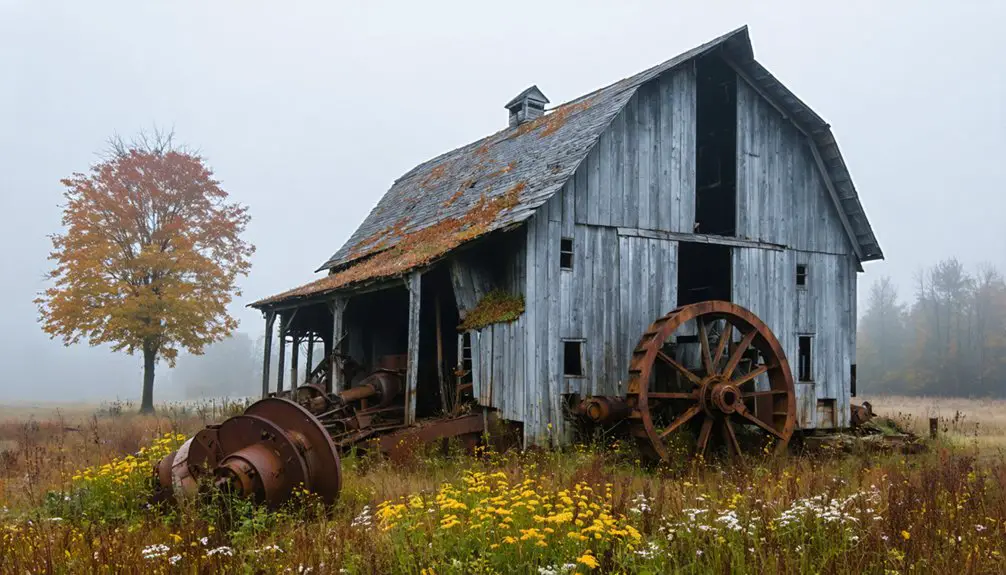
Though most travelers pass through Essex County without a second glance, Clark, Vermont rewards the curious with something far more compelling than a roadside attraction — it’s a genuine ghost town, a place where an entire community once worked, lived, and eventually vanished into the forest.
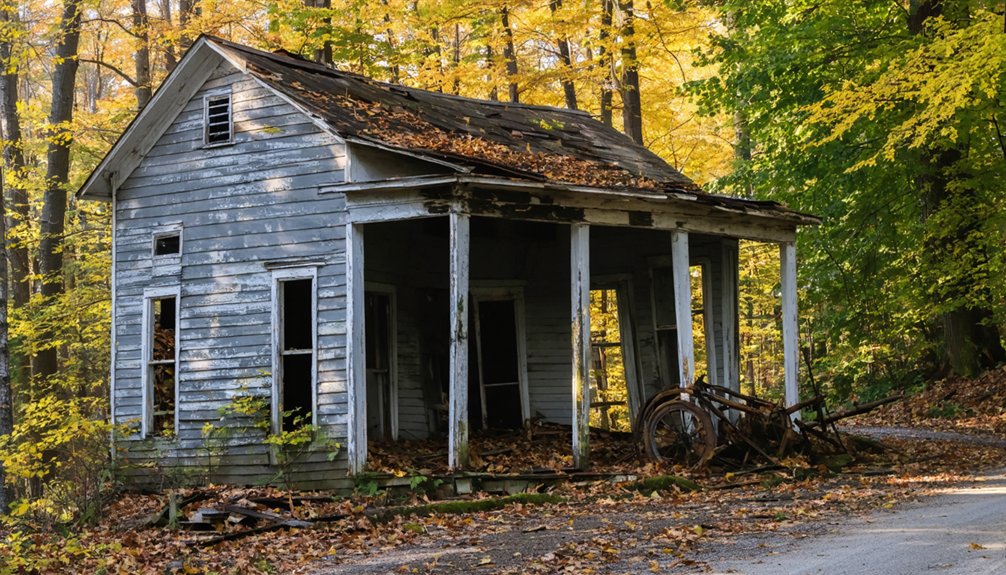
Industrial decline claimed Clark the way it claimed so many rural ghost towns across Vermont — quietly, completely, and without ceremony. What remains today isn’t a curated museum or a marked historic district. It’s raw history embedded in cellar holes, overgrown foundations, and silent terrain that once hummed with human activity.
If you’re someone who craves authentic discovery over packaged tourism, Clark offers exactly that — a direct, unfiltered encounter with a Vermont that most people never knew existed.
Why Vermont Is Full of Forgotten Towns Like Clark
Clark isn’t an anomaly — it’s a pattern. Vermont’s hills once powered entire economies built on logging, charcoal, and milling. When those industries collapsed in the late 19th and early 20th centuries, communities vanished almost overnight. Roads faded. Families left. Forests reclaimed what people had built.
Towns like Glastenbury and Somerset followed the same arc — boom, decline, abandonment. Some lost their official incorporation entirely. What remains are cellar holes, rail grades, and local legends that refuse to die quietly.
Historical preservation efforts exist, but they’re scattered and incomplete. That’s partly what makes these places magnetic — you’re reading a landscape, not a museum placard. Vermont didn’t erase these towns. It just stopped maintaining them, and now you get to find what’s left.
How to Get to Clark, Vermont
Getting to Clark means committing to a drive through northeastern Vermont’s Essex County — one of the most sparsely populated regions in the entire state. Local road conditions can shift rapidly, especially after rain or winter, so check routes before you leave civilization behind.
Pack these essentials before heading out:
- Historical maps — digital and printed versions help you identify former settlement boundaries that modern GPS won’t recognize.
- Offline navigation — cell service drops considerably once you’re deep into Essex County’s forested corridors.
- Full fuel tank and supplies — service stations are rare, and backtracking wastes daylight you’ll need on site.
Treat the drive itself as part of the experience. The thinning towns and thickening tree lines tell you exactly where you’re headed.
How to Pack Before You Leave for Clark
Packing for Clark isn’t like loading up for a weekend at a developed park — you’re heading into isolated Essex County terrain where the nearest supply stop could be an hour back the way you came. Your essential gear should include sturdy hiking boots, layered clothing, a paper map, and a fully charged battery pack.
Packing for Clark means preparing for isolation — the nearest supply stop could be an hour away.
Cell service disappears fast in northeastern Vermont’s forested terrain, so download offline navigation before you leave. Pack enough water for a full day of walking through uneven, overgrown ground.
Your emergency kit needs a first-aid kit, a flashlight, a multi-tool, and a whistle. Bring more food than you think you’ll need.
Clark rewards self-sufficient travelers — those who arrive prepared move freely through its quiet, forgotten landscape without depending on infrastructure that simply isn’t there.
What You’ll Actually Find When You Arrive
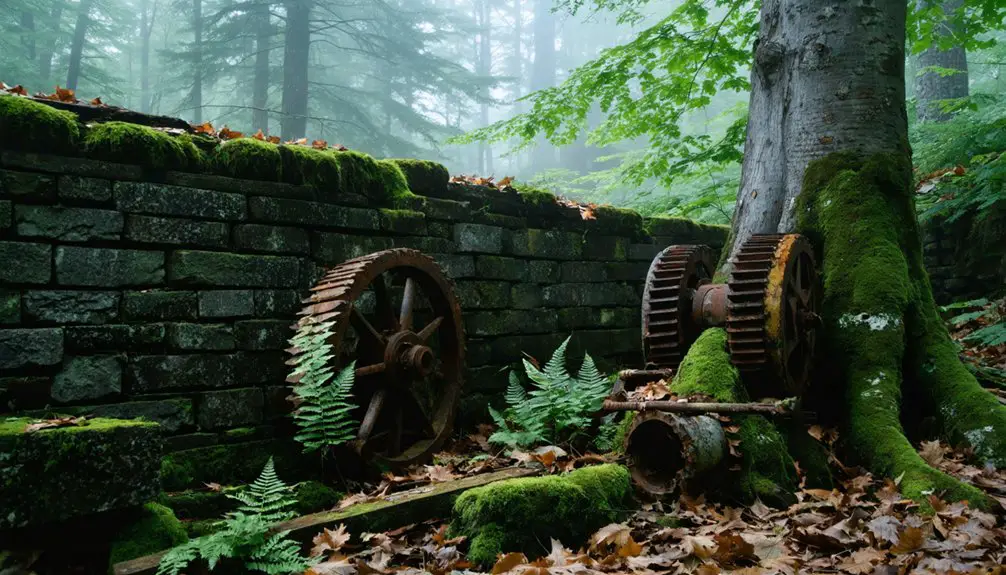
When you reach Clark, you won’t find a preserved historic district or interpretive signs — you’ll find cellar holes, overgrown foundations, and the quiet evidence of a community that simply stopped.
The terrain is rugged and forested, so expect uneven ground, root-tangled paths, and no clearly marked trails guiding you between remnants.
You’re fundamentally reading the landscape itself, piecing together what once stood from what the woods haven’t yet fully swallowed.
Ruins And Remnants
Once you pull off the road and step into Clark’s forested quiet, the landscape itself becomes the exhibit. You’ll find no interpretive signs or maintained paths — just raw, honest remnants of a life once lived here.
Look for these key historical artifacts as you explore:
- Cellar holes — stone-lined depressions marking where homes and outbuildings once stood
- Overgrown road grades — former cart paths now reclaimed by birch and fern
- Scattered structural foundations — rock arrangements that outline former industry or domestic life
Preservation efforts here are minimal, which means the site stays unfiltered and genuine. That’s the draw. You’re reading the land directly, piecing together Clark’s story through what nature hasn’t fully swallowed yet.
Tread lightly and leave everything exactly as you find it.
Terrain And Trail Conditions
Arriving at Clark means trading pavement for something far less predictable. Expect overgrown paths, uneven ground, and forested terrain that’s reclaimed what roads once existed.
Terrain difficulty ranges from manageable to surprisingly rough depending on the season, so don’t underestimate soft soil after rain or hidden cellar holes beneath leaf cover. Trail accessibility isn’t guaranteed — you may encounter fallen timber, washed-out grades, or unmarked boundaries where public land meets private property.
Wear sturdy boots with ankle support and move deliberately. You’re not following a groomed nature trail; you’re steering through a landscape that’s been slowly erasing itself for decades.
That’s exactly what makes it worth the effort. Stay alert, respect the land, and let the silence do the talking.
Ghost Towns Near Clark Worth Combining Into One Trip
Since Clark sits in Vermont’s ghost-town-rich northeast, you’d be missing out if you didn’t string a few more abandoned settlements into your route. Each nearby site adds depth through historical preservation and local legends that stretch across the region’s logging and industrial past.
Clark sits at the heart of Vermont’s ghost-town country—and the surrounding region rewards every curious traveler who wanders deeper.
- Glastenbury – Once a thriving charcoal hub, this unincorporated town rewards hikers willing to cover serious mileage through dense forest.
- Somerset – A flooded and largely erased community sitting near a reservoir, offering eerie contrast between water and former settlement.
- Greenbank’s Hollow – A quiet mill village remnant where cellar holes and overgrown paths tell a story without signage.
Linking these stops creates a full ghost-town circuit that turns your road trip into genuine exploration.
How to Visit Clark, Vermont Responsibly and Safely
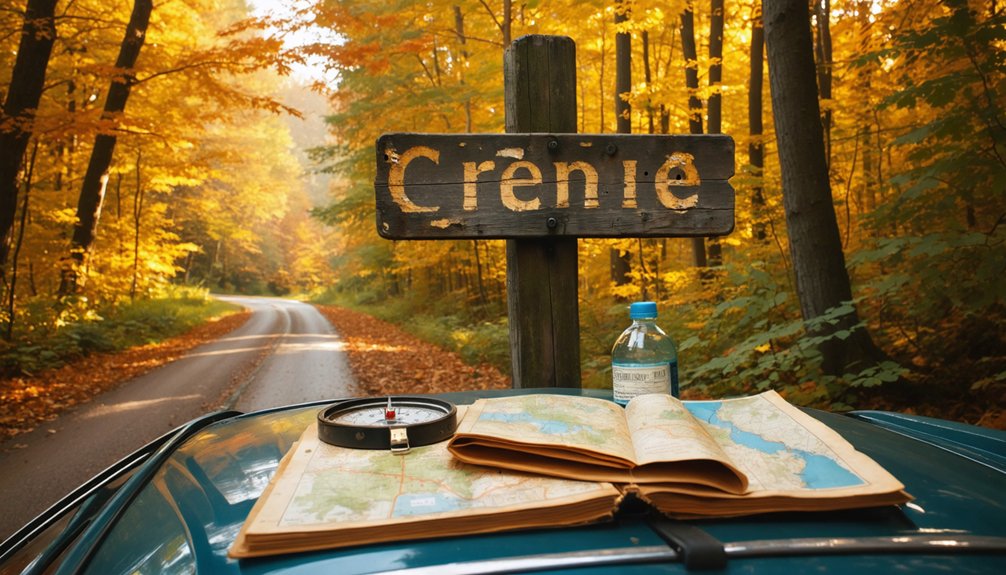
Visiting a place like Clark means accepting that the landscape won’t meet you halfway. You’re stepping into forgotten terrain, so come prepared. Bring water, food, a paper map, and offline navigation because cell service will likely disappear before you do.
Wear sturdy boots and dress in layers — Vermont weather shifts fast.
Respect what remains. Preservation efforts depend on visitors who observe without disturbing, so don’t remove relics or damage structures. Local folklore gives Clark its atmosphere, but the site itself deserves careful handling, not reckless exploration.
Stay on visible paths, watch for unstable ground, and tell someone your itinerary before heading out. Arrive with enough daylight to explore and leave safely.
Clark rewards the prepared traveler — and punishes the careless one.
Frequently Asked Questions
Is There an Entrance Fee or Permit Required to Visit Clark?
Over 80% of Vermont’s ghost towns have no formal entrance requirements! You don’t need to navigate any permit process to explore Clark — just pack your gear, respect the land, and roam freely.
What Time of Year Offers the Best Weather for This Trip?
You’ll find late summer through early fall offers the best weather, rewarding you with vibrant foliage at scenic viewpoints, active seasonal wildlife, and dry trails perfect for exploring Clark’s haunting, forgotten ruins adventurously.
Are Dogs Allowed at the Clark Ghost Town Site?
No official dog leash policies or pet friendly facilities exist here, but don’t let that stop you — you can bring your dog if you’re a responsible explorer who keeps them close on rugged, remote terrain.
Can You Camp Overnight Near the Clark Settlement Area?
You’ll need to verify local camping regulations before pitching a tent near Clark’s settlement area. Check pet policies too, since rules shift across Essex County’s remote parcels—don’t let surprises derail your wild Vermont adventure!
Is Clark, Vermont Accessible for Visitors With Mobility Limitations?
Clark’s rugged terrain and lack of accessibility features or visitor amenities make it challenging if you’ve got mobility limitations. You’ll encounter uneven ground, overgrown paths, and remote wilderness — so plan accordingly and embrace your adventurous spirit carefully.
References
- https://www.facebook.com/groups/739731312877597/posts/1232611246922932/
- https://happyvermont.com/2014/10/23/glastenbury-ghost-town/
- https://www.youtube.com/watch?v=ScW-H7A8yL8
- https://www.reddit.com/r/vermont/comments/b0b64m/glastenbury_vermont_ghost_town_hotel_casino_1898/
- https://www.youtube.com/watch?v=Mf7cQUCM3hI
- https://www.youtube.com/watch?v=6zrC4j7tGHE
- https://montpelierbridge.org/2022/10/ghost-towns-of-new-england/
- https://en.wikipedia.org/wiki/List_of_ghost_towns_in_Vermont