Creston, South Dakota is a true ghost town you can drive to via State Highway 44 southwest of Rapid City, then onto Creston Road. Built by the Milwaukee Railroad in 1907 and abandoned by 1980, it’s left behind foundations, scattered farm equipment, and a striking railroad bridge over the Cheyenne River. Summer’s your best bet for traversing the dirt roads safely. Pack smart, respect private land boundaries, and there’s far more to know before you go.
Key Takeaways
- Creston, South Dakota, is located in Pennington County at 43.91°N, -102.43°W, accessible via State Highway 44 southwest from Rapid City.
- The site features remnants like building foundations, abandoned farm equipment, and an 1907 railroad bridge over the Cheyenne River.
- Visit in summer for dry roads and favorable weather; avoid winter due to dangerous snow and cold conditions.
- Bring a high-clearance vehicle stocked with water, a spare tire, tools, and navigation equipment due to limited cell service.
- Confirm land ownership before visiting, respect private property signs, and stay cautious of wildlife, uneven terrain, and rattlesnakes.
What Made Creston, South Dakota a Ghost Town
Creston, South Dakota didn’t fade quietly — it was built by the railroad and died with it. When Milwaukee Railroad laid its tracks between Murdo and Rapid City in 1907, Creston sprang to life almost overnight. That historical significance can’t be overstated — without the railroad, there was no town.
You can still feel the cultural influence of that era when you walk the site today. The railroad gave settlers a reason to stay, build, and plant roots in this remote stretch of Pennington County.
Then the Dust Bowl hit, stripping away livelihoods and driving people out. By 1980, when the railroad finally abandoned its line, Creston had nothing left to hold onto. The town didn’t just decline — it disappeared entirely.
How to Get to Creston South Dakota
Now that you know what brought Creston to life — and what killed it — getting there is your next challenge. Forget medieval castles or modern architecture — Creston offers raw, unfiltered American history sitting quietly on the plains.
Head toward Pennington County and navigate using coordinates 43.91 latitude and -102.43 longitude. Creston Road parallels the old abandoned railroad grade, guiding you directly to the site.
Head toward Pennington County using coordinates 43.91 latitude and -102.43 longitude, where Creston Road follows the old abandoned railroad grade.
From Rapid City, follow State Highway 44 southwest through rolling hills until you reach the turnoff.
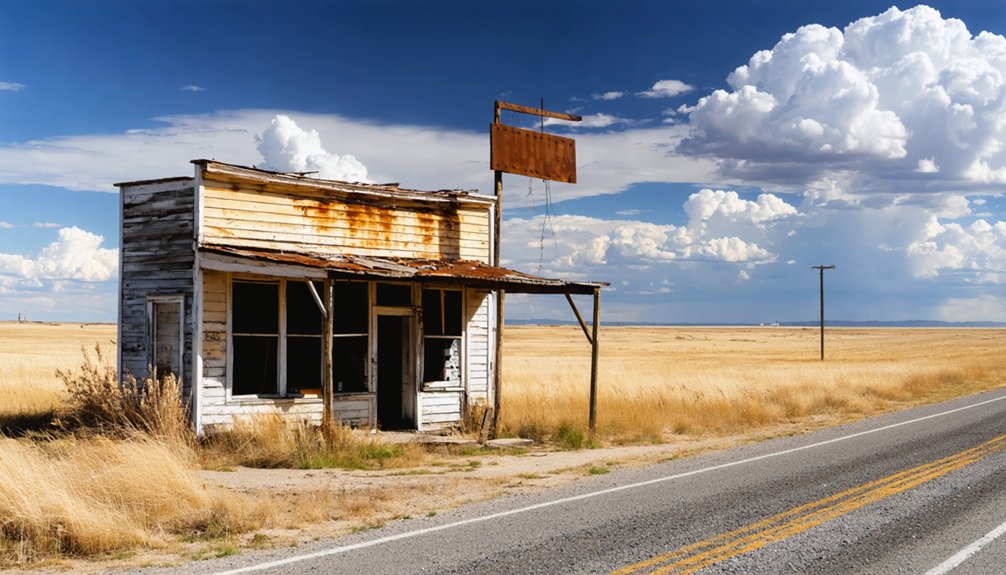
Expect a dirt road and a remote, end-of-the-road atmosphere once you’re close. A railroad bridge over the Cheyenne River confirms you’ve arrived.
Check county land management maps beforehand, respect posted signs, and secure landowner permission if your route crosses private ranch property.
What You’ll Actually Find at the Creston Town Site
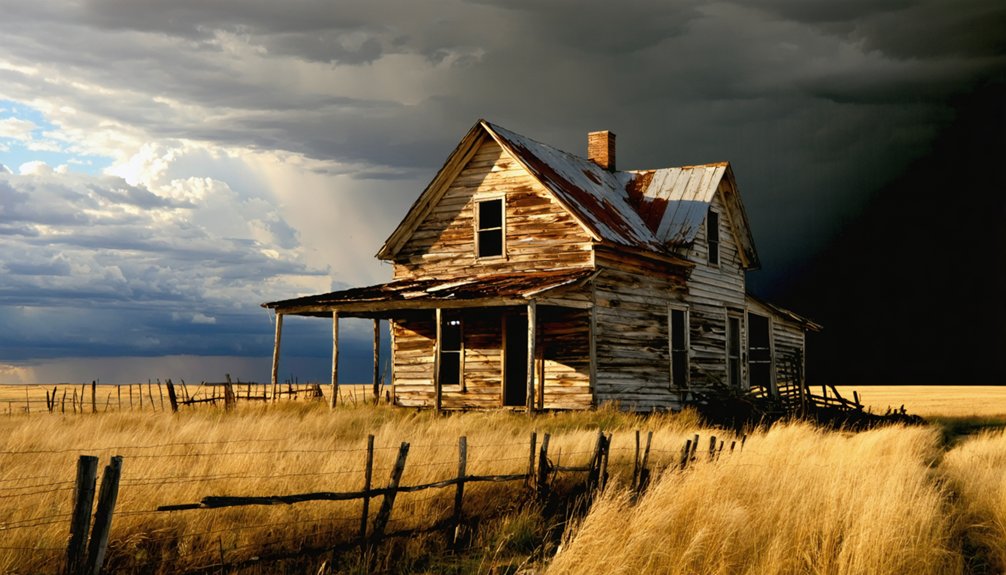
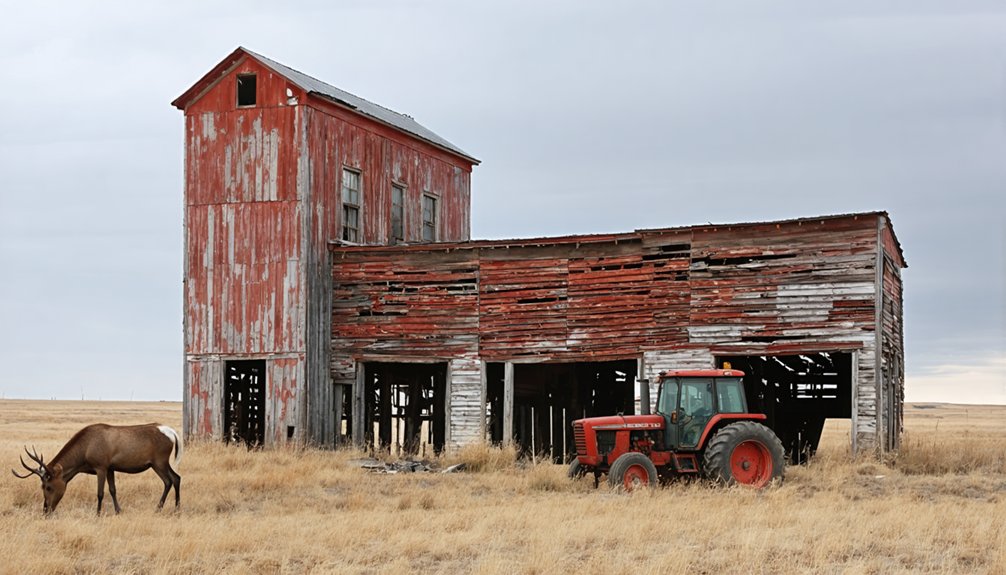
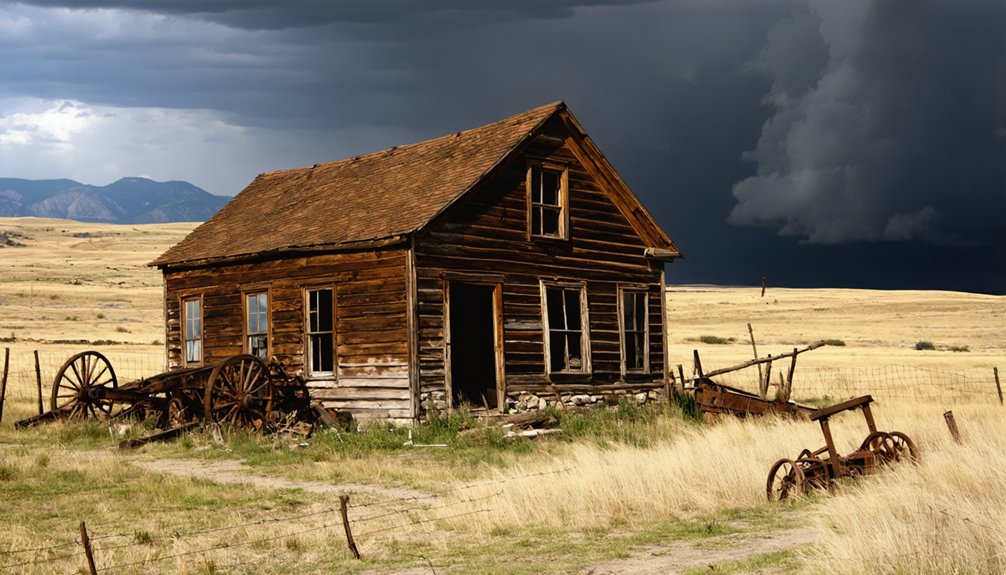
Once you step onto the Creston town site, don’t expect standing buildings or preserved storefronts — what’s left are building foundations, scattered abandoned farm equipment, and an old railroad grade cutting through the rolling hills. These historic artifacts quietly tell the story of a community that railroads built and time erased.
You’ll also notice Creston Rd paralleling the old grade, giving you a natural path to explore without getting lost. Keep your eyes open for local wildlife; deer and birds frequently roam this undisturbed landscape.
The railroad bridge over the Cheyenne River still stands nearby, offering a striking visual anchor to the site.
You’re fundamentally walking through open history here — raw, unpolished, and entirely yours to interpret without crowds or entry fees slowing you down.
Is the Railroad Bridge Still Standing?
Among the most striking remnants of Creston’s railroad era, the bridge over the Cheyenne River still stands today. You’ll find it as a powerful symbol of the Milwaukee Railroad’s ambitious reach across South Dakota’s rolling terrain.
While no formal railroad restoration effort currently protects the structure, the bridge endures as a raw testament to 1907-era engineering.
Unprotected and unrestored, the bridge stands defiantly as a raw monument to early twentieth-century engineering ambition.
Historic preservation advocates have noted its significance alongside the abandoned grade that once connected Murdo to Rapid City.
When you visit, approach with caution and respect any posted signs, as surrounding land may be privately owned.
Standing near this weathered structure, you can almost hear the freight cars rumbling across the river valley below.
It’s one of Creston’s most rewarding discoveries for anyone chasing authentic frontier history.
Who Actually Owns the Land Around Creston?
Beyond the bridge itself, knowing who controls the surrounding land shapes your entire visit to Creston. Local landownership here isn’t straightforward — some ruins sit on federal or publicly managed land, while private parcels carve up much of the surrounding territory.
Before you wander beyond the road, check county records and land management maps to confirm what’s accessible. Respecting posted signs isn’t just courtesy — it’s essential. Private ranch owners control significant portions of this area, and trespassing can cut your adventure short fast.
You’ll find that some of Creston’s most compelling remnants, including scattered farm equipment and crumbling foundations, may require landowner permission to reach. Do your homework beforehand, and you’ll move through the landscape confidently, freely, and without legal complications.
Best Time of Year to Visit Creston
Summer gives you the clearest shot at exploring Creston comfortably, with hot and dry conditions keeping the dirt roads passable and the site accessible. You’ll move freely across the terrain, spotting historical artifacts like scattered farm equipment and crumbling foundations without battling mud or snow.
The longer daylight hours give you more time to wander the abandoned railroad grade and soak in the remote atmosphere.
Avoid winter visits entirely. Cold, snowy conditions make the already isolated location genuinely dangerous, and you’ll see far less of what makes Creston worth the trip.
Spring and fall offer cooler temperatures but unpredictable weather that can wash out dirt roads quickly.
Summer also increases your chances of wildlife encounters along Rapid Creek, adding another layer to an already compelling off-grid adventure.
How Creston Compares to Other Pennington County Ghost Towns
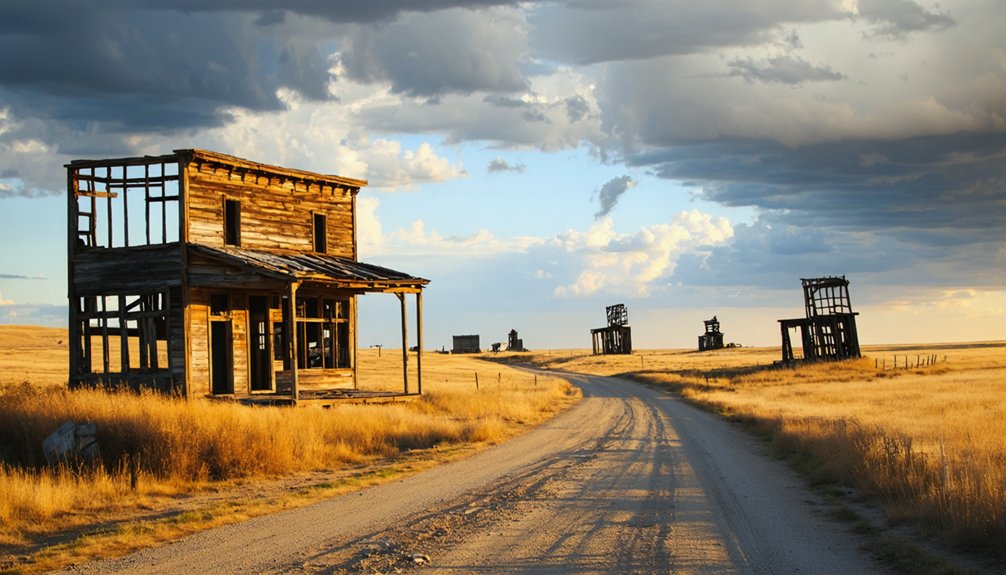
Pennington County holds more ghost towns than most visitors realize, but Creston stands apart from the rest through its rare combination of accessible ruins and intact railroad infrastructure.
While many sites have vanished beneath brush or sit locked behind private ranch gates, Creston offers you tangible evidence of its past — foundations, abandoned equipment, and a surviving railroad bridge.
Other ghost towns in the region carry stronger local legends tied to gold rushes and mineral booms, yet few preserve the railroad story as clearly as Creston does.
Preservation efforts here remain minimal, which paradoxically keeps the site raw and authentic.
You won’t find interpretive signs or guided tours — just open land, rolling hills, and a dirt road that leads you directly into history on your own terms.
What to Pack for Creston’s Dirt Roads and Extreme Weather
Creston’s unpaved Creston Rd demands a vehicle with high clearance, so you’ll want to pack extra water, a spare tire, and a basic tool kit before heading out.
You should dress in layers, since temperatures swing hard between scorching summer heat and the bitter cold that rolls across Pennington County without warning.
Sturdy boots, sun protection, and a waterproof outer shell will keep you comfortable as you explore the foundation ruins and scattered farm equipment across the site.
Essential Gear for Dirt Roads
Because Creston’s dirt roads turn unpredictable in both summer heat and winter cold, you’ll want to pack smart before heading out. Toss a full-size spare tire, jumper cables, and a basic tool kit into your vehicle before leaving pavement behind.
Creston Rd parallels the abandoned railroad grade through remote terrain where cell service disappears fast.
Carry extra water, snacks, and a paper map since GPS signals drop without warning. Sturdy boots help you navigate uneven foundation rubble and scattered farm equipment safely.
Understanding land management boundaries matters here — some ruins sit on federal public land while others occupy private ranches. Respecting posted signs supports historical preservation efforts for what little remains. Pack light, stay prepared, and you’ll move freely through this forgotten corner of Pennington County.
Dressing for Extreme Weather
Gear fills your trunk, but what you wear determines how long you’ll last out there. Creston’s climate swings hard — blistering summers and brutal winters leave unprepared visitors miserable. You’re exploring historical artifacts and open terrain, so dress smart and move freely.
- Moisture-wicking base layers — regulate temperature during hot, dry summer hikes across the abandoned railroad grade
- Sturdy, ankle-supporting boots — protect you across uneven foundations and scattered farm equipment
- Wind-resistant outer shell — prairie gusts arrive without warning across those rolling hills
- High-visibility colors — essential during wildlife encounters with deer or rattlesnakes common to the region
Layer up, strip down, adapt fast. The freedom of exploring Creston demands clothing that works as hard as you do.
Frequently Asked Questions
Are There Any Guided Ghost Town Tours Available Near Creston?
No official guided exploration exists for Creston, but you’ll find historical preservation tours throughout the Black Hills region’s 600+ ghost towns. You’re free to explore independently—just respect posted signs and seek landowner permission on private ranchland.
Can You Camp Overnight at or Near the Creston Town Site?
You’ll need to check camping restrictions carefully before staying overnight near Creston. Some land’s public, but private ranches require permission. Seek nearby overnight accommodations in Rapid City if you’re unsure about sleeping beneath those wild, starlit plains.
Is There Cell Phone Service at Creston’s Remote Location?
Sparse signals and silence surround Creston’s remote reaches — you’ll likely find little to no cell reception here. Plan ahead, as contacting emergency services could prove difficult in this beautifully isolated, freedom-filled frontier landscape.
Are Metal Detectors Allowed at the Creston Ghost Town Site?
Metal detecting regulations depend entirely on property ownership rules where you’re standing. You’ll need landowner permission on private ranches, while federal public lands have stricter guidelines. Always respect posted signs before you start detecting!
What Wildlife Might Visitors Encounter at the Creston Site?
Like whispers on the wind, wildlife thrives here. You’ll spot diverse species perfect for wildlife photography and bird watching. Deer, hawks, and prairie birds roam Creston’s rolling hills, making every visit an unexpected, thrilling natural encounter.
References
- https://www.sdpb.org/rural-life-and-history/2023-08-21/some-black-hills-ghost-towns-and-their-origins
- https://www.youtube.com/watch?v=CZsnA7GJ1Co
- https://mad-peak.com/blog-posts-and-info/f/black-hills-ghost-towns-are-real—and-you-can-ride-through-them
- https://kids.kiddle.co/List_of_ghost_towns_in_South_Dakota
- https://www.ghosttowns.com/states/sd/creston.html
- https://www.sdhspress.com/journal/south-dakota-history-2-2/some-black-hills-ghost-towns-and-their-origins/vol-02-no-2-some-black-hills-ghost-towns-and-their-origins.pdf
- https://www.atlasobscura.com/places/creston-dinosaur
- https://33travels.com/ghost-towns-in-south-dakota/