Planning a ghost town road trip to Hibernia, Ohio means heading to the intersection of East Main Street (US 40) and Noe Bixby Road, just east of Columbus near Reynoldsburg. Founded by Irish immigrant Thomas Armstrong in the 1840s, this vanished community now hides beneath an apartment complex. You’ll find Carlisle Cemetery and Hibernia Drive as the only surviving traces. Stick to accessible paths, respect the residents, and keep exploring — there’s more to this forgotten town’s story than you’d expect.
Key Takeaways
- Hibernia, Ohio, is a ghost town founded in the 1840s near Reynoldsburg, east of Columbus, accessible via US 40 and Noe Bixby Road.
- No original structures survive, but Carlisle Cemetery and Hibernia Drive remain as the primary historical landmarks worth visiting.
- The former town site is now occupied by an apartment complex, so visitors must respect private property and resident privacy.
- Stick to accessible areas like Hibernia Drive and Carlisle Cemetery, photographing responsibly without disturbing graves or removing any items.
- Extend your road trip by visiting nearby Ohio ghost towns like Lisle, Wonderland, and Helltown for a fuller historical experience.
Who Founded Hibernia and Why It Disappeared
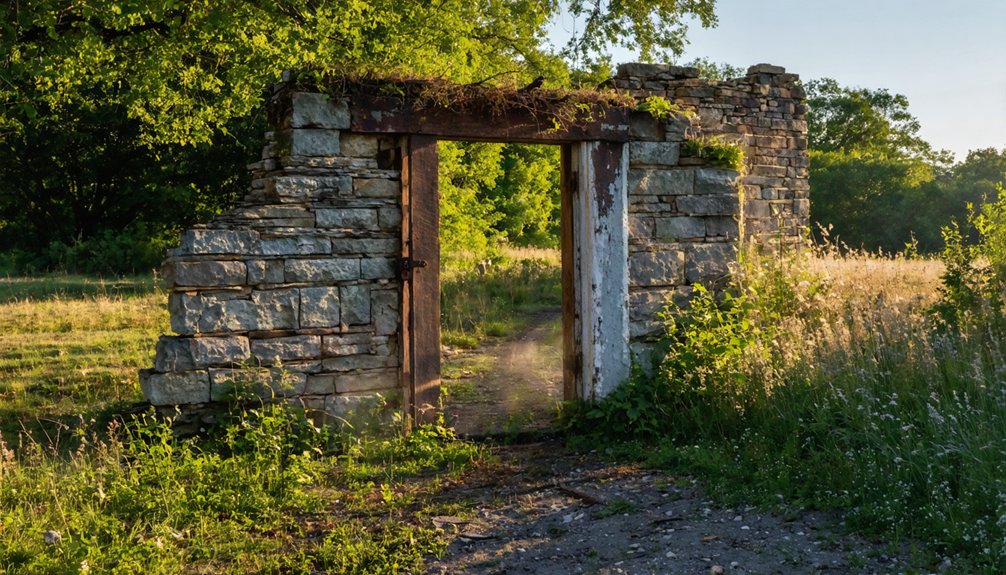
Though Hibernia never made it onto an official map, its story began with an Irish immigrant named Thomas Armstrong, who founded the settlement in the 1840s and sold the lots that gave the community its shape. Armstrong, who lived from 1769 to 1856, brought clear founding motivations to central Ohio — establishing a self-sufficient community along US 40 near Big Walnut Creek.
The town’s historical significance lies in what it briefly became: a functioning settlement with a school, hotel, grocery store, wagon shop, and blacksmith. Yet Hibernia never incorporated, and its post office closed by 1857. Without official status, the town simply faded.
Today, no original structures survive. Armstrong rests in nearby Carlisle Cemetery, the only tangible proof that this independent community ever existed.
What’s Left of Hibernia Today: The Cemetery and the Drive
What remains of Hibernia today fits inside an apartment complex — and you’d almost certainly miss it without knowing where to look. Two quiet markers anchor the ghost town’s legacy: Carlisle Cemetery and a driveway called Hibernia Drive.
Carlisle Cemetery, also known as Carlisle Garden within the complex grounds, carries the full weight of Hibernia’s historical preservation. Thomas Armstrong himself rests there alongside relatives, making the site deeply personal to the town’s origins. You can walk through the cemetery without trespassing, as it sits visible within the complex.
Hibernia Drive, the renamed entrance road, offers a small but meaningful nod to what stood here. Cemetery significance runs deep at this site — it’s the last honest proof that a real community once thrived at this crossroads.
How To Get to the Hibernia Ohio Ghost Town Site
Finding the Hibernia ghost town site is straightforward once you know what you’re actually looking for. Head to the intersection of East Main Street (US 40) and Noe Bixby Road just outside modern Reynoldsburg, inside the I-270 corridor east of Columbus. The coordinates 39.954753° N, -82.851364° W will drop you right at the spot.
You’ll find an apartment complex occupying the entire former town site. Don’t expect dramatic ruins — urban exploration here means reading the landscape carefully. Look for Hibernia Drive, the named apartment driveway, and locate Carlisle Cemetery within the grounds.
Big Walnut Creek flows nearby, grounding you in the same geography Thomas Armstrong chose in the 1840s. Local legends have faded, but the land itself still tells the story.
Can You Visit Hibernia Respectfully and Safely?
Knowing where to go is only half the equation — how you show up matters just as much. Hibernia exists on private apartment grounds, so visiting requires real awareness and cultural sensitivity toward both residents and preservation efforts.
Follow these four principles:
- Respect the residents — you’re walking through someone’s home community, not a tourist attraction.
- Stay on accessible paths — Hibernia Drive and visible cemetery grounds are your boundaries.
- Leave nothing behind — Carlisle Cemetery deserves the same dignity as any active burial site.
- Don’t disturb the cemetery — photograph freely, but never move, touch, or remove anything.
You’re not just exploring history here — you’re protecting what little of it survives. Tread lightly, stay curious, and honor the ground beneath your feet.
Which Ohio Ghost Towns Sit Close to Hibernia
Hibernia doesn’t stand alone in Ohio’s ghost town landscape — several vanished communities sit close enough to fold into the same road trip. Lisle, another forgotten settlement, rests near the Ohio State University campus, giving urban exploration enthusiasts a fascinating contrast between academic energy and buried history.
Wonderland, a vanished summer resort that once drew crowds to Jefferson and Mifflin Townships, adds a haunting leisure-era story to your itinerary. Regional local legends also swirl around Helltown, the notorious nickname for Boston Township, making it a compelling detour for anyone craving atmosphere alongside historical fact.
Stringing these stops together transforms a single afternoon visit into a full Ohio ghost town circuit, letting you cover serious ground while chasing the state’s most elusive forgotten places.
Frequently Asked Questions
Did Hibernia’s Post Office Serve a Large Surrounding Rural Population?
You’d find that Hibernia’s postal services likely supported community development by reaching surrounding rural residents, operating from 1849 to 1857 and serving travelers and locals along US 40’s bustling corridor.
What Goods Did Hibernia’s Grocery Store Typically Stock for Residents?
You’d have found typical store inventory like staple goods, dry goods, and basic provisions at Hibernia’s local grocery offerings — everyday essentials that kept frontier families and travelers fueled as they forged their independent lives along US 40.
How Many Lots Did Thomas Armstrong Sell to Establish Hibernia?
The records don’t reveal exactly how many lots he sold — that detail’s lost to time. Yet Thomas Armstrong’s sales birthed Hibernia’s ghost town preservation, creating historic landmarks you can still uncover today.
Did the Hotel in Hibernia Cater Primarily to Stagecoach Travelers?
We don’t know exactly who the hotel’s stagecoach accommodations served, but you can imagine weary travelers finding essential traveler amenities along US 40, a major route where road-worn adventurers desperately needed rest and refuge.
Was Big Walnut Creek Used Commercially by Hibernia Residents?
Like a silver highway cutting through the land, Big Walnut Creek’s historic creek significance likely drew Hibernia’s residents to commercial uses of Walnut Creek—you’d have found them fishing, milling, and powering local industry there.
References
- https://ohioghosttowns.wordpress.com/franklin-county/
- https://en.wikipedia.org/wiki/Hibernia
- https://en.wikipedia.org/wiki/List_of_ghost_towns_in_Ohio
- https://en.wikipedia.org/wiki/List_of_ghost_towns_in_Franklin_County
- https://www.youtube.com/watch?v=QWTtG6njIDs