Planning a ghost town road trip to Yatton, Iowa means tracing the footsteps of a settlement that vanished before the Civil War. You’ll find the site in Washington County, accessible via I-80 and rural county roads. Expect open fields and subtle earth depressions rather than dramatic ruins. Visit in late spring or early fall for the best conditions, bring offline maps, and respect private property. There’s far more to this forgotten landscape than first meets the eye.
Key Takeaways
- Yatton is located in Washington County, southeastern Iowa, accessible via I-80, Highway 218, and I-35 from major cities like Des Moines and Kansas City.
- Visit during late spring or early fall for mild weather, and prefer weekdays for a quieter, more solitary exploration experience.
- Bring offline maps, a first aid kit, insect repellent, snake-proof boots, and a headlamp for safe, prepared exploration.
- Nearly a dozen ghost towns, including Astoria, Lake, and Havre, lie within 60 miles of Yatton, making strategic route planning worthwhile.
- Contact local historical societies and county courthouse archives for plat maps, records, and oral histories to enrich your visit.
What Is Yatton, Iowa and Why Did It Disappear?
Tucked into the forgotten corners of Iowa history, Yatton was a small settlement that existed briefly during the 1840s before vanishing entirely — gone well before the Civil War era even began.
Unlike thriving Iowa towns that left behind historic architecture and rich local legends, Yatton disappeared without leaving much of a trace.
Where Exactly Was Yatton in Washington County?
Knowing that Yatton vanished before the Civil War raises an obvious follow-up question: where exactly did it sit? Washington County holds the answer, tucked within a region that once supported several 1840s settlements simultaneously.
Yatton disappeared before the Civil War — but its exact location in Washington County, Iowa, is still traceable.
You won’t find a street sign or municipal marker pointing the way, but tour groups and Leadership Washington classes actively explore this forgotten corridor.
Researchers have relied on archaeological artifacts — fragments of foundations, ceramic shards, and metal remnants — to pinpoint the settlement’s footprint.
Modern preservation techniques, including ground-penetrating radar and careful site documentation, help protect what little remains from further deterioration.
If you’re planning your visit, connect with local historical societies beforehand. They’ll give you precise coordinates and context, turning an otherwise invisible patch of Iowa farmland into something genuinely worth stopping for.
What You’ll Actually See When You Arrive?
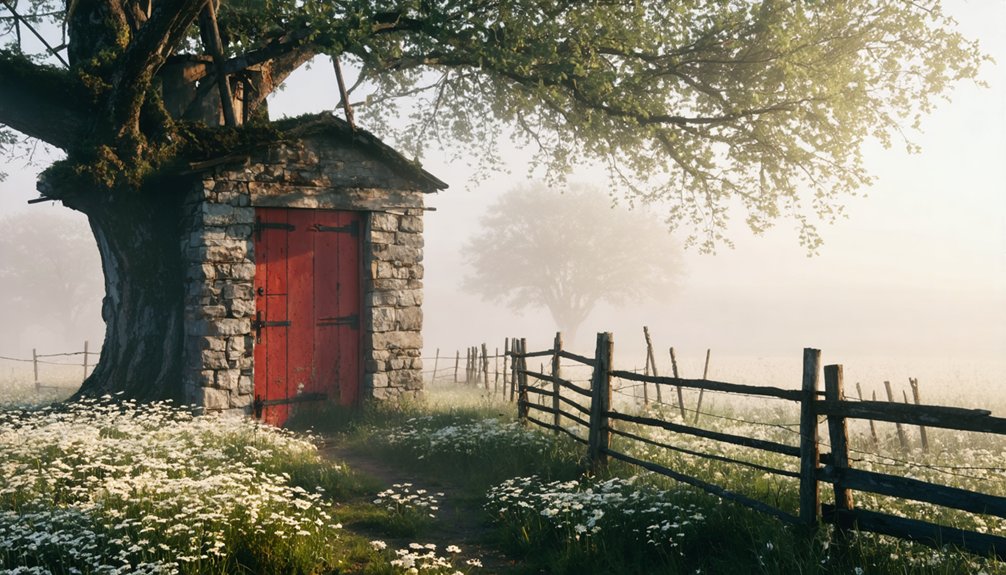
Once you reach the general area of Yatton’s former footprint in Washington County, don’t expect dramatic ruins or photogenic decay — what you’ll find is subtler than that. The land has largely reclaimed itself, leaving little trace of the 1840s settlement that once stood here.
You’ll encounter open fields, scattered vegetation, and perhaps faint depressions in the earth where structures once existed.
Historical preservation efforts haven’t prioritized Yatton, so documentation matters more than physical artifacts here. Bring a camera anyway — the quiet landscape tells its own story.
Talk to locals if you can; local legends surrounding Yatton’s disappearance vary, adding texture to your visit. The freedom of interpreting this empty space yourself is part of what makes ghost town exploration genuinely rewarding rather than scripted.
How to Reach the Yatton Ghost Town Site
To reach the Yatton ghost town site, you’ll want to set your sights on Washington County, Iowa, where the abandoned settlement once stood.
Once you’re in the county, traveling to the exact site requires some preparation, as you won’t find street signs or active roads leading directly to a long-vanished town.
Pack a detailed county map, confirm coordinates in advance, and expect to do some walking once you’ve reached the nearest accessible point.
Getting To Washington County
Washington County sits in the southeastern corner of Iowa, and getting there’s straightforward whether you’re driving from Des Moines, Cedar Rapids, or Kansas City. Each route offers open roads and scenic countryside worth exploring.
- From Des Moines: Take I-80 East to Highway 218 South — roughly 90 minutes.
- From Cedar Rapids: Head south on Highway 218 directly into Washington County — about 60 minutes.
- From Kansas City: Drive north on I-35, then cut east on Highway 92 — approximately 2.5 hours.
- Tourist safety tip: Download offline maps before departing, as rural signal coverage is unreliable.
Historical preservation efforts have marked several ghost town sites, making navigation easier once you’re in the county. Pack water, comfortable shoes, and your curiosity.
Reaching the Yatton ghost town site requires a bit of local knowledge, since no road signs mark the spot and GPS apps won’t recognize the address. You’ll need to connect with Washington County locals who carry the area’s folklore traditions in their memories rather than their smartphones. Ask around at diners or local historical societies — residents often share urban legends about the site that double as surprisingly accurate directions.
Once you’re on the right rural road, watch for subtle landscape clues: depressions in fields, unusual tree clusters, or old fence lines typically signal where a settlement once stood. Bring a detailed county map, wear sturdy boots, and respect private property boundaries.
Freedom to explore means responsibility too, so always secure landowner permission before stepping onto unmarked farmland.
Five Iowa Ghost Towns Within 60 Miles of Yatton’s Site

Once you’ve explored Yatton’s site in Washington County, you’ll find nearly a dozen documented ghost towns within a 60-mile radius worth adding to your route.
Towns like Astoria, Lake, Havre, and White Ash share Yatton’s 1840s origins and offer visible remains that bring Iowa’s abandoned settlement history to life.
Plan your driving loop strategically so you’re hitting the most historically significant sites without backtracking across the same rural roads twice.
Nearby Ghost Town Locations
Scattered across Washington County and the surrounding region, nearly a dozen ghost towns lie within 60 miles of Yatton’s former site, making this corner of Iowa a surprisingly rich destination for history-minded road trippers. You’ll find local legends tied to each abandoned settlement, and archaeological findings continue surfacing at several locations.
Prioritize these four stops:
- Astoria – A well-documented 1840s settlement sharing Yatton’s era
- Lake – Offers visible structural remains worth photographing
- Havre – Local legends here run deep among Washington County residents
- White Ash – Archaeological findings include foundations and early homestead artifacts
Each site rewards explorers who value unfiltered history. Pack a map, fuel up, and move freely through Iowa’s forgotten past on your own terms.
Historical Significance Of Sites
Historic preservation efforts have documented nearly 500 such sites statewide, giving you access to verified locations with visible remains. Cultural heritage organizations like Leadership Washington actively study these disappearing towns, connecting modern visitors to forgotten economic struggles and human decisions that shaped the region.
Towns like Astoria, Lake, Havre, and White Ash each carry unique stories — failed commerce, natural disasters, or shifting migration routes. Understanding these forces transforms your road trip from a sightseeing excursion into genuine historical discovery.
Planning Your Visit Route
Planning your route around Yatton’s former Washington County site puts you within striking distance of several companion ghost towns, each reachable within a 60-mile radius. You’ll find rich history, urban legends, and active preservation efforts scattered across the region.
- Astoria – Explore its abandoned foundations and documented folklore.
- Lake – A flood-abandoned settlement carrying haunting stories locals still whisper about.
- Havre – Preservation efforts here protect crumbling structures worth photographing.
- White Ash – Urban legends surround this site’s mysterious disappearance from county records.
Map your stops strategically, moving county road to county road. You’re fundamentally stitching together Iowa’s forgotten past into one cohesive journey.
Bring printed maps since cell service drops noticeably across Washington County’s rural stretches.
When Should You Plan an Iowa Ghost Town Road Trip?

When you’re mapping out a ghost town road trip through Iowa, timing can make or break the experience. Late spring and early fall offer the clearest conditions for exploring sites like Yatton in Washington County, where cultural preservation efforts reveal the archaeological significance of 1840s settlement patterns.
Summer heat can make outdoor exploration exhausting, while winter freezes limit access to remote sites. You’ll want mild temperatures when you’re walking abandoned grounds and photographing remnants of Iowa’s forgotten past.
Weekdays work better than weekends if you’re seeking solitude among the nearly 500 ghost town sites scattered across the state. Check local Washington County historical society schedules too — guided tours occasionally run through these areas, giving you deeper context about why settlements like Yatton simply vanished.
What to Bring for Exploring Unmarked Rural Sites in Iowa
Exploring unmarked rural sites like the former Yatton settlement demands preparation you can’t improvise on-site. Washington County’s abandoned terrain rewards the ready traveler and punishes the careless one.
Take these safety precautions seriously before you leave:
- Navigation tools – Download offline maps since cell service disappears in rural Iowa hollows.
- First aid kit – Uneven ground and deteriorating structures create real injury risks far from help.
- Wildlife awareness gear – Insect repellent and snake-proof boots protect against local wildlife common in overgrown abandoned sites.
- Daylight management – Bring a headlamp and plan your exit before dusk when visibility drops fast.
You’re stepping into forgotten history, so respect the land, move carefully, and leave every remnant exactly where you found it.
How to Find Other Lost Towns Near Yatton’s Washington County Site

Once you’ve packed your gear and mapped out Yatton’s former Washington County location, you’d be shortchanging yourself by stopping there. Iowa’s forgotten corners hold nearly 500 ghost town sites, and several once-thriving settlements share Yatton’s 1840s origins and fate.
Start by connecting with local historical preservation societies in Washington County — they maintain records, maps, and oral histories you won’t find online. Towns like Astoria, Lake, Havre, and White Ash emerged and vanished during the same turbulent era, each carrying its own local legends about why residents ultimately abandoned everything behind.
County courthouse archives offer plat maps pinpointing exact former locations. Cross-reference these with Leadership Washington educational materials documenting disappearing towns. You’ll piece together a compelling regional picture of ambition, collapse, and the raw freedom of wide-open, forgotten Iowa landscape.
Frequently Asked Questions
Is There an Entrance Fee to Visit Iowa Ghost Town Sites?
You’ll find that most Iowa ghost town sites don’t charge entrance fees, giving you free site access to explore at will. Simply drive to Washington County’s abandoned locations and you’re ready to discover history firsthand!
Are Pets Allowed When Exploring Abandoned Ghost Town Areas in Iowa?
You can bring your pets to Iowa’s ghost town sites! Always prioritize pet safety by following local leash regulations, keeping your furry companions close as you explore Yatton’s fascinating, historically rich abandoned landscapes together.
Can Children Safely Participate in Iowa Ghost Town Road Trips?
Yes, children can join your Iowa ghost town adventures! You’ll want to prioritize family safety by supervising kids near unstable structures. Embrace historical preservation by teaching them about Yatton’s fascinating 1840s heritage, creating unforgettable, freedom-filled memories together.
Do Iowa Ghost Town Sites Require Permits for Photography or Filming?
You’ll generally find no strict legal restrictions at Iowa’s ghost town sites, but always check photography permissions with local authorities first. Public land’s typically free to capture, while private property requires owner approval before you start filming!
Are There Guided Tours Specifically Focused on Washington County Ghost Towns?
You’ll find guided tours in Washington County that embrace historical preservation and uncover local legends of vanished settlements. Leadership Washington classes actively explore these forgotten sites, letting you roam freely through Iowa’s haunting, abandoned past.
References
- https://en.wikipedia.org/wiki/Yatton
- https://www.youtube.com/watch?v=YDd_wn2B2js
- https://www.thevintagenews.com/2015/12/30/10-abandoned-and-creepy-ghost-towns-in-iowa/
- https://washingtoniowa.gov/city-of-washington/leadership-washington-class-explores-washington-county-history/