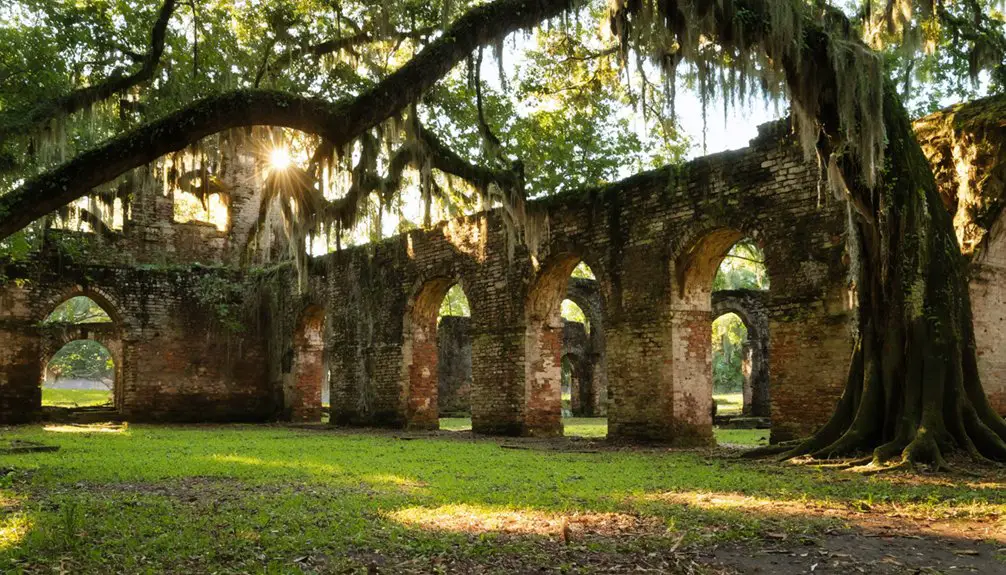
Planning a ghost town road trip to Diamond City, North Carolina, starts before you ever hit the road — because you can’t drive there at all. Located on Shackleford Banks in Carteret County, this former maritime community of 500 residents was destroyed by an 1899 hurricane and completely abandoned by 1902. You’ll need a ferry or private boat from Harkers Island to reach it. Stick around, and you’ll uncover everything you need to make this unforgettable trip happen.
Key Takeaways
- Diamond City, located on Shackleford Banks, North Carolina, is an abandoned ghost town accessible only by ferry or private boat from Harkers Island.
- The town was completely abandoned by 1902 after a devastating 1899 hurricane destroyed homes and shattered the local maritime economy.
- No standing structures remain; scattered family graveyards are the only physical remnants amid wild grass and shifting coastal sands.
- Visit during spring or early fall for mild weather, active wildlife, and reliable ferry schedules; avoid winter for harsh conditions.
- Pack water, food, sun protection, and sturdy footwear, as the site is undeveloped with no marked trails or facilities.
What Is Diamond City, North Carolina?
Once a thriving maritime community on North Carolina’s Shackleford Banks, Diamond City was home to roughly 500 residents who built their lives around fishing, whaling, shipping, and boat-building in the late 1800s.
Nestled on the eastern end of Shackleford Banks in Carteret County, it stood as one of the region’s most active coastal settlements.
Today, it’s a ghost town swallowed by shifting sands and wild barrier-island terrain, leaving behind little more than scattered traces and rich local folklore.
If you’re drawn to places where maritime history runs deep and nature has quietly reclaimed what people left behind, Diamond City belongs on your radar.
No roads reach it, no buildings remain, but the story it carries makes the journey absolutely worth it.
The 1899 Hurricane That Destroyed Diamond City
When the hurricane of August 1899 slammed into Shackleford Banks, it didn’t just damage Diamond City—it broke the community’s will to stay. Coastal erosion had already threatened the land, but this storm made rebuilding feel impossible.
The hurricane of 1899 didn’t just destroy Diamond City—it destroyed the community’s reason to stay.
The hurricane delivered three crushing blows:
- It destroyed homes, leaving roughly 500 residents without stable shelter.
- It accelerated coastal erosion, making the island’s long-term survival uncertain.
- It shattered the maritime economy that fishing and whaling families depended on.
Rather than rebuild, residents made a remarkable choice—they loaded their houses onto boats and relocated to Harkers Island, Morehead City, and Salter Path.
Urban legends suggest some families left almost overnight. By 1902, Diamond City was completely empty, and the barrier island quietly reclaimed what remained.
Why Diamond City Is Considered a True Ghost Town
When you visit Diamond City, you’re stepping into one of North Carolina’s most thoroughly erased communities. By 1902, every last resident had packed up and left, leaving the island completely abandoned.
What makes this ghost town especially remarkable is that residents didn’t just walk away from their homes; they actually hauled their houses off the island and relocated them to places like Harkers Island and Morehead City.
Today, you won’t find a single standing structure at the site — just wild, shifting coastal terrain that’s swallowed nearly every trace of the 500 people who once called this place home.
Complete Community Abandonment
By 1902, Diamond City had gone completely silent — not through slow decline, but through a deliberate, collective departure that left the island entirely empty. No urban development replaced what the storm destroyed. No economic decline dragged the town out slowly. Residents simply chose to leave on their own terms.
What made the abandonment so complete came down to three decisive factors:
- The 1899 hurricane destroyed homes and shattered the community’s confidence in island life.
- Residents physically relocated their houses by boat to Harkers Island and Morehead City.
- The last holdouts departed by 1902, leaving zero permanent occupants behind.
You won’t find another ghost town story quite like this one — where an entire community packed up, moved out, and never looked back.
Residents Relocated Entire Homes
What separates Diamond City from nearly every other ghost town in America is the sheer audacity of how its residents left. They didn’t walk away empty-handed. They dismantled their homes, loaded them onto boats, and carried entire structures across the water to Harkers Island and Morehead City.
That kind of determined departure is something maritime archaeology rarely documents so clearly. Residents refused to abandon what they’d built, even as coastal erosion and the 1899 hurricane made staying impossible.
You won’t find that story replicated anywhere else on the Outer Banks. When you visit today, you’re standing in a place where an entire community literally picked up and moved.
The land remembers nothing. That erasure is exactly what makes Diamond City unforgettable.
No Structures Remain Today
Those relocated homes left behind something just as striking as their departure: absolute emptiness. You won’t find crumbling walls or weathered storefronts here. The shifting sands and relentless coastal forces erased nearly every trace, making Diamond City one of North Carolina’s most completely vanished communities.
What you’ll actually encounter reflects that erasure clearly:
- No standing structures survive from the original settlement
- Scattered family graveyards represent the only documented physical remnants
- Wild barrier-island terrain has reclaimed the entire townsite
Despite ongoing preservation efforts and the urban legends surrounding its dramatic exodus, the landscape offers no architectural reward. You’re fundamentally visiting an idea more than a place. That raw, unfiltered emptiness is precisely what makes Diamond City so compelling for anyone craving authentic, unscripted history.
How to Reach Diamond City by Ferry or Boat
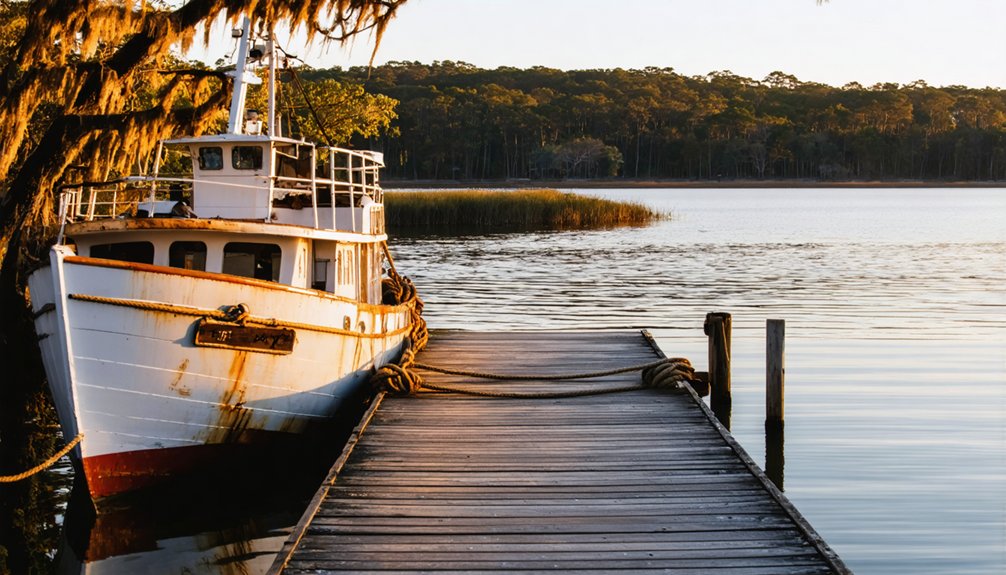
Since no bridge connects to Shackleford Banks, you’ll need to plan your arrival by ferry or private boat before heading out.
Check Cape Lookout National Seashore’s current ferry schedules in advance, as departure times and seasonal availability vary and can affect your entire trip.
If you’re launching your own vessel, identify nearby boat ramps along the Carteret County coast and confirm entry requirements for the national seashore before casting off.
Ferry Schedule And Access
Because Diamond City sits on Shackleford Banks, you can’t simply drive there — reaching the site requires a ferry or private boat. Cape Lookout National Seashore ferry schedules shift seasonally, so checking current departure times before you go keeps your trip on track.
Here’s what to plan around:
- Ferry schedules run primarily from Harkers Island and operate on seasonal timetables — confirm availability before committing to a date.
- Boat rental gives you flexible departure times and lets you explore the banks at your own pace, though ferry safety requirements still apply regardless of vessel type.
- Weather windows matter on open water — rough conditions can cancel or delay crossings unexpectedly.
Arriving prepared means you’ll spend more time exploring and less time troubleshooting logistics on the water.
Private Boat Launch Options
Travelers who prefer flexibility over a fixed ferry timetable can launch a private boat from Harkers Island, which sits directly across from Shackleford Banks and offers the most practical put-in point for reaching Diamond City’s general site.
The crossing is short, and you’ll control your own schedule entirely. Once you land on the banks, you’re steering through undeveloped coastal terrain shaped by decades of coastal erosion, so expect shifting sands and no marked paths.
Historical preservation efforts focus on documentation rather than on-site markers, meaning the landscape itself tells the story through absence.
Check current National Seashore regulations before launching, as permit requirements may apply. Bring navigational tools, since no infrastructure guides you once you’re ashore.
This route rewards self-sufficient travelers willing to engage directly with raw, unmediated coastal history.
Cape Lookout Seashore Entry
Whether you’re arriving by passenger ferry or private vessel, reaching Diamond City means crossing water—there’s no road, no bridge, and no shortcut to Shackleford Banks. Cape Lookout National Seashore manages access, so knowing the entry basics saves you time.
Before you cross, confirm these three things:
1. Check ferry schedules — seasonal operators run from Harkers Island and Beaufort, but hours shift throughout the year.
22. Review seashore regulations — the park protects local wildlife, including wild horses and nesting shorebirds.
3. Understand the terrain — coastal erosion has reshaped the shoreline considerably, so landing points may differ from older maps.
Once ashore, you’ll find an untamed barrier island with no standing structures. That raw, windswept freedom is exactly what makes Diamond City worth the crossing.
What You’ll Find at the Diamond City Site Today
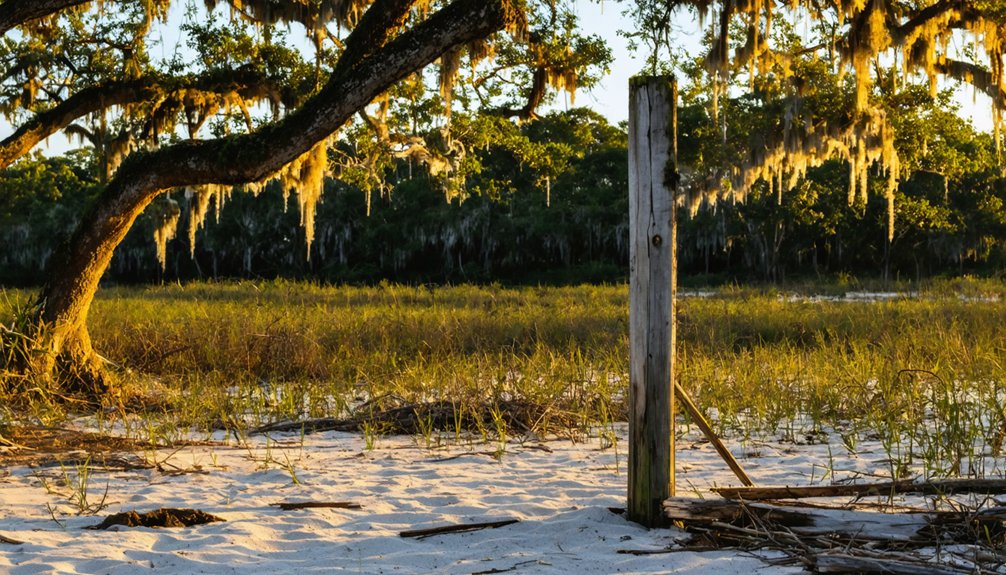
When you step off the ferry onto Shackleford Banks, you won’t find a single standing structure from Diamond City’s past. Coastal erosion and shifting sands have reclaimed nearly everything, leaving only wild, undeveloped terrain stretching toward the waterline.
Shackleford Banks holds no trace of Diamond City — only wind, wild grass, and the silence of a vanished world.
What remains belongs more to local folklore than to visible history — scattered traces of family graveyards and the quiet knowledge that roughly 500 people once built lives here.
That absence is actually the point. You’re standing inside a landscape that swallowed an entire town whole.
The national seashore protects the site from development, so what you experience is raw barrier-island wilderness — wind, sea grass, and open sky.
Bring your curiosity and a sense of adventure, because Diamond City rewards imagination far more than it rewards a camera.
Is Diamond City Worth the Trip?
Getting to Diamond City isn’t easy—you’ll need to arrange boat or ferry access to Shackleford Banks since no road or bridge reaches the site.
Once you arrive, you won’t find standing buildings or interpretive markers, just a wild, shifting barrier-island landscape where a 500-person community once thrived.
If you’re drawn to coastal history and the rare story of a town that literally moved away after disaster, that challenge is absolutely worth it.
Remote Access Challenges
Reaching Diamond City isn’t as simple as plugging an address into your GPS and hitting the road. Shackleford Banks has no bridge, no parking lot, and no welcome sign. You’ll need to plan your water access carefully before you go:
- Book a private boat or passenger ferry departing from Harkers Island or nearby docks.
- Check Cape Lookout National Seashore’s current ferry schedules and seasonal availability.
- Prepare for an undeveloped shoreline shaped by coastal erosion, shifting sand, and local wildlife.
Once you arrive, you’re walking untamed barrier-island terrain with no marked trails or structures guiding your path. That raw freedom is exactly the point. Diamond City rewards the traveler willing to work a little harder for something genuinely off the beaten path.
Historical Rewards Await
What do you get in exchange for the logistical effort? You get one of North Carolina’s most compelling ghost-town stories wrapped inside a pristine barrier-island landscape.
Diamond City isn’t a reconstructed attraction — it’s a place where local legends grew from real loss, where nearly 500 people dismantled their lives after an 1899 hurricane and physically carried their homes away. That human drama runs beneath every stretch of sand you’ll walk.
Maritime archaeology enthusiasts will appreciate knowing that traces of the town’s past — including scattered family graveyards — still exist within this shifting coastal terrain.
You’re stepping into a layered history of whaling, fishing, and survival. For travelers who crave raw, unscripted destinations, Diamond City delivers something rare: a story the land itself quietly tells.
Best Time to Visit Diamond City on Shackleford Banks
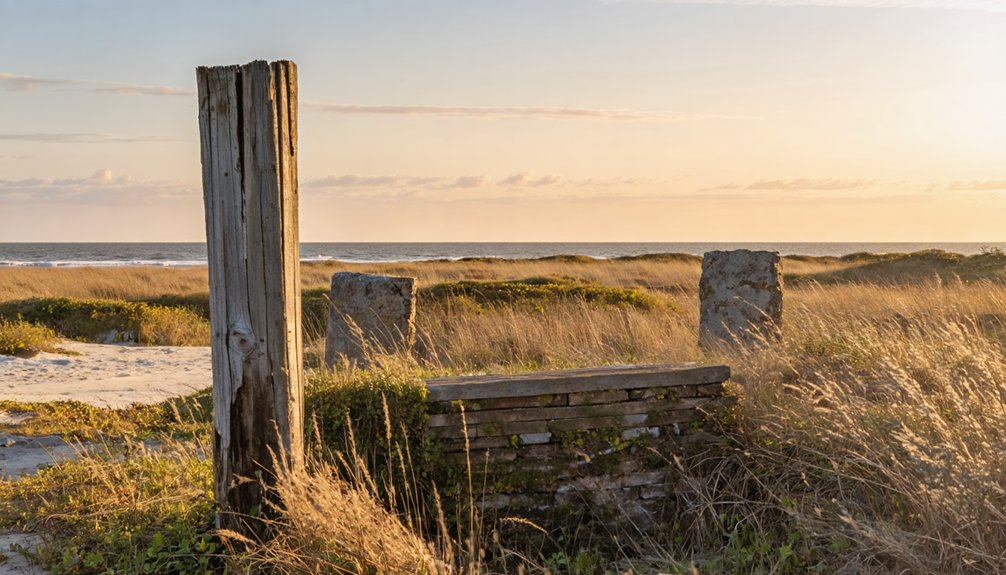
Since Diamond City sits on an undeveloped barrier island with no road access, timing your visit around weather and ferry schedules makes a notable difference. Plan smart and you’ll get the most from this coastal ghost town experience.
Diamond City rewards the prepared traveler—check ferry schedules and weather before you go.
- Spring (April–May): Mild temps, manageable crowds, and active local wildlife make exploration rewarding before summer heat peaks.
- Early Fall (September–October): Cooler conditions return, but always check hurricane forecasts—the same storms that erased Diamond City still threaten the coast.
- Avoid Winter: Reduced ferry schedules and harsh coastal winds limit access considerably.
Coastal erosion continues reshaping Shackleford Banks, so conditions shift year to year. Check Cape Lookout National Seashore‘s ferry schedule and weather advisories before committing to a date.
You want open water, stable skies, and enough daylight to explore freely.
How to Plan Your Diamond City Day Trip
Once you’ve locked in the right season, the next step is building a day trip that actually works for a site with no roads, no buildings, and no on-island services.
Book your ferry or arrange a private boat to Shackleford Banks before anything else, since that single step controls your entire schedule. Arrive early to maximize exploration time across the coastal ecology of shifting sands, maritime shrub, and wild shoreline that now covers Diamond City’s former footprint.
Bring water, food, and sun protection because you’re fully on your own out there. Research the local folklore beforehand so the landscape carries meaning when you’re standing on it. There’s nothing to read on-site, so your preparation becomes the experience.
Keep return ferry times visible and don’t cut it close.
Nearby Carteret County History Sites Worth Adding to the Visit
After crossing back from Shackleford Banks, you’ll find Carteret County holds enough maritime history to fill the rest of your day. The region’s coastal heritage runs deep, blending local folklore with serious maritime archaeology that rewards curious travelers.
Carteret County’s coastal heritage runs deep — blending local folklore with maritime archaeology that rewards the curious traveler.
Consider adding these stops:
- Core Sound Waterfowl Museum & Heritage Center – Harkers Island’s cultural anchor celebrates the same communities that fled Diamond City in 1902.
- North Carolina Maritime Museum in Beaufort – Covers regional boat-building, shipwrecks, and archaeological discoveries pulled from coastal waters.
- Beaufort Historic Site – Walking distance from the waterfront, it connects local folklore to tangible colonial-era structures.
Each location builds on Diamond City’s story, giving you the broader context that a bare barrier island simply can’t provide anymore.
What to Pack for a Barrier Island Visit
Because Shackleford Banks offers no facilities, no shade structures, and no shops, you’ll need to pack carefully before boarding the ferry. This wild coastal environment rewards preparation and punishes carelessness. Bring more water than you think you’ll need, sun protection, sturdy footwear for shifting sand, and insect repellent. A hat and lightweight layers handle the unpredictable barrier-island wind better than anything else you’ll reach for.
Since you’re walking ground tied to maritime history, consider bringing a field guide or downloaded historical maps to orient yourself without relying on cell service.
A dry bag protects your gear during water transit. Pack snacks, a basic first-aid kit, and a charged battery pack.
Treat this trip like a backcountry excursion, because that’s fundamentally what it is.
Frequently Asked Questions
Did Diamond City Residents Take Their Homes With Them When They Left?
Yes, many residents actually took their homes with them! You’ll find this act of historic preservation remarkable — families physically relocated their houses, carrying community stories across the water to Harkers Island and Morehead City after 1899’s devastating hurricane struck.
Are There Any Graveyards Still Visible at the Diamond City Site?
Like whispers of ancestors calling through shifting sands, you’ll find scattered family graveyards during your cemetery exploration — faint echoes of historical preservation. These rare traces remain, quietly marking where Diamond City’s soul once thrived before the sea reclaimed its freedom.
How Many People Lived in Diamond City Before the 1899 Hurricane?
You’d find around 500 residents once called Diamond City home before the 1899 hurricane. While the town’s historic architecture is long gone, local legends keep the memory of this thriving maritime community alive.
Is Diamond City Accessible Year-Round or Only Seasonally?
You can visit year-round, but it’s no easy drive—you’ll need a boat or ferry to reach this remote historical preservation site. Before exploring these unique tourist attractions, check Cape Lookout National Seashore’s current ferry schedules and seasonal conditions.
Where Exactly Did Diamond City Residents Relocate After Abandoning the Island?
After the 1899 hurricane’s devastation, you’ll find the local folklore fascinating — residents actively relocated to Harkers Island, Morehead City, and Salter Path, carrying their urban legends and even their houses with them to mainland communities.
References
- https://northcarolinaghosts.com/coast/the-ghost-lights-of-dymond-city/
- https://www.wral.com/news/state/6-eerie-ghost-towns-north-carolina-june-2026/
- https://en.wikipedia.org/wiki/Diamond_City
- http://daresociety.blogspot.com/2009/07/another-ghost-town-diamond-city.html
- https://en.wikipedia.org/wiki/List_of_ghost_towns_in_North_Carolina
- https://www.youtube.com/watch?v=1nE7wiYk4m4
- https://www.youtube.com/watch?v=HcP07R3jsBY
- https://www.onlyinyourstate.com/experiences/north-carolina/nc-ghost-towns
- https://www.youtube.com/watch?v=UAaBj0M8Ogk