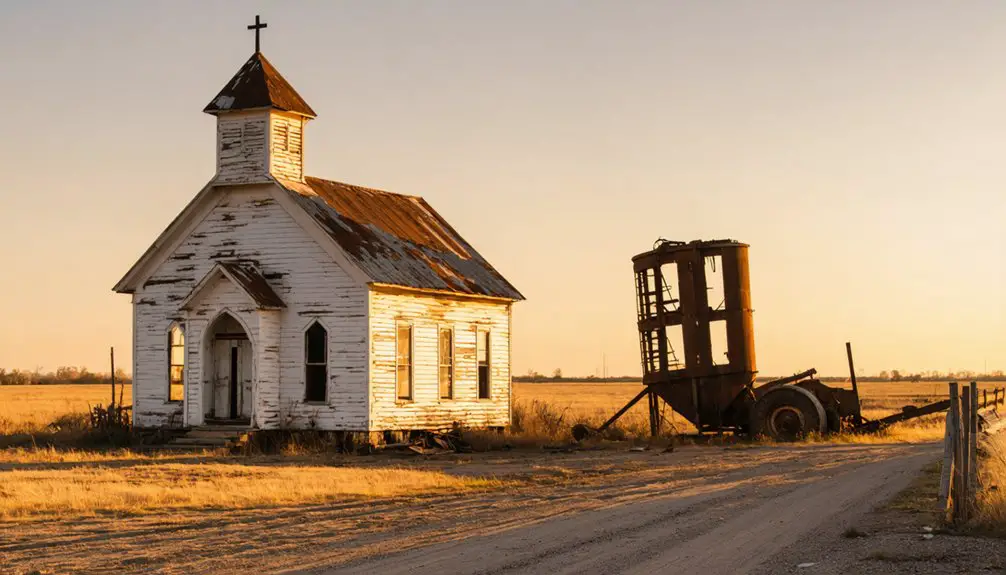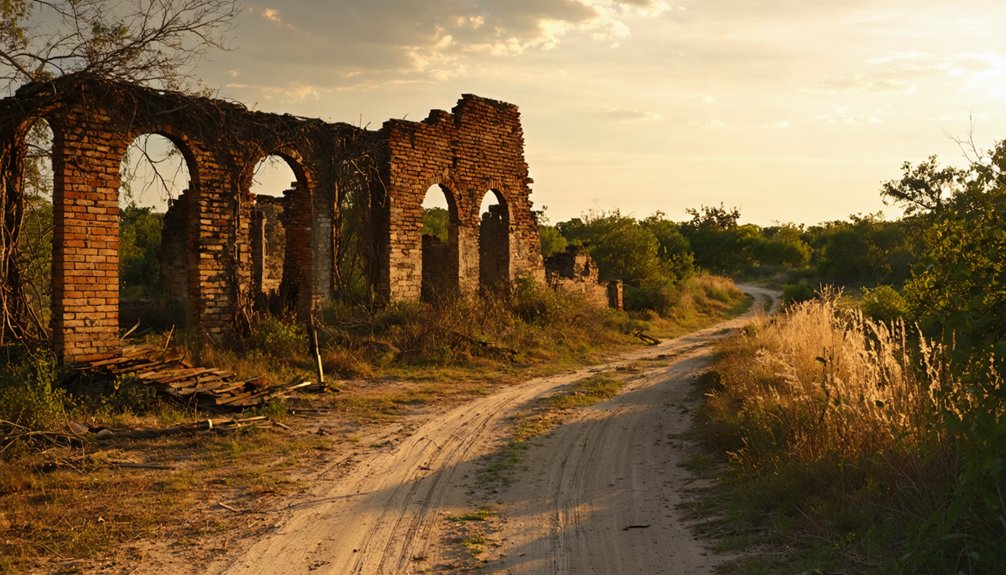
Planning a ghost town road trip to Doaksville, Oklahoma means stepping into one of the most historically rich corners of the South. You’ll find the former Choctaw Nation capital, Civil War surrender site, and buried 19th-century ruins all in one quiet Choctaw County location. Start near Fort Towson off Highway 70, plan two to three hours minimum, and visit in spring or fall for the best experience. There’s far more to this site than first meets the eye.
Key Takeaways
- Doaksville is located near Fort Towson in Choctaw County, Oklahoma, accessible via Highway 70 and Red Road.
- Plan at least 2-3 hours to explore Doaksville and nearby Fort Towson, which offers free admission and self-guided tours.
- Visit during spring or fall for mild weather, as summers are extremely hot and winters have limited daylight.
- A walking trail guides visitors through foundation outlines, interpretive signs, and a historic cemetery with 19th-century headstones.
- Nearby ghost towns Jumbo and Hopewell provide additional historical depth, enriching your overall road trip experience.
What Was Doaksville and Why Does It Matter?
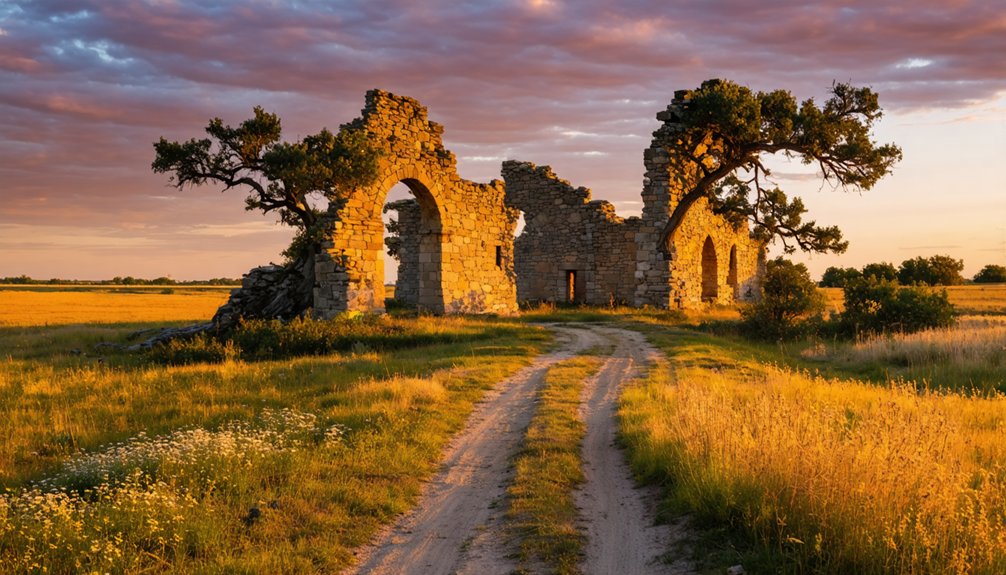
Once a thriving trade hub and political capital, Doaksville played a central role in shaping early Choctaw life in Indian Territory. Founded between 1824 and 1831, it grew around a trading post established by Josiah Doak, making historical trade the backbone of its early identity.
Choctaw families relocated here following removal from the Southeast, building a community rooted in commerce and culture.
How Doaksville Became the Choctaw Nation’s Political Capital
As trade brought settlers and stability to Doaksville, the town’s influence quickly extended beyond commerce into governance. By 1850, the Choctaw Nation had named Doaksville its tribal seat, cementing its cultural significance across Indian Territory.
For over a decade, leaders gathered here to shape laws and protect their people’s sovereignty.
You’re visiting a place where a nation fought to govern itself on its own terms. That freedom-minded legacy still resonates today. In 1863, the capital shifted to Chahta Tamaha, and Doaksville’s political era ended.
Two years later, Confederate General Stand Watie surrendered near here, closing another chapter of history.
Preservation efforts have kept this story alive through archaeology, interpretive trails, and National Register recognition, so you can still connect with everything this ground once held.
How the Civil War Ended Doaksville’s Run
The same war that ended Stand Watie’s Confederate command also gutted Doaksville’s future. The Civil War devastated the town’s economy and political standing, stripping away what had made it essential to the Choctaw Nation.
Three forces accelerated its collapse:
Three forces accelerated Doaksville’s collapse — and none of them gave the town a fighting chance.
- Labor shortages crippled local agriculture and commerce after the war ended in 1865.
- Railroad bypass around 1870 redirected trade away from Doaksville permanently.
- Capital relocation to Chahta Tamaha in 1863 had already stripped the town of its political identity.
What Archaeologists Found Beneath the Doaksville Townsite
When you walk the Doaksville townsite today, you’re stepping over more than empty ground. Archaeologists have uncovered buried foundations from structures that once made this a thriving trade hub, including a hotel, jail, tavern, and store.
Their work also brought everyday artifacts to the surface, giving you a tangible connection to the people who lived and worked here.
Buried Structural Foundations Discovered
Although nothing stands above ground at Doaksville today, archaeologists have uncovered a surprisingly detailed picture of what once thrived beneath the surface. Excavations revealed foundations that confirm the town’s cultural significance as a thriving 19th-century hub.
Researchers discovered buried remains of:
- A hotel – evidence of travelers and regional commerce passing through the Choctaw Nation’s capital
- A jail – proof of organized governance and civic infrastructure
- A tavern and store – signs of daily economic life that shaped the surrounding community
These findings make historical preservation at Doaksville more than symbolic. When you visit, interpretive signs and a walking trail connect you directly to these buried layers of history, letting you explore a past that refused to completely disappear.
Artifacts From Daily Life
Buried alongside those structural foundations, archaeologists pulled everyday objects from the Doaksville soil that reveal how residents actually lived, worked, and traded within the Choctaw Nation’s former capital. You can imagine ceramic dishes that once held local cuisine, trade goods exchanged at the nearby store, and personal items left behind when families abandoned their homes after the Civil War’s end.
These fragments paint a vivid picture of a thriving community that once hosted historic festivals and seasonal markets drawing traders from across Indian Territory. Each artifact connects you directly to the people who built something meaningful in a wild, untamed land.
Walking the interpretive trail today, you’re fundamentally reading their story through objects the earth preserved for over a century.
What the Doaksville Walking Trail Actually Shows You
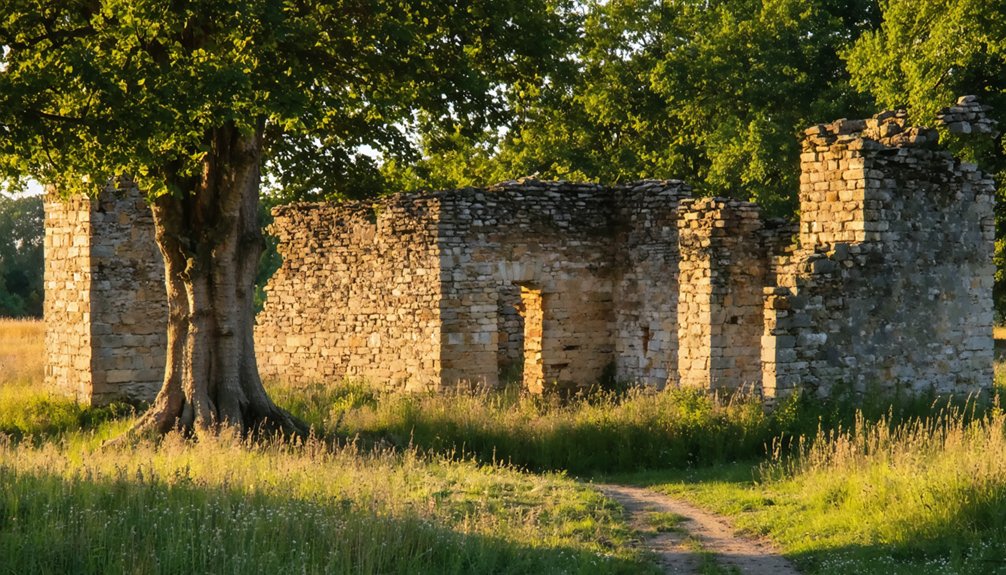
As you walk the trail at Doaksville, interpretive signs guide you through what was once a bustling Choctaw trade center. They identify where specific structures once stood.
You’ll spot uncovered foundations marking the footprints of a hotel, jail, tavern, and store — tangible proof that a real community thrived here.
The trail ends near the cemetery, where 19th-century headstones stand as the only above-ground remnants of Doaksville’s former life.
Trail Markers And Signage
When you walk the trail at Doaksville, interpretive signs do the heavy lifting, translating an otherwise empty field into a legible historic townsite. Each marker connects you directly to the historical trade networks and Choctaw leadership decisions that once defined this place.
The signage highlights three key stops:
- Foundation outlines – Stone remnants mark where a hotel, jail, tavern, and store once operated along active trade routes.
- Political landmarks – Signs identify where Choctaw leadership governed the Nation from 1850 to 1863, giving context to the tribal decisions made here.
- Cemetery boundary – Markers guide you toward 19th-century headstones, the town’s most tangible surviving feature.
You’re reading history directly off the landscape, no tour guide required.
Uncovered Foundation Sites
Four structural foundations anchor the Doaksville walking trail, giving you something concrete to study where buildings once defined a bustling Choctaw trade center. Archaeologists using careful archaeological techniques uncovered the outlines of a hotel, jail, tavern, and store beneath decades of soil and overgrowth.
Each exposed foundation lets you visualize daily life in a town that once served as the Choctaw Nation’s political heart.
Historical preservation efforts keep these sites accessible without over-restoring them, so you’re seeing authentic remnants rather than reconstructions. You can walk between each foundation, read the nearby markers, and piece together the town’s original layout yourself.
That freedom to explore and interpret makes Doaksville far more rewarding than a polished museum exhibit ever could be.
Cemetery And Headstones
Beyond the exposed foundations, the cemetery stands as Doaksville’s most intact surviving feature—and it’s where the walking trail delivers its most personal connection to the past. Cemetery symbolism runs deep here; each weathered headstone represents real people who built one of Indian Territory’s most powerful early communities.
Historical preservation efforts keep this sacred ground accessible and respected.
As you walk through, you’ll notice:
- 19th-century headstones still standing despite decades of neglect and natural weathering
- Interpretive signs placed throughout the grounds that identify key figures and explain burial customs
- Quiet, open access that lets you explore without crowds or restrictions
You’re not just reading about history here—you’re standing inside it, free to move through it at your own pace.
How to Get to Doaksville, Oklahoma
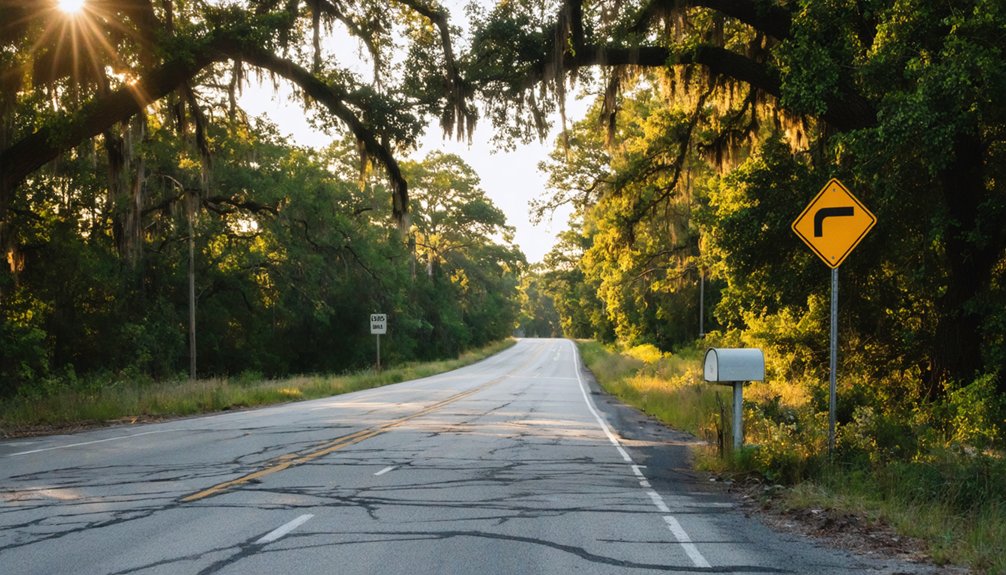
Tucked just outside the community of Fort Towson in Choctaw County, Doaksville isn’t hard to find once you know the route. Head into Fort Towson along Highway 70, then turn onto Red Road and drive about one mile.
You’ll find the cemetery on the east side of the road, where local legends still echo through the weathered 19th-century headstones standing quiet against the Oklahoma sky.
Preservation efforts have made the site accessible, with interpretive signs and a walking trail guiding you through the grounds.
While you’re in the area, the nearby Fort Towson Historic Site offers free admission and self-guided tours, making it an easy addition to your road trip.
Pack light, follow the signs, and explore at your own pace.
What to Know Before Pairing Doaksville With Fort Towson
Since both sites sit within easy reach of each other, pairing Doaksville with Fort Towson makes for a natural and rewarding half-day stop.
Fort Towson offers free admission and self-guided tours, so you won’t spend a dime exploring its grounds. Local legends tied to Stand Watie’s 1865 surrender give both sites a shared Civil War narrative worth unpacking.
Free admission, self-guided tours, and Civil War history tied to Stand Watie’s surrender — Fort Towson costs nothing but your time.
Here’s what to keep in mind before you go:
- Preservation efforts at Doaksville are ongoing, so stay on marked trails and respect the archaeology.
- Fort Towson’s interpretive materials add valuable context that enriches your Doaksville visit.
- The Doaksville cemetery sits on the east side of Red Road, roughly a mile from Fort Towson.
Plan two to three hours minimum for both stops combined.
When Is the Best Time to Visit Doaksville?
Timing your visit to Doaksville matters more than you might expect for an open-air archaeological site with no climate-controlled buildings to retreat into. Oklahoma summers are brutal, with heat that makes walking interpretive trails genuinely uncomfortable.
Spring and fall offer the best conditions — mild temperatures, manageable humidity, and enough light to appreciate the cemetery’s 19th-century headstones and the excavated foundations that once anchored historical trade activity across this region.
Winter visits are possible but can feel stark, with shorter daylight hours limiting your exploration time.
Avoid visiting after heavy rain, since the unpaved access road near Red Road can become difficult to navigate.
Whenever you go, you’re stepping through one of the earliest Native settlements in Indian Territory — treat it with the time it deserves.
Other Ghost Towns in Choctaw County Worth the Drive
Choctaw County holds more forgotten history than most visitors realize, and Doaksville isn’t the only ghost town worth pulling off the highway for. If you’re already making the drive, extend your route and explore nearby sites that share the same cultural preservation mission and historic significance.
- Fort Towson – A military post turned trading hub with preserved ruins and free self-guided tours just minutes from Doaksville.
- Jumbo – A small vanished community east of Hugo that once supported local farming families before railroads redirected regional growth.
- Hopewell – A forgotten settlement with cemetery remnants that reflect early Choctaw Nation community building across Indian Territory.
Each stop adds depth to your road trip and connects you to a broader story of settlement, loss, and resilience.
Frequently Asked Questions
Is There an Entrance Fee to Visit the Doaksville Ghost Town Site?
Listed on the National Register of Historic Places since 1975, you won’t pay a dime to explore these historical landmarks! The nearby Fort Towson Historic Site also offers free visitor amenities, including self-guided tours.
Can You Bring Pets or Dogs Along the Doaksville Walking Trail?
The knowledge doesn’t confirm dog-friendly trails at Doaksville, so you’ll want to check before bringing your pup. Always prioritize pet safety by contacting local authorities to guarantee you’re welcome on the walking trail.
Is the Doaksville Cemetery Open to Visitors Year-Round or Seasonally?
Like most open-air historical preservation sites, you can visit Doaksville’s cemetery year-round. Visitor amenities remain accessible anytime, so whether you’re exploring in January’s chill or July’s heat, you’ll find the headstones and interpretive signs waiting.
Are Photography and Drone Flights Permitted at the Doaksville Archaeological Site?
The knowledge doesn’t confirm drone flight permissions, so check ahead! You’re welcome to capture historical artifacts and explore photography permissions on-site, where interpretive signs and 19th-century headstones await your adventurous, freedom-loving lens.
How Long Does a Typical Visit to Doaksville Take to Complete?
You’ll typically spend one to two hours exploring Doaksville’s historical artifacts, walking the trail, and reading interpretive signs. Visitor amenities are minimal, so you’re free to roam this hauntingly beautiful ghost town at your own pace.
References
- https://en.wikipedia.org/wiki/Doaksville
- https://www.youtube.com/watch?v=eWrCe13jrRk
- https://www.redriverhistorian.com/post/doaksville-choctaw-county-oklahoma
- https://www.okhistory.org/publications/enc/entry?entry=DO002
- https://www.facebook.com/redriverhistorian/videos/the-red-river-historian-at-doaksville-choctaw-county-oklahoma/1009959586078185/
- https://www.travelok.com/articles/oklahomaghosttowns
- https://the405voyager.com/doaksville-part-2-of-forgotten-towns-in-oklahoma/
- https://en.wikipedia.org/wiki/List_of_ghost_towns_in_Oklahoma
- https://mike-boucher.com/wordpress/?page_id=244
- https://www.youtube.com/watch?v=OS2BqmzPplM