Planning a ghost town road trip to London, Minnesota means heading roughly 75 miles northeast of Duluth, winding through dense northern forest on rough back roads near Finland. You’ll find a town that didn’t burn or flood—it simply faded, its post office finally closing in 1996. Abandoned buildings, faint road traces, and reclaimed foundations are all that remain. Pack offline maps, sturdy boots, and curiosity, because this quiet landscape rewards everyone who comes prepared.
Key Takeaways
- London, Minnesota, platted in 1900, gradually declined due to economic shifts and loss of rail access, with its post office closing in 1996.
- The site features abandoned buildings, faint road traces, and foundation edges reclaimed by vegetation, rewarding observant visitors with a nostalgic atmosphere.
- Located approximately 75 miles northeast of Duluth, the town is accessible via back roads from Finland, requiring patience and deliberate travel.
- Pack sturdy footwear, offline maps, a compass, first aid kit, and emergency supplies, as cell service is limited and roads are unpredictable.
- Visit in summer or fall for optimal access, and pair the trip with nearby stops like Two Harbors, Beaver Bay, and Split Rock Lighthouse.
What Is London, Minnesota’s Ghost Town History?
London, Minnesota was platted in 1900, named after New London, Connecticut, and built on the quiet hope that small settlements carry before time moves on without them.
Platted in 1900, London carried the quiet hope of a settlement that time simply forgot.
People arrived, built lives, and left behind a community legacy that the land still holds in silence. The post office closed in 1996, which marked the final institutional breath of a place that had already been fading.
No grand catastrophe erased it. Economic shifts and changing roads simply made London unnecessary.
You won’t find polished historical landmarks here, but you’ll find something more honest — the outline of a settlement that couldn’t outrun time. That rawness is exactly what draws road trippers who want history unfiltered, unmarked, and completely real beneath a wide northeastern Minnesota sky.
What Physically Remains of London Today?
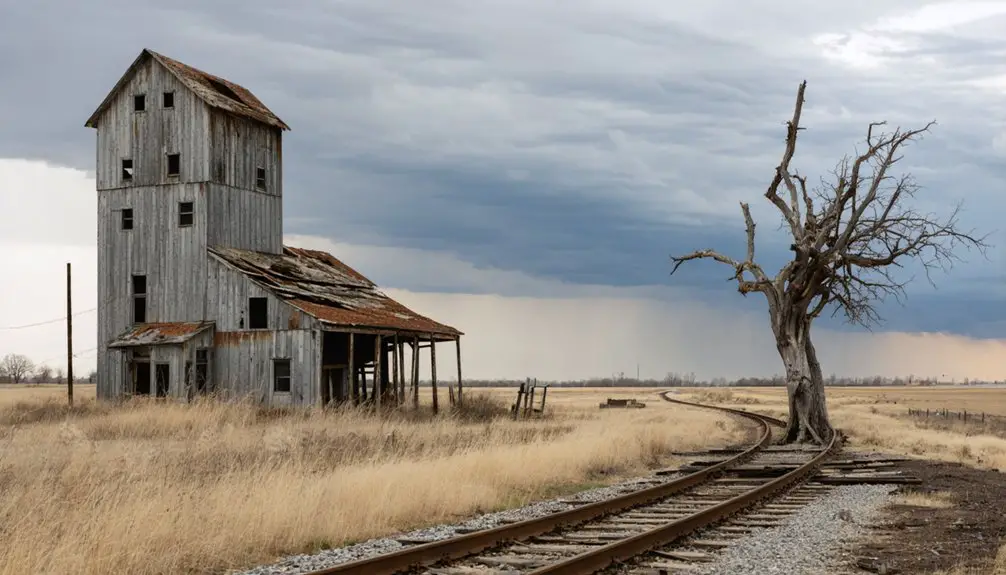
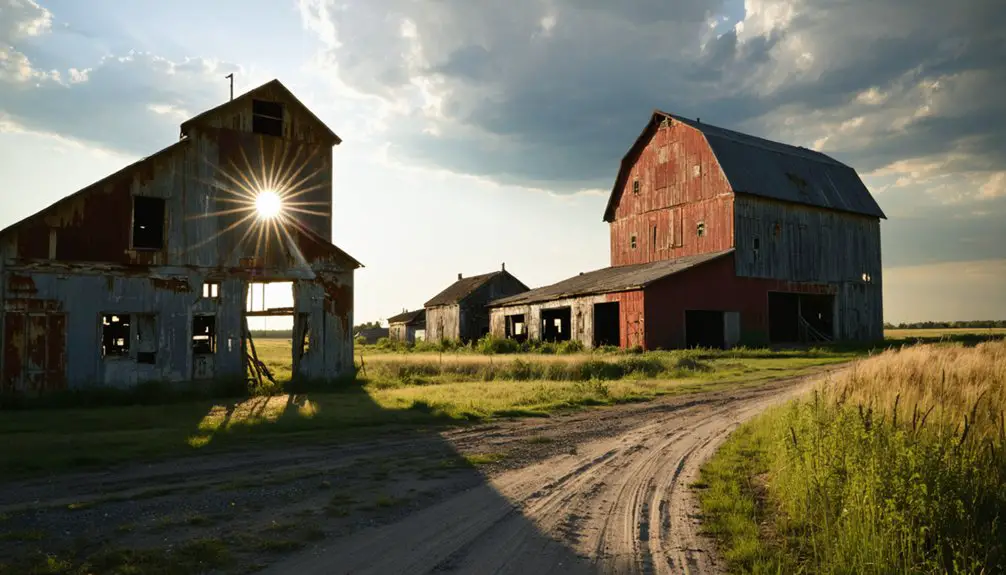
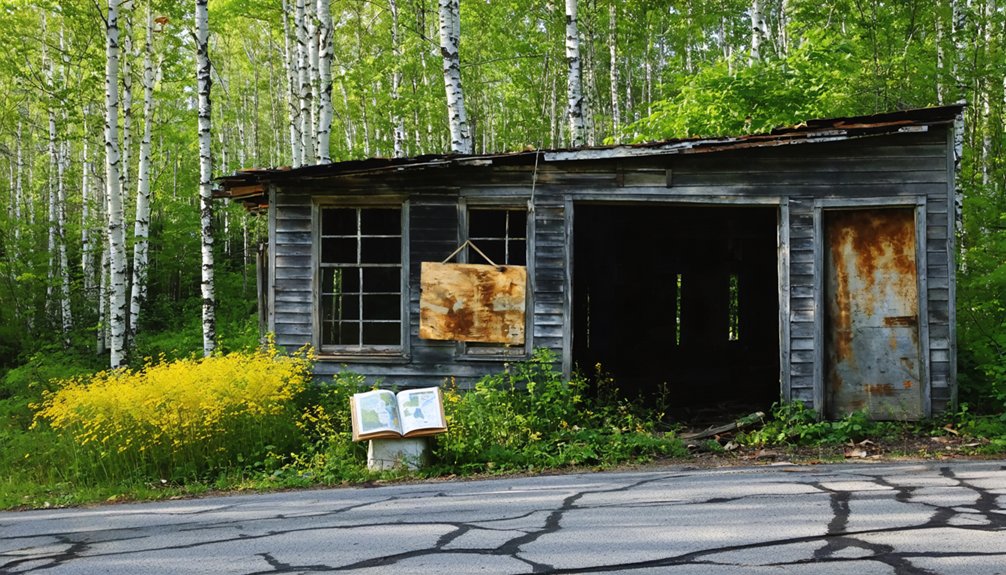
What remains of London today is less a collection of structures and more a feeling the landscape refuses to let go. You’ll find abandoned structures reclaimed by northern Minnesota’s insistent vegetation, their outlines softened by decades of frost and growth.
Historical artifacts, where they exist, are subtle — a foundation edge pushing through the soil, a faint road trace disappearing into tree cover.
Don’t expect signage or preservation. This place rewards the observant traveler who slows down and reads the land rather than a brochure. The silence itself carries weight.
You’re standing where a community once organized its daily life, and now the forest has quietly moved back in. That tension between human effort and natural reclamation is exactly what makes London worth the detour.
How Did London, Minnesota Become a Ghost Town?
That quiet reclamation you’re standing in didn’t happen overnight. London followed a pattern that erased dozens of small Minnesota settlements — economic shifts, dwindling transportation connections, and a population that simply moved on.
When the forces sustaining a frontier community collapsed, people packed up and left, leaving structures and streets behind like a still photograph.
Community nostalgia keeps places like London alive in memory, but nostalgia alone can’t sustain a town. Without industry, rail access, or population growth, London couldn’t adapt.
The post office closing in 1996 marked the final, quiet exhale.
Historical preservation efforts have documented what London once was, giving you context as you walk its forgotten ground. You’re not just visiting a ruin — you’re reading a story about freedom pursued and ultimately surrendered to circumstance.
How to Get to London, Minnesota by Back Road
Getting to London, Minnesota means leaving the main corridors behind and committing to a back road that winds from the village of Finland toward Route 61 and Lake Superior.
You’ll navigate roughly 75 miles northeast of Duluth through a landscape that rewards patience and curiosity. The route itself carries weight — rural roads lined with dense northern forest, minimal signage, and a quietude that primes you for what’s ahead.
As you approach, watch for abandoned structures that signal the settlement’s edges. Locals carry local legends about what London once was, adding texture to what you’re seeing firsthand.
This isn’t a drive you rush. You’re trading convenience for authenticity, and that trade defines the entire ghost town experience waiting at the end of the road.
Best Time of Year to Visit a Remote Minnesota Ghost Town
Summer gives you the easiest access to London’s remote back roads, when dry conditions make rural driving predictable and manageable.
If you can push your visit to late September or early October, northeastern Minnesota’s fall foliage transforms the drive into something genuinely stunning.
Whatever you do, don’t attempt this route in winter — isolated roads in Lake County turn punishing fast, and a ghost town’s atmosphere isn’t worth a ditch or a dead battery in subzero cold.
Summer Offers Easy Access
Because London, Minnesota sits along a remote back road in the rugged northeastern corner of the state, timing your visit matters more than you’d expect. Summer gives you the clearest shot at reaching this ghost town without fighting mud, ice, or early darkness. The roads open up, the daylight stretches long, and you can actually absorb the historical preservation and cultural significance embedded in this quiet, abandoned place.
Summer advantages include:
- Dry, passable rural roads that handle regular vehicles without trouble
- Extended daylight hours for exploring and photographing the site
- Comfortable temperatures that make walking the area enjoyable
- Easier navigation through back roads connecting Finland to Route 61
Pack water, download offline maps, and go chase this slice of forgotten Minnesota on your own terms.
Fall Colors Peak Scenery
Fall transforms northeastern Minnesota into something almost unfair in its beauty, and London’s ghost town sits right in the middle of it. Maples and birches ignite in amber and crimson along the back roads between Finland and Route 61, framing abandoned structures in colors that demand your camera.
You’ll find photographic opportunities around every curve — weathered wood against gold foliage creates compositions you won’t replicate anywhere else.
Local legends grow louder in autumn too, when quieter crowds and longer shadows make the settlement feel genuinely haunted. The crisp air sharpens your senses and slows your pace naturally.
Come mid-September through mid-October for peak color, but move quickly — northern Minnesota’s fall window closes fast, and you don’t want to miss it.
Avoid Harsh Winter Roads
Once fall’s color window slams shut, northeastern Minnesota stops being forgiving — and London’s remote back roads become genuinely dangerous fast. Ice, snowdrifts, and zero maintained access can strand you miles from help. Respect these historic landmarks by visiting when you can actually reach them safely.
- Snow arrives early and lingers late, often through April
- Unplowed rural roads near Finland become impassable without specialized equipment
- Preservation efforts depend on visitors who arrive responsibly, not recklessly
- Spring thaw creates deep mud conditions nearly as hazardous as ice
Your best window runs May through October. Outside that range, you’re gambling against brutal conditions. London waited this long — it’ll keep waiting until the roads give you a fair shot at reaching it.
What to Pack for the London, Minnesota Road Trip

Since London sits along a remote back road with no developed tourist infrastructure, you’ll want to pack smarter than you’d for a typical sightseeing stop.
Bring sturdy footwear, water, snacks, a first-aid kit, and a portable charger, since rural northeastern Minnesota offers few conveniences once you’ve left Finland or Route 61 behind.
Cell service gets unreliable fast out there, so download offline maps, carry a paper backup, and let someone know your route before you head out.
Essential Gear To Bring
Because London, Minnesota sits along a remote back road far from any developed tourist infrastructure, you’ll want to pack smart before you head out. Rural northeastern Minnesota demands self-sufficiency, especially when you’re chasing historical artifacts through forgotten settlements where preservation efforts mean no visitor centers exist.
- Navigation tools: Download offline maps since cell service disappears fast on back roads near Finland.
- Camera and extra batteries: Capture atmospheric details before changing light flattens the mood.
- Water and snacks: No stores exist along this stretch toward Route 61.
- Sturdy footwear: Uneven terrain surrounds abandoned settlement grounds.
Pack light but pack deliberately. Every item should earn its place in your bag. The freedom of a ghost town road trip depends entirely on your preparation before leaving civilization behind.
Navigation And Safety Tools
When you turn off the main road toward London, Minnesota, cell service doesn’t fade gradually — it cuts out fast, leaving you dependent on whatever tools you carried in. Download offline maps before you leave Finland village, and bring a paper backup. A compass still earns its place here. These back roads don’t announce themselves, and missing a turn means losing significant time.
Carry a first aid kit, jumper cables, and a flashlight rated for actual darkness — not just convenience. A small notebook helps you document historic landmarks and jot down local legends you hear from anyone you happen to meet.
Freedom on remote roads comes from preparation, not luck. Pack smart, and London rewards you with silence most travelers never find.
Nearby Ghost Towns and Lake Superior Stops Worth Adding
London, Minnesota sits in a corner of the state where ghost towns aren’t hard to find, so you’d be doing yourself a disservice by stopping at just one. Northeastern Minnesota rewards curious travelers with local legends, crumbling historic architecture, and shoreline views that hit differently after miles of back roads.
Stretch your route and add these stops:
- Finland, MN – A living village with deep Scandinavian roots sitting just before London on your approach road.
- Beaver Bay – One of Lake Superior’s oldest settlements, loaded with history and waterfront access.
- Two Harbors – Lighthouse, ore docks, and a walkable downtown worth an hour.
- Split Rock Lighthouse State Park – Dramatic cliffs, cold Superior water, and unforgettable scenery closing out your northeastern Minnesota loop.
Building a Full Northeast Minnesota Ghost Town Itinerary
Pulling those stops together into a single loop turns a casual detour into something worth planning a full weekend around. Start inland near Finland, roll through London, then trace Route 61 south along Lake Superior’s shoreline, weaving in other abandoned settlements as the road allows.
Each site carries its own local legends — failed mines, vanished post offices, communities that quietly dissolved when the economy shifted. You’ll notice uneven preservation efforts along the way; some towns leave crumbling foundations, others leave almost nothing. That contrast is exactly what makes northeastern Minnesota ghost town travel feel raw and honest.
Pack a paper map, keep your tank full, and leave room for unexpected turnoffs. The region rewards curiosity far more than it rewards rigid scheduling.
Road Conditions, Cell Service, and What to Know Before You Go
Northeastern Minnesota’s back roads don’t coddle you. Gravel stretches shift with the seasons, cell service drops without warning, and local legends about these forgotten places don’t come with a signal bar attached.
Before you chase preservation efforts and ghost town history near London, prepare smart.
- Download offline maps before leaving Finland or any nearby town
- Pack extra water, a spare tire, and basic emergency supplies
- Expect little to no cell coverage once you leave Route 61’s corridor
- Check seasonal road conditions through the Minnesota DOT website before departing
You’re trading comfort for something rawer and more honest. These roads reward the self-sufficient traveler who respects the landscape.
Go in summer or early fall for the best access and the clearest views of northeastern Minnesota’s wild, quiet country.
Frequently Asked Questions
Is There an Entry Fee or Permit Required to Visit London, Minnesota?
Coincidentally, you won’t need a permit or entry fee to explore London, Minnesota. There aren’t strict visitor regulations here — just respect historic preservation by leaving the ghost town exactly as you find it.
Are Pets Allowed When Exploring the London, Minnesota Ghost Town Area?
No official pet policies restrict your four-legged companion here. You’re free to explore with your pet, but keep them leashed to prevent dangerous wildlife interactions amid London’s remote, untamed northeastern Minnesota wilderness.
Can You Legally Take Artifacts or Souvenirs From the Ghost Town Site?
You shouldn’t remove anything — artifact removal violates federal and state laws. Souvenir legality isn’t on your side here, even on abandoned land. Capture memories through photographs instead, preserving London’s haunting atmosphere for every future explorer who wanders through.
Is London, Minnesota Accessible to Visitors With Mobility Limitations?
Ironically, London’s “welcome mat” is an overgrown trail. You’ll find no accessibility improvements or visitor amenities here — just raw, rugged wilderness. If you crave freedom, you’ll need sure footing to explore this remote, atmospheric ghost town.
Are There Any Local Guided Tours Available for the London Ghost Town?
You won’t find formal guided tours here, but that’s part of the freedom—explore at your own pace, uncover historical stories hidden in the silence, and seize stunning photography opportunities along this raw, untamed ghost town road.
References
- https://kids.kiddle.co/London
- https://en.wikipedia.org/wiki/London
- https://www.famousfix.com/list/ghost-towns-in-minnesota
- https://en.wikipedia-on-ipfs.org/wiki/List_of_ghost_towns_in_Minnesota
- https://en.wikipedia.org/wiki/Category:Ghost_towns_in_Minnesota
- https://www.facebook.com/WandermoreMinnesota/posts/town-175-of-856-new-london-mnpopulation-1252county-kandiyohi-new-london-the-coun/122139759236611633/
- https://en.wikipedia.org/wiki/List_of_ghost_towns_in_Minnesota
- https://www.youtube.com/watch?v=5bCG6B2rzZY
- https://1037theloon.com/haunted-timber-lake-road/