Planning a ghost town road trip to Duquesne, Arizona starts in Patagonia, where you’ll head south on State Route 82 before turning onto Duquesne Road. The 20-mile drive mixes pavement and rugged dirt roads, so you’ll need a high-clearance vehicle. Once there, you’ll find a crumbling boarding house, rusted machinery, and eerie silence where nearly 1,000 people once lived. Stick to fall, winter, or spring for the best conditions, and there’s much more to uncover ahead.
Key Takeaways
- Start in Patagonia, stocking up on supplies before heading south on State Route 82, then turning onto Duquesne Road (F.S. 61).
- The 20-mile journey requires a high-clearance vehicle, as dirt road sections become muddy and rutted, especially during summer monsoons.
- Visit in fall, winter, or spring for optimal road conditions; carry water, a spare tire, and offline maps for safety.
- Duquesne sits on private property, so view the boarding house ruins, machinery, and artifacts respectfully from public roads only.
- Enhance your trip by combining Duquesne with nearby ghost towns Harshaw and Washington Camp, plus the Civil War-era Mowry mine site.
A 1,000-Person Boomtown That Quietly Vanished
At its peak around 1900, Duquesne wasn’t just a mining camp—it was a full-blown mountain town of nearly 1,000 people, complete with boarding houses, stores, a hotel, and the operational headquarters of the Duquesne Mining and Reduction Company. That historical context makes it stand out among Arizona’s forgotten places.
At its peak, Duquesne wasn’t a mining camp—it was a mountain town of nearly 1,000 people.
The Bonanza Mine drove everything. Ore came out, money came in, and people followed.
Then, as quickly as it boomed, it faded. By February 14, 1920, the post office had closed, and the town was essentially done.
Today, you can still see remnants of that vanished world—structures, equipment, and ruins scattered across the mountainside.
Tourist accessibility remains limited since the land is private, but the surrounding roads tell the story clearly enough.
How to Drive to Duquesne From Patagonia
Your road trip to Duquesne starts on State Route 82, where you’ll head south from Patagonia into the rolling high-desert landscape of Santa Cruz County.
From there, you’ll turn onto Duquesne Road (F.S. 61), a route that stays paved for roughly the first six miles before shifting to dirt.
Plan on driving about 20 miles south of Patagonia before you reach the ghost town, so give yourself enough time to navigate the mountain terrain comfortably.
Starting Point On SR-82
Most ghost town road trips begin with a straightforward landmark, and Duquesne’s starting point is no different — you’ll want to set your sights on State Route 82 heading south toward Patagonia. From there, you’re already stepping into territory rich with local legends and wildlife encounters around every mountain bend.
Before you leave SR-82, lock in these four essentials:
- Fill your gas tank — services disappear fast once you turn south.
- Check your tires — dirt roads ahead demand it.
- Note your mileage — Duquesne Road branches off roughly 20 miles south of Patagonia.
- Download offline maps — cell service fades quickly in the Patagonia Mountains.
SR-82 is your last taste of easy pavement, so use it wisely.
Once you leave SR-82, Duquesne Road — also marked as F.S. 61 — carries you south through the Patagonia Mountains on pavement for roughly the first six miles before the surface shifts to dirt.
From there, FR 49 winds deeper into forested terrain, gaining elevation as you push toward the 5,000-foot mark. Drive slowly — local wildlife including deer and javelina cross these roads without warning.
Watch for historical signage along the corridor that hints at the mining activity once defining this entire district.
The route eventually connects to Washington Camp before continuing south toward Duquesne itself, roughly 20 miles from Patagonia.
A high-clearance vehicle handles the dirt segments best. Give yourself enough time to stop, look around, and absorb the isolation these mountain back roads deliver.
What Remains at the Duquesne Townsite Today
When you reach the Duquesne townsite, you’ll find a surprising number of original structures still standing, including a large boarding house and the crumbling remains of homes, stores, and a hotel that once served a population of nearly 1,000 people.
Scattered mining equipment and deteriorating buildings left behind by the Duquesne Mining and Reduction Company give the site a raw, time-capsule quality that few ghost towns can match.
As you drive the road corridor leading into town, you’ll pass abandoned mines and roadside ruins that tell the story of a boomtown that simply ran out of time.
Standing Structures And Buildings
Although Duquesne sits on private land and isn’t open to the public, the townsite still holds a surprising number of original structures that have survived more than a century of neglect. The historical architecture here tells a vivid story of a boomtown that once housed 1,000 residents.
While formal preservation efforts remain limited, the buildings themselves stand as raw, unfiltered evidence of that era.
From the road, you can observe:
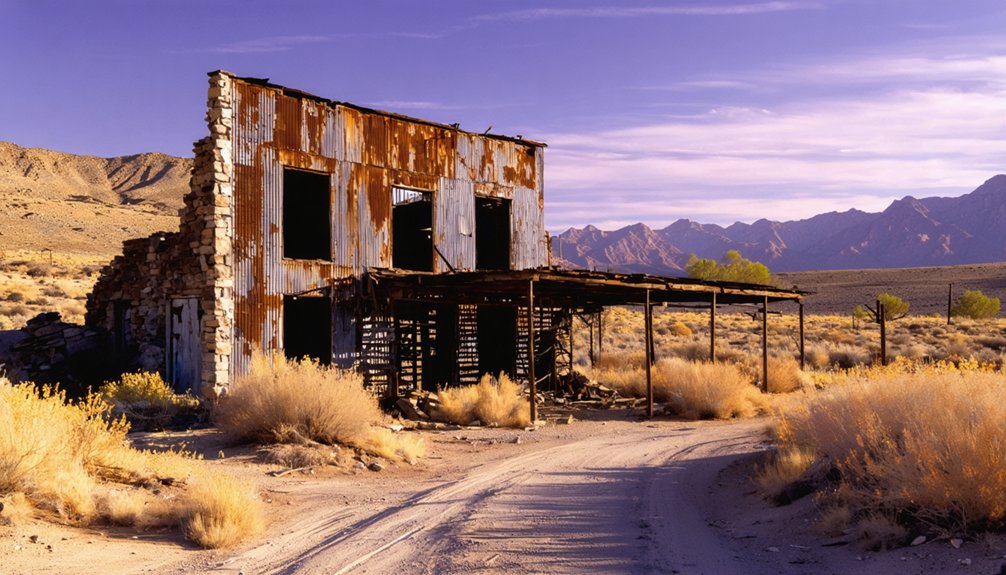
- A large boarding house — one of the most intact remaining structures
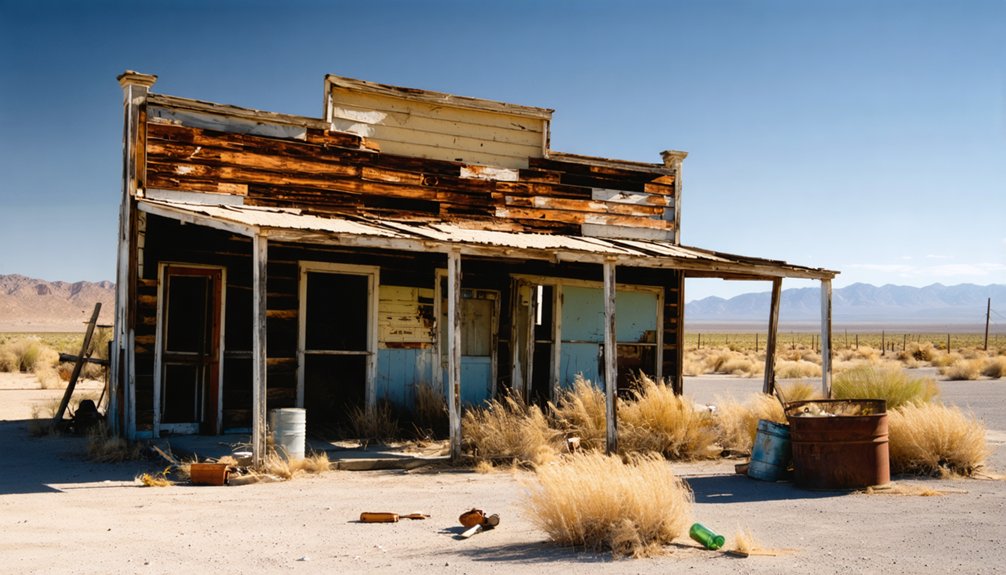
- Dilapidated commercial buildings — former stores frozen in time
- A hotel and brothel — remnants of the town’s rougher social life
- Abandoned mining equipment — scattered near collapsed workspaces
Each structure reinforces why this back-road destination rewards historically curious travelers.
Mining Equipment Left Behind
Beyond the crumbling walls and sagging rooflines, scattered mining equipment tells the most direct story of what once drove Duquesne’s existence. You’ll find remnants of the operation that once employed hundreds, from rusted machinery to structural fragments tied directly to the Bonanza Mine and the Duquesne Mining and Reduction Company.
These mining artifacts carry real weight. They connect you to an era when this remote mountain site produced enough wealth to sustain nearly 1,000 residents. Unlike museum displays, what remains here sits where workers left it decades ago.
Historical preservation isn’t formalized at Duquesne, so what survives does so largely by isolation. Respect that. Don’t disturb what you find. Photograph it, absorb it, and leave it exactly as you discovered it for the next traveler passing through.
Ruins Along The Road
Driving the road corridor toward Duquesne, you’ll pass a scattered timeline of collapse — abandoned homes, a crumbling hotel that doubled as a brothel, ruined storefronts, and a large boarding house that still stands as one of the more substantial reminders of the town’s former life.
Set against striking forest scenery, these historical artifacts create a raw, unfiltered window into a boomtown that once housed 1,000 people.
Here’s what you’ll encounter along the route:
- Abandoned residential structures slowly reclaimed by vegetation
- A collapsed hotel and brothel frozen mid-decay
- Ruined storefronts outlining what were once busy commercial streets
- A large boarding house — the most intact surviving structure on site
Stay on public roads and respect posted boundaries — this land is private.
Best Seasons and Road Conditions for the Trip
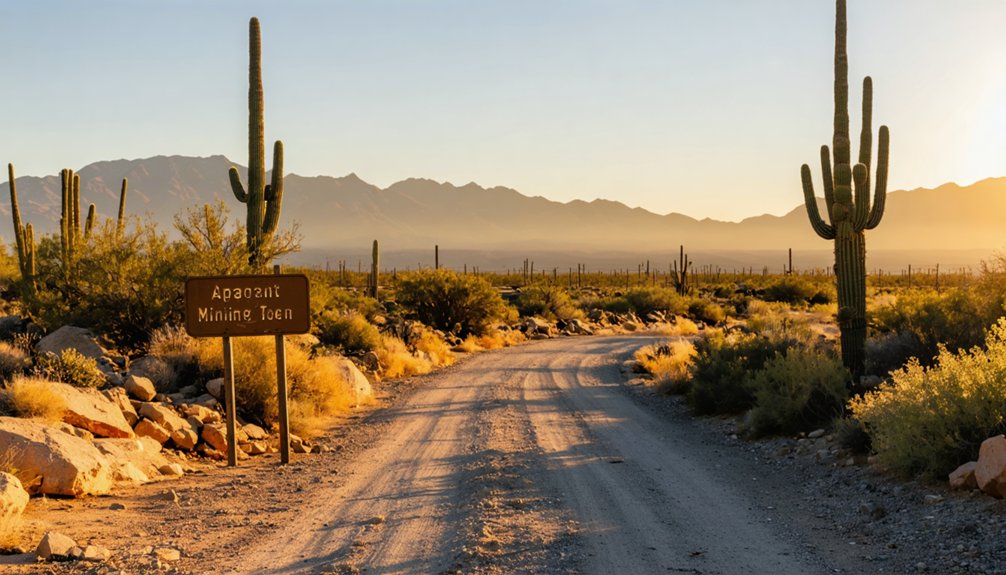
Timing your visit to Duquesne can make the difference between a memorable back-road adventure and a frustrating, impassable slog. Fall, winter, and spring offer the most reliable conditions on the dirt segments of Duquesne Road and FR 49.
Summer monsoons turn those unpaved stretches into muddy, rutted hazards that can strand even high-clearance vehicles.
Tourist safety depends on checking road conditions before you leave pavement behind. Carry water, a spare tire, and a paper map since cell service is unreliable in the Patagonia Mountains.
Historical preservation is everyone’s responsibility out here. Wet weather accelerates structural decay on already fragile ruins, so visiting during drier months reduces unintentional damage from increased foot traffic near unstable buildings.
Plan smart, and the road rewards you.
Other Ghost Towns to Add to Your Duquesne Route
Duquesne sits at the center of a ghost-town cluster that rewards anyone willing to string together a full day’s drive through the Patagonia Mountains. Each nearby stop adds cultural significance and deepens your understanding of Southern Arizona’s mining past.
- Harshaw – A once-thriving silver camp with a cemetery and scattered ruins worth exploring.
- Washington Camp – Fewer visible remains, but strong historical preservation value as a companion stop to Duquesne.
- Mowry – A remote site tied to Civil War-era lead mining, offering raw, unfiltered history.
- Patagonia – A living town where you can fuel up, eat, and orient yourself before hitting the back roads.
Split these stops together, and you’ll experience the full arc of the region’s boom-and-bust story.
Why Duquesne Is Private Land: and How to Respect That
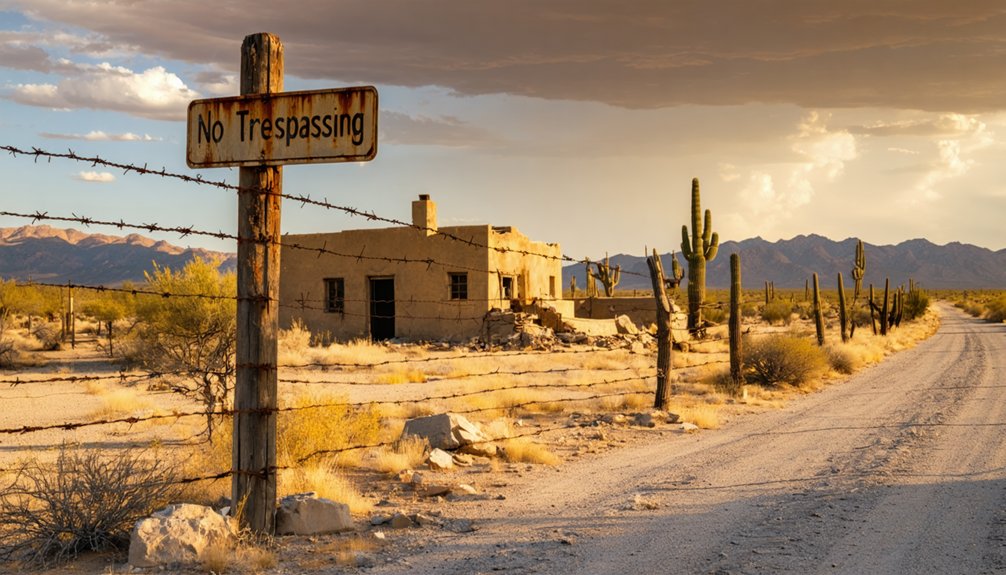
Before you load the car and head south from Patagonia, there’s one detail about Duquesne that can’t be glossed over: the town sits on private land, and it’s not open to the public.
Duquesne sits on private land — and that’s the first thing you need to know before heading south from Patagonia.
Land ownership here means that even when the roads feel open and the ruins look accessible, you’re likely standing at someone’s boundary line.
Trespassing laws apply, and No Trespassing signs throughout the area mean exactly what they say. Owners and residents aren’t known for welcoming curious visitors, so pushing past posted boundaries isn’t just illegal — it’s disrespectful to the people who hold title to this land.
You can still appreciate the landscape, ruins, and history from public roads. That’s the respectful version of this road trip, and honestly, it’s enough.
Frequently Asked Questions
Is There Cell Phone Service Along Duquesne Road in the Mountains?
Don’t count on cell coverage along Duquesne Road — signal strength drops considerably once you’re deep in the Patagonia Mountains. You’ll want to download offline maps and share your travel plans before heading out.
Are Pets Allowed on the Public Roads Near Duquesne?
No one’s stopping your dog from enjoying freedom on public roads near Duquesne! However, prioritize pet safety by keeping them on a leash, since rattlesnakes and rugged terrain make leash requirements practically essential out there.
What Type of Vehicle Is Recommended for Reaching Duquesne Safely?
You’ll want a high-clearance 4WD — it’s your best bet for tackling dirt roads like FR 49. Consider vehicle rental options featuring off-road vehicle suitability to handle Duquesne’s rugged mountain terrain confidently and safely.
Are There Any Restroom Facilities or Services Near Duquesne?
You won’t find restroom availability or nearby amenities at Duquesne’s remote, private site. Stock up on supplies in Patagonia before heading out — it’s your last reliable stop for fuel, food, and facilities.
How Close Is Duquesne to the U.S.–Mexico Border Crossing?
You’re just miles from the U.S.–Mexico border when you reach Duquesne. Road access through this remote mountain terrain brings you remarkably close to the border crossing, making it an adventurously free-spirited destination near international boundaries.
References
- https://en.wikipedia.org/wiki/Duquesne
- https://www.nogalesinternational.com/news/duquesne-no-longer-a-ghost-town/article_98216984-2319-11e8-bc85-a38ab8070499.html
- https://kids.kiddle.co/Duquesne
- https://www.visitskyislands.com/ghost-towns-of-harshaw-mowry-washington-camp-and-duquesne/
- https://www.ghosttowns.com/states/az/duquesne.html
- https://azoffroad.net/washington-campduquesne
- https://en.wikipedia.org/wiki/List_of_ghost_towns_in_Arizona
- https://www.legendsofamerica.com/az-patagoniaghosts/