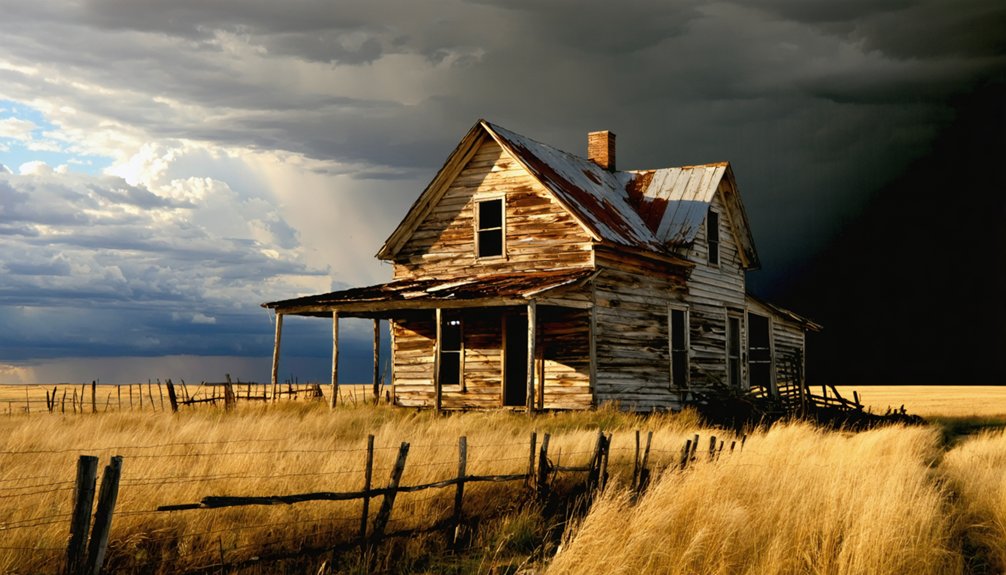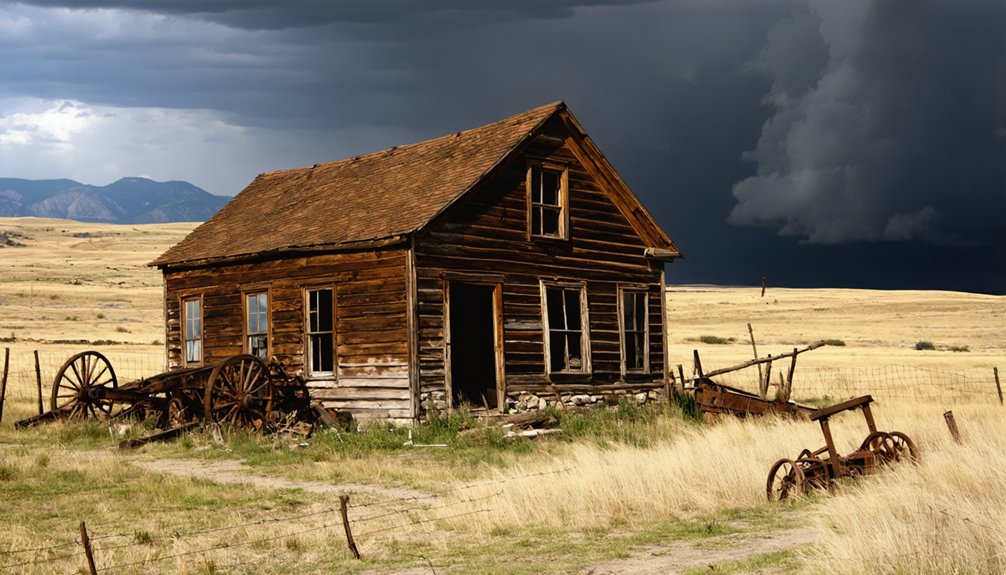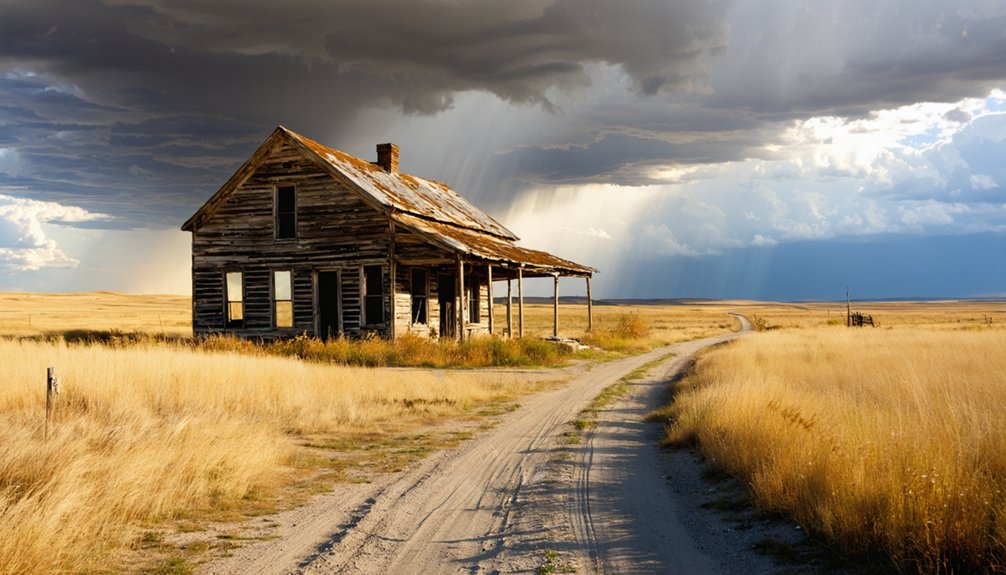
Planning a ghost town road trip to Elizabethtown, South Dakota means chasing a gold rush story through Whitewood Gulch, where a community of over 300 once thrived in the 1870s. You won’t find welcome signs or guided tours — just remote terrain, private land, and echoes of the past. Base yourself in nearby Deadwood, visit during summer or fall, and secure land permissions before you go. There’s far more to uncover about this forgotten settlement.
Key Takeaways
- Elizabethtown, located in Whitewood Gulch near Deadwood, South Dakota, was a thriving 1870s gold rush settlement with a peak population of 316.
- No public access, markers, or guided tours exist; research Lawrence County land records and obtain landowner permission before visiting.
- Book lodging in Deadwood as your base, and visit during summer or fall to avoid hazardous winter road conditions.
- Pack topographic maps, water, food, and a first aid kit, as GPS signals are unreliable and no services exist nearby.
- Extend your trip by exploring nearby ghost towns like Montana City and Foundation City within Whitewood Gulch.
What Makes Elizabethtown a True Ghost Town
Once a thriving mining settlement tucked into Whitewood Gulch, Elizabethtown now exists only in historical records and fragmented maps. You won’t find standing structures or guided tours here — the town’s physical footprint was absorbed entirely into Deadwood after its decline. That erasure is precisely what qualifies it as a true ghost town.
At its peak in the 1870s, Elizabethtown supported 316 residents and even hosted its own Fourth of July celebration in 1876. Yet today, archaeological evidence of that community is scarce, and historical preservation efforts remain minimal.
No published excavations or photographic documentation confirm what once stood here.
For you as an explorer, that ambiguity adds raw authenticity. Elizabethtown isn’t a polished attraction — it’s a vanished world waiting for the historically curious to reclaim its story.
Elizabethtown’s Rise During the Black Hills Gold Rush
When gold fever swept the Black Hills in the mid-1870s, Elizabethtown emerged as one of Whitewood Gulch’s most active mining settlements, drawing hundreds of hopeful prospectors to its rugged terrain.
By 1876, the town had grown confident enough in its identity to host its own Fourth of July celebration, complete with a formal oration by A.B. Chapline — a clear sign of organized civic life beyond mere survival.
The 1880 census captured a population of 316 residents, confirming that Elizabethtown had achieved genuine community momentum before its eventual decline.
Gold Rush Origins
During the Black Hills gold rush of the 1870s, Elizabethtown carved out its own identity as a distinct mining community nestled in Whitewood Gulch. The town was positioned between Montana City and Foundation City.
The town’s mining history reflects a classic boom-era pattern — ambitious settlers flooded the region chasing gold, and Elizabethtown rose quickly to meet their needs.
Peak Prosperity Era
By 1876, Elizabethtown had grown into a self-sustaining mining community with enough civic pride to host its own Fourth of July celebration, complete with an oration by A.B. Chapline. That kind of organized pageantry signals something real — a town with roots, ambition, and momentum.
Advances in mining technology drove this prosperity, allowing residents to extract gold more efficiently from Whitewood Gulch’s rich deposits. Town planning followed naturally, with a community layout distinct enough to appear on regional maps between Montana City and Foundation City.
By 1880, the census counted 316 residents — proof that Elizabethtown wasn’t just a camp but a functioning town.
You’re looking at a place that briefly had everything: population, purpose, and pride. That’s exactly what makes its disappearance so compelling to explore.
Civic Community Growth
Elizabethtown didn’t just attract miners — it built a community around them. By 1876, residents were organizing Fourth of July celebrations complete with formal orations, signaling a town with real civic ambition. A.B. Chapline’s address that Independence Day wasn’t just ceremonial — it was proof that people here saw a future worth celebrating.
When you dig into the mining history of Whitewood Gulch, Elizabethtown stands out as more than a camp. It had structure, leadership, and community legends worth chasing. The 1880 census confirmed 316 residents, a number that reflects genuine roots rather than a transient rush.
As you plan your road trip, let that human story drive your curiosity — Elizabethtown earned its place in Black Hills history long before it disappeared into Deadwood’s shadow.
Where Exactly Is Elizabethtown, South Dakota?
Tucked into the narrow folds of Whitewood Gulch, Elizabethtown sits between two other vanished settlements — Montana City and Foundation City — in the Black Hills region of South Dakota. You’ll use Deadwood as your primary landmark, since Elizabethtown’s footprint has long since merged into that town’s development.
Historical preservation efforts remain minimal here — no markers guide you, no signs confirm your arrival. Tourist accessibility is practically nonexistent; there are no public trails, guided tours, or designated viewing areas.
The terrain is remote and largely private, so you’ll need to research land ownership before venturing out. Consult historical maps referencing Whitewood Gulch to orient yourself accurately.
Think of this destination less as a place you visit and more as one you investigate.
How to Reach Whitewood Gulch From Deadwood
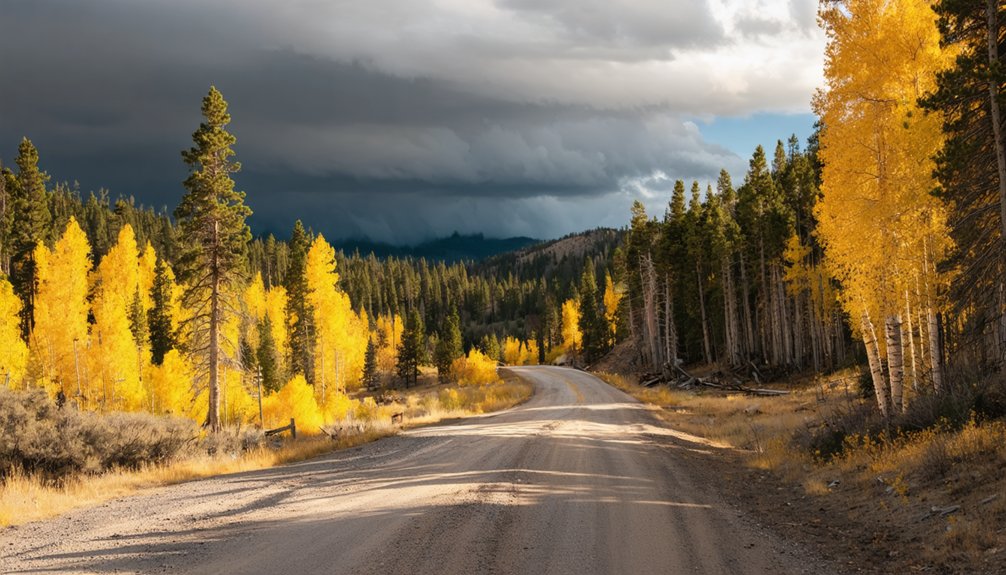
Deadwood serves as your jumping-off point for reaching Whitewood Gulch, and the drive itself sets the tone for what’s fundamentally an investigative expedition rather than a conventional sightseeing trip.
From Deadwood, you’ll navigate rural roads winding through rugged Black Hills terrain, following Whitewood Creek’s natural corridor toward the gulch.
Keep historical landmarks in mind as reference points — the landscape shifts noticeably as you push deeper into former mining territory.
You won’t find polished signage marking Elizabethtown’s boundaries, so download offline maps before leaving cell range.
Watch for mining relics scattered along the route; they signal you’re closing in on the right area.
Confirm land ownership status before stepping off the road — much of this corridor sits on private property requiring explicit permission.
Can You Legally Visit the Elizabethtown Site?
Before you set foot anywhere near the Elizabethtown site, you’ll need to confront a hard reality: no public access or guided tours currently exist for this location.
Land ownership in Whitewood Gulch is primarily private, meaning trespassing carries real legal consequences. You can’t simply wander onto the property because historical preservation interests you.
Land in Whitewood Gulch is privately owned — trespassing has real legal consequences, regardless of your historical intentions.
Your best move is researching current land ownership through Lawrence County records before planning your visit. If private owners control the site, contact them directly and request permission. Some landowners welcome respectful historians; others don’t.
Deadwood’s local historical societies may also connect you with legitimate access channels.
Respecting these boundaries isn’t just legally smart — it protects the fragile remnants of Elizabethtown’s story for future explorers who share your passion for freedom and discovery.
What’s Left to See at the Elizabethtown Site Today?
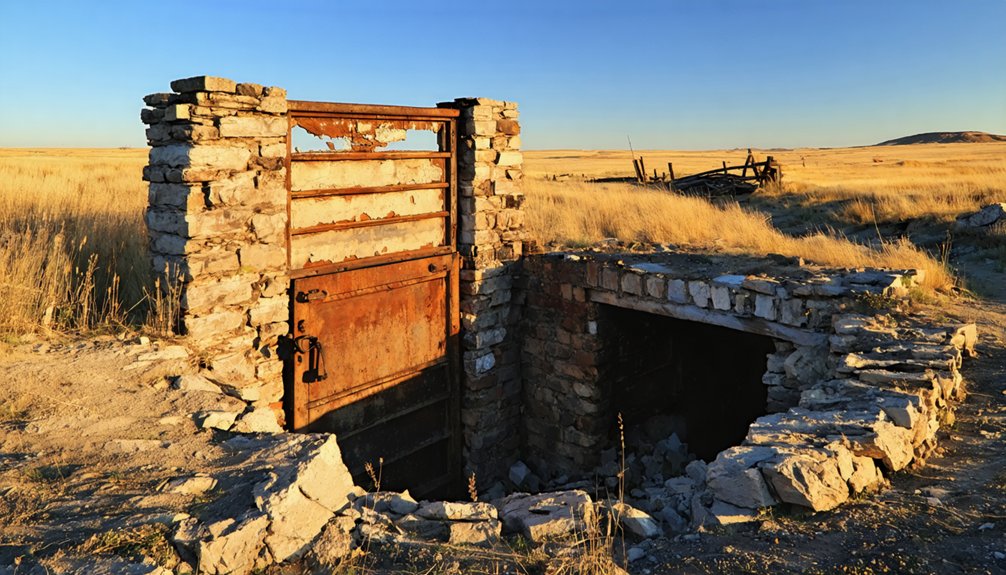
Once you’ve secured permission to visit, temper your expectations — Elizabethtown offers almost nothing visible to the naked eye.
Deadwood’s expansion swallowed the town whole, erasing its physical footprint with brutal efficiency. You won’t stumble across mining relics scattered across the ground or historical markers anchoring you to specific locations. No weathered storefronts, no crumbling foundations, no remnants of the civic pride that organized that 1876 Fourth of July celebration.
What you do get is something subtler — a landscape that rewards imagination.
Standing in Whitewood Gulch, you’re breathing the same canyon air that 316 residents once called home. The absence itself tells a story.
Bring historical maps, study them before arriving, and let the terrain speak where the structures cannot.
The Best Time of Year to Visit Elizabethtown
Timing your visit to Elizabethtown shapes everything about the experience. Late spring through early fall offers the most accessible conditions in Whitewood Gulch, when roads are passable and daylight stretches long enough for meaningful exploration.
Summer visits carry a symbolic weight — the town once celebrated Fourth of July 1876 here, alive with local legends and civic pride. Walking that ground in summer connects you to that living history.
Avoid winter months when snow isolates the gulch and turns rural roads treacherous.
Fall brings crisp air and quieter terrain, ideal for those chasing historical artifacts and fragments of the past without crowds.
Whatever season you choose, come prepared, respect private property boundaries, and let the landscape tell its story on its own terms.
Other Black Hills Ghost Towns to Pair With Elizabethtown
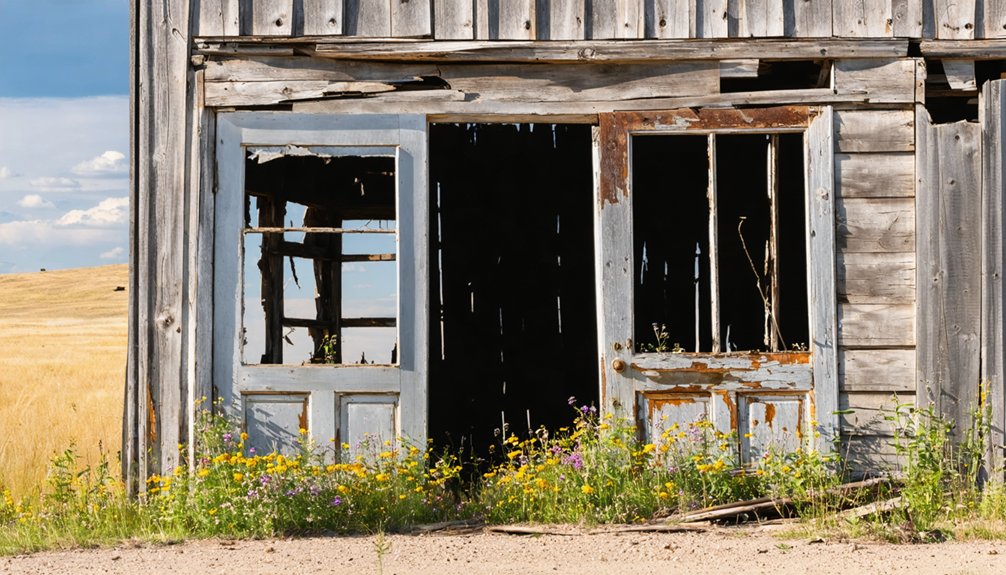
While you’re exploring Elizabethtown’s faded footprint in Whitewood Gulch, you’d be missing out if you didn’t extend your trip to nearby Black Hills ghost towns that still hold visible ruins and rich histories.
The region harbors over 600 ghost towns, giving you plenty of options to build a full itinerary around Deadwood as your base.
Pairing multiple stops not only deepens your understanding of the gold rush boom-and-bust cycle but also maximizes the miles you’ll put into this remote, rugged terrain.
Nearby Ghost Towns Worth Visiting
Since the Black Hills region holds over 600 ghost towns, you’d be foolish to stop at Elizabethtown alone. Pair your visit with nearby Montana City and Foundation City, both tucked within Whitewood Gulch along the same route. These sites share Elizabethtown’s boom-and-bust DNA, offering connected historical preservation value without demanding major detours.
Deadwood serves as your central base, making tourist accessibility surprisingly straightforward across multiple sites in a single day. Push further into the Hills and you’ll find additional abandoned mining camps that still carry visible remnants — a stark contrast to Elizabethtown’s absorbed footprint.
Each town adds another layer to the Black Hills gold rush story. String them together deliberately, and your road trip transforms from a single stop into a genuinely immersive historical expedition.
Combining Multiple Ghost Town Stops
Black Hills ghost town hunting rewards those who plan deliberately, and pairing Elizabethtown with other abandoned mining camps turns a single-site visit into a layered historical journey. You’ll uncover mining artifacts and historical photographs across multiple stops, building a richer picture of boom-and-bust life.
Consider combining these sites for maximum impact:
- Rockerville – One of the Black Hills’ earliest gold camps, offering tangible remnants and documented history.
- Galena – A silver mining hub with surviving structures worth photographing.
- Spokane – A compact stop revealing classic frontier settlement patterns.
- Montana City – Elizabethtown’s immediate neighbor in Whitewood Gulch, making it a natural extension of your route.
Cluster your stops geographically, move efficiently, and let each abandoned site deepen your understanding of the region’s restless, gold-driven past.
How to Build Your Elizabethtown Road Trip Itinerary
Planning your Elizabethtown road trip means anchoring your itinerary around Deadwood, the closest populated hub and your best launching point into Whitewood Gulch. Book your lodging there, then dedicate your first morning to absorbing Deadwood’s mining history before heading into the gulch toward Elizabethtown’s former site.
Anchor your Elizabethtown itinerary around Deadwood — your closest hub and best gateway into Whitewood Gulch.
Since no standing structures remain, you’ll navigate by historical maps and local knowledge. Pair your visit with nearby Montana City and Foundation City to maximize the drive.
Research Elizabethtown’s civic celebrations, including its 1876 Fourth of July oration, before you go — context transforms an empty landscape into something meaningful.
Always confirm land access permissions in advance, carry detailed maps, and pack essentials for remote terrain. Your freedom to explore depends on preparation, respect for private property, and a genuine curiosity about what once thrived here.
What to Bring When Visiting Remote Sites Like Elizabethtown
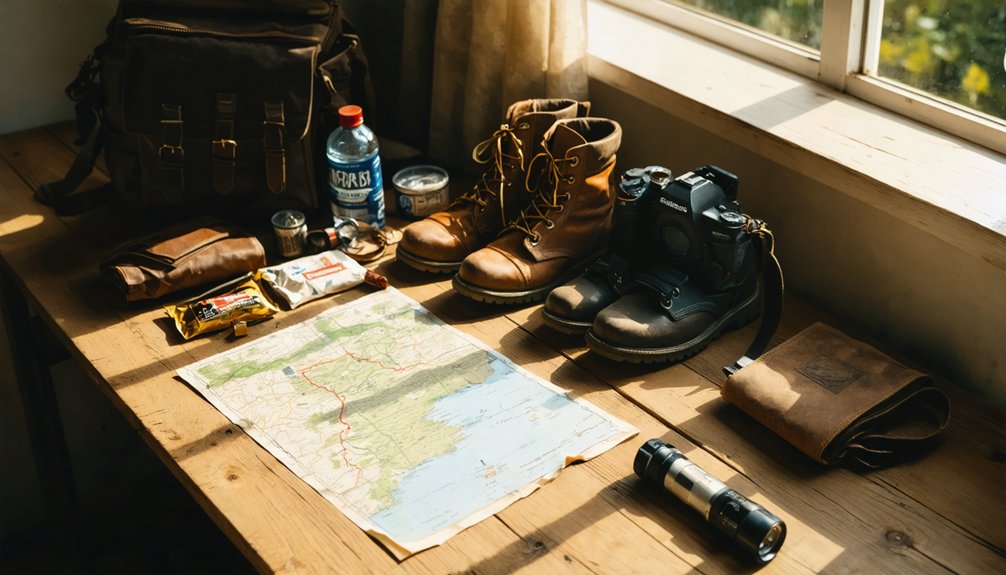
Visiting a remote site like Elizabethtown demands more preparation than a typical road trip stop. You’re venturing into undeveloped terrain where self-sufficiency isn’t optional—it’s essential. The land holds historical artifacts and local legends, but it won’t hold your hand.
Pack these four essentials before leaving Deadwood:
- Detailed maps – GPS fails in Whitewood Gulch’s dead zones; carry printed topographic maps.
- Water and food – No services exist near the site; bring more than you think you’ll need.
- First aid kit – Uneven, overgrown terrain increases injury risk markedly.
- Camera and notebook – Document what you observe without disturbing anything.
Respect private property boundaries, tread lightly, and leave every fragment of history exactly where you found it.
Frequently Asked Questions
Who Was A.B. Chapline and Why Did He Speak at Elizabethtown?
A.B. Chapline was a civic leader who spoke at Elizabethtown’s 1876 Fourth of July celebration, honoring the gold rush community’s spirit. He embodied mining history’s pride, giving voice to a free, thriving people carving independence from the Black Hills.
How Many People Lived in Elizabethtown During Its Peak Population Year?
You’ll find that Elizabethtown’s peak population reached 316 residents in 1880, a snapshot of its mining history glory. Sadly, population decline soon followed, swallowing this once-thriving, freedom-seeking community into Deadwood’s ever-expanding embrace.
Which Neighboring Mining Camps Were Closest to Elizabethtown in Whitewood Gulch?
Right in Elizabethtown’s backyard, you’ll find Montana City and Foundation City nestled within Whitewood Gulch. These neighboring camps shaped the area’s mining history, and exploring them enriches your understanding of ghost town preservation in South Dakota’s Black Hills.
How Does Elizabethtown’s Story Compare to Other Black Hills Ghost Towns?
You’ll find Elizabethtown mirrors classic mining town decline — it boomed, faded, and got swallowed by Deadwood. Like other ghost town legends across the Black Hills, it reflects freedom’s fleeting promise during the gold rush’s boom-and-bust cycle.
Was Elizabethtown Ever Considered for Historical Landmark or Preservation Status?
You won’t find any confirmed historical preservation efforts or landmark designation for Elizabethtown—it’s been absorbed into Deadwood, leaving scarce records behind. Its story lives in determined ghost town hunters who keep its memory alive.
References
- https://en.wikipedia.org/wiki/List_of_ghost_towns_in_South_Dakota
- https://www.sdpb.org/rural-life-and-history/2023-08-21/some-black-hills-ghost-towns-and-their-origins
- https://mad-peak.com/blog-posts-and-info/f/black-hills-ghost-towns-are-real—and-you-can-ride-through-them
- https://www.newmexico.org/places-to-visit/ghost-towns/elizabethtown/
- https://www.youtube.com/watch?v=_0WNYsFLSLA
- https://www.sdhspress.com/journal/south-dakota-history-2-2/some-black-hills-ghost-towns-and-their-origins/vol-02-no-2-some-black-hills-ghost-towns-and-their-origins.pdf
- https://www.ghosttowns.com/states/tx/elizabethtown.html