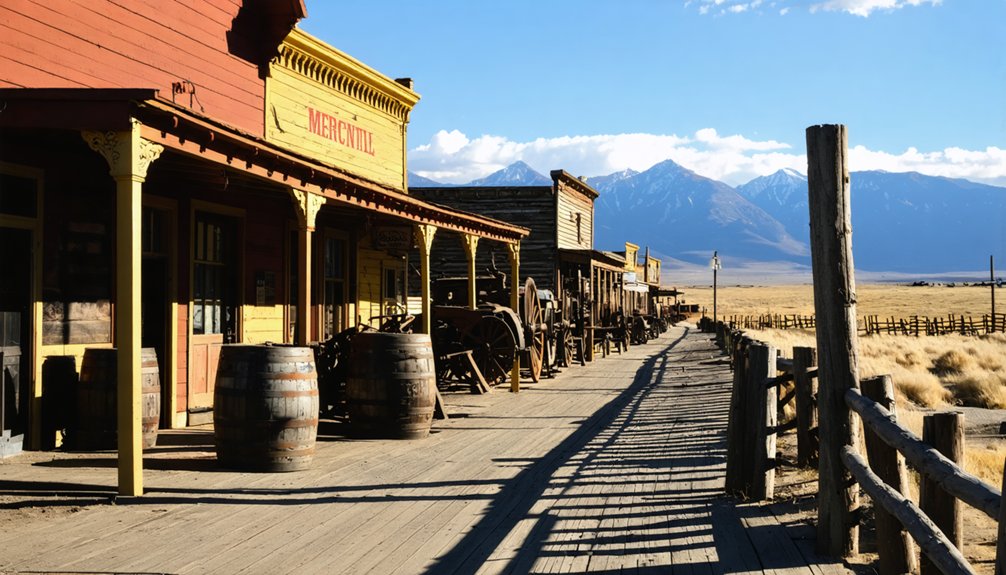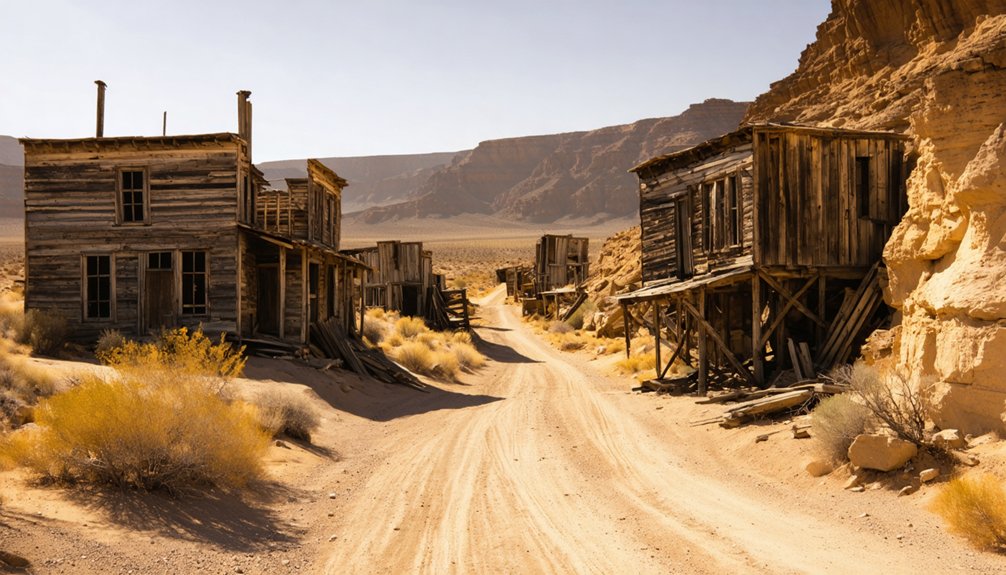
Leadfield sits 16 miles into Death Valley’s rugged Titus Canyon Road, and it’s not your average ghost town stop. You’ll find crumbling shacks, rusted sheds, and sealed mine shafts left behind after a brazen 1926 land fraud collapsed faster than its own mine tunnels. You’ll need a high-clearance vehicle, solid tires, and sharp eyes for rattlesnakes. This trip rewards the prepared traveler—and there’s far more to this canyon’s story than meets the eye.
Key Takeaways
- Leadfield sits 16 miles into Titus Canyon Road, starting from CA-374 near Beatty, Nevada, requiring a high-clearance or four-wheel-drive vehicle.
- Check NPS alerts before departing, as flash floods and sudden weather shifts can dramatically alter driving and trail conditions.
- Watch for rattlesnakes, avoid open mine shafts, and wear sturdy footwear to navigate the rocky, unstable terrain safely.
- The ghost town features rusted sheds, crumbling shacks, and sealed mine shafts tied to C.C. Julian’s 1920s land fraud scheme.
- Follow Leave No Trace principles by leaving all artifacts undisturbed, preserving Leadfield’s historical and natural integrity for future visitors.
What Makes Leadfield California Worth the Drive?
Tucked 16 miles into the rugged, unpaved stretch of Titus Canyon Road, Leadfield isn’t just a ghost town — it’s a cautionary tale frozen in desert time. You’re not simply driving through scenery; you’re retracing the footsteps of over 300 people who believed a con man’s promise.
The mining relics scattered across this remote canyon tell that story better than any history book. Rusted metal sheds, crumbling shacks, and sealed mine shafts stand as silent witnesses to one of the West’s most brazen land frauds.
Local legends surrounding promoter C.C. Julian give the site an almost cinematic edge. At 4,058 feet elevation, surrounded by the Grapevine Mountains, Leadfield rewards curious, independent travelers who crave authentic history over tourist-polished destinations.
The Fraud That Built and Destroyed Leadfield in Two Years
Few ghost towns carry a paper trail as damning as Leadfield’s. Promoter C.C. Julian orchestrated one of the American West’s most brazen mining scandals, selling stock and town plots through flashy PR campaigns built on historical deception rather than real ore evidence.
Julian hyped Leadfield as a rich lead and copper source, drawing over 300 people by 1926. The Western Lead Mine tunnel collapsed that illusion completely. When workers finally reached the anticipated deposit in late October, they found only low-grade ore worthless to investors.
The town died within a year. By July 1927, seven desperate miners remained. Julian fled to Shanghai after his indictment and died by suicide in 1934. You’re now walking through the wreckage that shameless ambition left behind.
What Vehicle You Actually Need Before Attempting Titus Canyon Road
Before you even think about turning onto Titus Canyon Road, you’ll need a high-clearance vehicle to handle the rugged, unpaved 27-mile stretch that leads to Leadfield.
Four-wheel drive isn’t always mandatory, but when the terrain gets loose or wet, you’ll be grateful you have it.
More than anything, your tires need to be in solid condition, because a blowout on this isolated road puts you in a genuinely dangerous situation far from help.
High Clearance Is Essential
Getting to Leadfield isn’t something you can do in just any vehicle—Titus Canyon Road demands high clearance, solid tires, and often 4-wheel drive to handle its 27 miles of rugged, unpaved terrain. Low-clearance sedans won’t survive the rocky washouts and steep canyon walls standing between you and this ghost town’s historical architecture and local legends.
You’ll hit Leadfield 16 miles into the drive, but the road doesn’t go easy on you before then. Sharp rocks, sudden dips, and narrow passages make every mile a real commitment.
Flash floods can transform the canyon instantly, so check NPS alerts before you leave. Bring plenty of water, know your vehicle’s limits, and respect the terrain—it’s unforgiving to anyone who arrives unprepared.
Four-Wheel Drive Considerations
Titus Canyon Road doesn’t care what you’re driving—it will expose every weakness your vehicle has within the first few miles. Shifting weather patterns and unpredictable terrain make four-wheel drive a serious advantage, not a luxury. Rocky switchbacks and wash crossings punish unprepared rigs fast.
Before you roll out, consider these four realities:
- Sandy washes between local flora clusters can swallow two-wheel drive vehicles completely.
- Sudden weather pattern shifts create instant mud sections requiring serious traction.
- Steep descents near Leadfield demand confident low-range four-wheel drive control.
- Remote recovery isn’t coming quickly—mechanical failure miles deep costs you a full day minimum.
Four-wheel drive transforms this drive from a gamble into a calculated adventure worth every rugged mile.
Tire Condition Matters Most
Four-wheel drive gets you far, but bald or worn tires will strand you just as fast as having no four-wheel drive at all. Titus Canyon Road punishes weak rubber with sharp rocks, loose gravel, and unpredictable terrain that spans 27 unforgiving miles.
You’re out there chasing vintage photography of crumbling shacks and rusted mining equipment, not a roadside breakdown in Death Valley heat.
Before you leave, physically inspect every tire, including your spare. Check tread depth, sidewall integrity, and air pressure.
A slow leak 16 miles in, with no cell service and triple-digit temperatures nearby, turns an adventure into a rescue call.
Your tires connect everything — your vehicle, the road, and your freedom to actually reach Leadfield and explore it on your own terms.
How to Reach Leadfield via Titus Canyon Road

To reach Leadfield, you’ll start your journey near Beatty, Nevada, where Titus Canyon Road begins off CA-374.
From there, you’ll navigate a rugged 27-mile one-way unpaved stretch that winds through the Grapevine Mountains.
Leadfield sits 16 miles into the drive.
Keep your eyes on the road and your speed low, as the terrain demands careful navigation to protect both your vehicle and yourself.
Starting Point And Entry
Getting to Leadfield means committing to a rugged, 27-mile one-way stretch of unpaved Titus Canyon Road that’ll test both your nerve and your vehicle. You’ll enter near Beatty, Nevada, off CA-374, pushing 16 miles in before the ghost town‘s historical architecture and scattered mining equipment emerge from the canyon walls.
Before you roll out, lock in these four essentials:
- Confirm the entry point at the CA-374 trailhead near Beatty, Nevada
- Check NPS alerts for road closures, flash flood warnings, or dangerous conditions
- Verify your vehicle has high clearance, solid tires, and ideally four-wheel drive
- Pack serious water because Death Valley’s extreme heat shows zero mercy on exposed desert roads
Freedom out here is earned, not handed to you.
Once you’ve confirmed the CA-374 entry point near Beatty, Nevada, you’re committing to a raw, 27-mile one-way push through Titus Canyon Road that demands your full attention. Leadfield sits 16 miles into that drive, buried deep in the Grapevine Mountains at 4,058 feet elevation.
The unpaved road twists through narrow canyon walls where wildlife encounters with desert bighorn sheep and rattlesnakes are genuinely possible. Local legends surrounding C.C. Julian’s elaborate fraud still echo through these canyon walls, making every mile feel historically charged.
Keep your high-clearance vehicle steady, watch for flash flood conditions, and check NPS alerts before departing. The canyon doesn’t forgive careless driving.
Extreme heat demands you carry substantial water. This road isn’t scenic background — it’s an active participant in your journey.
The Ruins, Mine Shafts, and What Survives at Leadfield Today
When you finally arrive at Leadfield, what greets you isn’t so much a ghost town as a skeleton of one. Rusted metal sheds, crumbling shacks, and debris scatter across the canyon floor, frozen in quiet collapse. Two locked mine shafts remain, while others stay dangerously open.
Historic preservation efforts keep this site intact but raw.
Here’s what you’ll actually encounter:
rust, rot, open shafts, rattlesnakes, and silence thick enough to feel.
- Rusted metal sheds — few remain standing but still photogenic
- Abandoned mine shafts — some open, all hazardous without proper gear
- Collapsing wooden structures — handle nothing, photograph everything
- Local wildlife — rattlesnakes patrol the ruins, so watch every step
A National Park Service sign frames it perfectly: a boom built on distortion, preserved as a warning.
Rattlesnakes, Open Shafts, and Leave No Trace Rules for Leadfield
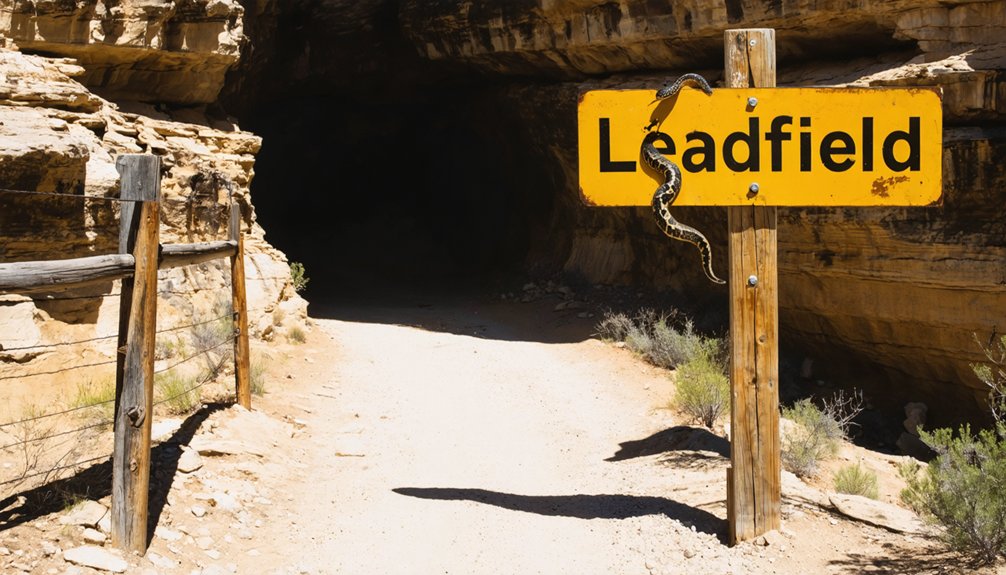
Exploring Leadfield means accepting that nature has reclaimed this canyon on its own terms. Rattlesnakes patrol the rocky terrain, so watch every step and never reach blindly into crevices or debris. Wildlife safety isn’t optional here — it’s survival thinking.
Open mine shafts present serious hazards. Some entrances invite curiosity, but unstable ground and hidden drop-offs make every step inside a calculated risk. The National Park Service advises entering at your own risk, so bring proper hiking gear and a headlamp if you venture in.
Respecting Leave No Trace principles protects both the site and your freedom to access it. Minimizing your environmental impact keeps Leadfield open for future explorers. Take nothing, disturb nothing, and let this infamous canyon remain exactly as history left it.
Frequently Asked Questions
You’ll navigate directly to Leadfield using 36°50′48″N 117°03′33″W. Plug these coordinates in before hitting off road adventure routes through Titus Canyon, ensuring you capture stunning ghost town photography at this remote, freedom-inspiring destination.
What Elevation Does Leadfield Sit at Within the Grapevine Mountains?
You’ll find Leadfield sitting at 4,058 feet within the Grapevine Mountains, where abandoned structures and failed mineral deposits tell a haunting story of broken dreams waiting for free-spirited explorers to uncover.
How Many People Lived in Leadfield During Its Peak Population Boom?
Over 300 people once called Leadfield home during its 1926 boom — but you’d never guess it exploring its ghost town history today. You’ll find only abandoned mines and silence where that fleeting community thrived.
What Happened to C.C. Julian After the Leadfield Fraud Collapsed?
After Leadfield’s fraud collapsed, C.C. Julian faced indictment, fled to Shanghai, and died by suicide in 1934. His deception shaped ghost town preservation efforts, making abandoned mining towns like Leadfield infamous reminders of unchecked greed you can still explore today.
Is Leadfield Listed on the National Register of Historic Places?
Yes, Leadfield’s on the National Register of Historic Places! This designation champions historic preservation, ensuring you can explore its notorious mining history — a wild tale of boom, bust, and fraud forever etched into California’s landscape.
References
- https://en.wikipedia.org/wiki/Leadfield
- https://www.youtube.com/watch?v=o_6qAfGxjr8
- https://www.marincountyvisitor.com/leadfield-ghost-town-death-valley-two-year-boom-and-bust/
- https://nypost.com/2026/03/23/lifestyle/inside-the-death-valley-town-that-shut-within-two-years/
- https://thebreakofdawns.com/leadfield-ghost-town-in-death-valley-california/
- https://it.wikipedia.org/wiki/Leadfield
- https://www.usgs.gov/media/images/leadfield-ghost-town
- https://www.nps.gov/parkhistory/online_books/deva/section4a8.htm
- https://www.abandonedspaces.com/towns/leadfield-mining-town.html