Planning a ghost town road trip to Calaveras, Texas means embracing raw, unfiltered history over polished attractions. You’ll find scattered foundations, a quiet cemetery, and historical markers telling stories most travelers never stop to hear. Hit the road in fall or spring for the best conditions, and approach from US-181 with a full tank and offline maps ready. There’s far more to uncover about making this journey unforgettable.
Key Takeaways
- Calaveras features a cemetery, scattered foundations, and historical markers, offering a raw, uncurated ghost town experience without dramatic ruins or cinematic emptiness.
- Fall and spring offer the most comfortable exploration conditions, while weekday mornings before 10 a.m. provide the quietest visits.
- Access Calaveras via US-181 from San Antonio or Corpus Christi, using Alpine as your last supply stop before remote travel.
- Combine your visit with nearby Terlingua, Marfa, Fort Davis, and Big Bend for a fuller West Texas ghost town road trip.
- Pack snacks, first aid supplies, offline maps, and a full fuel tank when exploring Calaveras and surrounding remote sites.
What You’ll Actually Find When You Arrive at Calaveras?
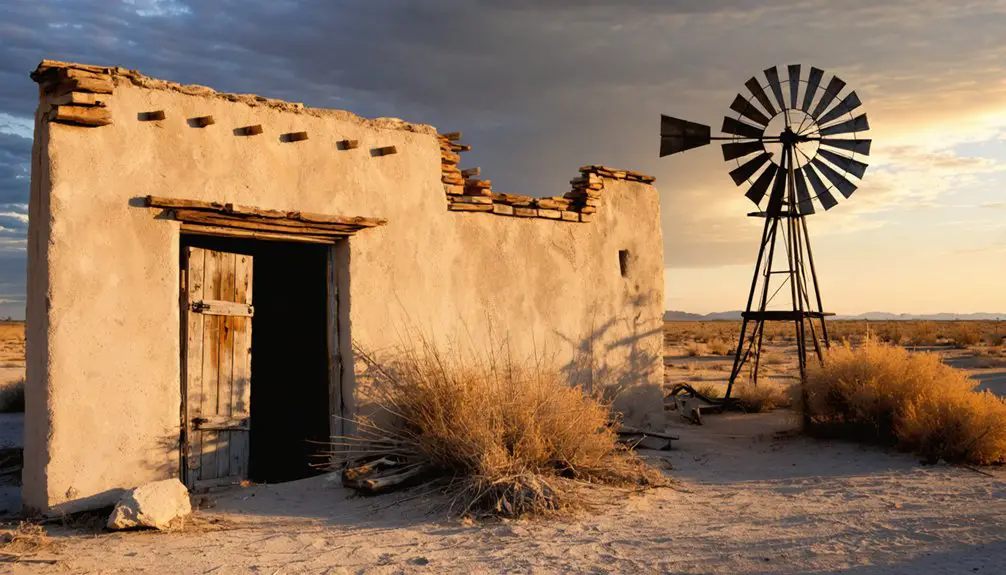
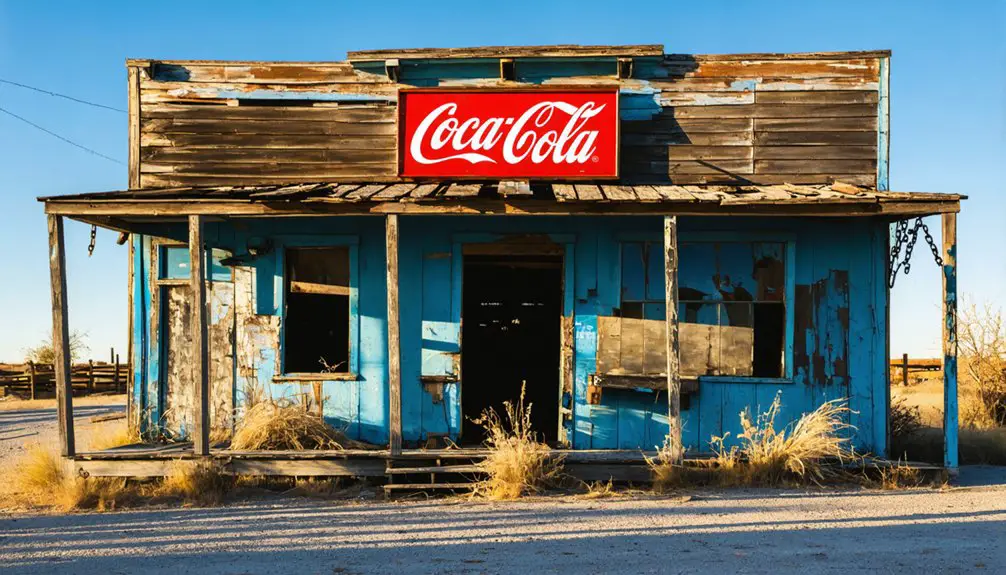
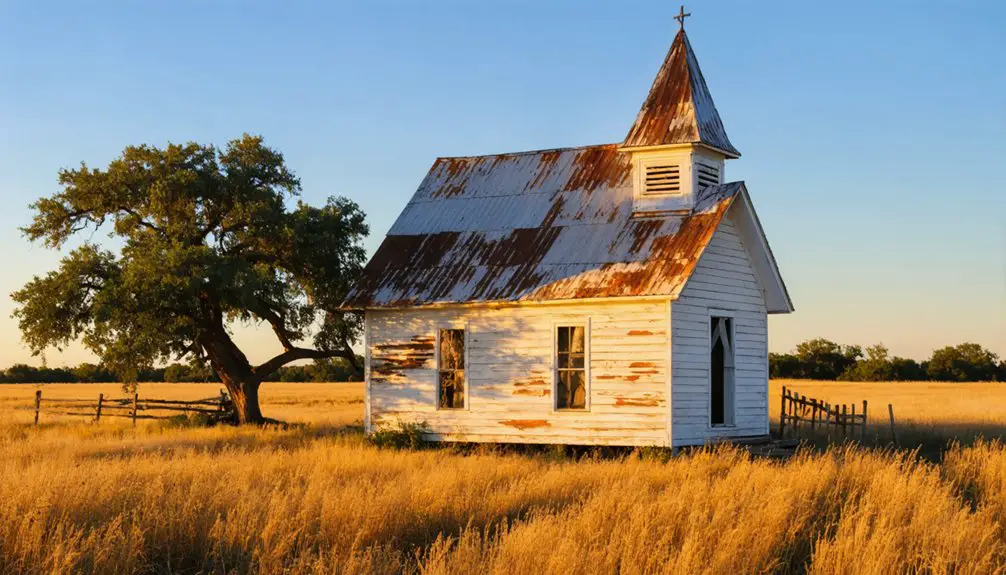
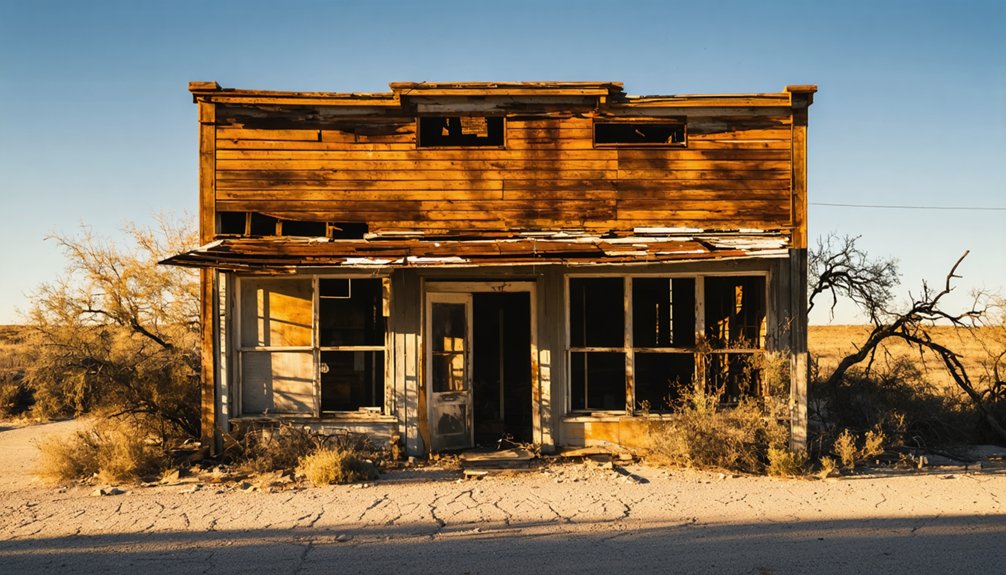
Calaveras won’t overwhelm you with dramatic ruins or cinematic emptiness — and that’s worth knowing before you pull off the road. What you’ll find instead is quieter and more honest: a cemetery, scattered foundations, maybe a historical marker standing beneath a hard white sky.
Calaveras doesn’t announce itself. It waits — a cemetery, a foundation, a marker beneath pale sky.
Historical preservation here isn’t polished or curated — it’s raw and unmediated, which makes it more authentic. You’re reading what’s left, not what someone reconstructed for you.
Local legends cling to this place the way dust clings to old stone, and locals who pass through occasionally will share fragments if you’re willing to listen. Walk the grounds slowly. Read every marker. Let the geography tell you what the economy couldn’t sustain.
That’s the real arrival.
What Makes Calaveras a Texas Ghost Town Worth Visiting?
What separates Calaveras from a forgettable roadside stop is exactly what most travelers overlook: it doesn’t perform for you. There’s no curated experience waiting, no gift shop softening the edges.
What you get instead is raw geography, abandoned structures slowly returning to the earth, and local legends that reward the curious rather than the passive.
You earn this place by paying attention. You read the markers, walk the grounds, and ask the harder questions — why here, and why did it stop working?
That’s where Calaveras shifts from a dot on a map to something that actually stays with you.
For travelers who want freedom over convenience, that’s the entire point. Calaveras doesn’t need to impress you. It just needs you to show up willing.
When To Visit Calaveras for the Best Experience?
You’ll find Calaveras most rewarding in the cooler months of fall and spring, when mild temperatures make walking the grounds and reading historical markers far more comfortable.
Summer heat in south Texas can be punishing, so visiting between October and April gives you the stamina to actually linger rather than rush back to your car.
If you want the site largely to yourself, weekday visits in the off-season keep the crowds thin and the atmosphere authentically quiet.
Best Seasons To Visit
Though Calaveras doesn’t operate on a tourist season the way beach towns do, timing your visit smartly makes a real difference in what you experience. Each season offers something distinct for explorers craving open roads and quiet history.
- Spring (March–May): Mild temps, wildflowers blooming, and peak wildlife sightings near water sources.
- Fall (September–November): Crisp air, golden light ideal for photography tips like shooting ruins at golden hour.
- Winter (December–February): Sparse crowds, stark landscapes, and dramatic skies for moody compositions.
- Summer (June–August): Intense heat demands early morning visits, but long daylight hours extend exploration time.
- Weekdays year-round: You’ll encounter fewer visitors, giving you uninterrupted access to markers, cemeteries, and foundations.
Choose your window based on what you’re chasing — comfort, solitude, or the perfect shot.
Avoiding Peak Crowds
Calaveras draws its quietest crowds on weekday mornings, when most travelers are still planning their routes or sleeping in at Marfa motels. Arrive before 10 a.m. on a Tuesday or Wednesday, and you’ll have the cemetery and remaining foundations almost entirely to yourself. That solitude matters — it lets you absorb the local legends embedded in every weathered marker without distraction.
Spring and fall weekends attract the heaviest traffic, pulling visitors enthusiastic for comfortable temperatures and Big Bend excursions nearby. If your schedule forces a weekend visit, go early and leave by noon.
Historical preservation sites deserve unhurried attention, not rushed walkthroughs behind tour groups. Give yourself room to read, wander, and actually think about why this community rose, thrived, and ultimately emptied out.
How To Get To Calaveras, Texas?
Calaveras sits within easy reach of San Antonio via US-181 South, making it one of the more accessible ghost town detours in the region.
If you’re coming from Corpus Christi, head north on US-181 and you’ll hit the area without any complicated backroads navigation.
Factor in a route that lets you string together nearby historical stops, since the drive itself rewards you with a strong sense of South Texas’s layered past.
Nearest Major Highway Access
Getting to Calaveras, Texas, requires a bit of deliberate planning, since it sits off the main corridors most travelers stick to. Its mining history and town preservation make the detour absolutely worth it.
Key access points to keep in mind:
- US-90 serves as your primary east-west backbone through southwestern Texas
- US-385 connects you southward toward Big Bend country and surrounding ghost towns
- TX-118 offers a scenic alternative dropping through Alpine and Fort Davis
- Alpine, Texas functions as your last reliable fuel and supply stop before heading out
- Marfa sits nearby as a western anchor point if you’re building a broader route
Keep your tank full, download offline maps, and embrace the open road between stops.
Recommended Route From Cities
Once you’ve locked in your highway access points, the next step is mapping out which city you’re departing from so you can string together a route that actually makes sense.
From San Antonio, head west on US-90, weaving through small towns carrying deep mining history before reaching ghost town preservation hotspots like Marfa and Fort Davis.
From El Paso, drive southeast on I-10, then cut south toward the Big Bend region, where Terlingua’s corrugated steel structures and century-old cemetery anchor the experience.
Dallas travelers benefit from taking US-67 south through Midland, then dropping into Brewster County.
Whichever direction you’re coming from, build buffer time into each stop.
The cumulative reward of reading markers, walking cemeteries, and studying abandoned geography amplifies considerably the further you travel.
Which Ghost Towns Pair Well With Calaveras?
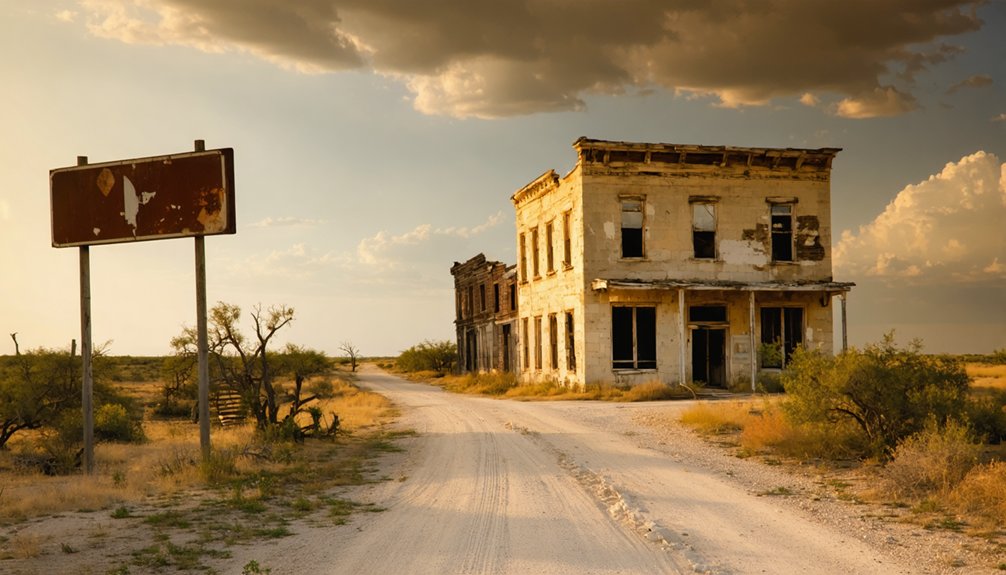
If you’re building a route around Calaveras, the surrounding West Texas landscape rewards travelers who string together several stops rather than treating any single ghost town as a destination.
Historical preservation varies across these sites, but local legends thrive at each one.
Pair Calaveras with these complementary stops:
- Terlingua – A living ghost town with a cemetery, trading post, and real café serving grilled cheese and iced coffee
- Marfa – Equal parts art culture and atmospheric West Texas emptiness
- Fort Davis – Solid historical infrastructure and mountain terrain
- Big Bend region – Anchors your route with hiking, rafting, and stargazing
- Roadside historical markers – Read every one; they explain why towns rose and collapsed
The cumulative experience deepens considerably by your third or fourth stop.
What To Pack for a Day Trip to Calaveras?
Calaveras sits in the hard West Texas sun with little shade, no services, and no guarantee of cell signal, so packing smart matters more than packing light. Bring more water than you think you’ll need, sunscreen, a wide-brimmed hat, and sturdy shoes for uneven ground.
Carry a paper map since digital navigation fails frequently out here. Toss in a notebook for jotting down local legends you’ll encounter on historical markers or from fellow travelers passing through. A camera helps document the site’s historical preservation efforts and crumbling architecture worth remembering.
Pack snacks, a first aid kit, and layers for temperature swings between afternoon heat and evening cool. Your freedom to explore this remote place depends entirely on your preparation before leaving pavement behind.
Where To Eat and Sleep Near Calaveras?
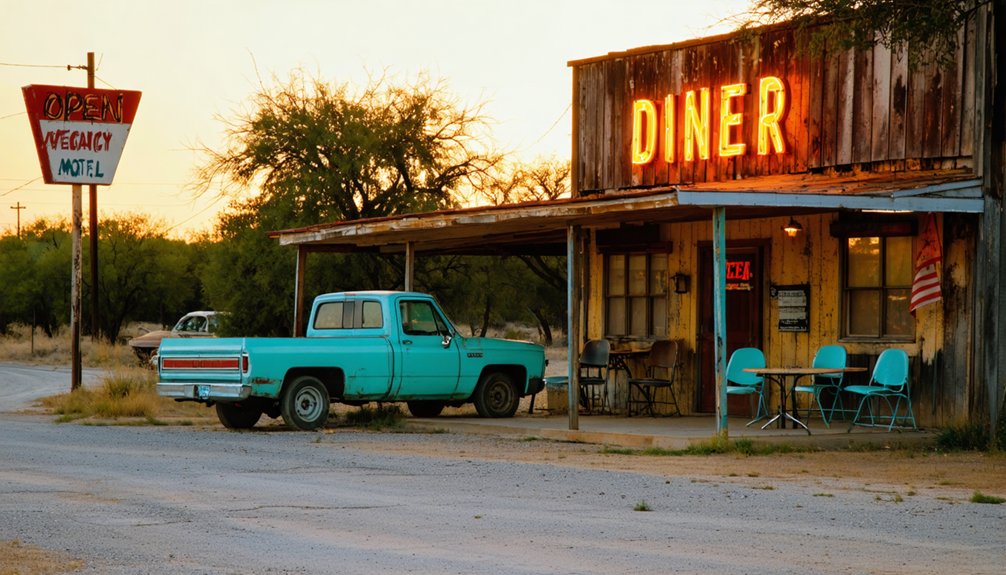
Sleeping near Calaveras means anchoring yourself in Terlingua, the closest town with actual infrastructure and a personality worth staying for. You’ll find local cuisine that punches well above the town’s size, from a BBQ trailer to a fabulous café serving grilled cheese and iced coffee.
The historic architecture surrounding you — corrugated steel structures built over old mining-era bones — makes every meal feel earned.
Here’s what you can expect nearby:
- A trading post doubling as a community hub
- Roadside diners with straightforward, satisfying meals
- Small art shops worth browsing between bites
- Camping options under genuinely dark, star-filled skies
- Rustic lodging with Big Bend access right outside your door
Stay loose with your schedule. Terlingua rewards lingering, not rushing.
Ask These Questions at Every Ghost Town Stop
Every ghost town asks you to do a little interpretive work, and the right questions sharpen that process considerably. Stand anywhere in Calaveras and ask yourself two things: why did people build here, and what finally made the economic math stop working?
Mining history answers the first question almost everywhere in this region. Ore deposits, water access, and rail proximity drew entire families into brutal landscapes. Then prices collapsed, veins ran thin, or the railroad rerouted — and towns emptied within a generation.
Cemetery walks answer the second question emotionally. The names, dates, and ages carved into weathered markers tell you who stayed, who died young, and what the land cost people personally. Read every marker you find. That’s where the real story lives.
Frequently Asked Questions
Is There an Admission Fee or Permit Required to Visit Calaveras?
You don’t need an admission fee or permit to explore Calaveras! Historical preservation efforts keep the site freely accessible, and visitor amenities are minimal, so pack your essentials, roam freely, and soak in the raw, untamed history.
Are Pets Allowed to Explore the Calaveras Ghost Town Site?
The knowledge base doesn’t cover pet policies or animal restrictions for Calaveras. You’ll want to contact local authorities directly before bringing your furry companion, ensuring you’re both free to explore without unexpected surprises.
Does Calaveras Have Accessible Pathways for Visitors With Mobility Limitations?
Like sand slipping through fingers, details on Calaveras’ wheelchair accessibility remain elusive. You won’t find confirmed paved pathways here, so you’ll want to contact local authorities directly before planning your visit with mobility limitations.
Can Visitors Legally Collect Artifacts or Souvenirs Found at Calaveras?
You shouldn’t collect artifacts or take souvenirs from Calaveras, as removing items is typically illegal at historical sites. Respecting artifact collection and souvenir rules preserves the site’s story, keeping its fascinating history intact for every future freedom-seeking explorer.
Is There Cell Phone Coverage or Emergency Services Available Near Calaveras?
You’ll find cell phone coverage is unreliable near remote ghost towns like Calaveras, so don’t count on it. Always inform someone of your plans, carry a satellite communicator, and know that emergency services response times can be dangerously slow.
References
- https://middlejourney.com/road-trip-terlingua-the-texas-ghost-town-by-big-bend/
- https://www.frommers.com/slideshows/848476-9-ghost-towns-to-explore-during-road-trips-through-the-american-west/
- https://www.unscaledtravelshow.com/texas-ghost-town-road-trip/
- https://www.huffpost.com/entry/abandoned-america-night_n_4079720
- https://www.click2houston.com/news/texas/2020/06/18/the-ghost-towns-of-texas-5-abandoned-texas-towns-to-check-out-on-your-next-road-trip/
- https://texasghosttours.com/2025/04/22/haunted-highways/