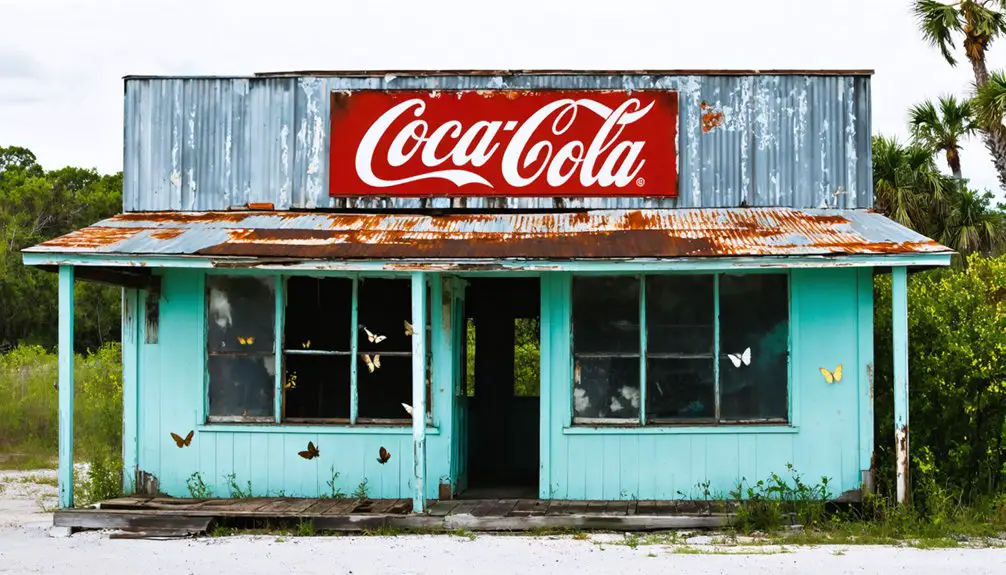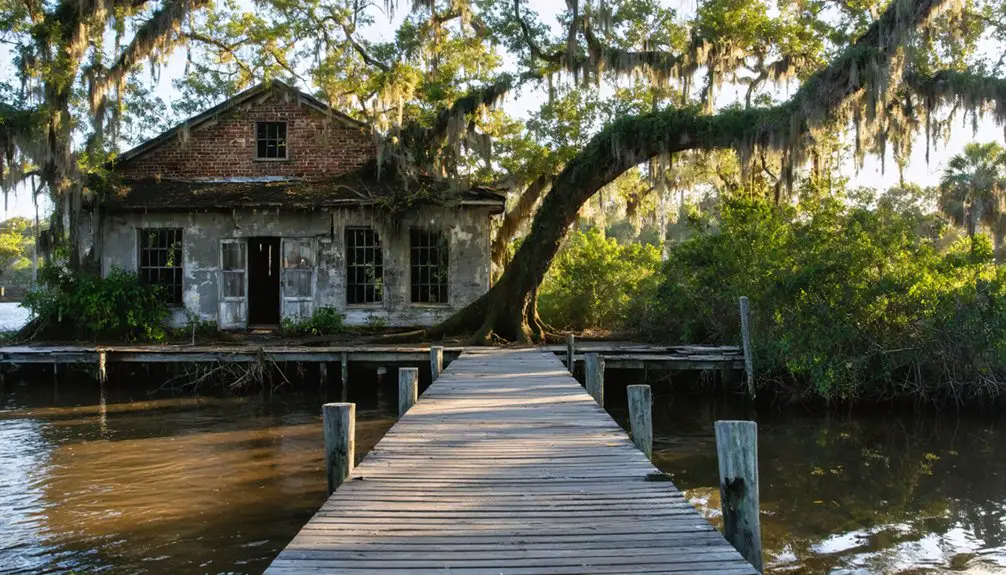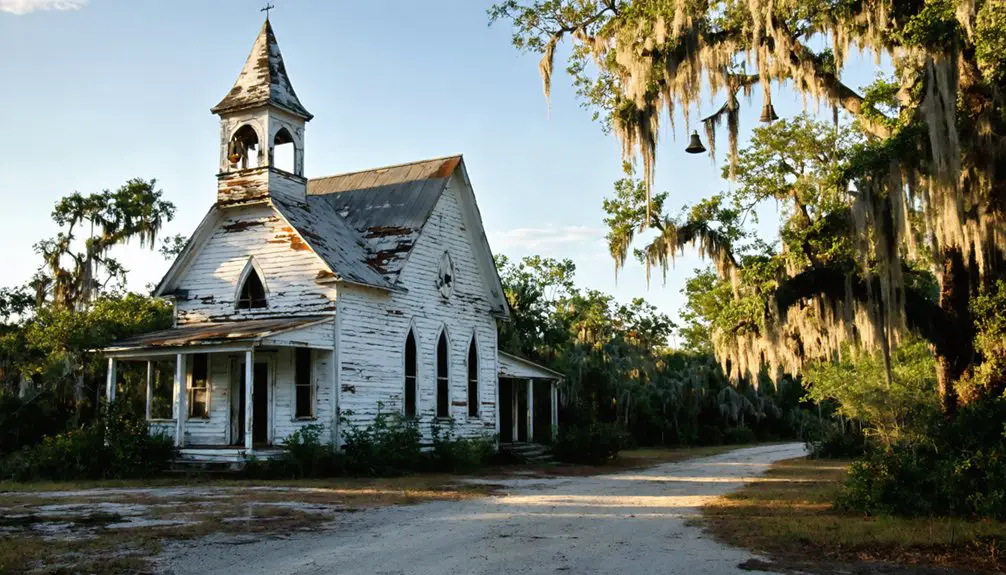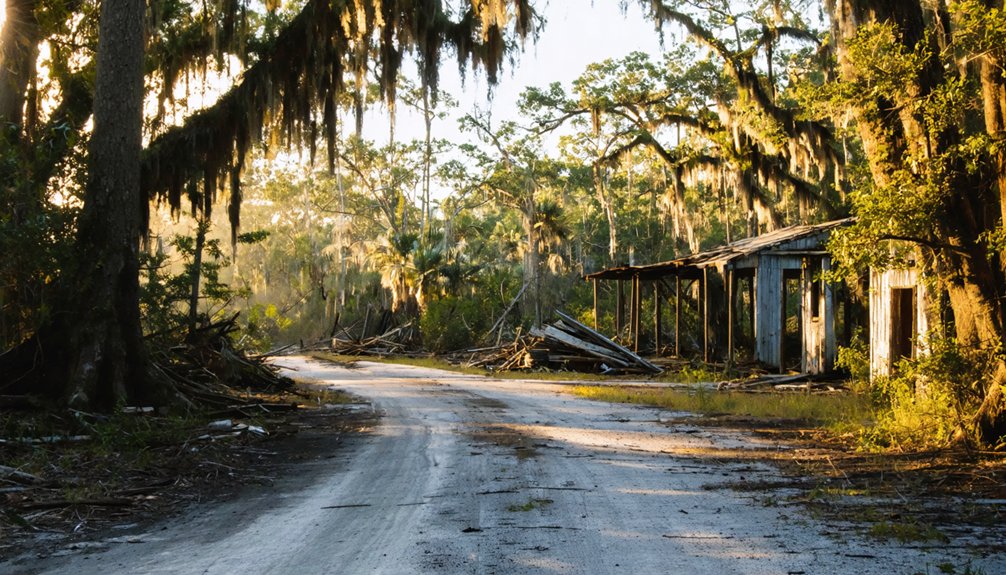
Planning a road trip to Fivay, Florida means chasing a ghost you can barely see. This vanished company town once housed up to 2,300 residents around a massive sawmill operation, but it collapsed before 1914 when the timber ran out. Today, you’ll find suburban sprawl where industry once roared, with little more than a road sign marking the spot. Stick around to uncover what really happened here and how to make the drive worth your time.
Key Takeaways
- Fivay, a former Florida company town, has no preserved ruins; the Fivay Road sign near Little Road marks the approximate town center.
- State Road 52 follows the original logging railroad corridor, offering a historically meaningful route through the area.
- Visit Pasco County Historical Society archives beforehand for maps and photographs to enrich your understanding of the site.
- Pair Fivay with regional stops like Aripeka waterfront, Trilby historic district, and Withlacoochee State Forest edges for fuller context.
- Treat the trip as an educational research experience rather than traditional sightseeing, focusing on landscape interpretation and boom-and-bust history.
What Was the Fivay Ghost Town?
Once a thriving company town carved out of the Florida wilderness, Fivay was a full-scale industrial settlement built around a sawmill operation in Pasco County in the early 1900s.
Fivay was no ordinary settlement — it was an entire world built from scratch in the heart of the Florida wilderness.
Five investors, each with a last name starting with “A,” founded the town and gave it its distinctive name.
At its peak, Fivay supported roughly 1,500 to 2,300 residents, two sawmills, 14 locomotives, and 50 logging cars.
You’d have found historic architecture ranging from worker housing to mill infrastructure sprawling across what’s now quiet suburban land.
Local legends still circulate about its rapid rise and equally rapid collapse.
How a Sawmill Turned Pasco County Wilderness Into a Town of 2,000
Before the sawmill arrived, Pasco County’s interior was dense, largely inaccessible Florida wilderness. Then the Aripeka Saw Mill Company moved in around 1904, and everything changed fast.
Crews laid rail lines deep into the timber stands, and within a few years, Fivay supported roughly 1,500 to 2,300 residents. Two sawmills ran simultaneously, one cutting pine, one cutting cypress, powered by 14 locomotives hauling 50 logging cars across the landscape.
The operation was reportedly among the largest in Florida at its peak. What you see today is a story of urban decay where infrastructure vanished almost as quickly as it appeared.
Historical preservation efforts never took hold here, leaving you to read the land itself as the only remaining record of that remarkable industrial surge.
Why the Fivay Ghost Town Collapsed Before 1914
The same speed that built Fivay is exactly what tore it apart. The Aripeka Saw Mill Company burned through the surrounding timber so aggressively that the resource depletion became irreversible faster than anyone planned.
By around 1912, the trees were gone, and industrial decline followed almost immediately.
Without timber, the mill had no purpose. Without the mill, the workers had no income. Without workers, the town had no reason to exist.
The company liquidated what it could and walked away. Then came the final blow — crews pulled up the railroad tracks, stripping Fivay of its lifeline to the outside world.
What Survives of the Fivay Ghost Town Today
When you visit the former Fivay townsite today, you’ll find almost nothing standing from its industrial peak — no mill structures, no worker housing, no railroad depots.
The most tangible reminder you’ll spot is the Fivay Road sign near its junction with Little Road, marking a name that outlasted everything the town once held.
Suburban homes and shopping centers have replaced the sawmill grounds, quietly absorbing a site that once housed over a thousand people into Pasco County’s modern sprawl.
Visible Remnants Today
Unlike many ghost towns preserved as ruins or museums, Fivay has been swallowed almost entirely by modern suburban growth, leaving only faint traces for curious road-trippers to track down. Don’t expect dramatic crumbling buildings or ghost stories etched into weathered walls, but sharp eyes will still find evidence worth stopping for.
Here’s what you might actually encounter:
- Fivay Road sign – Your clearest landmark and the town’s most visible surviving identity marker.
- Fivay Road and Little Road junction – Considered the approximate heart of the original settlement.
- Pond-edge debris – Scattered remnants near former mill areas, fueling local urban legends about buried equipment.
- State Road 52 corridor – The highway itself traces the old logging railroad right-of-way directly beneath your wheels.
Suburban Absorption Signs
Suburban sprawl has done what time alone rarely manages — it’s erased Fivay so thoroughly that you won’t find crumbling foundations or rusted machinery waiting dramatically at the roadside. Shopping centers and subdivisions now occupy the former mill town, representing preservation challenges that historians and explorers alike find frustrating.
Drive along State Road 52 and you’re literally traveling the old railroad corridor, though nothing marks that connection. Urban legends occasionally surface about buried rail spikes or forgotten mill ponds hiding near Fivay Road, but verified physical evidence stays thin.
The clearest absorption sign is the road name itself — Fivay Road persisting quietly amid modern development near Little Road. That small geographic survivor carries more history per square inch than anything else you’ll spot here.
How State Road 52 Follows the Old Fivay Railroad Corridor
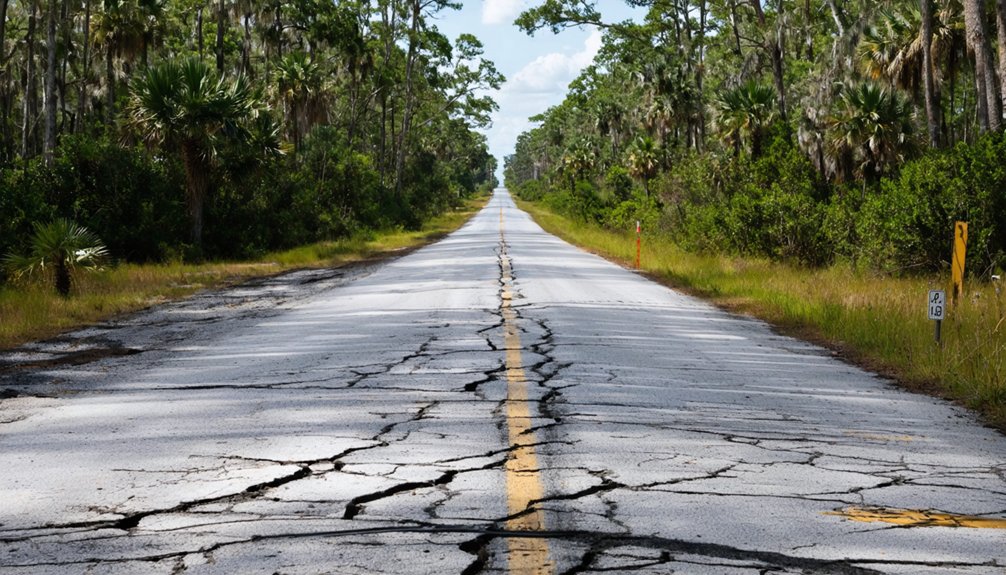
The road you’re driving on may be older than you think. State Road 52 doesn’t just cut through Pasco County — it traces the ghost of Fivay’s original railroad corridor, one of the key transportation corridors that made the entire logging operation possible.
Urban development has paved over the evidence, but the alignment tells the story:
The pavement hides the past, but the path itself remains a quiet confession.
- The railroad once hauled timber from deep forest to the sawmill site.
- After closure, crews pulled the track entirely.
- Road builders later followed the same cleared right-of-way.
- State Road 52 now moves commuters where locomotives once moved logs.
As you drive it, you’re literally following industrial history. That straight corridor through Hudson and Land O’ Lakes wasn’t engineered for cars first — it was engineered for lumber.
The Physical Traces Still Visible at the Fivay Townsite
Most ghost towns leave dramatic ruins behind — Fivay left almost nothing. When you pull off near Fivay Road and Little Road, you won’t find crumbling walls or preserved mill structures. Instead, you’ll spot subtle hints: pond-edge debris, irregular ground contours, and vegetation patterns that suggest past industrial activity.
Subdivision streets and shopping centers have consumed nearly everything else.
Preservation challenges here are real — private ownership and decades of suburban development erased what archaeology might’ve recovered. A few urban legends circulate locally about buried equipment and forgotten foundations beneath the tree lines, though nothing confirmed surfaces easily.
Your best tool is a historical map layered against what you see today. That contrast alone makes the stop worthwhile, turning an ordinary roadside into something genuinely worth understanding.
Pasco County History Sites That Provide Logging-Era Context
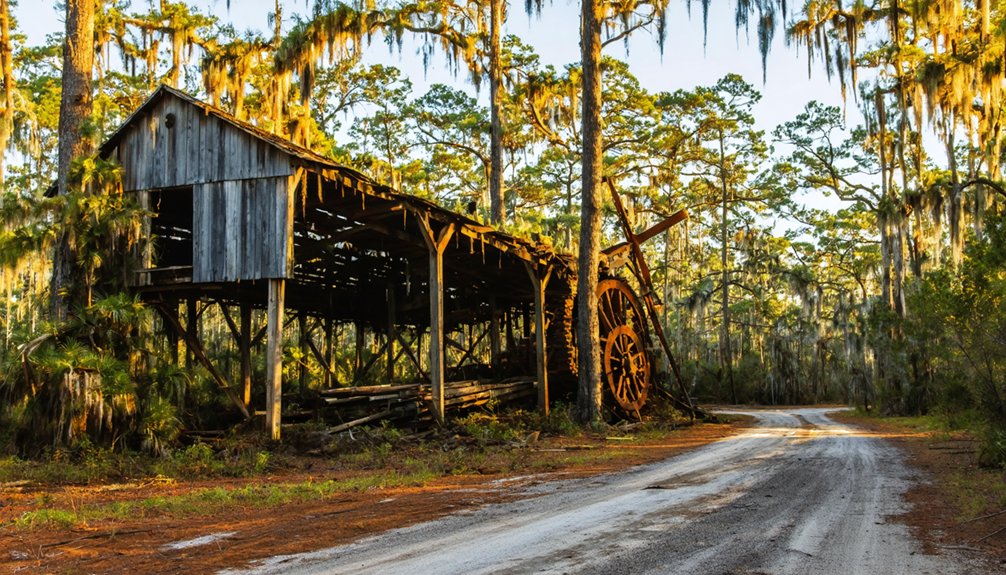
If you want to give Fivay some historical context, Pasco County’s local museums and heritage sites can fill in the gaps that the ghost town itself no longer can.
You’ll find logging-era exhibits and regional timber industry history at stops scattered across the county, helping you piece together how operations like the Aripeka Saw Mill Company shaped the entire landscape.
Pairing your Fivay visit with these nearby resources turns a short roadside stop into a richer understanding of west-central Florida’s boom-and-bust logging past.
Nearby Logging History Sites
Fivay doesn’t exist in isolation — Pasco County holds several history-focused stops that flesh out the logging era and give you a richer sense of what this corner of Florida looked like before the suburbs arrived.
Cut through the ghost town myths and urban legends by grounding your visit in documented regional history.
- Tarpon Springs Heritage Museum — traces early Florida industry and settlement patterns
- Dade City’s Pioneer Florida Museum — preserves authentic logging-era tools and structures
- Richland Cemetery — marks early communities connected to the timber economy
- Pasco County Historical Society archives — offers maps and photographs that separate fact from folklore
Each stop adds context that transforms a simple drive along State Road 52 into a genuinely informed exploration of west-central Florida’s vanished industrial past.
Pasco County Heritage Museums
Before you hit State Road 52, consider anchoring your road trip with a stop at one of Pasco County’s heritage museums — they’ll give you the logging-era context that makes the Fivay ghost town story click.
The Pasco County Historical Society preserves industrial artifacts, old photographs, and documents that trace the region’s sawmill boom directly. You’ll recognize names, railroad lines, and timber operations that connect straight back to Fivay’s rise and collapse.
Some exhibits even touch on urban legends surrounding vanished company towns, separating local myth from documented fact. Walking through these collections before you reach Fivay Road sharpens your eye for what little remains at the site.
You’ll stop guessing and start reading the landscape like someone who actually knows what they’re looking at.
Regional Timber Industry Trails
Once you’ve walked through the county’s heritage collections, the regional timber industry trails scattered across Pasco County pull the bigger picture into focus. Industrial nostalgia runs deep here, where railroad remnants and logged-out landscapes tell stories no museum wall fully captures.
Follow these four trail-worthy stops for logging-era context:
- State Road 52 corridor – Drive the old rail right-of-way that once hauled timber directly from Fivay’s mills.
- Aripeka waterfront – This coastal community connected the inland logging operation to broader markets.
- Trilby historic district – Another railroad remnant town revealing how rail shaped settlement patterns.
- Withlacoochee State Forest edges – Walk terrain where nineteenth-century timber crews stripped the land clean.
Each stop sharpens your understanding of how completely logging reshaped west-central Florida.
How to Plan a Fivay Ghost Town Road Trip Without Wasting the Drive
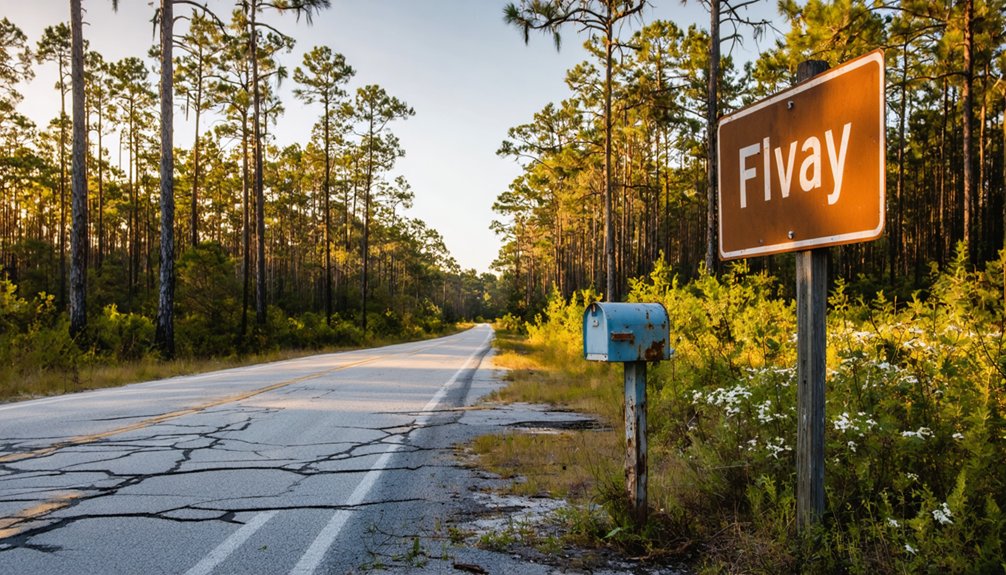
Planning a ghost town road trip to Fivay means accepting upfront that you won’t find crumbling ruins or a preserved historic district waiting for you. Historical preservation never happened here, and tourist attractions are fundamentally nonexistent.
What you’ll find is context, freedom, and a story written into the landscape itself.
Use State Road 52 as your anchor route. Pull up a historical map before you leave, note the junction of Fivay Road and Little Road, and treat the drive as active discovery rather than passive sightseeing.
Bring your own curiosity because the site rewards research more than arrival.
Pair the stop with other Pasco County logging-era destinations to build a fuller picture of west-central Florida’s boom-and-bust past. That combination makes the drive genuinely worth your time.
Frequently Asked Questions
Is There Any Parking Available Near the Fivay Road Historical Site?
You won’t find dedicated parking options or visitor amenities at Fivay Road’s historical site, but you can pull off safely along nearby roads and explore this fascinating ghost town remnant at your own adventurous pace.
Are There Any Guided Tours or Local Historians Covering Fivay Specifically?
You’re flying blind without guided tour options for Fivay, but local historian insights from Pasco County historical societies can connect you with knowledgeable volunteers who’ll help you uncover this ghost town’s fascinating, forgotten story.
What Is the Best Time of Year to Visit Fivay?
Visit Fivay in fall or spring when Florida’s seasonal weather stays mild and comfortable. You’ll dodge summer’s brutal heat and humidity, and you won’t battle visitor crowds, giving you freedom to explore the site peacefully.
Were Any Photographs or Maps of Original Fivay Structures Ever Published?
Few Fivay photographs and Fivay maps have surfaced publicly, but you’ll find scattered images and plat references tucked inside Pasco County historical archives, old newspaper archives, and Florida genealogical society collections if you dig persistently.
Did Any Descendants of the Five Founding Investors Ever Return to Fivay?
No records confirm founder descendants held family reunions at Fivay. With five founding families and a town gone by 1914, you’d think someone returned, but history’s stayed silent on that fascinating chapter.
References
- https://www.fivay.org/fivay.html
- http://www.gribblenation.org/2018/04/ghost-town-tuesday-fivay-fl.html
- https://en.wikipedia.org/wiki/Fivay
- https://www.tampabay.com/archive/1996/08/04/in-the-early-1900s-fivay-rose-and-fell-with-its-sawmills/
- https://www.youtube.com/watch?v=GJ8pioXw1Xs
- https://www.fivay.org/lacoochee59.html
- https://www.youtube.com/watch?v=fAu5kj5Q5uo
- https://en.wikipedia.org/wiki/List_of_ghost_towns_in_Florida