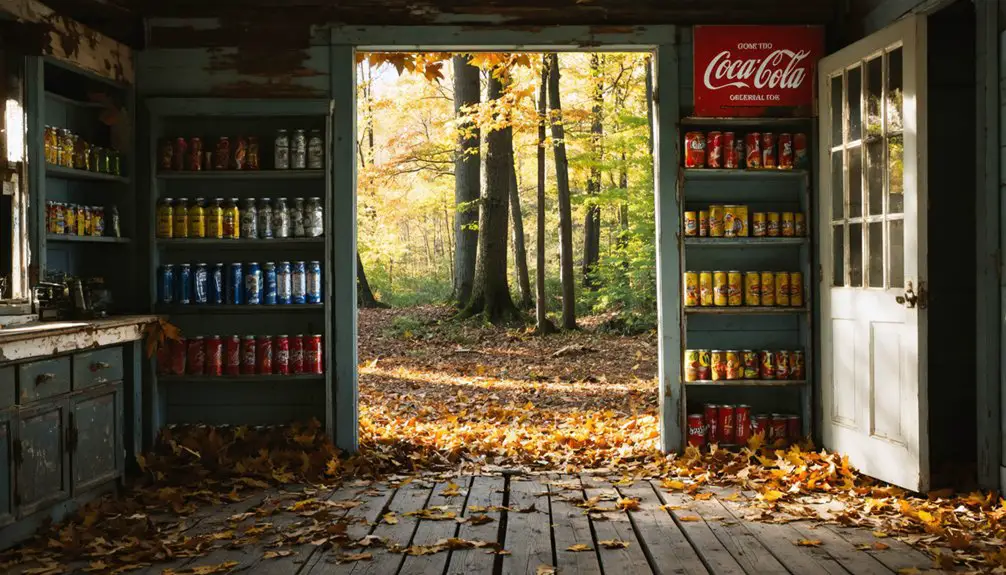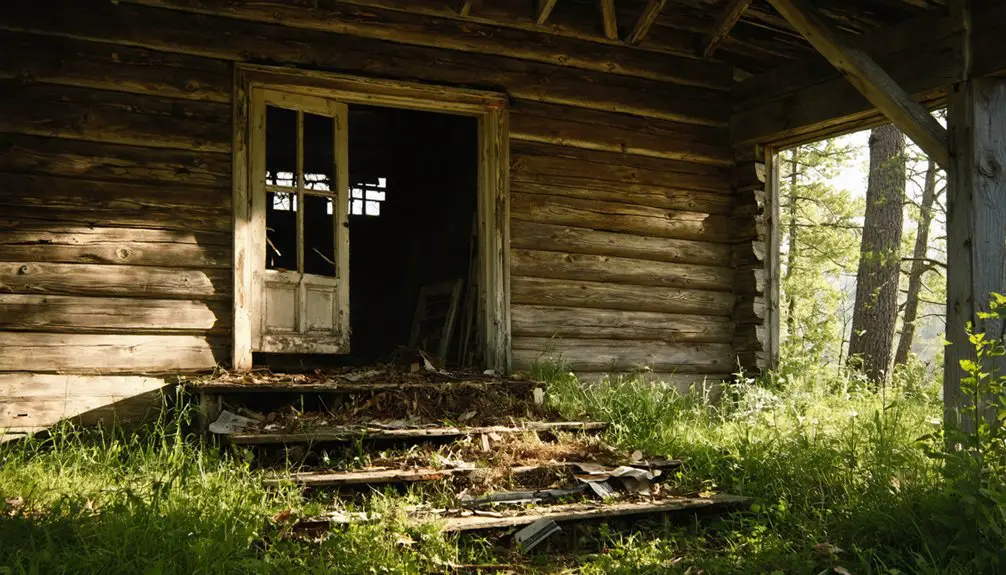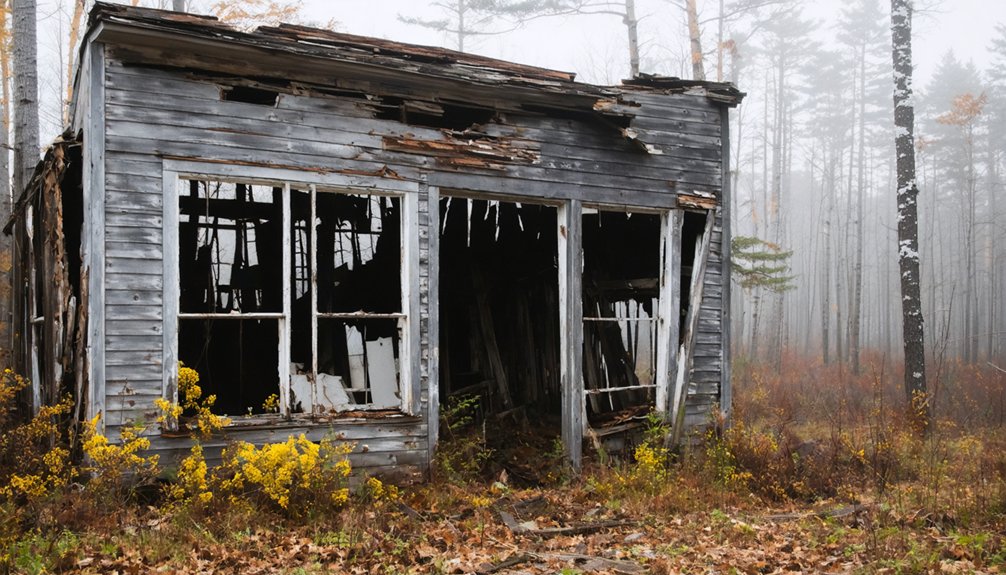
Flagstaff, Maine wasn’t always a lake — it was a living town with streets, homes, and history dating back to the 1700s. By 1950, rising waters swallowed it whole to create a 20,300-acre hydroelectric reservoir. Every fall, when water levels drop, you can walk through exposed cellar holes, foundations, and old road traces of this drowned community. Plan your route carefully, pack the right gear, and you’ll uncover one of Maine’s most hauntingly fascinating ghost town experiences.
Key Takeaways
- Flagstaff Lake, Maine’s largest man-made freshwater lake, was created in 1950 by flooding a historic logging community for hydroelectric power.
- Visit between late September and early November when receding water levels expose cellar holes, foundations, and old road traces.
- Access Flagstaff Lake through western Maine highlands from Portland or Bangor, packing water, sturdy shoes, offline maps, and safety gear.
- Leave all artifacts, bottles, and debris untouched, as removing items is illegal and damages the site’s historical integrity.
- Expand your road trip to include Fort William Henry, Ligonia Village, Riceville, and Askwith for a comprehensive Maine ghost town experience.
Why Flagstaff Was Flooded and What the Lake Replaced
Before Flagstaff Lake existed, a thriving logging community stood in its place — one with roots stretching back to the 1700s. The town even carried historical significance tied to Benedict Arnold, whose military flagstaff marker gave the settlement its name.
Flagstaff sat 48 miles northwest of Skowhegan in Somerset County, a self-sufficient community with real streets, homes, and history beneath its feet.
That all changed when Central Maine Power acquired the land. Residents relocated in 1930, and by 1950, rising waters swallowed everything.
The environmental impact was enormous — an entire township permanently submerged to power a hydroelectric project. What replaced it was Flagstaff Lake, now covering 20,300 acres and recognized as Maine’s largest man-made freshwater body.
You’re fundamentally driving to the edge of a drowned world.
What Remains of Flagstaff Under the Lake?
When water levels drop each fall, you can spot the ghost of Flagstaff rising from the lakebed — cellar holes, building foundations, and the skeletal remains of flooded forests emerge like a sunken city reclaiming its outline.
You’ll find the old road traces and structural remnants eerily intact, preserved beneath the cold, dark water for decades.
If you time your visit right, the seasonal drawdown transforms Flagstaff Lake into an open-air museum you can actually walk through.
Foundations Still Visible Underwater
Beneath the surface of Flagstaff Lake, an entire community still exists in eerie silence. When water levels drop seasonally, you’ll witness the lake’s remarkable historical significance revealed through exposed remnants.
Preservation challenges persist, but the structures endure.
Look for these underwater features during low-water periods:
- Cellar holes from original homes and businesses
- Flooded tree roots preserved beneath decades of water
- Road outlines and foundation walls still intact
- Industrial debris from the logging community’s working life
You can explore these ghostly traces from a kayak or along the shoreline when water recedes each fall. The foundations don’t just mark where people lived — they represent lives uprooted for progress.
Flagstaff’s bones remain stubbornly visible, refusing to let history disappear completely beneath the water.
Seasonal Water Level Reveals
Each fall, Flagstaff Lake pulls back like a curtain, exposing the skeleton of a town that’s been holding its breath since 1950. Water levels drop seasonally, revealing cellar holes, road traces, and foundations that local folklore says still echo with the lives once lived above them.
You’ll find this window runs roughly late September through early November — prime time for both exploration and fishing opportunities, since fish congregate near submerged structures. Walk the exposed lakebed and you’re literally standing where families cooked meals and children played.
The transformation is startling — what looks like open water in July becomes a readable landscape by October. Time your visit right, and Flagstaff doesn’t just show you history. It lets you walk through it.
Flooded Forests Preserved Below
Submerged beneath Flagstaff Lake’s surface, an entire world has been quietly preserved since 1950 — flooded tree roots, cellar holes, and industrial debris frozen in time like exhibits in a museum nobody designed.
Historic preservation here happens naturally, beneath cold water rather than inside climate-controlled archives. When seasonal water levels drop, you’ll glimpse four remarkable remnants:
- Flooded tree root systems still anchoring the original village floor
- Stone cellar holes marking where families once built their lives
- Industrial debris scattered from Flagstaff’s logging operations
- Foundation walls emerging like skeletal outlines of vanished buildings
The ecological impact of submersion accidentally protected these structures from weathering and looting. You’re fundamentally witnessing an unintentional time capsule.
Explore responsibly — these fragments belong to history, not to souvenirs.
When To Visit Flagstaff Lake To See the Most Ruins
If you want to catch the most dramatic ruins, plan your visit between late September and early November, when seasonal water levels drop and expose the ghostly remnants below.
As the lake recedes, you’ll spot cellar holes, flooded tree roots, and the outlines of roads that once carried Flagstaff’s residents through their daily lives.
Timing your trip around these lower water levels transforms an ordinary lake visit into a haunting, firsthand encounter with a drowned community.
Optimal Seasonal Exploration Windows
Timing your visit to Flagstaff Lake makes all the difference between seeing open water and walking among the ghostly remnants of a drowned town. Central Maine Power’s seasonal drawdowns expose foundations, cellar holes, and flooded forests, revealing their cultural significance to anyone willing to explore on foot.
Your ideal windows are:
- Late September – Water levels begin dropping, exposing shoreline ruins
- October – Peak visibility of foundations and road traces
- Early November – Maximum exposure before winter closes access
- Spring thaw – Secondary window as ice retreats from remnants
Preservation efforts depend on respectful visitors who document without disturbing. Bring sturdy shoes, offline maps, and a camera.
You’ll walk streets that haven’t seen sunlight in decades.
Water Levels Reveal Ruins
Water levels at Flagstaff Lake fluctuate dramatically each year, and that cycle is your best tool for planning a visit that actually rewards exploration.
As water drops seasonally, cellar holes, building foundations, flooded tree roots, and traces of old roads resurface like pages from a buried chapter. You’re fundamentally witnessing passive archaeological methods at work — erosion and recession doing what excavation teams might spend months achieving deliberately.
Late September through early November delivers the most dramatic exposure of ruins, making it the prime window for cultural preservation enthusiasts and curious road trippers alike.
During these months, you’ll walk ground that’s otherwise invisible beneath 20,300 acres of water. Plan around those dropping levels, and Flagstaff stops being just a lake — it becomes a living, breathing archive.
How to Get to Flagstaff Lake From Portland or Bangor

Whether you’re coming from Portland or Bangor, reaching Flagstaff Lake requires a scenic drive through Maine’s western highlands. Both routes reward you with open roads, thick forests, and glimpses of cultural preservation efforts honoring local legends tied to this drowned town.
From Portland or Bangor, follow these key navigation points:
- From Portland, take US-202 N to Route 27 N toward Kingfield.
- From Bangor, take I-95 S to US-2 W through Skowhegan.
- Both routes merge near Kingfield — continue north on Route 27.
- Follow signs toward Eustis and Dead River to reach the lake’s southern shore.
You’ll arrive at a remote destination with minimal services, so fuel up and download offline maps before leaving civilization behind.
What To Pack and Know Before You Explore Flagstaff Lake
Before you head out to Flagstaff Lake, pack smart — remote terrain leaves little room for error. Bring water, snacks, sun protection, and sturdy shoes built for uneven ground. Toss in a flashlight, first aid kit, and offline maps since cell service disappears fast out here.
Wildlife safety matters too — watch for signs of animals near the water’s edge and stay alert in dense brush. You’re moving through wild, untamed country.
Respect historical preservation by leaving everything exactly as you find it. Removing artifacts, bottles, or debris is illegal and strips future explorers of that same discovery.
Seasonally exposed cellar holes and flooded foundations aren’t souvenirs — they’re irreplaceable records of a drowned community. Take only photos. Leave the past exactly where it belongs.
Nearby Ghost Towns and Ruins Worth Adding to Your Route
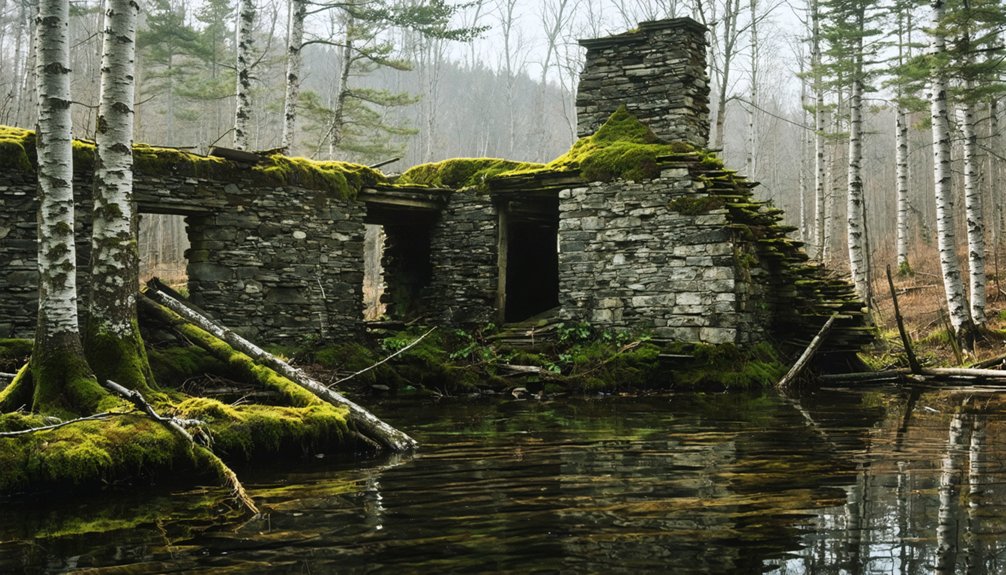
Flagstaff Lake is worth the trip on its own, but Maine’s ghost town circuit runs deeper than one drowned valley. Expand your route and you’ll uncover sites of serious archaeological significance scattered across the state.
Add these stops:
- Fort William Henry – Bristol’s colonial ruins blend coastal mystery with cultural preservation.
- Ligonia Village – South Portland’s forgotten 19th-century industrial neighborhood hides layered history.
- Riceville – Hancock County’s tannery ruins and headstone-less cemetery demand quiet respect.
- Askwith – Old rail trails between Greenville and Rockwood reward patient explorers.
Each site carries its own weight. You’re not just sightseeing — you’re moving through places that shaped Maine before anyone thought to save them.
Travel deliberately, document everything, and take nothing.
Frequently Asked Questions
Can Visitors Scuba Dive to Explore Flagstaff’s Underwater Ruins Legally?
Ironically, a sunken town invites curiosity but not chaos. You can pursue legal diving and underwater archaeology at Flagstaff Lake, though you must verify current access permissions and never remove artifacts from these hauntingly preserved ruins.
Are Guided Ghost Town Tours of Flagstaff Lake Available Year-Round?
Guided tours don’t run year-round — you’ll find the best access to Flagstaff Lake’s ghost town history and abandoned sites between late September and early November, when dropping water levels dramatically reveal sunken foundations and forgotten relics.
Is Flagstaff Lake Open to Fishing and Recreational Boating Today?
Yes, you can fish and boat Flagstaff Lake’s 20,300 acres today! You’ll glide over submerged foundations tied to local legends while honoring historic preservation — it’s freedom on water steeped in haunting, unforgettable history.
Were Any Flagstaff Residents Compensated When Central Maine Power Relocated Them?
The records don’t detail specific compensation policies for residents’ relocation when Central Maine Power acquired the land. You’ll find that historical societies actively preserve displacement stories, giving you deeper insight into what those uprooted families truly experienced.
Are There Any Surviving Photographs of Flagstaff Before It Was Flooded?
Historical societies have preserved historical photographs capturing Flagstaff’s vibrant life before the flooding aftermath swallowed it whole. You can explore these rare images, maps, and displacement stories, connecting you directly to the town’s haunting, freedom-filled past.
References
- https://q1065.fm/abandoned-maine-summer-road-trip-map/
- https://1019therock.com/flagstaff-maine-maines-ghost-town-video/
- https://www.facebook.com/downeastcowboy/videos/flagstaff-lake-has-an-abandoned-town-below-the-surface-of-the-water-maine-flagst/1127084101774415/
- https://www.themainemag.com/carrabassett-valley-in-48-hours/
- https://familydestinationsguide.com/thrilling-abandoned-places-maine/
- https://soulsummittravel.com/2025/07/25/flagstaff-in-fall/
- https://mooseheadnews.com/ghost-towns-in-maine-9-haunted-places-to-explore-this-fall-2025-guide/
- https://www.youtube.com/watch?v=-nQLdB0Y8yo
- https://urbexunderground.com/ghost-towns-in-maine/
- https://darkdowneast.com/flagstafflake/