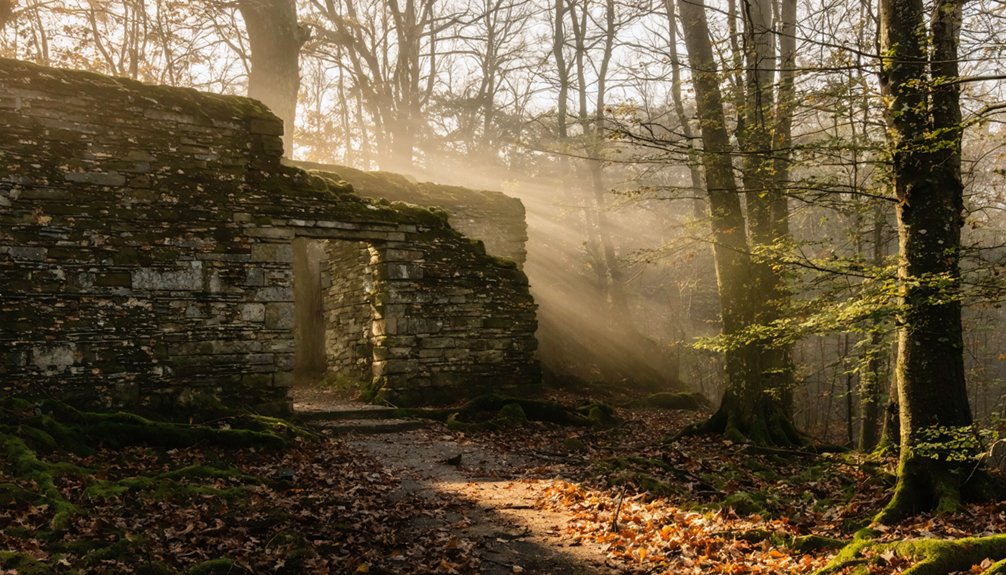
Planning a road trip to Hanton City starts with finding the unmarked Hanton City Trail off Route 7 North in Smithfield, Rhode Island. You’ll navigate overgrown woods to uncover stone foundations, crumbling walls, and a defunct dam from this abandoned colonial settlement. Visit in late spring or early fall for the best visibility. Wear sturdy boots, pack bug spray, and bring a flashlight. There’s far more to this haunted ghost town than meets the eye.
Key Takeaways
- Hanton City is an abandoned colonial ghost town in Smithfield, Rhode Island, featuring stone foundations, crumbling walls, a defunct dam, and a historic cemetery.
- Access the site via exit 8b off Route 295 North, then follow the unmarked Hanton City Trail off Route 7 North through overgrown woods.
- Visit during late spring or early fall for better weather, accessible trails, and clearer sightlines before heavy foliage obscures the ruins.
- Pack sturdy boots, protective clothing, bug spray, offline maps or GPS, a flashlight, and a fully charged phone for safe exploration.
- Ghost hunters frequently investigate the site, reporting unexplained sounds, shadow sightings near headstones, and sudden temperature drops throughout the ruins.
What Is Hanton City and Why Visit It?
If you’re looking for a road trip destination that blends history, mystery, and adventure, Hanton City in Smithfield, Rhode Island, is worth adding to your list. This abandoned colonial ghost town dates back to the 17th century, offering stone foundations, crumbling walls, and a buried past waiting to be explored.
Known by locals as Lost City, Ghost City, and Haunted City, it carries urban legends of paranormal activity that draw history buffs and ghost hunters alike. You’ll move at your own pace, uncovering remnants of a community that thrived, then vanished.
After exploring the trails, sample local cuisine from nearby Smithfield eateries to complete your experience. Hanton City rewards curious, independent travelers who crave destinations that feel genuinely undiscovered.
How Hanton City Became a Ghost Town
Once a thriving colonial settlement, Hanton City grew from humble origins when English families—the Paines, Hantons, and Shippees—carved out a community deep in Rhode Island’s woods. Possibly receiving their land as compensation for service in King Philip’s War.
English families etched their legacy into Rhode Island’s wilderness, building Hanton City from the ashes of colonial conflict.
By the 1730s, the town peaked, its residents crafting hand-made shoes for Providence markets and working local stone quarries. Then came the collapse:
- Factory machines eliminated hand-crafted shoemaking, gutting the local economy.
- Shifting highway patterns cut off the town’s trading traffic.
- Residents abandoned the settlement entirely by the early 1800s.
Today, historical artifacts like stone foundations and crumbling walls are all that remain. Urban exploration enthusiasts who visit discover a site nature has nearly swallowed whole, reclaiming every forgotten corner of this vanished community.
Who Owns Hanton City and Could It Be Demolished
While Hanton City’s economic collapse sealed its fate as a ghost town, its future now rests in the hands of a corporate giant—The Dow Chemical Company, which currently owns the land surrounding the site.
Historical records from the 1850s already listed the area as abandoned on official state maps, long before corporate land ownership became a concern.
Today, rumors suggest Dow Chemical plans to level what little remains of the village for development. That means the stone foundations, crumbling walls, and burial sites you’re hoping to explore could disappear entirely.
If you value preserving forgotten history, visiting sooner rather than later isn’t just a suggestion—it’s urgent. Land ownership decisions happen fast, and once it’s gone, no road trip can bring it back.
How To Get To Hanton City in Smithfield, Rhode Island
To reach Hanton City, you’ll start by heading to Smithfield, Rhode Island, and taking exit 8b off Route 295 North, which puts you within a half-mile of the site.
From there, you’ll follow a winding road until the pavement gives way to dirt near a commercial building — that’s your signal you’re close to the trailhead.
Keep your eyes open for the unmarked Hanton City Trail off Route 7 North, then follow the curved left turns through the overgrown woods until you reach the clearing where the stone foundations await.
Starting Your Route
Getting to Hanton City requires a bit of navigation, but the route is straightforward once you know what to look for. Whether you’re drawn by historical preservation or urban exploration, follow these key steps:
- Take exit 8b off Route 295 North, then travel half a mile along a winding road toward the site.
- Head to Route 7 North and locate the unmarked Hanton City Trail — your gateway to this forgotten colonial settlement.
- Follow the road where pavement shifts to dirt near a commercial building, then take the curved left turns leading to the stone foundation clearing.
Pack your sense of adventure and prepare for dense vegetation. Without this guidance, you’ll likely wander right past one of Rhode Island’s most mysterious hidden gems.
Navigating Route 295 North
Once you’ve mapped out your starting route, Route 295 North becomes your primary artery into Smithfield. Take exit 8b, where a half-mile winding road carries you deeper into Rhode Island’s quieter landscape.
As the pavement gradually surrenders to dirt near a commercial building, you’ll know you’re close. Follow the curved left turns until a clearing reveals the stone foundation remnants of Hanton City.
This unmarked trail off Route 7 North doesn’t advertise itself, which makes the journey feel genuinely earned. Local legends surrounding this abandoned colonial settlement have circulated for generations, drawing history enthusiasts and urban legends chasers alike.
Stay alert — dense vegetation swallows landmarks quickly, and without sharp attention to the terrain, you could easily miss the turn that leads straight into history.
Finding The Trailhead
Where exactly does the trail begin? Look for where the paved road shifts to dirt near a commercial building off Route 7 North. That’s your starting point for uncovering historical artifacts hidden deep within Smithfield’s overgrown woods.
Follow these exploration tips to stay on track:
- Turn left at the curved bend after the dirt road begins.
- Walk approximately half a mile along the winding, unmarked path.
- Watch for a clearing where stone foundation remnants emerge through the dense vegetation.
You won’t find official signage guiding you here — that’s part of the adventure. The trail rewards those who stay observant and move deliberately.
Bring a map, wear sturdy boots, and prepare for thick brush swallowing nearly every visible landmark along the way.
Stone Foundations, Walls, and a Defunct Dam: What Survives at Hanton City
Though nature has spent centuries reclaiming Hanton City, the remnants stubbornly endure. You’ll discover stone foundations scattered across the forest floor, their outlines still clearly tracing where colonial families once lived and worked. These historical artifacts stand as silent witnesses to a community that thrived, then vanished.
Vegetation overgrowth blankets much of the site, so you’ll need sharp eyes to spot the dilapidated stone walls threading through the woods. They once marked property boundaries and farming plots for tanners, bootmakers, and quarry workers.
Don’t miss the defunct dam, originally built for irrigation, which remains a surprisingly intact structural survivor.
Together, these elements paint a vivid picture of a self-sustaining settlement that industrialization ultimately rendered obsolete, leaving only stone behind to tell its story.
The Alfred Smith Cemetery at Hanton City
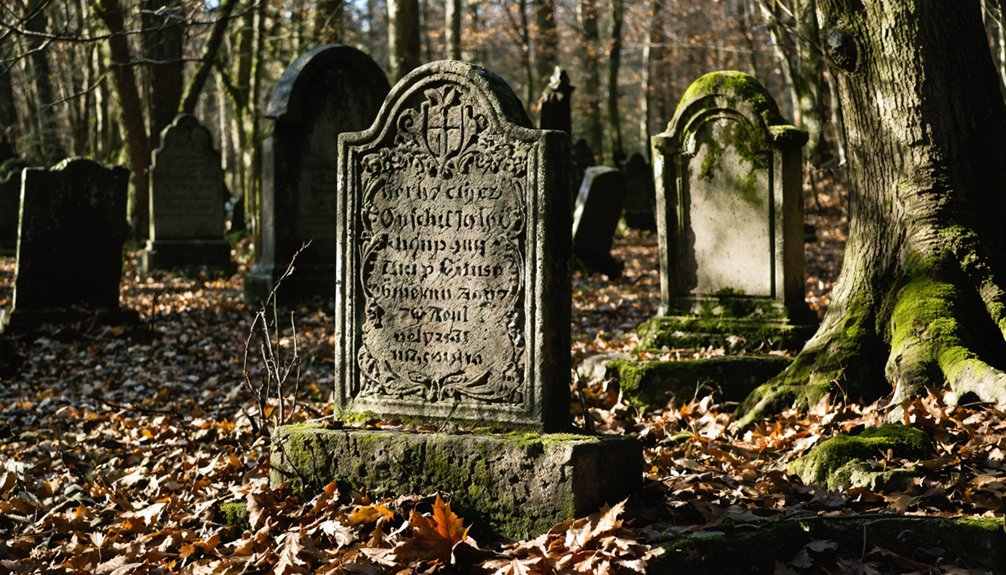
Tucked within Hanton City’s overgrown landscape, the Alfred Smith Cemetery offers one of the site’s most striking and somber discoveries. Among the dense vegetation, you’ll find three readable headstones — rare historical artifacts that have somehow endured centuries of neglect.
The cemetery marks the resting place of:
- Alfred Smith – the family patriarch whose name anchors this forgotten burial ground
- Eliza Smith – believed to be a family member sharing this isolated plot
- Emor Smith – another relation memorialized in weathered stone
Despite minimal preservation efforts, these headstones remain surprisingly legible.
As you explore, you’ll sense the weight of lives lived and lost in this abandoned settlement. The cemetery reminds you that Hanton City wasn’t just ruins — it was home to real families.
Is Hanton City Really Haunted?
If you’re a skeptic, you might raise an eyebrow, but Hanton City’s reputation for paranormal activity draws local ghost hunters to the site regularly.
You can explore “Gone but Never Forgotten” exhibits that examine Victorian death superstitions, adding a layer of eerie historical context to your visit.
Legends and ghostly claims surrounding the abandoned ruins make it easy to understand why so many visitors leave convinced that something unexplained lingers among the crumbling stone walls.
Local Ghost Hunter Activity
Whether or not you believe in the paranormal, Hanton City has earned a reputation that draws ghost hunters and thrill-seekers alike. Local legends surrounding this abandoned colonial settlement fuel countless investigations each year.
You’ll find that its crumbling historical architecture and dense wilderness create the perfect atmosphere for unexplained experiences.
Ghost hunters frequently report three recurring phenomena at the site:
- Unexplained sounds echoing through the stone foundation ruins
- Unusual shadows moving near the Alfred Smith Cemetery headstones
- Sudden temperature drops along the overgrown trails
If you’re planning a visit, connecting with local paranormal groups beforehand can enhance your experience markedly. They’ll share firsthand accounts and guide you through the unmarked paths.
You don’t need to be a believer to appreciate the eerie, undeniable energy Hanton City radiates.
Paranormal Claims And Legends
Ghost hunters aren’t the only ones captivated by Hanton City’s mysterious reputation — the legends themselves tell a compelling story. Local legends suggest the site carries an eerie energy rooted in its troubled past, from families fleeing revolution to a community swallowed whole by time.
You’ll find that the crumbling stone foundations and historical artifacts scattered throughout the woods feel less like ruins and more like whispers from another era. Some visitors report strange sounds and unexplained sensations while exploring the overgrown paths.
Whether you believe in the paranormal or not, Hanton City’s atmosphere is undeniably haunting. The combination of isolation, dense vegetation, and centuries-old remnants creates an experience that challenges even the most skeptical visitors to reconsider what they think they know.
Victorian Death Superstition Exhibits
Beyond the ghost stories and paranormal claims, Hanton City offers something unexpectedly tangible: “Gone but Never Forgotten” exhibits that explore Victorian death superstitions. These curated experiences connect you directly to the beliefs surrounding mortality that shaped communities like this one.
You’ll encounter death symbolism woven throughout Victorian culture, revealing how people once processed grief and the afterlife. The exhibits highlight three fascinating Victorian superstitions:
- Mirrors were covered after death to prevent the deceased’s soul from becoming trapped.
- Clocks were stopped at the moment of death to honor the departed’s final hour.
- Mourning jewelry crafted from human hair memorialized loved ones permanently.
These exhibits transform Hanton City from simply an eerie ruin into an educational destination, giving you genuine historical insight alongside the mystery.
Best Time of Year To Visit Hanton City
Spring through fall offers the best window for exploring Hanton City, when mild temperatures and accessible trails make traversing the dense, overgrown terrain far more manageable.
Spring through fall is prime time for Hanton City — mild temps, manageable trails, and terrain worth every step.
Winter visits aren’t recommended, as frozen, uneven ground and reduced visibility create serious visitor safety concerns along the unmarked paths.
You’ll find that late spring and early fall strike the perfect balance — foliage hasn’t fully consumed the stone foundations yet, giving you clearer sightlines to the historical preservation remnants scattered throughout the site.
Summer works too, though thick vegetation peaks during these months, making navigation trickier.
Whatever season you choose, wear sturdy footwear, bring a trail map if you can find one, and go with someone familiar with the area.
Hanton City rewards the prepared explorer.
What To Pack Before You Visit Hanton City

Since Hanton City offers no marked trails, maintained paths, or nearby amenities, packing smart makes the difference between a rewarding exploration and a frustrating one. Dense vegetation, uneven terrain, and hidden stone foundations create real visitor safety concerns. Come prepared and you’ll explore freely without setbacks.
Bring these three essentials:
- Navigation tools – A downloaded offline map or GPS device keeps you oriented through the unmarked woods off Route 7 North.
- Protective clothing – Long sleeves, sturdy boots, and bug spray shield you while moving through thick overgrowth surrounding historical artifacts like stone foundations and burial sites.
- A fully charged phone and flashlight – Lighting shifts quickly under heavy tree cover, and emergency contact capability is non-negotiable.
Pack light, pack smart, and explore confidently.
Frequently Asked Questions
Are There Guided Tours Available for Visiting Hanton City?
No official guided tours exist, but you’ll find plenty of historical preservation efforts and photography opportunities when you explore independently. Prepare for dense vegetation and unmarked trails as you freely uncover Hanton City’s fascinating colonial mysteries yourself.
Is There an Entrance Fee to Access Hanton City Trail?
Like a free river flowing through time, you won’t pay an entrance fee at Hanton City Trail! You’ll explore historical preservation and uncover photography opportunities among ancient stone ruins without spending a single dollar.
Can Visitors Legally Explore the Dow Chemical Company-Owned Land?
The knowledge doesn’t clarify exploration regulations for Dow Chemical Company-owned land. You’ll want to research current land ownership rules before venturing out, ensuring your exploration remains lawful and you’re not trespassing on privately held property.
Are Pets Allowed on the Hanton City Trail?
Like a loyal hound following its owner into the unknown, pets may join you, but confirm current trail regulations beforehand. Pet safety matters in dense vegetation, so keep your furry companion leashed throughout your adventure.
Is Hanton City Accessible to Visitors With Mobility Limitations?
Hanton City doesn’t offer accessibility improvements or wheelchair friendly paths — you’ll navigate dense vegetation, dirt trails, and unmarked routes. If mobility limitations affect you, this rugged, untamed ghost town may present significant challenges to your exploration.
References
- https://en.wikipedia.org/wiki/Hanton_City
- https://fr.wikipedia.org/wiki/Hanton_City
- https://www.youtube.com/watch?v=kpy7zlXYrAU
- https://www.youtube.com/watch?v=3bFcmv7IH40
- https://weird-island.simplecast.com/episodes/57-ghost-town-hanton-city-ky53imy0
- https://www.youtube.com/watch?v=n9qmg4V7Gtc
- https://www.chowdaheadz.com/blogs/news/new-england-myths-legends-the-ruins-of-hanton-city-rhode-island
- https://www.valleybreeze.com/lifestyle/smithfields-ghost-town-hanton-city-still-revealing-its-secrets-after-300-years/article_5b749dc2-37c2-11ed-b2d9-772023120737.html
- https://www.youtube.com/watch?v=UFhsSLglhws
- https://www.youtube.com/watch?v=qMePSGqqUH4