Planning a ghost town road trip to Flinns, Pennsylvania means embracing the unknown from the start. Flinns doesn’t appear in official state records, so you’ll need county archives, USGS topographic maps, and digitized newspapers before you ever leave home. Pack food, water, a first-aid kit, and offline maps since cellular service is unreliable out there. Expect overgrown foundations, reclaimed forest, and landscape clues that tell stories no official document preserves. There’s much more to uncover ahead.
Key Takeaways
- Verify Flinns’ existence using Pennsylvania Ghost Towns Project, USGS topographic maps, and county archives before committing to the trip.
- Research land ownership records to understand current parcel controls and avoid trespassing on private property.
- Load offline maps onto devices beforehand, as remote Pennsylvania back roads typically have limited cellular service.
- Use a capable off-road vehicle, carry a spare tire, water, food, and a first-aid kit for safety.
- Explore only during daylight hours and bring printed historical records to guide and ground your on-site investigation.
What Makes Flinns, Pennsylvania Worth the Drive?
Before you pack your bags and fuel up the tank, it’s worth knowing that “Flinns, Pennsylvania” doesn’t appear in any verified state records, historical society databases, or Pennsylvania Historical and Museum Commission archives.
Historical records simply don’t support its existence as a documented ghost town.
Historical records leave no trace of Flinns, Pennsylvania — no documentation, no verification, no proof it ever existed.
That doesn’t mean your road trip dream dies here. Local legends sometimes preserve memories of settlements that official channels overlooked or forgot entirely.
You’ll want to dig deeper — cross-referencing county archives, USGS topographic maps, and digitized newspaper collections before committing to a route.
If “Flinns” came from a book, film, or misread map, identifying the real location protects your time and fuel.
Verify the name first, then chase the adventure with confidence and a well-loaded vehicle.
How to Find Flinns on Pennsylvania’s Back Roads
Since “Flinns” doesn’t appear on any verified Pennsylvania map, your first real road starts at a desk, not a dashboard. Dig into historical records through the Pennsylvania Ghost Towns Project or USGS topographic maps, where defunct settlements often survive as faint labels on forgotten terrain.
Land ownership records held in county archives can reveal who currently controls parcels where abandoned communities once stood. That information matters before you ever pack your gear — trespassing laws here aren’t flexible.
Cross-reference digitized newspaper archives with satellite imagery to spot structural remnants hiding beneath tree cover. Once you’ve built a solid picture of where you’re headed, load offline maps onto your device. Cellular service disappears fast on Pennsylvania’s backroads, and you’ll want your route locked in before the signal does.
What Flinns Looks Like on the Ground Today?
Once your offline maps are loaded and your route is locked, what you’ll actually find when you arrive at a suspected site like “Flinns” is rarely what the name suggests.
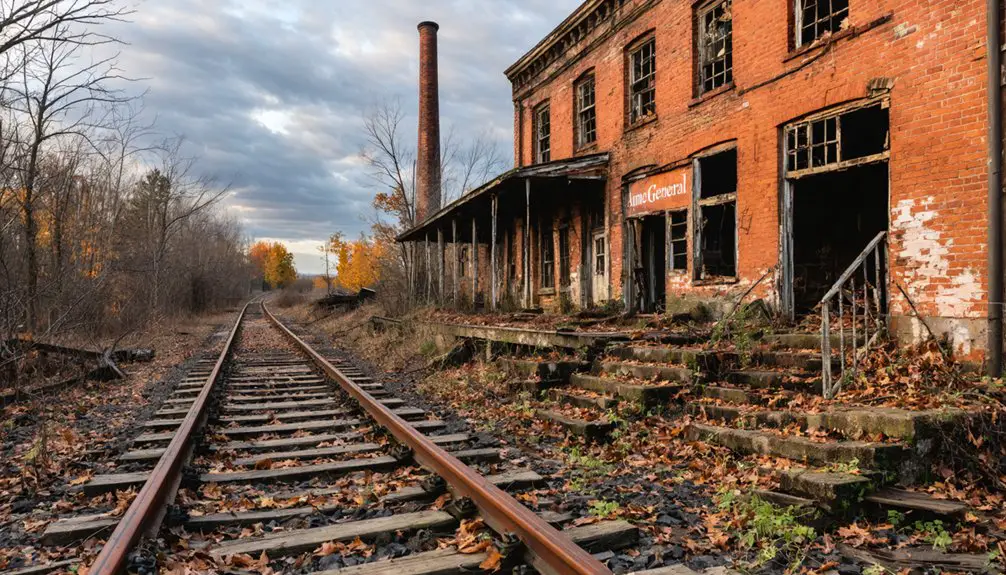
Urban legends often paint vivid pictures of crumbling storefronts and rusted signage, but historical accuracy tells a different story. Most unverified ghost town sites reveal overgrown foundations, collapsed timber, and reclaimed forest.
Historical accuracy rarely matches the legend. What you find is foundation stone, collapsed wood, and forest taking back what was its own.
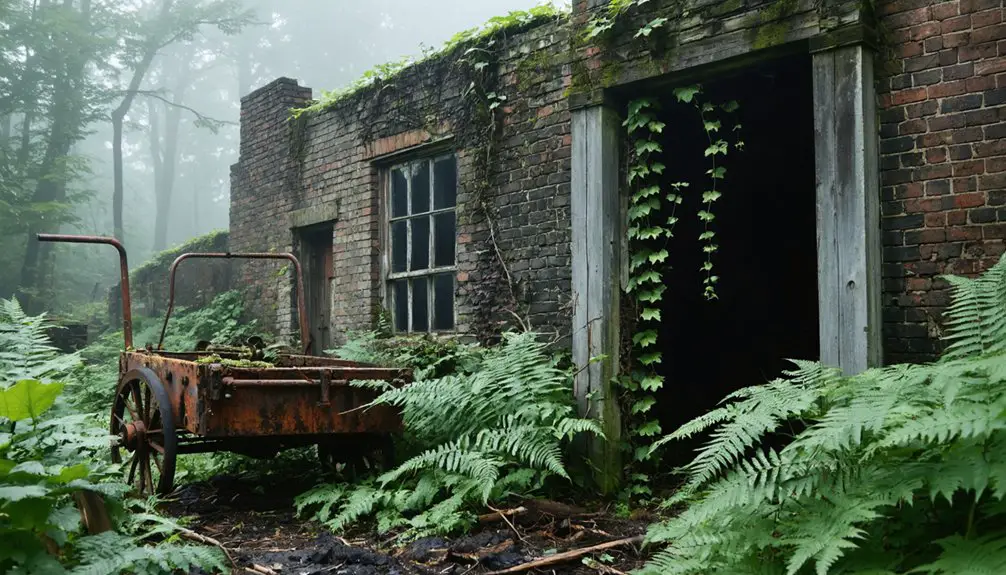
You’ll spot fieldstone remnants poking through undergrowth, broken fence lines marking old property boundaries, and maybe a rusted agricultural implement half-buried in soil.
Nature moves fast. Without documented records confirming “Flinns” exists, what you’re really doing is reading a landscape for clues.
Train your eye on soil depressions, unnatural tree lines, and road scars. The land remembers even when the maps don’t.
The Ruins in Flinns Actually Worth Your Time
Although no verified record confirms “Flinns” as a real Pennsylvania settlement, the ruins worth your time at any unverified ghost town site share common characteristics you can actively hunt for. Seek out stone foundations, which carry the most historical significance — they outlast wood and reveal original building layouts.
Collapsed mill structures often signal former economic activity, giving you tangible proof of past community life.
Don’t overlook crumbling cemetery markers. They ground local legends in real human stories and connect you directly to whoever once called this place home.
Remnant road beds cutting through overgrown terrain tell you how residents moved through daily life.
You’re not just exploring decay — you’re reading a landscape. Prioritize structures with visible craftsmanship, because those details reward careful attention and justify every mile you drove.
What the Drive to Flinns Demands You Bring
Before you point your vehicle toward Flinns, pack like the road itself will test you — because it will. Unpaved backroads demand a vehicle prepared for rough terrain, so check your tires and carry a spare. Cellular dead zones swallow this region whole, making offline maps non-negotiable.
Bring enough water and food for a full day — remote stretches offer nothing. A first-aid kit isn’t optional here; it’s your insurance against isolation. Sturdy boots protect you while exploring crumbling structures.
Carry printed historical records about the area, since they’ll ground your experience in documented fact rather than assumption. Local legends surrounding Flinns add texture to every ruin you’ll encounter, but solid preparation keeps you safe enough to actually enjoy them.
Daylight is your final essential — don’t waste it.
Frequently Asked Questions
Is Flinns, Pennsylvania Legally Accessible to Visiting Ghost Town Explorers?
You can’t confirm Flinns, Pennsylvania’s legal accessibility since it doesn’t appear in verified records. Before any urban exploration, you’ll want to research ownership, respect trespassing laws, and take essential safety precautions to protect your freedom-seeking adventure.
What Is the Historical Origin Story Behind Flinns Becoming Abandoned?
You won’t find a verified historical origin story for Flinns’ urban decay because it’s not a documented Pennsylvania ghost town. Explore real mining history by visiting confirmed abandoned coal towns instead — they’ll satisfy your adventurous spirit.
Are There Guided Tours Officially Available for Visiting Flinns, Pennsylvania?
No verified guided tours exist for Flinns, Pennsylvania, as it’s unconfirmed. You’ll explore freely, chase haunted legends independently, and capture stunning photography tips firsthand. Forge your own path, write your own story, and discover abandoned beauty on your terms.
What Nearby Towns Offer Lodging Accommodations Closest to Flinns, Pennsylvania?
Since Flinns can’t be verified, you’ll want to explore nearby Pennsylvania towns offering lodging while you chase haunted legends and photograph abandoned buildings. Check accommodations in Ralston or surrounding Lycoming County communities for your adventurous ghost town road trip.
Has Flinns, Pennsylvania Appeared in Any Documented Films or Literature?
You won’t find Flinns in documented films or literature. No verified records link it to urban decay narratives or ghost town legends, so you’ll want to confirm whether it’s real, fictional, or misnamed.