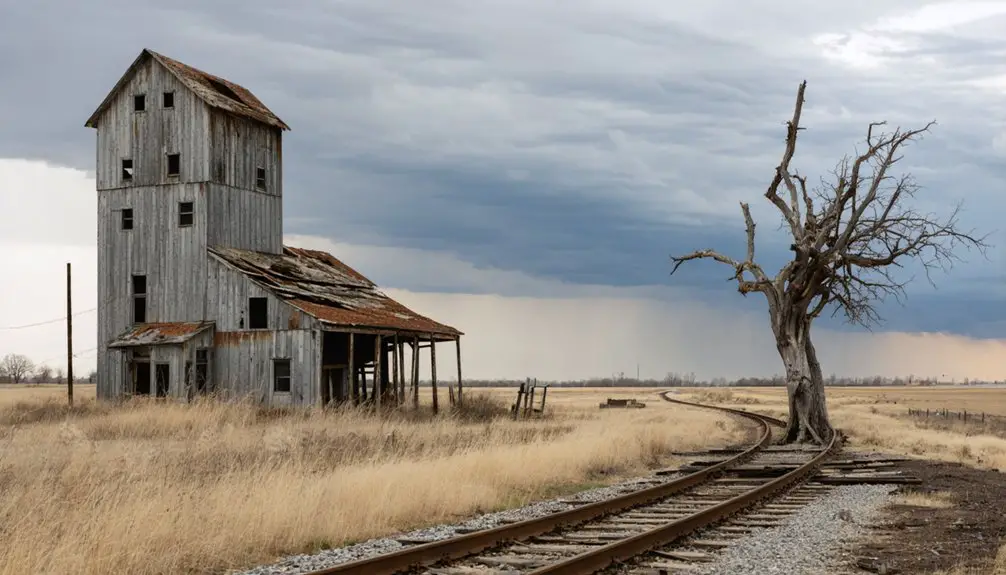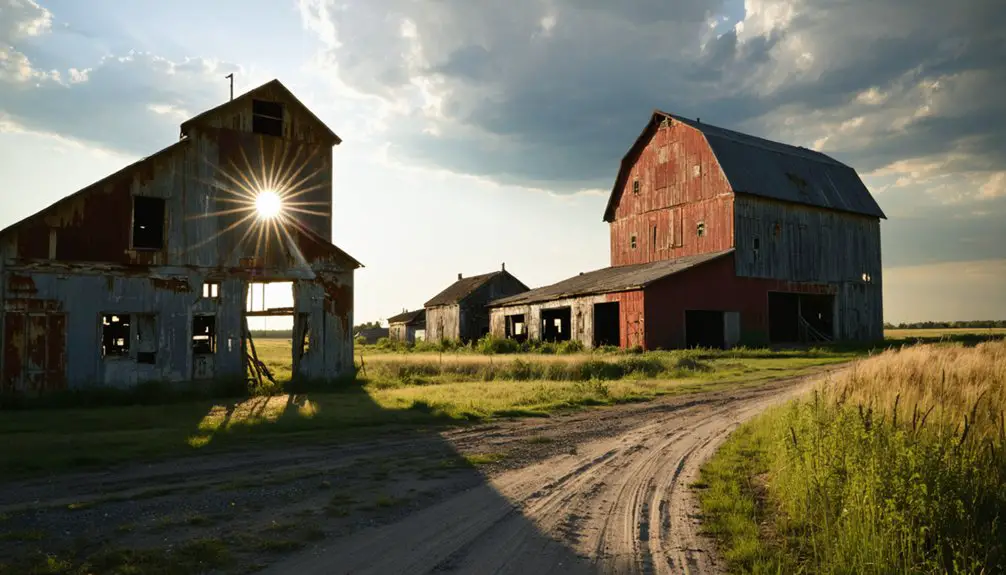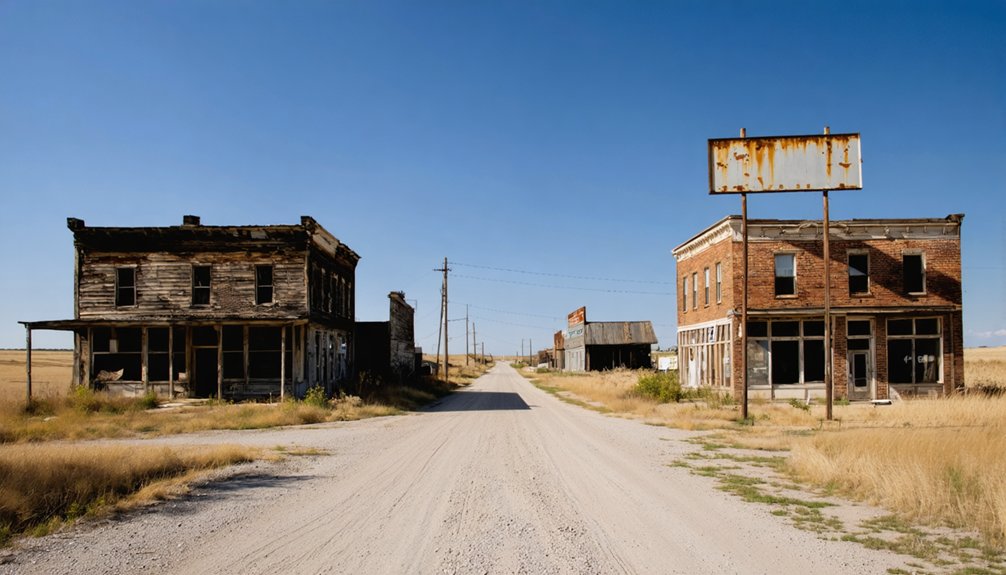
Lewiston, Minnesota won’t greet you with crumbling storefronts or Hollywood-style ruins—but it’ll reward you with something quieter. You’re tracing a town that once outgrew Northfield, produced a U.S. Supreme Court justice, and vanished within 15 years. The 1860 schoolhouse still stands as your anchor, surrounded by open fields where streets once ran. Pair it with nearby southeastern Minnesota ghost towns for a full corridor road trip, and there’s far more to this faded footprint than first glance suggests.
Key Takeaways
- Lewiston, founded in 1851, once surpassed Northfield in size before declining after major routes and the railroad bypassed it.
- The 1860 schoolhouse, now Sciota Township Hall, is the primary surviving landmark and visual anchor for visitors exploring the area.
- Expect open farmland and tree lines hinting at former streets rather than dramatic ruins or decayed storefronts.
- Lewiston fits a southeastern Minnesota ghost town corridor, with nearby stops along the Hastings corridor, Cannon River valley, and Faribault remnants.
- Approach the trip with curiosity, focusing on land interpretation and historical context rather than expecting spectacular Hollywood-style decay.
What Was Lewiston, Minnesota’s Forgotten Ghost Town?
Once a thriving hub in Winona County, Minnesota, Lewiston burst onto the scene in 1851, quickly growing larger than nearby Northfield before fading into near-obscurity by 1866. You’d never guess it today, but this quiet stretch once hummed with trade, transportation, and ambition.
During its peak, Lewiston boasted tourist attractions that drew travelers from across the region, including a lively horse-racing track and a bustling hotel.
Local legends connect the town to remarkable figures like Supreme Court Justice Pierce Butler and Minnesota Governor Edward J. Thye.
What killed Lewiston? Major routes simply bypassed it. The railroad boom that built the town eventually abandoned it.
Today, the 1860 schoolhouse, now Sciota Township Hall, stands as the sole surviving witness to everything this forgotten town once was.
How Lewiston Boomed and Vanished in 15 Years
Fifteen years. That’s all Lewiston needed to rise and fall. The town burst onto the scene in 1851, riding a wave of historical trade, optimism, and open road energy.
By 1866, it was fading fast.
During its peak, Lewiston offered real draws:
- A lively horse-racing track
- A welcoming hotel for travelers
- A bustling post office marking the town’s center
- Active trade routes connecting surrounding communities
Then railroad decline hit hard. As major routes bypassed Lewiston, the economic momentum simply stopped.
The businesses shuttered, the crowds thinned, and the land quietly returned to open farmland and silence.
What once rivaled nearby Northfield in size became little more than a memory pressed into old maps.
Fifteen years of boom, then a long, slow disappearing act.
What Still Stands at the Lewiston Townsite Today
Though most of Lewiston has dissolved back into farmland and tree lines, one structure still holds its ground: the 1860 schoolhouse, now serving as Sciota Township Hall. It’s a quiet but powerful example of historical preservation, anchoring a site that could’ve vanished completely without a trace.
When you pull up, don’t expect a sprawling ruin. What you’ll find is a single, modest building carrying the weight of an entire town’s memory. These architectural remnants won’t overwhelm your afternoon, but they’ll sharpen your sense of what once buzzed here — hotels, horse races, and railroad ambition.
Bring your camera, read the landscape carefully, and let the open fields do the talking. Sometimes one surviving wall tells a fuller story than a dozen crumbling ones.
Which Governors and Justices Once Called Lewiston Home?
What Lewiston lacks in standing structures, it more than makes up for in notable alumni. When you walk this quiet stretch of southeastern Minnesota, you’re treading ground that shaped careers far beyond local legends and historical architecture.
Three names stand out from Lewiston’s past:
- Edward J. Thye — rose to become Minnesota’s governor
- Pierce Butler — went on to serve as a United States Supreme Court justice
- Loren W. Collins — earned a seat on the Minnesota Supreme Court
- Lewiston itself — once outpaced nearby Northfield in size and influence
That’s a remarkable legacy for a town that vanished so quietly. You don’t need grand ruins to feel the weight of this place — just the knowledge of who once called it home.
Where Exactly Is the Lewiston Ghost Town Site?
You’ll find Lewiston’s ghost town site tucked into Winona County, Minnesota****, close to Alta Avenue and County Road 59 near the Cannon River.
If you’re plotting a route through southeastern Minnesota, the site sits conveniently between Hastings and Faribault, making it an easy addition to a longer road trip.
Pull up coordinates 43°59’8N, 91°51’58W** and set your elevation expectations around 1,214 feet** before you head out.
Winona County General Location
Tucked into the rolling terrain of Winona County, the Lewiston ghost town site sits near Alta Avenue and County Road 59, with coordinates placing it around 43°59’8N, 91°51’58W at an elevation of roughly 1,214 feet.
Local folklore and urban legends still drift through this corridor, reminding you that this land once hummed with ambition. Here’s what orients you to the site:
- Lewiston sits northeast of Northfield in Sciota Township
- The Cannon River runs nearby, shaping the landscape
- The area served as a natural pitstop between Hastings and Faribault
- Sciota Township itself was officially organized in 1858
You’re not chasing a fully erased place here. You’re standing where real history happened, and the land still carries its quiet, stubborn memory.
Nearby Landmarks And Routes
Once you pull onto Alta Avenue and feel County Road 59 stretch out ahead of you, the Lewiston ghost town site starts to take shape around you. The Cannon River runs nearby, giving the landscape a quiet, geographic anchor that old maps still reference.
Northfield sits to your southwest, and the corridor between Hastings and Faribault makes Lewiston a natural pitstop if you’re piecing together a southeastern Minnesota route.
Local legends claim this stretch once hummed louder than Northfield itself, and urban legends about the old horse-racing track still circulate among history enthusiasts.
The 1860 schoolhouse, now functioning as Sciota Township Hall, remains your clearest landmark. Use it as your visual reference point when you arrive, because the surrounding farmland offers few other obvious markers.
Coordinates And Elevation Details
Before you head out, note these navigation details:
- Elevation sits at 1,214 feet, giving you open sightlines across the township.
- Coordinates place you firmly inside Sciota Township.
- The surrounding farmland marks where streets and storefronts once stood.
- The schoolhouse provides your clearest visual reference point on arrival.
Go in knowing exactly where you’re headed, and Lewiston rewards the effort.
Which Southeastern Minnesota Ghost Towns Pair Well With Lewiston?
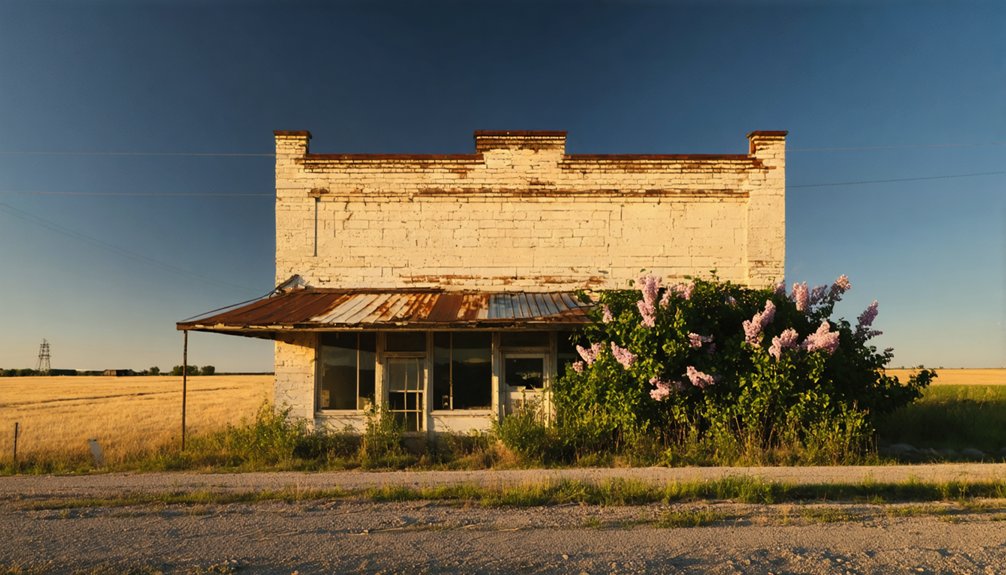
Southeastern Minnesota rewards patient road-trippers who string ghost towns together rather than chasing a single stop. Lewiston fits naturally into a corridor running between Hastings and Faribault, and that stretch holds several faded settlements worth pulling over for.
Once you’ve got Lewiston on your map, building a fuller southeast route around it becomes less of a detour and more of a logical progression.
Nearby Ghost Town Stops
Since Lewiston sits in a corridor between Hastings and Faribault, it practically begs you to string together a longer ghost town loop through southeastern Minnesota. Local folklore ties this whole region to vanished rail towns, and preservation challenges mean some sites won’t wait forever. Hit these stops while they’re still readable on the landscape:
- Sciota Township area – Walk the same ground early settlers did, with the 1860 schoolhouse as your anchor.
- Hastings corridor towns – Several small rail-linked settlements faded once routes shifted.
- Cannon River valley stops – Geography and ghost town history combine naturally here.
- Faribault-area remnants – Round out your southern loop with additional forgotten communities.
Each stop adds another layer to the story southeastern Minnesota rarely tells loudly enough.
Building A Southeast Route
Mapping out a full southeastern Minnesota route means thinking about which forgotten towns actually reward the detour, and Lewiston fits naturally into a loop that already has logical anchors at Hastings to the north and Faribault to the south.
You’ll move through river corridors and farmland that once supported a dozen small rail towns, many carrying their own urban legends about overnight prosperity and sudden collapse.
Lewiston pairs well with similarly quiet stops because it doesn’t demand a full afternoon. Preservation efforts at the 1860 schoolhouse give you a concrete visual reference, then you move on.
Think of the route as a loose thread you’re pulling southward, with each stop adding another layer to the same essential story: towns that mattered, then didn’t, then got left behind.
What to Expect When You Visit a Minimal-Remains Ghost Town Like Lewiston
Visiting a ghost town like Lewiston isn’t quite what Hollywood has trained you to expect — there’s no crumbling main street, no rusted storefronts, no dramatic silhouette against a dusty sky. Urban decay here is subtle. Historic preservation saved one schoolhouse, and farmland swallowed everything else.
What you’ll actually find:
- A quiet rural landscape where a booming railroad town once stood
- The 1860 schoolhouse, now functioning as Sciota Township Hall
- Open fields and tree lines marking where streets once ran
- Stillness that rewards curiosity more than spectacle
You’re reading the land like a map. That’s the real experience. Lewiston doesn’t hand you ruins — it hands you context, and your imagination fills the rest. Bring that freedom, and the stop delivers.
Frequently Asked Questions
Is There an Admission Fee to Visit the Lewiston Ghost Town Site?
You won’t pay admission here. Wander freely through Lewiston’s historical significance and witness preservation efforts firsthand. The 1860 schoolhouse, now Sciota Township Hall, stands open to the road — your freedom to explore costs nothing.
Can You Photograph the Sciota Township Hall Building From the Road?
Who doesn’t love capturing history from the open road? You can photograph the Sciota Township Hall’s historical architecture right from the roadside, making it one of Lewiston’s best photographic opportunities without leaving your freedom-fueled journey.
What Is the Best Time of Year to Visit Lewiston?
Late spring’s your sweet spot — you’ll catch mild seasonal weather, dodge winter’s grip, and sometimes stumble upon local festivals nearby. That golden light filtering through old farmland makes Lewiston’s quiet, forgotten charm feel achingly alive again.
Are There Any Guided Tours Available at the Lewiston Townsite?
Like a key without a lock, you won’t find formal guided tours here. Lewiston’s historical preservation relies on your own curiosity. Seek out locals who carry whispered local legends, and you’ll uncover the town’s soul yourself.
Is the Lewiston Site Accessible for Visitors With Mobility Limitations?
You’ll find the Lewiston site offers limited mobility assistance, as it’s mostly open farmland without accessible pathways. You can still soak in its nostalgic charm from your vehicle, feeling history’s quiet freedom all around you.
References
- https://thievesriver.com/blogs/articles/ghost-towns-in-minnesota
- https://www.facebook.com/groups/lewistonchamberofcommerce/posts/10153572937188454/
- https://www.youtube.com/watch?v=Naciyj05E1Y
- https://maplewoodmn.gov/1522/The-Ghost-town-of-Gladstone
- https://exploringnorthshore.com/taconite-harbor-ghost-town/
- https://y105fm.com/the-minnesota-town-that-lasted-only-15-years/
- https://en.wikipedia.org/wiki/Sciota_Township
- https://www.minnesotahistory.org/post/a-complete-guide-to-the-ghost-towns-of-hennepin-county
- https://www.onlyinyourstate.com/experiences/minnesota/ghost-towns-mn