Govan, Washington is a nearly forgotten wheat-field ghost town tucked between Wilbur and Almira in Lincoln County, about 60 miles west of Spokane off U.S. Highway 2. You’ll find a weathered 1905 schoolhouse, scattered ruins, and a landscape steeped in unsolved murders and local legend. Visit in late spring through fall for the best road conditions and light. There’s far more to this eerily quiet town than first meets the eye.
Key Takeaways
- Govan is located in Lincoln County, Washington, accessible via U.S. Highway 2, approximately 60 miles west of Spokane, between Wilbur and Almira.
- The town was established in 1889 but declined due to fires in 1904, 1909, and 1927, plus a 1933 highway bypass.
- Key attractions include the weathered 1905 schoolhouse, scattered ruins, and nearby ghost towns like Mondovi and Bluestem for a full loop.
- Visit between late spring and early fall for optimal road conditions, lighting, and photography opportunities across the surrounding wheat fields.
- Pack water, snacks, and a reliable GPS, as services are nonexistent and roads can be rough, especially in winter.
What Kind of Ghost Town Is Govan, Washington?
Govan isn’t the kind of ghost town that vanished overnight — it faded slowly, shaped by railroad ambition, repeated fires, a highway bypass, and a string of unsolved murders that still haunt its history.
You’re looking at a town that once had a bank, two churches, a hotel, and a saloon. Then fires hit in 1904, 1909, and 1927.
A highway bypass followed in 1933. The last business closed in 1967.
What you’ll find today sits somewhere between ghost town preservation and quiet erasure — a weathered 1905 schoolhouse, a still-operating grain elevator, and local legends tied to axe murders and masked gunmen.
Govan doesn’t dramatize itself. It just stands there in the Lincoln County wheat fields, letting its history speak for itself.
How Govan Went From Railroad Boomtown to Ghost Town
The story behind what you’re looking at starts in 1889, when the Central Washington Railway pushed through Lincoln County and dropped a depot in the middle of wheat-farming territory. A post office followed, businesses multiplied, and by 1909 Govan had two general stores, a bank, a hotel, and two churches.
An 1890 sandbank discovery fueled railroad construction and accelerated that early growth.
Then the losses stacked up fast. Fires struck in 1904 and 1909, a devastating blaze gutted the business district in 1927, and U.S. Route 2 bypassed the town in 1933. The school closed in 1942.
The Three Unsolved Murders That Defined Govan’s Reputation
Beyond its fires and railroad history, Govan carries something darker — three violent crimes that were never fully resolved.
In 1902, Judge J.A. Lewis and his wife were murdered with an axe, a case that shocked Washington and was never solved.
A year later, a masked gunman shot C.S. Thennes inside the Govan saloon; a suspect was caught but never convicted.
Then in 1941, Lillie Lesnett was murdered on her farm, and her son vanished — his skeleton discovered later in nearby fields.
These cases aren’t just local gossip. They carry real cultural significance, shaping how people understand Govan’s identity beyond its railroad roots.
For those drawn to historical preservation and authentic places, these unresolved stories make walking Govan’s quiet roads feel genuinely unsettling.
What Survives in Govan Today
After all the fires, bypasses, and unsolved crimes, you might expect Govan to have vanished entirely — but a handful of structures still stand against the wheat-field skyline. The 1905 schoolhouse remains the town’s most iconic landmark, its steeple gone since 2019 but its bones still photogenic.
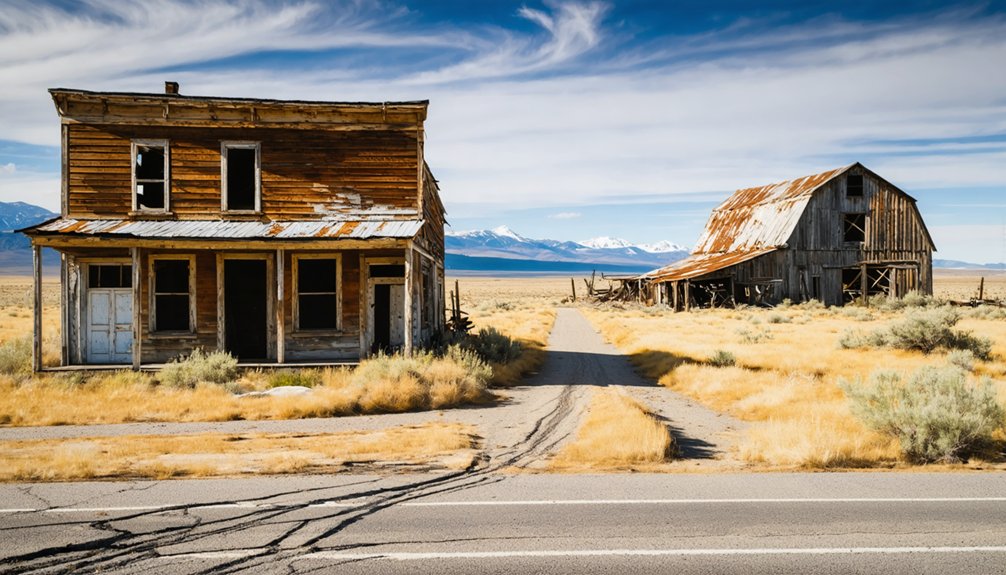
Scattered abandoned structures break the open horizon, each one carrying local legends tied to the murders, fires, and families that shaped this place. A few houses still show signs of life — as of 2019, three people called Govan home.
Remarkably, a grain elevator still operates during harvest, connecting the ghost town to the agricultural economy that originally built it. Bring a camera, respect the private property, and give yourself time to absorb what’s left standing.
When to Visit Govan
Late spring through early fall gives you the best light and road conditions for visiting Govan, with long summer days letting you explore the schoolhouse and scattered structures without rushing.
If you time your visit around harvest season, you’ll catch the grain elevator humming with activity, which adds a rare pulse of life to an otherwise silent town.
Avoid winter trips if you can, since the exposed wheat-field roads into Lincoln County turn rough, and flat gray skies strip the ruins of the photogenic contrast that makes ghost-town shots worth keeping.
Best Seasons To Visit
Timing your visit to Govan makes a real difference in what you’ll experience. Late spring and early fall offer the most rewarding conditions for historical preservation photography, with softer light casting long shadows across the old schoolhouse and scattered remnants.
Summer brings open roads and easier access through Lincoln County’s rolling wheat fields, though midday heat can be punishing.
Fall transforms the landscape into golden tones that perfectly frame the grain elevator and abandoned structures.
Winter visits are possible but unpredictable, with icy rural roads adding risk.
Spring and fall also reward wildlife observation, as migratory birds move through the quiet fields surrounding town.
Whatever season you choose, arrive early in the day before wind picks up and clouds shift your best natural light.
Ideal Daylight Hours
Choosing the right season gets you to Govan under favorable conditions, but narrowing down the ideal hours within that day will sharpen your experience even further.
Arrive mid-morning, when light cuts across the schoolhouse at a low angle, revealing weathered textures and historical artifacts with striking clarity. Harsh midday sun flattens detail and makes photography frustrating.
Late afternoon offers another golden window, casting long shadows that amplify the town’s eerie atmosphere and make local legends feel genuinely plausible.
You’ll want at least two hours on-site to explore scattered structures without rushing. Avoid arriving near dusk unless you’re comfortable maneuvering uneven terrain in low light.
The grain elevator and remaining houses reward patient, unhurried exploration, so give yourself enough daylight to move freely and observe deliberately.
Harvest Season Considerations
Harvest season transforms Govan from a quiet ghost town into a briefly active agricultural hub, and if you time your visit well, you’ll witness the grain elevator running at full capacity—a striking contrast against the surrounding decay.
Late summer through early fall brings trucks rolling through what’s otherwise a forgotten stretch of Lincoln County’s rolling wheat fields. This living snapshot of agricultural history reminds you that Govan’s roots ran deeper than railroad architecture and boomtown ambition—the land itself kept producing long after the people left.
Plan your arrival during harvest if you want movement and noise alongside the ruins. Outside that window, you’ll find stillness, which carries its own reward for anyone chasing the raw, unfiltered atmosphere of Washington’s inland ghost towns.
How to Get to Govan, Washington
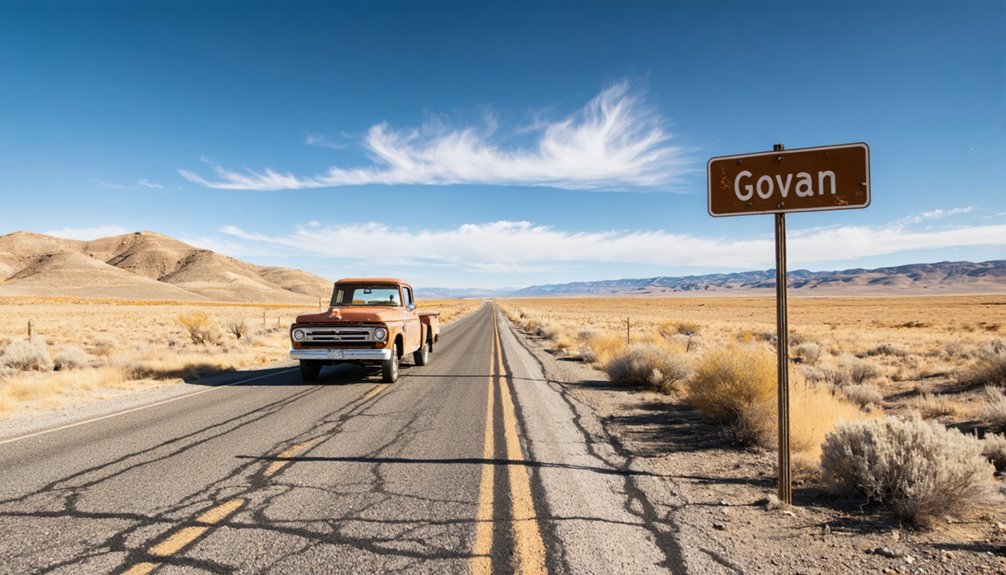
You’ll find Govan tucked into the rolling wheat fields of Lincoln County, Washington, roughly midway between the small towns of Wilbur and Almira.
To get there, take U.S. Highway 2 east from Wilbur or west from Almira, then turn onto the county road that cuts through the old railroad corridor toward the townsite.
The drive is straightforward, but you’ll want a full tank and a reliable GPS signal, since services along this stretch of eastern Washington are sparse.
Govan’s General Location
Tucked into the rolling wheat fields of Lincoln County, Washington, Govan sits along the old railroad corridor between the small towns of Wilbur and Almira. It’s a wide-open stretch of eastern Washington where local legends run deep and historical architecture dots the landscape. Here’s what to know before you go:
- Govan lies roughly between Wilbur and Almira on the former Central Washington Railway route.
- U.S. Highway 2 passes nearby, making it an easy roadside stop on a longer ghost-town drive.
- Lincoln County’s rural grid roads give you direct, uncrowded access to the site.
You won’t find crowds or tourist traps here — just wheat fields, quiet roads, and a forgotten town waiting to tell its story on your terms.
Nearest Towns And Roads
Getting to Govan is straightforward if you’re already driving U.S. Highway 2 through Lincoln County. The town sits between Wilbur, roughly eight miles to the east, and Almira, about seven miles to the west. From either direction, you’ll spot the weathered town architecture rising against rolling wheat fields before you even reach the turnoff.
Take State Route 21 north from the highway to reach the site directly. The roads are open and uncrowded, giving you the freedom to stop, explore, and soak in the local folklore without fighting traffic or tour groups.
Spokane lies about 60 miles to the east, making Govan a solid day-trip destination. Most visitors roll through as part of a broader Lincoln County ghost-town loop.
Driving Route Tips
Whether you’re coming from Spokane or the coast, U.S. Highway 2 is your backbone route through Lincoln County’s rolling wheat fields. Govan sits quietly between Wilbur and Almira, easy to miss if you’re not watching for it.
- From Spokane: Drive west on U.S. Highway 2 approximately 60 miles toward Wilbur, then continue a few miles to Govan.
- From Wenatchee: Head east on U.S. Highway 2 through Coulee City, passing Almira before reaching Govan.
- Stop deliberately: Slow down near the schoolhouse — it’s the centerpiece of local legends and an active symbol of historic preservation.
Pull off safely, respect private property, and bring a camera. The town rewards curious travelers who take time to look closely.
Pairing Govan With Other Lincoln County Ghost Towns
Govan pairs well with other ghost towns scattered across Lincoln County, making it an easy anchor point for a longer day trip through the region’s forgotten railroad corridor.
Nearby towns like Mondovi and Bluestem offer their own glimpses of historical architecture, from crumbling storefronts to weathered grain structures that echo Govan‘s rise-and-fall story.
You can piece together a self-guided loop along the old railroad routes, stopping where the wheat fields open up around abandoned foundations and rusted equipment.
Each town carries its own local legends, and Lincoln County has no shortage of unsolved histories and eerie atmospheres.
Pack a map, keep your tank full, and give yourself a full day.
The roads are quiet, the landscape is wide open, and the freedom to explore at your own pace is entirely yours.
What to Bring and Expect Before You Go
Before you head out on your Lincoln County ghost town loop, a little preparation goes a long way toward making the trip comfortable and worthwhile. Govan rewards curious travelers who arrive ready to explore independently.
- Wear sturdy shoes — uneven ground and weathered structures demand solid footing around the schoolhouse and scattered ruins.
- Bring a camera — local legends surrounding the unsolved murders and historical artifacts like the 1905 schoolhouse photograph beautifully against the open wheat fields.
- Pack water and snacks — no services exist in Govan, and the nearest towns are miles away.
Expect a quiet, windswept stop with no signage or guided tours. You’re charting your own course, which honestly makes the experience feel more authentic and worth every mile.
Frequently Asked Questions
Is There an Admission Fee or Permit Required to Visit Govan?
You don’t need an admission fee or permit to explore Govan! It’s an open, freely accessible ghost town offering incredible photography opportunities and historical preservation discoveries among weathered schoolhouses and rolling wheat fields.
Are There Any Restrooms or Facilities Available in Govan?
Like tumbleweeds in the wind, visitor amenities have vanished from Govan. You won’t find restrooms or facilities here — historical preservation doesn’t include modern conveniences, so pack your own supplies before you hit this remote ghost town.
Is It Legal to Enter the Abandoned Buildings in Govan?
You shouldn’t enter Govan’s abandoned buildings—they’re privately owned and potentially unsafe. Capture the haunted history from outside instead; you’ll still get incredible photography tips-worthy shots of the iconic schoolhouse and weathered structures.
Does Govan Have Any Cell Phone Coverage or Emergency Services Nearby?
Cell coverage here is a ghost itself — spotty and unreliable. You’ll want to download offline maps before arriving. Emergency services are sparse, with the nearest help in Wilbur or Almira, so you’re planning ahead matters.
Are Pets Allowed When Exploring Govan’s Ghost Town Sites?
No official animal access rules restrict pets at Govan, so you’re free to bring them! Prioritize pet safety by keeping them leashed, as abandoned structures, uneven terrain, and open fields present real hazards.
References
- https://www.facebook.com/groups/1064379881480462/posts/1281404059778042/
- https://en.wikipedia.org/wiki/Govan
- https://www.youtube.com/watch?v=ZdEcAblBVVA
- https://thewaywardjournal.substack.com/p/ghosts-of-govan
- https://www.youtube.com/watch?v=_qBgVAFbqUY
- https://www.inlander.com/culture/govan-wash-a-railroad-put-this-lincoln-county-community-on-the-map-but-a-1927-fire-set-its-demise-in-motion-28851234
- https://www.facebook.com/ghosttownsofwashington/posts/govan-lincoln-county-wa-located-in-the-rolling-wheat-fields-of-lincoln-county-wa/1005162361640178/
- https://www.sunset-hwy.com/govan.htm
- https://www.facebook.com/ghosttownsofwashington/posts/govan-lincoln-county-wafounded-in-1889-as-a-depot-on-the-central-washington-rail/1183772003779212/