Planning a ghost town road trip to Mule Lick, Nevada means trading smooth highways for rugged gravel tracks deep in the desert interior. You’ll want a high-clearance vehicle, plenty of water, and offline maps before you go. Start in Austin, your last reliable fuel stop, then follow the boom-and-bust corridor south through scattered ruins and raw desert scenery. Spring and fall offer the best conditions. Keep going, and you’ll uncover everything you need to make this trip unforgettable.
Key Takeaways
- Start your trip in Austin, Nevada, the last reliable fuel stop, and use it as your base for exploring the ghost town corridor.
- A high-clearance vehicle, offline maps, paper backup, and at least one gallon of water per person per day are essential.
- Spring and fall offer the best conditions, with mild temperatures, dry roads, and ideal lighting for photography.
- Key stops include Rhyolite, Gold Center, Gold Bar, and Mule Lick, each offering unique ruins and mining history.
- Roads are unpaved and rough; check conditions with local authorities before departure and carry a full-size spare tire.
What Is Mule Lick, Nevada?
Tucked into Nevada’s remote desert landscape, Mule Lick is a ghost town born from the same boom-and-bust mining cycle that shaped dozens of forgotten settlements across the state. Like so many Nevada communities, it flared to life when mineral wealth seemed endless, then quietly emptied when the ore ran out.
Mining legends tie these places together — stories of lucky strikes, rapid growth, and sudden abandonment that define the region’s rugged character. Today, ghost town preservation efforts help keep that history visible, though many sites exist as little more than crumbling foundations and scattered debris.
If you crave open roads, raw desert scenery, and unfiltered history, Mule Lick fits perfectly into a Nevada road trip built around the freedom to explore places most travelers never find.
How Mule Lick Boomed, Busted, and Disappeared
Like most Nevada ghost towns, Mule Lick didn’t grow slowly — it exploded. A mineral discovery pulled fortune-seekers into the desert almost overnight, filling the valley with tents, timber structures, and ambition. Miners, merchants, and gamblers all chased the same rush.
Mule Lick didn’t grow slowly — it exploded, pulling fortune-seekers into the desert almost overnight.
Then the ore ran out.
When production dropped, people packed up and left just as fast as they’d arrived. Buildings emptied, roads went quiet, and the desert slowly reclaimed what settlers had built. Without sustained investment in historical preservation, most physical traces faded into the landscape.
Today, you’ll find scattered mining relics where a full community once operated. That cycle — explosion, collapse, erasure — defines Mule Lick and dozens of Nevada towns like it. Understanding that pattern makes the ruins you’ll encounter on the road feel far more meaningful.
How to Get to Mule Lick, Nevada
Knowing the history is one thing — actually getting there’s another. Mule Lick sits deep in Nevada’s remote interior, where paved roads give way to gravel tracks carved by miners hauling ore generations ago.
You’ll want a high-clearance vehicle, a full tank, and offline maps downloaded before you lose signal.
Plan your approach through central Nevada, using Austin as your last reliable fuel stop. From there, you’re steering the same corridors that once supported historical mining techniques — stamp mills, freight wagons, and supply lines threading through the desert.
Ghost town preservation out here is minimal, meaning nature has reclaimed most structures. Expect ruins, not museums.
Check road conditions with Lincoln County or Lander County before heading out — weather changes fast, and isolation is real.
Ruins, Roads, and What Survives at Mule Lick Today
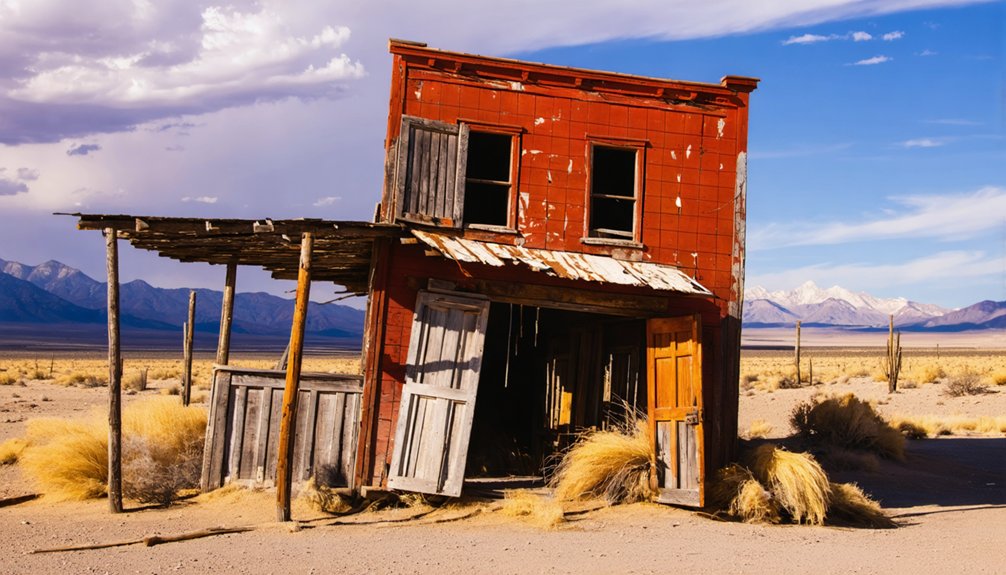
Once you arrive, you’ll find the kind of sparse, sun-bleached remnants that define Nevada’s forgotten mining settlements — crumbled foundations, scattered debris, and the occasional standing wall hinting at what once bustled here.
The roads leading in are typically unpaved and unforgiving, so a high-clearance vehicle isn’t just recommended — it’s essential.
Take your time scanning the landscape, because what survives at Mule Lick tells the story of a boom-and-bust cycle that played out across dozens of Nevada communities just like it.
Visible Ruins Standing Today
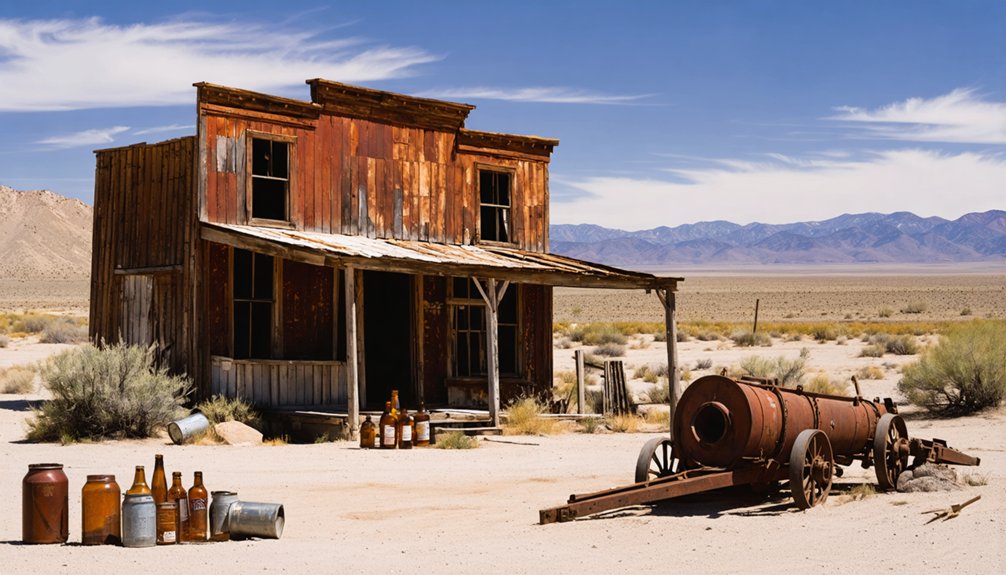
Although time and desert weather have stripped Mule Lick down to its bones, what’s left still tells a story worth chasing. You’ll find weathered foundation stones, collapsed timber frames, and scattered mill debris that speak directly to the boom-and-bust cycle that defined Nevada’s mining frontier.
Historical preservation here isn’t formal or curated. Nature and neglect have done their work, leaving raw remnants that reward curious, self-directed explorers far more than polished tourist attractions ever could.
Crumbling walls mark where structures once stood against the desert sky. Rusted hardware and broken masonry outline former work sites.
Walk carefully, photograph freely, and resist the urge to remove anything. What survives at Mule Lick stays meaningful only when every visitor leaves the site exactly as they found it.
Roads Leading To Mule Lick
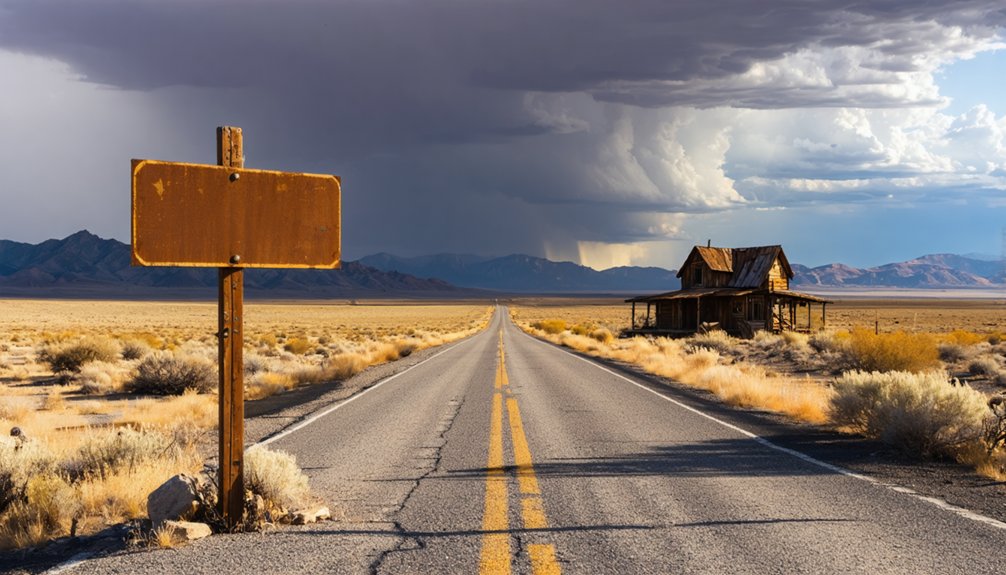
Getting to those ruins means traversing the kind of roads Nevada ghost towns are famous for — unpaved, unforgiving, and completely worth it. You’ll navigate washboard dirt tracks cutting through open desert, where the landscape itself becomes part of the mining history you’re chasing.
Bring a high-clearance vehicle, extra water, and a downloaded offline map — cell service disappears fast out here.
Road conditions shift with seasons, so check with local county offices before you head out. Spring and fall offer the most forgiving travel windows. Summer heat turns remote desert roads into genuine hazards.
That rough access is precisely why ghost town preservation remains imperfect here — few visitors make the effort, which means what survives stays raw, unpolished, and authentically Nevada.
Best Time to Drive Nevada’s Ghost Town Back Roads
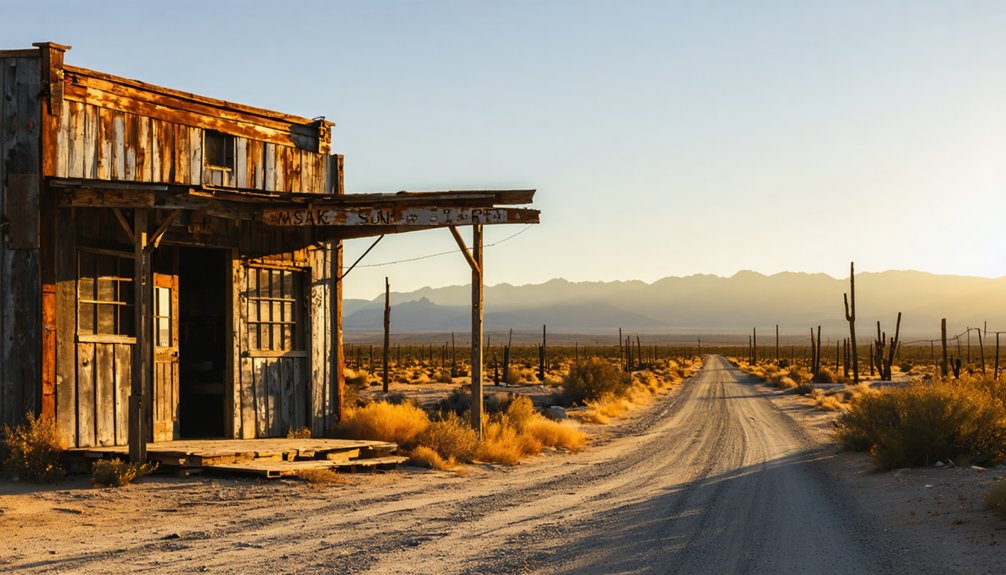
Spring and fall give you the best conditions for driving Nevada’s remote back roads, with mild temperatures and stable, dry surfaces that make reaching isolated sites like Mule Lick far more manageable.
Summer heat regularly pushes past 100°F in the desert, turning a straightforward drive into a serious risk if your vehicle breaks down miles from help.
Winter brings its own hazards, as high-elevation routes can close without warning after snowfall, leaving you stranded on unpaved roads with no cell service.
Spring And Fall Advantages
When you’re planning a Nevada ghost town road trip, timing matters more than most travelers realize. Spring and fall give you the best conditions for exploring remote back roads without battling extreme heat or icy passes.
In spring, desert wildflowers frame abandoned mining sites, and cooler temperatures let you spend more time on foot examining ghost town preservation details — crumbling foundations, rusted equipment, and weathered signage that tell the real mining history story.
Fall strips the landscape down to its bare, dramatic bones. The light turns golden, shadows grow long, and the crowds thin out almost completely. You’ll have ruins largely to yourself.
Both seasons keep daytime temperatures manageable, reduce flash flood risks, and leave most dirt access roads in drivable condition.
Summer Heat Warnings
Summer turns Nevada’s remote back roads into a genuine hazard. Temperatures routinely climb past 110°F, turning your car into an oven and the desert floor into a reflective furnace. Visitor safety isn’t optional out here — it’s the difference between a great story and a dangerous emergency.
Carry extra water, check your coolant, and tell someone your route before you leave. Many ghost town sites have zero cell service and no shade. Historical preservation efforts protect these ruins, but no ranger station protects you on an unmarked dirt road in July.
If you’re committed to summer travel, start driving before sunrise, reach your destinations by mid-morning, and retreat to air-conditioned lodging before afternoon heat peaks. The ghost towns will wait for cooler weather.
Winter Road Conditions
Winter opens a surprisingly good window for ghost town exploration, but Nevada’s high desert doesn’t make it easy. Seasonal weather shifts fast at elevation, and back roads leading to historically preserved sites can turn icy or wash out overnight. You’ll want to check road conditions before you leave, not when you’re already thirty miles from pavement.
Snow actually works in your favor sometimes. It slows you down, sharpens the silence, and makes crumbling structures look striking against a white landscape.
But it also hides ruts and soft shoulders. Four-wheel drive isn’t optional on certain routes. Carry chains, extra fuel, and water. Cell service disappears quickly.
Winter rewards prepared travelers with solitude and dramatic scenery, just don’t let the quiet fool you into underestimating the terrain.
Desert Survival Kit: Water, Fuel, and Road Essentials
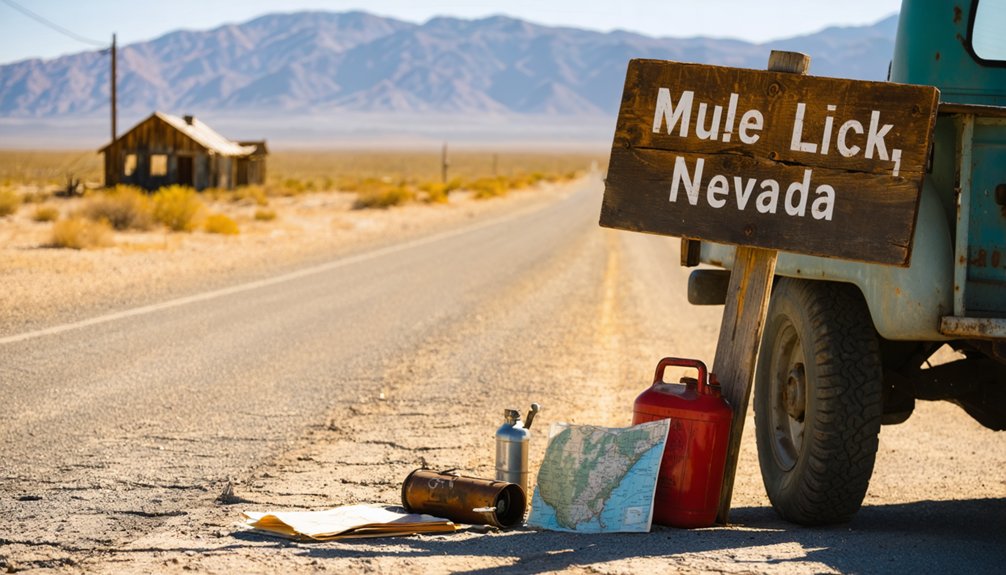
Heading into Nevada’s remote desert stretches means you’ll need to prepare before you leave cell service behind. The open road rewards the bold, but the desert doesn’t forgive careless planning. Watch for wildlife encounters near washes and stay aware of desert flora that signals water sources or unstable terrain.
Pack these essentials before departure:
- Water: Carry at least one gallon per person per day
- Fuel: Fill up at every town — stations vanish fast in rural Nevada
- Tires: Bring a full-size spare and a portable inflator
- Navigation: Download offline maps and carry a paper backup
Distances between stops near Mule Lick stretch longer than they look on screen. Preparation isn’t optional — it’s your ticket to freedom out there.
How to Build Your Nevada Ghost Town Road Trip Route
Once you’ve stocked your kit and checked your tires, building a route through Nevada’s ghost towns becomes the real adventure. Think county-to-county rather than single-stop, threading together sites connected by mining history and desert scenery.
Start in central Nevada around Austin, where an 1862 silver strike built a town of nearly 10,000 people. Head south toward the Bullfrog District, where gold discovery in 1904 sparked another short-lived boom. Mule Lick fits naturally into this corridor, adding texture to the broader story of Nevada’s boom-and-bust cycles.
Prioritize stops with visible ghost town preservation — standing structures, mill ruins, and historic markers tell richer stories than empty flats. Check road conditions before each leg, carry a paper map, and let the route breathe.
Nearby Ghost Towns Worth Adding to Your Mule Lick Run
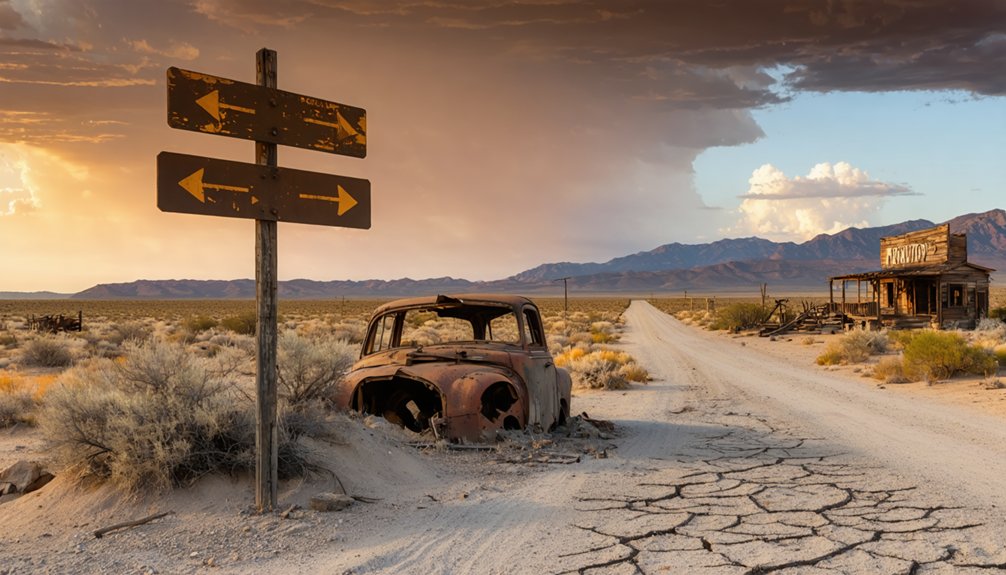
Once you’ve explored Mule Lick, you’re already deep in Nevada country worth pushing further through — Austin sits to the north as a living ghost town where fewer than 200 residents still share streets with 19th-century silver-rush remnants.
Head south toward the Bullfrog District, where the 1904 gold boom left behind ruins that still break the desert skyline near Rhyolite.
Between those anchors, you’ll find smaller mining camp stops scattered across the region that round out the story of how Nevada’s boom-and-bust cycle shaped — and abandoned — dozens of settlements in a single generation.
Austin’s Living Ghost Town
While Mule Lick anchors your route, Austin deserves a stop of its own. This living ghost town carries a serious mining legacy dating back to 1862, when a silver strike transformed a desert stretch into a boomtown of nearly 10,000 people. Today fewer than 200 residents remain, yet historical preservation efforts keep Austin’s story visible and tangible.
Walk its historic Main Street and you’ll feel the contrast between past ambition and present quiet.
- Stokes Castle offers striking stone architecture against open desert sky
- The old Gridley Store ties directly to Civil War–era fundraising history
- Austin’s mining legacy shaped central Nevada’s entire development arc
- A “living ghost town” atmosphere means you get history without total abandonment
It’s a rare stop that rewards curiosity.
Bullfrog District Ruins
Austin rewards a slow walk, but Nevada’s ghost-town history doesn’t stop there. Push south toward the Bullfrog District, where gold fever struck hard on August 4, 1904, and entire settlements erupted almost overnight. You can still read the old settlement layout across the desert floor — grid streets that once buzzed with saloons, assay offices, and supply depots now trace faint lines through scrub and dust.
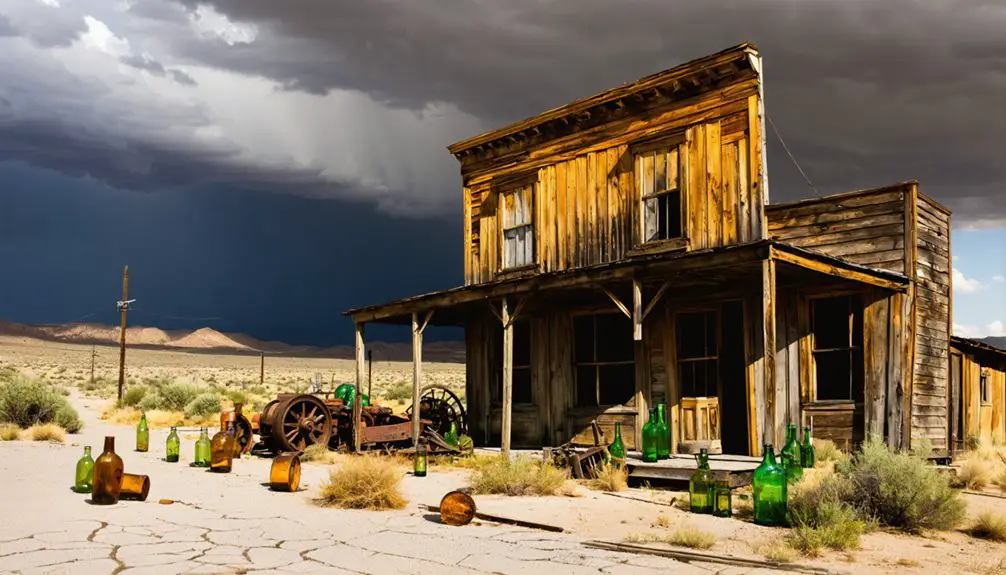
Rusted mining equipment scattered across the flats tells a blunter story: when the ore thinned, everyone left fast. Gold Center briefly served as a railroad terminus before that advantage vanished too. Walking these ruins hands you something no museum can replicate — the raw, unfiltered evidence of lives built on risk and abandoned without ceremony.
Regional Mining Camp Stops
Four ghost towns within striking distance of Mule Lick deserve a spot on your itinerary, and stringing them together turns a single-stop curiosity into a full desert history run. Each stop layers in ghost town legends, scattered mining equipment, and the raw silence of boom-and-bust Nevada.
- Austin – A living ghost town where Stokes Castle and historic Main Street anchor the story of an 1862 silver rush.
- Rhyolite – Crumbling bank walls and bottle houses hold some of Nevada’s most photogenic ruins.
- Gold Center – Once a railroad terminus, now a quiet reminder of how fast rail towns vanished.
- Gold Bar – A tiny camp that peaked at 50 residents, proving not every boom grew loud.
Map these stops county to county and let the open road connect the rest.
Austin, Nevada: The Living Ghost Town Down the Road
Just a short drive from Mule Lick, you’ll find Austin, Nevada — a town that never fully let go of its past. Silver put Austin on the map in 1862 after a Pony Express mule reportedly kicked a rock and exposed ore.
At its peak, roughly 8,000 to 10,000 people crowded its streets. Today, fewer than 200 remain.
That shrinkage is exactly what makes Austin worth your stop. Mining relics scatter the hillsides, and historic landmarks like Stokes Castle and the old Gridley Store anchor Main Street with genuine frontier character.
Austin isn’t frozen in time — it’s still breathing, still lived in, which gives it a texture that purely abandoned sites can’t match. Walk it slowly. The details reward attention.
Trespassing Laws, BLM Land, and Nevada Ghost Town Access Rules
Before you wander onto any ghost town property, you’ll want to understand who actually owns the ground you’re standing on. Much of rural Nevada falls under BLM jurisdiction, meaning public access is generally permitted. However, historical preservation rules and legal restrictions still apply.
Watch for these key access rules:
- BLM land is typically open to visitors, but disturbing structures, artifacts, or mining remnants is federally prohibited.
- Private inholdings exist within public land boundaries — posted signs mean stay out.
- Patented mining claims may still have active private ownership, even if abandoned-looking.
- Nevada Revised Statutes protect historic sites from vandalism and artifact removal.
Respect these boundaries and you’ll keep your road trip legal, ethical, and repeatable. When in doubt, check the local BLM field office before exploring.
Frequently Asked Questions
Can I Find Cell Service or Emergency Contacts Near Mule Lick?
Like wandering into unmapped wilderness, you’ll find cell coverage scarce near Mule Lick. You should save emergency contacts offline, carry a satellite communicator, and notify someone of your route before venturing into Nevada’s remote desert terrain.
Are There Guided Ghost Town Tours Available in Central Nevada?
You’ll find several tour companies offering guided historical preservation experiences across central Nevada’s ghost towns. They’ll take you deep into forgotten mining camps, sharing rich stories of boom-and-bust history while you explore remote, wide-open desert landscapes freely.
Is Dispersed Camping Permitted Overnight Near Mule Lick’s Site?
You’ll sleep under a billion stars out there! Dispersed camping’s likely permitted on BLM land near Mule Lick, but you’ll want to verify current camping regulations and prep for surprise wildlife encounters before you unroll that sleeping bag.
What Camera Gear Works Best for Photographing Nevada Ghost Towns?
Bring a wide-angle lens for expansive desert ruins and a prime lens for tight architectural details. You’ll want to dial in your camera settings manually, capturing golden-hour light that transforms Nevada’s abandoned structures into breathtaking, timeless scenes.
Have Any Artifacts From Mule Lick Been Preserved in Nevada Museums?
Specific records don’t confirm historical artifacts from Mule Lick in Nevada museums, but preservation efforts across the state — like Austin’s Gridley Store collection — show you can discover similar mining-era relics at regional historical societies nearby.
References
- https://www.youtube.com/watch?v=ao6QbaDgzkk
- https://nvtami.com/2025/06/25/lincoln-county-ghost-town-trip/
- https://travelnevada.com/nevada-magazine/odyssey-of-a-ghost-town-explorer-part-8/
- https://en.wikipedia.org/wiki/List_of_ghost_towns_in_Nevada
- https://en.wikipedia.org/wiki/Delamar
- https://nvtami.com/2023/12/05/las-vegas/
- https://travelnevada.com/ghost-town/
- https://kids.kiddle.co/List_of_ghost_towns_in_Nevada