Planning a ghost town road trip to Knik, Alaska means stepping into one of the Mat-Su Valley’s most haunting chapters. You’ll find the site along South Knik Goose Bay Road, where overgrown lots, scattered relics, and two weathered buildings on the National Register of Historic Places tell a story of boom-and-bust gold rush glory. A town of nearly 1,500 people vanished almost overnight when the railroad chose Anchorage instead — and there’s much more to that story.
Key Takeaways
- Knik ghost town is accessible along South Knik Goose Bay Road from Anchorage and Wasilla, making it an easy road trip destination.
- Visit between late May and early September for optimal conditions, with July and August offering peak tourism experiences.
- The site features overgrown grounds, scattered relics, two historic buildings listed on the National Register of Historic Places since 1973.
- No guided tours or curated attractions exist, offering visitors a raw, authentic ghost town experience at their own pace.
- Nearby destinations like Hatcher Pass, Independence Mine, and Wasilla Museum enrich your road trip with additional regional history.
What Was Knik, Alaska Before Euro-American Settlement?
Before Euro-American settlers arrived, the land that would become Knik served as a gathering place for the Dena’ina people, an Athabascan group who recognized the area’s value long before any gold rush put it on a map.
Rooted in Dena’ina heritage, this site along the Knik Arm of Cook Inlet supported ancient trade networks connecting interior communities to coastal resources.
The name Knik itself traces back to the Inupiaq word *igniq*, meaning “fire,” hinting at the deep cultural history embedded in the landscape.
When you visit today, you’re walking ground that Indigenous people used as a strategic meeting point for generations.
That layered past gives the ghost town story a richer foundation than just a boom-and-bust mining tale.
How the Cook Inlet Gold Rush Turned Knik Into a Boom Town
That Dena’ina foundation set the stage for what came next—a burst of commercial energy that transformed Knik from a quiet trading post into one of Alaska’s earliest boom towns.
Between 1895 and 1897, the Cook Inlet Gold Rush pushed a wave of prospectors, traders, and adventurers through town, cementing local legends that still echo today.
At its peak, Knik offered:
- Supply routes reaching Talkeetna Mountains mines
- Hotels, saloons, and a movie theatre
- A pool hall decorated with artistic murals
- Commerce serving Willow Creek and Cache Creek miners
- A population approaching 1,500 residents
You’d have found a raw, self-reliant community thriving on motion and ambition.
Knik wasn’t just surviving—it was driving Alaska’s early frontier economy with remarkable speed and independence.
Why the Alaska Railroad Killed Knik Almost Overnight
All that momentum collapsed almost overnight when federal planners made a single decision that rerouted Alaska’s future. Instead of anchoring the Alaska Railroad at Knik, they chose Ship Creek’s mouth, birthing Anchorage in 1916.
By 1917, the rails reached Wasilla, and commerce followed the tracks. Businesses dismantled their storefronts and hauled them away. Residents packed up and left.
Local legends say Knik emptied in less than a single season — a thriving town of 500 reduced to silence almost immediately.
Walking the site today, you’re standing where historical artifacts and fading foundations tell that brutal story. The railroad didn’t just bypass Knik; it erased it.
That freedom to redirect an entire region’s future came at Knik’s direct expense.
The Two Historic Buildings Still Standing at the Knik Townsite
Most of Knik vanished into flatbed wagons and train cars, hauled off to Wasilla and Anchorage without ceremony. Two buildings survived, and they’re worth your time.
- The Fulton-Hirshey Pool and Billiard Hall (1910) stands as the most recognizable structure.
- It later operated as a roadhouse serving travelers moving through the region.
- A log cabin represents the second surviving structure on the townsite.
- Both buildings earned placement on the National Register of Historic Places in 1973.
- Ongoing cultural preservation and architectural restoration efforts keep their stories accessible.
When you visit, you’re walking ground where 500 residents once built something real. These structures aren’t polished museums — they’re honest remnants.
Let that rawness remind you what genuine freedom costs when progress decides to reroute itself elsewhere.
What You’ll Actually See at the Knik Ghost Town Site
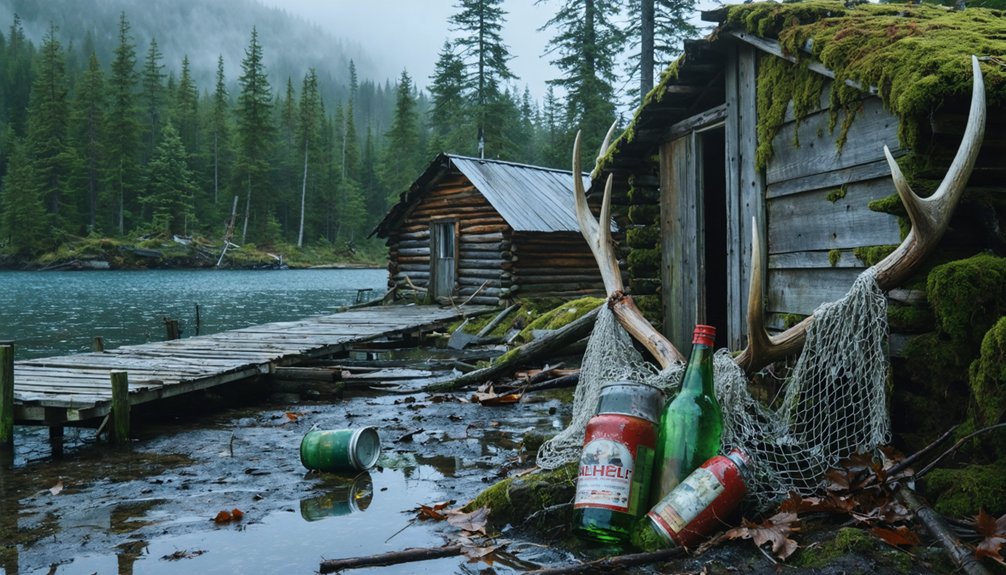
When you pull off South Knik Goose Bay Road and step onto the townsite, you’re not walking into a curated attraction — you’re standing on quiet, overgrown ground where a boomtown once ran saloons, screened films, and outfitted miners heading into the Talkeetna Mountains.
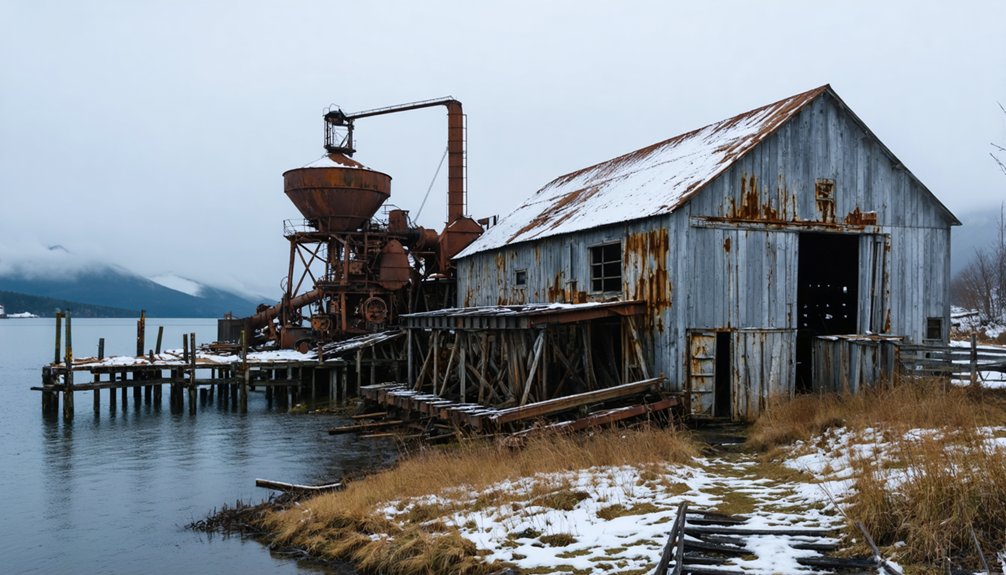
The two surviving buildings anchor the site, but the surrounding landscape tells its own story. Scattered mining relics hint at the supply operations that once moved through here, while cultural artifacts connect the site to the Dena’ina people who inhabited this land long before the gold rush changed everything.
There are no crowds, no gift shops, no guided tours pulling you along. What you get instead is open ground, honest history, and the rare satisfaction of discovering a place largely on your own terms.
How to Reach the Knik Townsite From Anchorage or Wasilla
If you’re starting from Anchorage, you’ll head north on the Glenn Highway before connecting through Wasilla, making the full drive roughly 50 miles.
From Wasilla, you’ll take Palmer-Wasilla Highway west, then turn south onto South Knik Goose Bay Road, which carries you the final stretch toward the historic townsite about 13 miles away.
The last section of road delivers you to a quiet, unassuming site that once buzzed with saloons, hotels, and the restless energy of Alaska’s earliest boom-town days.
Drive From Anchorage
Getting to Knik from Anchorage takes roughly an hour and follows a straightforward route north on the Parks Highway toward Wasilla, then southwest on South Knik Goose Bay Road until the old townsite comes into view along the west bank of Knik Arm.
The drive itself rewards you with open skies, wildlife sightings along wetland corridors, and a quiet sense of leaving modern Alaska behind.
- Start on the Glenn Highway heading north from Anchorage
- Merge onto the Parks Highway toward Wasilla
- Turn southwest onto South Knik Goose Bay Road
- Watch for moose and waterfowl along roadside marshes
- Stop in Wasilla for local cuisine before the final stretch
The route covers about 50 miles total and needs no special vehicle.
Wasilla Departure Route
Whether you’re departing from Anchorage or already staying in Wasilla, the road to Knik’s old townsite follows a simple path that hasn’t changed much since miners and traders traveled it over a century ago. Head northwest on the Parks Highway toward Wasilla, then turn south onto South Knik Goose Bay Road.
Knik sits roughly 13 miles southwest of Wasilla, placing the entire drive from Anchorage well under two hours. You’re fundamentally tracing ancient trade routes once used by Dena’ina people, whose Indigenous settlements shaped this landscape long before gold fever struck.
The road delivers you quietly to a flat, open townsite where only two original buildings remain standing — a humbling contrast to the 500 residents who once called this remote inlet community home.
Final Road Access
Reaching the Knik townsite is straightforward whether you’re starting in Anchorage or already positioned in Wasilla. Either way, South Knik Goose Bay Road delivers you directly to this quiet landmark of cultural significance.
- From Anchorage, head north on the Parks Highway toward Wasilla.
- Exit toward Wasilla, then follow Knik Road southwest.
- Turn onto South Knik Goose Bay Road and continue roughly 13 miles.
- Watch for signage marking the Old Knik Townsite on your left.
- Park near the remaining structures and explore at your own pace.
Two original buildings still stand, representing rare architectural preservation from Knik’s boom-town era. You’re not walking into a reconstructed attraction — you’re stepping onto ground where gold rush commerce, Indigenous history, and railroad decisions permanently shaped Alaska’s future.
The Best Time of Year to Road Trip to Knik
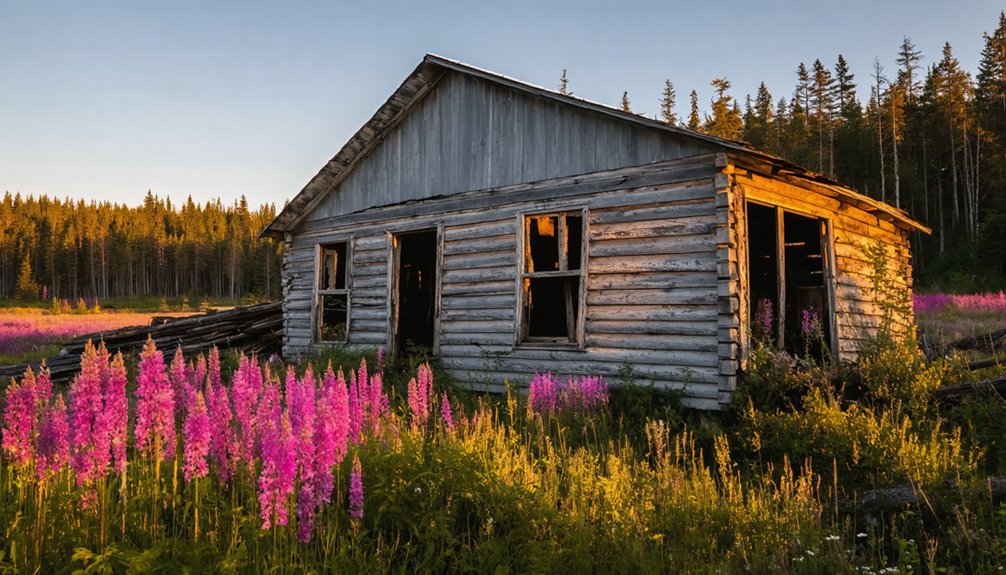
Since Knik sits in southcentral Alaska, timing your visit makes all the difference. Summer, from late May through early September, offers the most accessible conditions. The roads stay dry, daylight stretches well into the evening, and the surrounding landscape blooms with wildflowers that contrast beautifully against the aging timber of the surviving structures.
Summer transforms Knik, when dry roads, endless daylight, and wildflowers make the aging structures worth every mile.
Modern tourism around Knik peaks in July and August, so arriving in late May or early September gives you quieter, more reflective access to the townsite.
Cultural preservation efforts are best appreciated when you’re not rushing past other visitors.
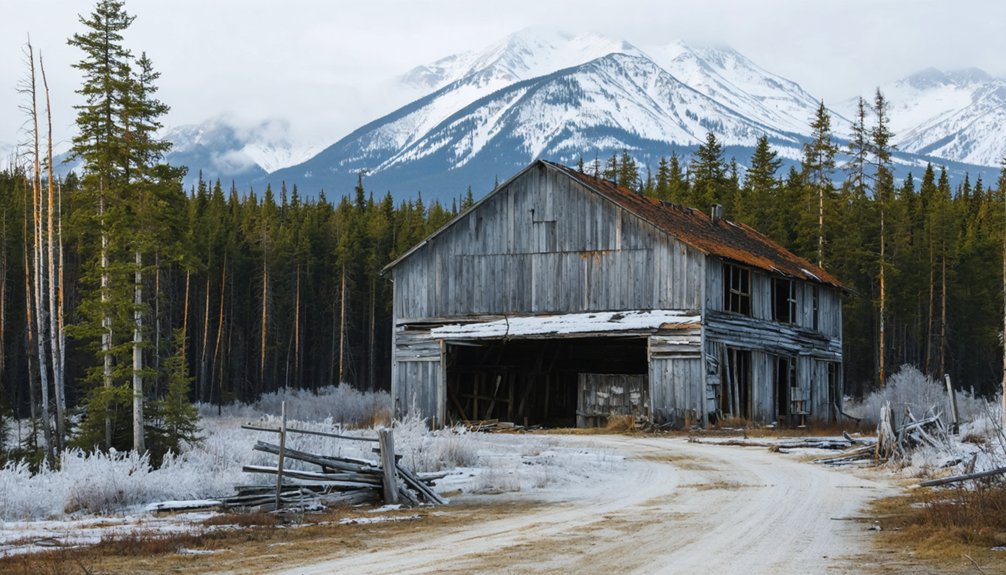
Avoid winter unless you’re experienced with Alaska road conditions. Snow and ice can make South Knik Goose Bay Road unpredictable.
Spring mud season, typically April, can also limit access considerably.
How Knik Fits Into the Broader Mat-Su Valley History
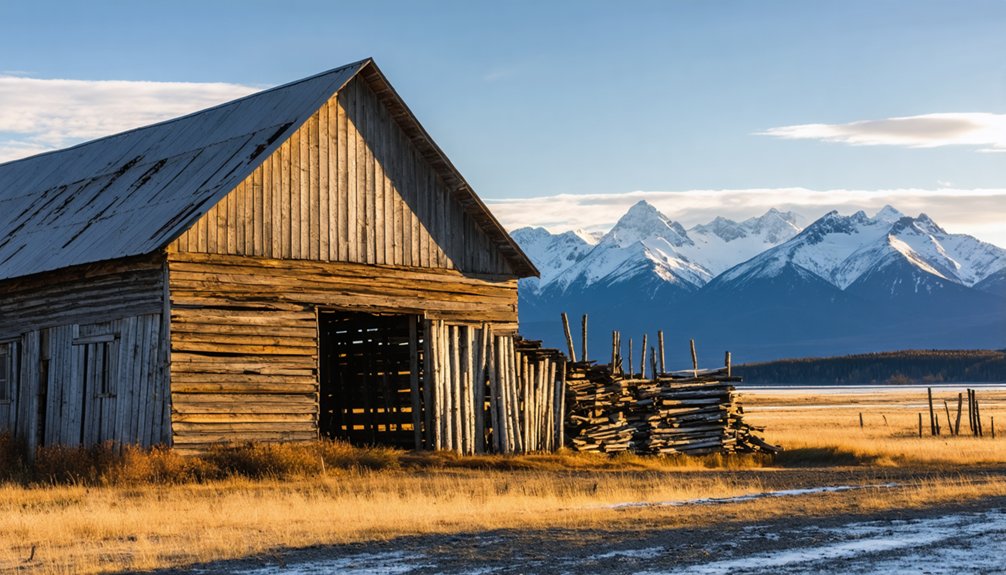
When you visit Knik, you’re stepping into a place where Dena’ina people traded long before Euro-American settlers arrived, making it one of the Mat-Su Valley’s earliest cultural crossroads.
The Cook Inlet Gold Rush of the 1890s transformed that Indigenous trading ground into a booming supply hub, briefly putting Knik at the center of regional commerce.
Then the Alaska Railroad rerouted everything, shifting economic power to Wasilla and Anchorage almost overnight and leaving Knik frozen in time.
Indigenous Roots And Trade
Before Euro-American traders ever arrived, the Dena’ina people had already made Knik a meeting point for commerce and community along the Knik Arm of Cook Inlet. Their Indigenous culture shaped the region’s earliest trade networks long before outsiders recognized its value.
When you visit today, you’re walking ground where generations exchanged goods, knowledge, and survival skills. Key facts worth knowing:
- The name “Knik” traces to the Inupiaq word igniq meaning “fire”
- Dena’ina people established trade routes throughout the Mat-Su Valley
- The 1880 U.S. Census recorded 46 Athabascan Indians at the site
- Trader George W. Palmer built his post directly within an existing Dena’ina village
- Indigenous trade networks preceded and enabled later Euro-American commercial expansion
Their legacy quietly anchors everything that followed.
Railroad Growth Shifts Power
Knik’s boom didn’t collapse from within—the Alaska Railroad simply drew a new map and left the town off it. When railroad planners chose Ship Creek’s mouth over Knik, Anchorage claimed the future.
By 1917, tracks reached Wasilla, and commerce followed the rails. Businesses dismantled their storefronts and hauled them north almost overnight.
You’re visiting a place where that pivot reshaped the entire Mat-Su Valley. What once funneled gold rush traffic now stood quietly at the edge of progress.
Today, cultural preservation efforts keep that story accessible through the remaining structures and interpretive resources on-site. Archaeological remains beneath the townsite hold deeper layers of that *shift*.
Walking this ground, you feel the weight of decisions made far away that redirected an entire region’s destiny.
Other Historic Stops Worth Pairing With a Knik Road Trip
Since you’re already making the drive out to Knik, it’s worth stretching the trip into a fuller exploration of the Matanuska-Susitna Valley‘s layered past. Cultural preservation runs deep across this region, and local legends echo through every weathered landmark you’ll encounter along the way.
Pair your Knik stop with these nearby destinations:
- Wasilla Museum & Visitor Center – traces the town’s railroad-era roots
- Hatcher Pass – the gold mining country that Knik once supplied
- Independence Mine State Historical Park – preserved hard-rock mining structures above treeline
- Museum of Alaska Transportation & Industry – covers the machinery that shaped the territory
- Willow Creek area – where miners once flooded the hills chasing gold
Each stop adds another layer to the same boom-and-bust story.
Frequently Asked Questions
Is There an Admission Fee to Visit the Knik Historic Townsite?
The knowledge doesn’t confirm an admission fee, so you’ll want to verify before visiting. You’ll discover historical artifacts and may find guided tours that reconnect you with Knik’s fascinating, freedom-filled gold rush past.
Are Pets Allowed at the Knik Ghost Town Site?
The knowledge base doesn’t confirm pet policies, so check ahead before visiting. If you bring your furry companion, prioritize pet safety, stay alert for wildlife encounters, and embrace the freedom of exploring Knik’s hauntingly beautiful, storied frontier grounds.
Is the Knik Townsite Accessible for Visitors With Mobility Limitations?
Like stepping back in time on uneven ground, wheelchair accessibility isn’t guaranteed at Knik. You’ll find the historic townsite lacks paved pathways, so prepare accordingly and contact local authorities beforehand to make sure your visit remains comfortable.
Can You Camp Overnight Near the Knik Historic Site?
No designated campgrounds exist directly at the site, so you’ll want to check local camping regulations beforehand. You’re exploring wild Alaska, and wildlife encounters are real — embrace that freedom, but camp responsibly nearby.
Is the Knik Museum Open Year-Round or Seasonally?
The Knik Museum operates seasonally, not year-round — but don’t let that stop you. You’ll want to plan your visit during summer months to fully explore these local attractions and experience the historic preservation of Alaska’s storied past firsthand.
References
- https://www.alaska-stories.com/p/the-knik-alaska-story
- https://en.wikipedia.org/wiki/Knik_Site
- https://www.youtube.com/watch?v=i73lBrRYWMk
- https://www.facebook.com/truenorthphotoak/posts/old-knik-townsiteknik-alaskabuilt-in-1898nrhp-in-1973construction-of-the-alaska-/135271145689608/
- http://sites.rootsweb.com/~coleen/knik.html
- https://www.ghosttowns.com/states/ak/knik.html
- https://www.anchoragememories.com/wasilla-alaska.html
- https://www.adn.com/alaska-news/article/historic-knik-set-celebrate-its-100th-anniversary/2010/07/14/
- http://sites.rootsweb.com/~coleen/gwp.html
- https://matanuskacolony.com/tag/knik/