Planning a ghost town road trip to Harrietta, Michigan means stepping into a lumber boomtown frozen in time. Located about 20 miles west of Cadillac via M-55 and Boon Road, this quiet village once supported over 400 residents before timber resources dried up and industries vanished. Today, you’ll find weathered storefronts, a still-operating post office, and eerie small-town silence. Visit midweek in late spring through fall for the best experience—and there’s plenty more to uncover ahead.
Key Takeaways
- Harrietta sits about 20 miles west of Cadillac, accessible via M-55 and Boon Road, roughly a 30-minute drive through farmland and forest.
- No gas stations or grocery stores exist in Harrietta; stock up on fuel, water, and snacks at least 3.5 miles before arriving.
- Visit midweek during late spring, summer, or fall for ideal lighting, solitude, and safer road conditions.
- Main Street’s weathered storefronts, operating post office, churches, and a fish hatchery highlight Harrietta’s preserved lumber-era history.
- Extend your trip by visiting nearby lumber-era towns like Fife Lake, Manton, Mesick, and Copemish via a scenic northwest loop.
What Makes Harrietta, Michigan a Ghost Town?
Although Harrietta technically still has residents, a post office, and a couple of churches, its Main Street tells a different story — one of empty storefronts, quiet blocks, and the unmistakable feel of a town that time passed by. The urban decay you’ll notice isn’t the result of sudden collapse — it’s a slow unraveling that started when the lumber boom ended and never reversed.
At its peak around 1900, Harrietta held over 400 residents and supported sawmills, a brick factory, and multiple businesses. Today, fewer than 200 people call it home. What remains is a compelling case for historic preservation, where surviving structures quietly document a vanished era.
It’s not a fully abandoned ghost town — it’s something more interesting: a living community wearing the bones of a much bigger past.
How Harrietta Went From Boom Town to Empty Streets
When the last big trees fell, so did Harrietta’s reason for existing. The lumber boom built this town fast — sawmills, a brick factory, a stove factory, even a chemical plant. By 1900, nearly 420 people called it home.
Then the timber ran out, and businesses closed one by one.
Two world wars pulled young men away, shrinking the population further. Nobody replaced them. What you see on Main Street today is urban decay frozen in place — empty storefronts standing where general stores and professional offices once thrived.
Yet Harrietta never fully disappeared. A post office, churches, and a fish hatchery kept it breathing. That tension between collapse and survival is exactly what makes historical preservation here feel personal.
You’re not visiting ruins — you’re walking through a town still deciding its fate.
What’s Left to See on Harrietta’s Main Street
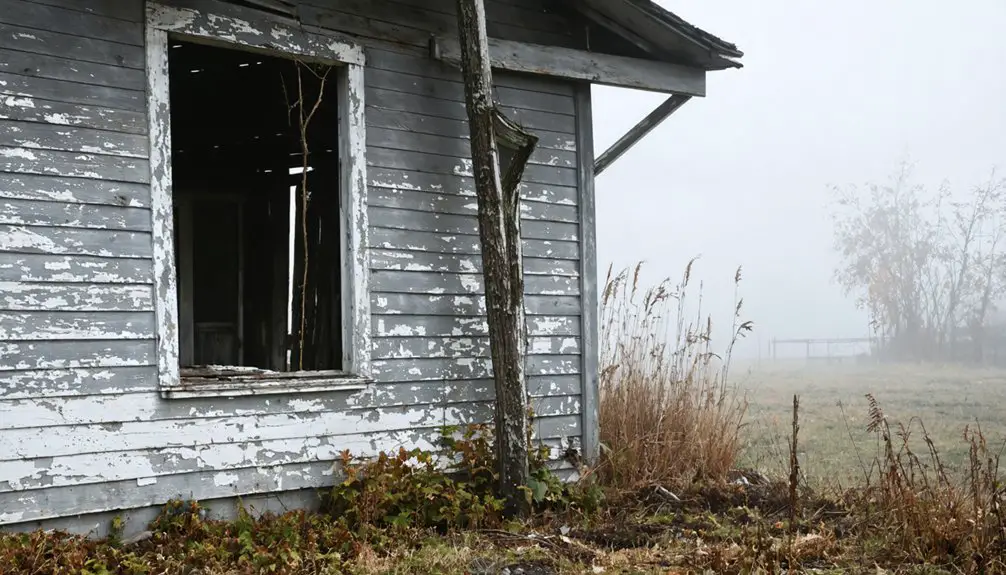
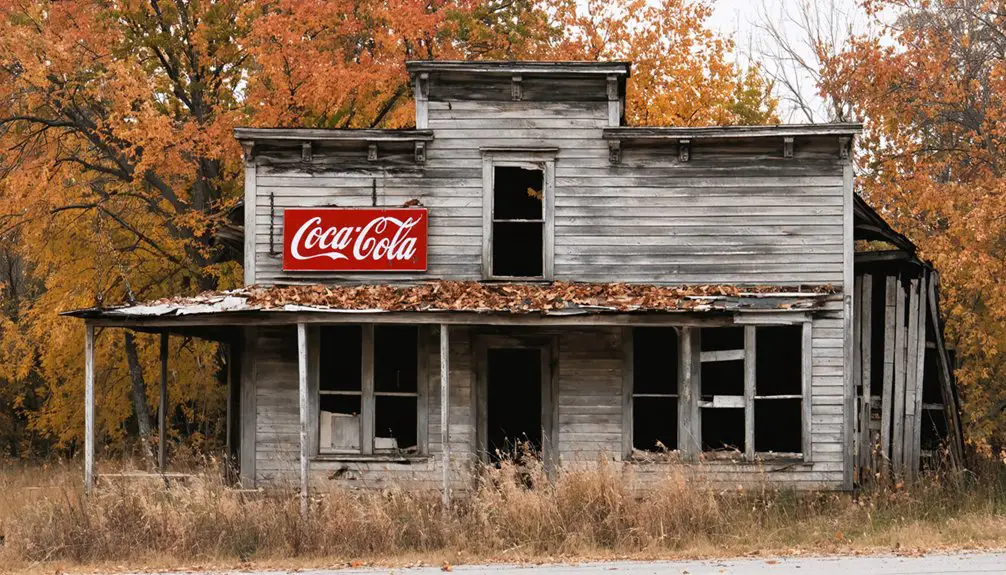
When you walk Harrietta’s Main Street, you’ll find a row of empty storefronts that tell the story of a town that once thrived on lumber dollars. The vacant buildings give the street an eerie, time-capsule quality that makes it ideal for history-focused photography.
Yet the town isn’t completely hollow — a post office and a couple of churches remind you that a small community still calls this quiet stretch home.
Empty Storefronts Remain
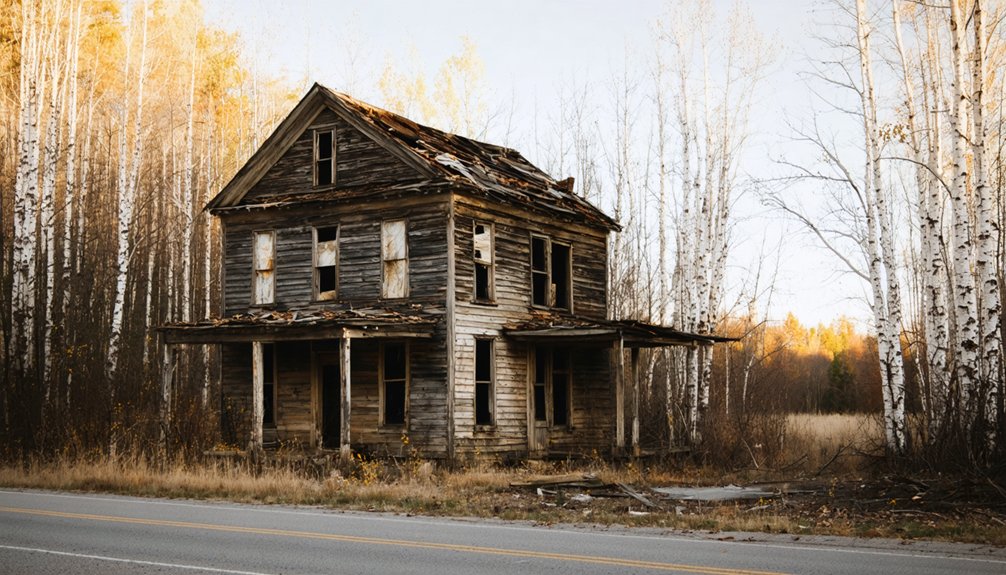
Once you turn onto Main Street, the ghost town feeling hits you immediately — empty storefronts line the block, their weathered facades quietly narrating Harrietta’s boom-and-bust past. You’re looking at urban decay in its most honest form: buildings that once housed general stores, professional offices, and thriving local businesses now standing silent.
But don’t mistake stillness for abandonment. A post office still operates here, and a few churches remind you this community hasn’t fully surrendered.
That tension between ruin and resilience is exactly what makes Harrietta worth the detour.
If historic preservation interests you, bring your camera. The surviving architecture tells a cleaner story than any museum exhibit could. You’ll leave with a sharper sense of what Michigan’s lumber era built — and what timber depletion eventually took away.
Surviving Community Landmarks
Despite the empty storefronts, Harrietta still has a few functioning landmarks worth noting before you leave. A working post office keeps the village officially on the map, and a couple of churches signal that community life hasn’t completely faded.
The fish hatchery stands out as one of the more unexpected survivors, offering a glimpse into how the area adapted after the lumber economy collapsed.
These landmarks reflect quiet historic preservation efforts rather than grand urban development schemes. Nothing here is packaged for tourists, which is exactly what makes Harrietta feel authentic.
You’re free to walk the streets, take photographs, and absorb the atmosphere without crowds or admission fees. It’s a rare kind of place where history simply exists, unhurried and unpolished.
How to Reach Harrietta From Cadillac
Harrietta sits about 20 miles west of Cadillac, making it an easy half-day detour on a northern Michigan road trip. From Cadillac, head west on M-55 and follow the signs toward Boon Road. The drive takes roughly 30 minutes through rolling farmland and second-growth forest, remnants of the timber era that once defined this region.
Once you arrive, you’ll notice the urban decay along Main Street almost immediately — empty storefronts standing as quiet testaments to historical preservation efforts that never quite materialized.
Park along the main corridor and explore on foot. The village is small enough to walk in minutes.
Keep in mind that the nearest gas station sits about 3.5 miles west, so fill your tank in Cadillac before heading out.
When to Visit Harrietta
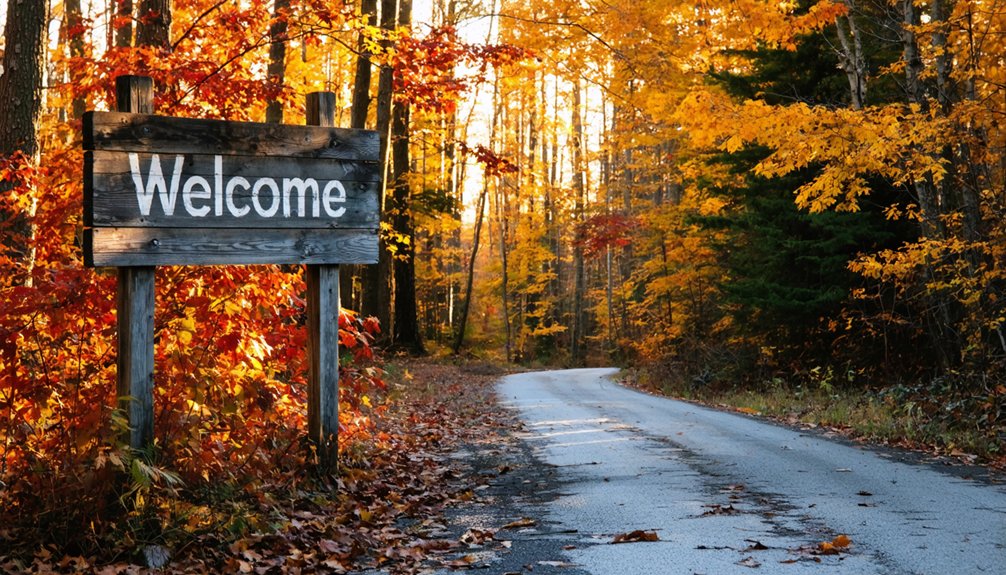
Timing your visit matters as much as the route you take. Harrietta’s historical architecture photographs best in natural light, and the seasons shape what you’ll actually experience on the ground.
Timing your visit matters — Harrietta rewards those who plan around the light, not just the road.
- Late spring (May–June): Mild temperatures, longer daylight hours, and clear skies ideal for shooting empty storefronts.
- Summer (July–August): Peak accessibility, though humidity can be heavy inland.
- Fall (September–October): Dramatic foliage frames the historical architecture beautifully, adding atmosphere to local legends about the town’s lumber-era past.
- Winter: Harsh road conditions make the detour risky, though snow amplifies the ghost-town mood considerably.
Avoid weekends if you want solitude. Harrietta’s quietness is part of its appeal, and arriving midweek on a clear morning gives you the place almost entirely to yourself.
What to Pack for a Ghost Town Photography Stop
You’ll want to bring a DSLR or mirrorless camera with a wide-angle lens to capture Harrietta’s empty storefronts and full streetscapes in a single frame.
A polarizing filter cuts glare on old glass windows, while a neutral density filter lets you slow your shutter on overcast days for a moodier, more atmospheric shot.
Pack a compact tripod too, since the low-light interiors of weathered buildings demand longer exposures that handheld shooting simply can’t handle cleanly.
Essential Camera Gear
Since Harrietta rewards patient, detail-oriented photography more than sweeping panoramic shots, your gear choices matter more than you might expect. Empty storefronts and weathered facades tell stories of historical preservation and community revitalization, but capturing them well requires preparation.
Pack these four essentials:
- Wide-angle lens — frames entire building fronts without distortion on narrow Main Street
- Prime lens (35mm or 50mm) — isolates architectural details like peeling paint and aged signage
- Portable tripod — stabilizes low-light interior shots through broken windows
- Polarizing filter — cuts glare on glass storefronts and enriches natural Michigan sky tones
Keep your kit lightweight. You’ll walk the entire historic core quickly, so mobility beats hauling unnecessary equipment through this quiet, compact village.
Lighting And Filters
Light transforms Harrietta’s empty storefronts from flat, forgettable facades into moody, textured scenes worth stopping for. Golden hour — roughly 30 minutes after sunrise or before sunset — delivers warm, raking light that deepens shadows across weathered wood and aged brick. These lighting techniques cost you nothing except an early alarm.
Pack a circular polarizer to cut glare on old glass windows and saturate faded paint colors. A neutral density filter lets you slow your shutter on overcast days, smoothing any movement and adding atmosphere.
Don’t dismiss cloudy skies — diffused light reveals surface detail without harsh contrast.
These filter effects give you creative control rather than leaving results to chance. Harrietta rewards photographers who arrive prepared and ready to work the light on their own terms.
Nearby Stops to Pair With Your Harrietta Visit

Harrietta sits just west of Cadillac, which makes it an easy anchor for a longer northern Michigan loop. You’re already in prime territory for historical architecture and local legends, so don’t stop here.
Harrietta anchors a northern Michigan loop perfectly — prime territory for history, legend, and roads worth driving slowly.
Pair your visit with these nearby stops:
- Cadillac – Explore downtown’s vintage storefronts and waterfront parks just a short drive east.
- Manton – A small railroad town with its own lumber-era bones worth photographing.
- Lake Mitchell and Lake Cadillac – Perfect for a break between historic stops.
- Mesick – Another quiet village with deep timber-boom roots and an unhurried pace.
Together, these stops build a full-day itinerary that rewards curiosity, keeps fuel costs low, and lets you move freely through Michigan’s fascinating forgotten corridor.
Gas and Supplies Near Harrietta
Before you head out to Harrietta, know that the village itself won’t cover your fuel or supply needs. The town’s urban decay extends to its commercial infrastructure — there’s no gas station or grocery store waiting on Main Street. Your nearest reliable stop sits roughly 3.5 miles west, so fill your tank and stock your cooler before you arrive.
This isn’t a drawback — it’s part of Harrietta’s character. Historic preservation keeps the focus on what remains rather than what’s been rebuilt for convenience. Treat the supply run as part of your planning, not an afterthought.
Pack water, snacks, and a full tank, and you’ll move through this slice of forgotten Michigan on your own terms, completely free to explore at your pace.
Michigan Ghost Towns Near Harrietta Worth a Detour
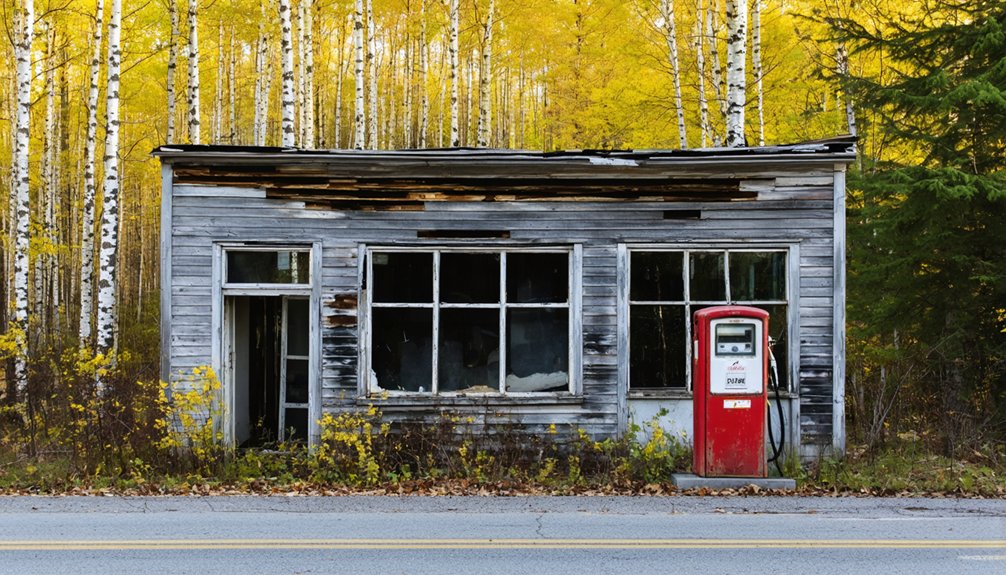
Once you’ve soaked in Harrietta’s quiet decay, northern Michigan rewards you with more ghost towns and lumber-era remnants within easy driving distance. Each stop layers historical landmarks, urban legends, and vanished industries into a compelling road-trip narrative.
- Fife Lake – A former lumber hub with preserved Victorian-era architecture worth photographing.
- Manton – Once a booming mill town, now a quiet stop with visible echoes of its timber past.
- Mesick – A small community tied to the same lumber-era collapse that hollowed out Harrietta.
- Copemish – A near-ghost town featuring abandoned storefronts and local legends surrounding its rapid decline.
String these stops together heading northwest from Harrietta, and you’ll piece together Michigan’s full boom-and-bust lumber story mile by mile.
Frequently Asked Questions
Who Originally Platted Harrietta and What Year Was It Founded?
James M. Ashley platted Harrietta in 1889, and you’ll find its historical population trends fascinating — once thriving at 419 residents, it’s now one of Michigan’s most notable ghost town attractions worth exploring freely.
What Were Harrietta’s Original Names Before the Current Spelling?
You’ll love uncovering the history of early settlement here — Harrietta carried two original names: Gaston in 1891, then Hariette in 1892. Local legends and folklore suggest the shifting names reflect the town’s restless, evolving identity.
How Did Harrietta Get Its Unique Name Combining Two Different People?
Behind every name’s a story — local folklore traces Harrietta’s name origin stories to a railroad official named Harry and his wife Henrietta. You’ll find their combined names created this village’s uniquely charming identity forever.
What Was Harrietta’s Population During Its Lumber Boom Peak Years?
You’ll find that Harrietta’s ghost town history traces back to its lumber industry impact peak, when the population hit 419 by 1900 — a thriving community that’d later fade as timber resources ran dry.
Which Two Townships Does the Village of Harrietta Sit Between?
You’ll find Harrietta straddling Boon Township and Slagle Township — and before you dismiss it as too small, these boundaries hold fascinating historic landmarks to visit and local ghost stories worth chasing on your journey.
References
- https://lostinmichigan.net/harrietta/
- https://www.theinnatstonecliffe.com/blog/fayette-historic-townsite-a-ghost-town-frozen-in-1891
- https://99wfmk.com/harriettami/
- https://www.youtube.com/watch?v=SeHP0eA3K_8
- https://www.facebook.com/LostInMichigan.net/posts/you-could-say-the-small-town-of-harrietta-is-a-ghost-town-since-most-of-its-buil/1160742388742574/
- https://www.facebook.com/groups/628602987646037/posts/1732159470623711/
- https://lostinmichigan.net/category/small-towns/page/6/
- https://en.wikipedia.org/wiki/List_of_ghost_towns_in_Michigan