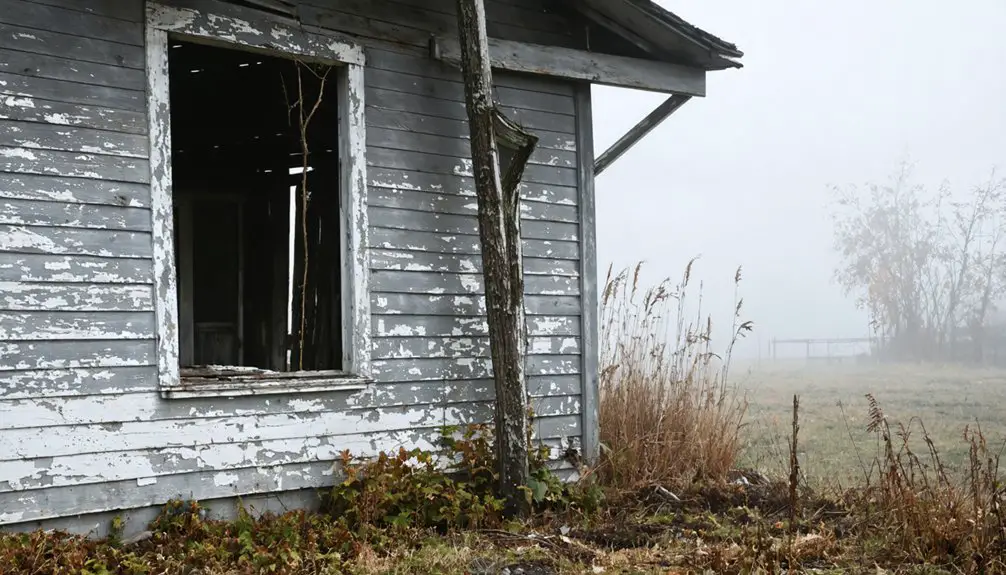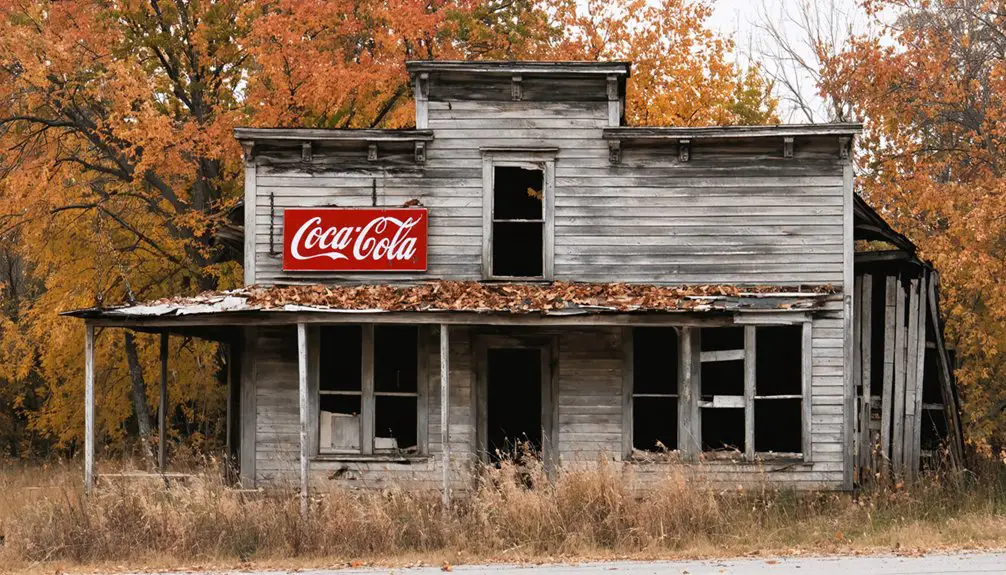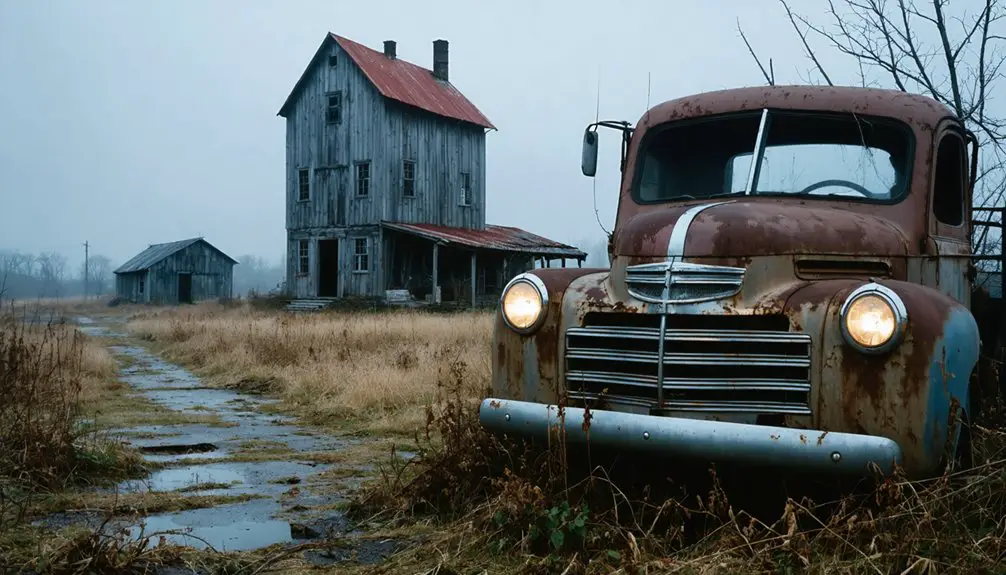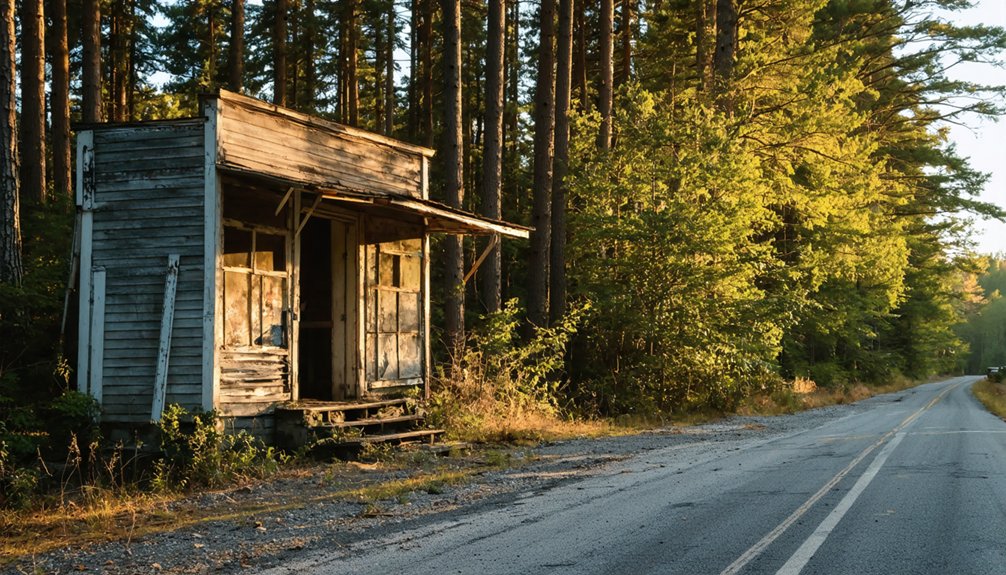
Planning a ghost town road trip to Harlan, Michigan means tracing the rise and fall of a once-thriving railroad community in the heart of northern Michigan. You’ll find the town tucked along the county line road between Wexford and Manistee Counties, where a rerouted 1880s railroad sparked a boom that vanished by the 1950s. Today, a weathered church and scattered roadside houses are all that remain. Stick around and you’ll uncover everything you need to explore Harlan like a pro.
Key Takeaways
- Harlan, Michigan, sits along the county line road between Wexford and Manistee Counties, easily accessible via a scenic drive from Copemish.
- The town peaked in the 1880s after railroad rerouting but declined sharply when the railroad stopped passing through in the 1950s.
- The old church is the only original public building still standing, alongside a small row of weathered roadside houses.
- Bring a wide-angle lens, extra batteries, sturdy shoes, and memory cards to fully capture Harlan’s decayed, historically rich structures.
- Plan for slow, unhurried exploration, as the weathered church and roadside remnants are the site’s primary attractions.
What Is Harlan, Michigan’s Ghost Town Story?
Once a bustling rail-era settlement, Harlan started out as Churchill’s Siding before Alfred F. Churchill built a sawmill and put the town on the map.
Before it was Harlan, it was Churchill’s Siding — until a sawmill changed everything.
In the 1880s, steep grades and sharp curves forced the railroad to reroute through Harlan instead of nearby Cleon, triggering a population boom that brought stores, a blacksmith shop, and a hotel.
When the railroad stopped coming, so did the prosperity. By the 1950s, businesses had shuttered, and Harlan faded into one of Michigan’s quiet local legends.
Today, you’ll find only a handful of houses lining the highway and one original church still standing among the historic landmarks. It’s a small but striking snapshot of how quickly a railroad town can rise — and disappear.
How Did Harlan Go From Railroad Town to Ghost Town?
Harlan’s rise was swift, but its fall was even faster. Once the railroad stopped bypassing the area and began running through town, Harlan thrived. Stores, a blacksmith shop, and a hotel gave the community real momentum. You can almost picture the bustle when you stand there today.
But when the railroad pulled out, it took everything with it. Businesses shuttered one by one, and by the 1950s, Harlan had fundamentally emptied out.
What were once local legends of a booming rail town faded into quiet memory.
Today, you’ll find only a handful of houses and a lone church among the historic landmarks still standing. The railroad built Harlan, and its absence dismantled it — a story written plainly across the landscape.
What’s Left to See in Harlan Today?
When you pull up to Harlan today, you won’t find much — and that’s exactly the point. The old church still stands as the town’s most striking survivor, flanked by a small row of houses lining the highway.
Bring your camera, because the quiet decay and weathered architecture make for compelling roadside shots that tell the town’s story better than any historical marker could.
The Old Church Stands
Although time has quietly emptied Harlan of its businesses and bustle, one original structure still stands: the old church. It’s a rare surviving piece of historic architecture that anchors the site and gives you something tangible to connect with when you visit.
Standing quietly along the highway, the church carries layers of local folklore tied to Harlan’s railroad boom and eventual decline. It’s worth stopping to photograph and explore on your own terms.
When you pull over, keep these details in mind:
- The church is the only original public building still standing
- A few houses line the highway nearby, adding context to the layout
- The setting rewards slow exploration and unhurried photography
You don’t need a full day here — just curiosity and a camera.
Few Houses Remain
Beyond the old church, a small row of houses lines the highway — and that’s fundamentally what’s left of Harlan today. These few remaining structures sit quietly along the road, offering a rare, unfiltered glimpse into a community that time simply moved past.
You won’t find crowds here. What you’ll find are historic remnants that tell an honest story — a town that once buzzed with railroad traffic, stores, and a hotel, now reduced to a handful of weathered homes.
The abandoned structures dotting this stretch carry a certain raw authenticity that no museum can replicate.
If you’re craving open roads and forgotten places, pull over. Walk the highway edge, take your photos, and let Harlan’s quiet remains speak for themselves. Some stories hit harder in silence.
Roadside Photo Opportunities
Harlan won’t overwhelm your camera roll, but what remains is genuinely worth the stop. The old church stands as the town’s most photogenic abandoned structure, quietly holding its ground against time. Pull over, walk the roadside, and let the stillness do the talking.
Local legends give these remnants extra weight — you’re not just photographing decay, you’re capturing a railroad town that almost never existed.
Frame your shots around:
- The church, weathered but standing, framed against open Michigan sky
- The row of remaining houses, lined simply along the highway’s edge
- The county line road itself, a forgotten corridor connecting two counties
You don’t need hours here. You need good light, a curious eye, and a willingness to see history in what’s left behind.
How to Get to Harlan, Michigan?
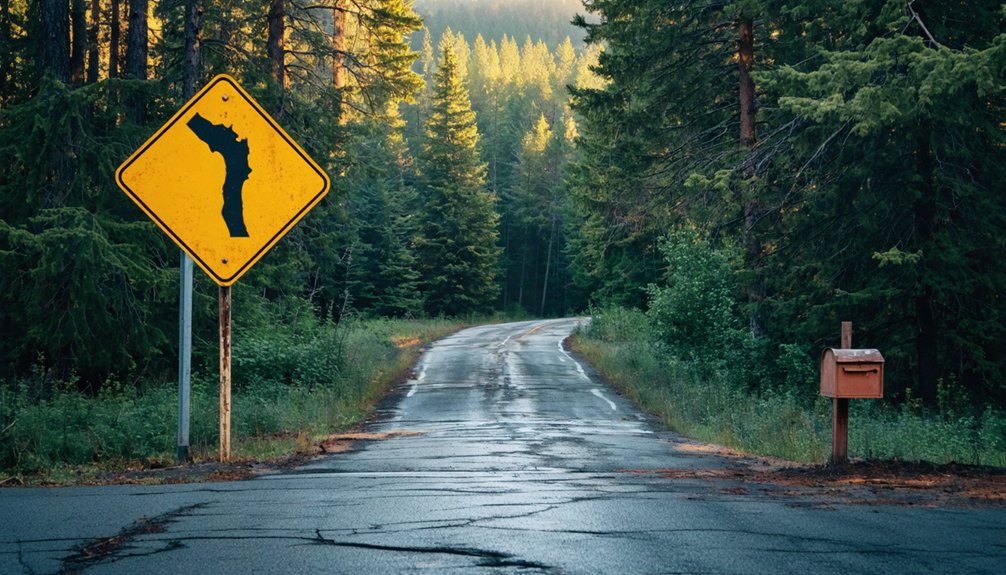
Tucked along the county line road dividing Wexford and Manistee Counties, this quiet ghost town sits just a few miles southeast of Copemish in northern Michigan. To reach Harlan, head east from Copemish along the county line road, and you’ll spot the remaining structures without much trouble.
The drive itself rewards you with scenic viewpoints across the rolling northern Michigan landscape, making the journey as worthwhile as the destination. Once you’ve explored the old church and the small row of houses, consider stopping in Copemish for local dining before or after your visit.
The roads connecting this area are straightforward to navigate, so you won’t need anything beyond a basic map or GPS to find this overlooked slice of Michigan railroad history.
What to Pack for a Ghost Town Photography Stop?
Once you’ve mapped your route to Harlan, packing the right gear will make the difference between a forgettable stop and a rewarding shoot. Harlan’s old church and remaining roadside structures reward photographers who come prepared.
You won’t find scenic overlooks or local cuisine nearby, so pack snacks and water before leaving Copemish.
Bring these essentials for your ghost town stop:
- Camera with a wide-angle lens to capture the church’s full facade and surrounding decay
- Sturdy walking shoes for traversing uneven ground around the remaining houses
- Extra battery and memory cards since you’ll have no access to power or shops
Keep your kit light but intentional. Harlan rewards those who arrive ready to document its quiet, fading character quickly and move on.
What to See Near Harlan on a Manistee County Drive?
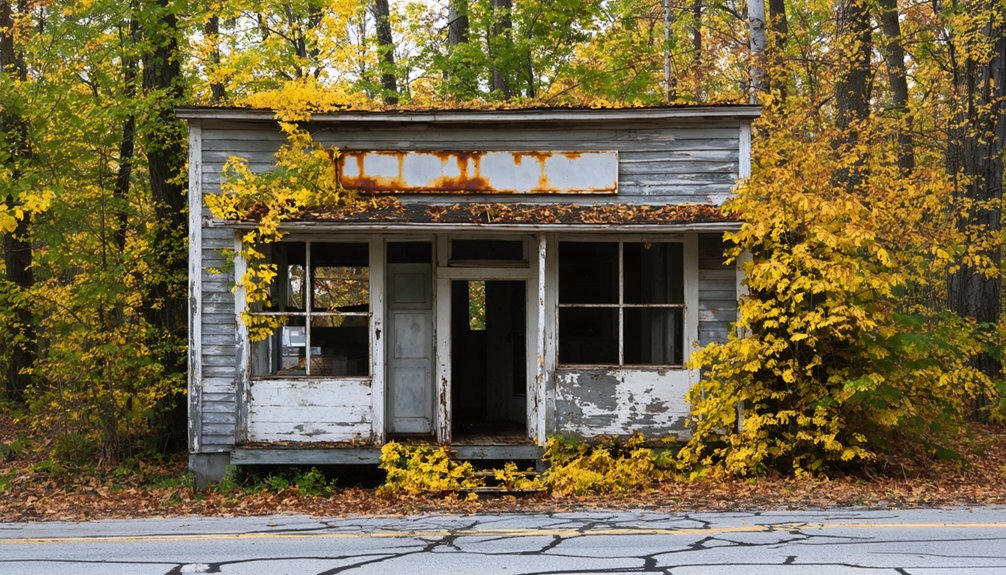
After exploring Harlan’s quiet church and roadside remnants, you’ll find that Copemish sits just a few miles northwest and makes a natural next stop on your Manistee County loop. This small village offers local dining options where you can recharge before pushing deeper into the county.
From there, head toward the Manistee National Forest corridors, where scenic overlooks reward drivers willing to leave the main road. The county line road connecting Wexford and Manistee Counties itself tells a story of railroad rerouting and forgotten settlements worth tracing on a paper map.
You’re not chasing crowded attractions here — you’re following a route shaped by timber history, rail decisions, and rural resilience. That freedom to roam defines exactly what makes this drive worth taking.
Frequently Asked Questions
Is There an Admission Fee or Permit Needed to Visit Harlan?
You don’t need an admission fee or permit to explore Harlan! Simply drive up, embrace its historic preservation story, and uncover local legends firsthand. It’s a freely accessible roadside gem welcoming every curious adventurer.
Are There Restrooms or Facilities Available Near the Harlan Site?
You won’t find restroom facilities or visitor amenities at Harlan’s ghost town site. Plan ahead by stopping in nearby Copemish before you explore, where you’ll discover basic services to keep your adventure rolling comfortably.
What Is the Best Season to Visit Harlan for Photography?
Fall’s your best bet! You’ll capture stunning seasonal foliage framing Harlan’s old church beautifully. For photography tips, visit on overcast days — soft light eliminates harsh shadows, making those weathered structures look dramatically atmospheric and timelessly haunting.
Is Harlan, Michigan Accessible by RV or Large Vehicles?
You’ll find RV accessibility fairly straightforward, as Harlan sits along a county line highway. However, large vehicle parking is limited, so you’ll want to pull over carefully near the church and remaining roadside structures.
Are There Any Guided Ghost Town Tours Available in Manistee County?
Guided ghost town legends and haunted tour guides aren’t formally found in Manistee County, but you’ll freely forge your own fascinating journey, exploring Harlan’s historic church, crumbling corners, and railroad remnants at your own adventurous pace.
References
- https://en.wikipedia.org/wiki/List_of_ghost_towns_in_Michigan
- https://99wfmk.com/harlan-michigan-ghost-town/
- https://www.facebook.com/groups/688404128396373/posts/1890715218165252/
- https://michigan4you.com/michigan-road-trips-routes-and-pit-stops/
- https://www.youtube.com/watch?v=7-vjuqiGWJU
- https://www.facebook.com/groups/628602987646037/posts/1772897726549885/
- https://www.youtube.com/watch?v=E0rnsWF_RyA
- https://lostinmichigan.net/a-michigan-ghost-town-church/
- https://www.reddit.com/r/upperpeninsula/comments/1jpqd2n/up_michigan_hidden_gems_n_ghost_towns/