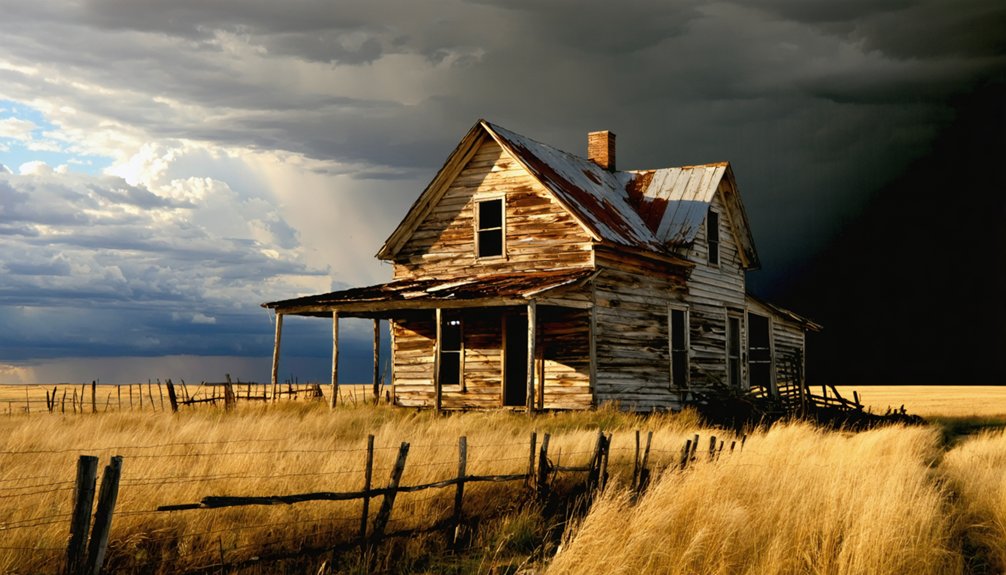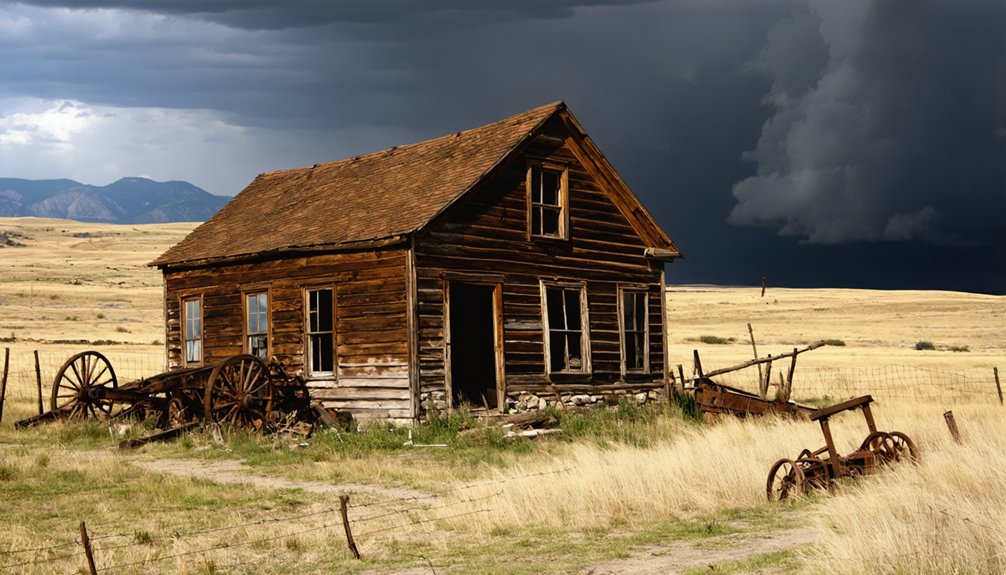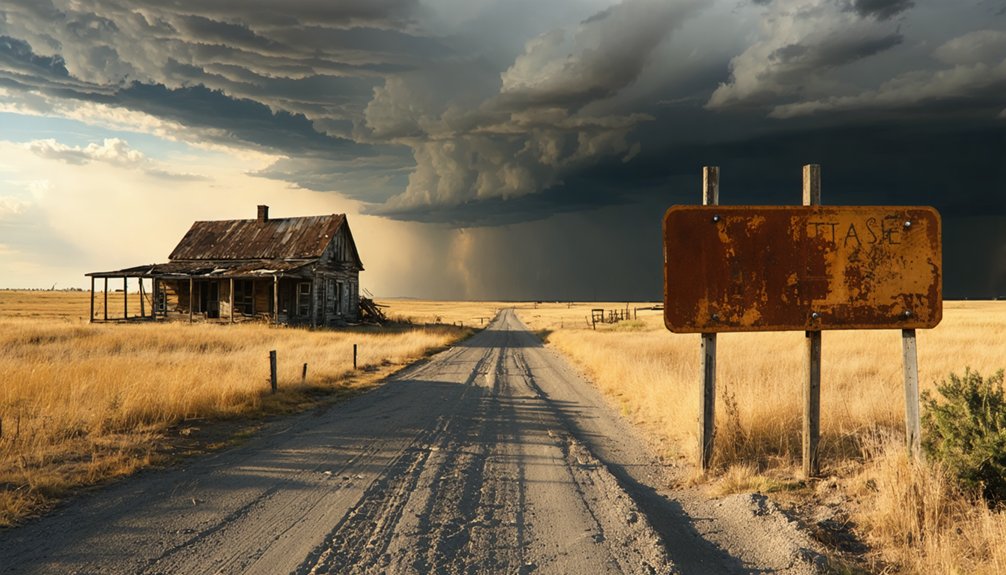
Harney, South Dakota, is a ghost town two miles west of Keystone along Battle Creek, born during the 1876 Black Hills gold rush and abandoned by 1878. A bold hydraulic mining revival in 1883 brought a massive 700-foot trestle and dual flume system, but it all collapsed by 1900. Today you’ll find rugged canyon terrain, mining remnants, and open-road exploration waiting for you. Keep going to uncover everything you need to plan your trip.
Key Takeaways
- Harney sits about two miles west of Keystone along Battle Creek, making it an easy drive from town.
- The ghost town boomed during the 1876 Black Hills gold rush but was abandoned by 1878 after deposits were exhausted.
- A hydraulic mining revival in 1883 brought a massive 700-foot trestle, but operations failed by 1900.
- No preserved buildings or signage exist, so bring maps and focus on canyon landscapes and mining remnants.
- Nearby Hill City, roughly 26 miles southwest, offers a contrasting ghost town survival story worth including on your route.
What Was Harney, South Dakota?
Tucked about two miles west of Keystone along Battle Creek, Harney was a Black Hills mining town laid out in 1876 during the region’s gold rush era. It had homes, businesses, a school, and a post office — everything a frontier community needed to thrive. But gold deposits ran out by 1878, and residents moved on fast.
Harney didn’t fade quietly into ghost town legends, though. In 1883, the Harney Hydraulic Gold Mining Company reorganized operations, showcasing serious mining engineering with two flumes and a canyon-crossing trestle standing 200 feet high and 700 feet long. Despite that ambition, the revival failed.
How Gold Built and Buried Harney by 1900
When gold drew prospectors into the Black Hills in 1876, Harney grew fast, filling up with homes, businesses, a school, and a post office.
By 1878, the deposits were exhausted, and the town emptied just as quickly as it had filled.
You’re looking at a classic boom-and-bust arc that took less than a generation to complete.
Gold Rush Sparks Growth
Gold brought Harney to life in 1876, drawing settlers who built homes, businesses, a school, and a post office along Battle Creek in the Black Hills.
You can almost picture the energy of those early years, when every shovelful of dirt carried the promise of fortune. Miners pushed hard, and the town grew fast around their ambition.
But by 1878, the gold deposits were exhausted, and Harney joined the ranks of ghost town legends scattered across the Black Hills. The boom collapsed as quickly as it began.
A later revival effort introduced advanced mining technology through an ambitious hydraulic system, including flumes and a massive trestle, but even that couldn’t save the settlement.
Exhausted Mines, Abandoned Town
By 1878, the gold was gone, and Harney didn’t survive the silence that followed. The mines emptied faster than anyone expected, and residents left just as quickly, taking businesses, ambitions, and daily life with them.
A revival attempt came in 1883 when the Harney Hydraulic Gold Mining Company pushed forward with impressive mining technology, including two flumes and a canyon-spanning trestle stretching 700 feet long and standing 200 feet high.
That engineering effort ultimately couldn’t resurrect what geology had already decided.
The Hydraulic Mining Revival That Almost Saved Harney
After gold deposits ran dry in 1878, Harney didn’t simply fade without a fight. In 1883, the Harney Hydraulic Gold Mining Company organized and brought bold new mining techniques to Battle Creek.
When gold ran out in 1878, Harney refused to surrender — fighting back with bold new mining techniques by 1883.
Workers constructed two flumes — one drawing from Grizzly Creek, another from Battle Creek — engineering a system that crossed a canyon on a trestle stretching 700 feet long and soaring 200 feet high.
That structure alone fuels local legends about the ambition behind this revival effort. You can almost picture the scale of it standing in that valley today.
But hydraulic mining couldn’t outrun economic reality. By 1900, Harney had lost both its school and post office, leaving behind only the canyon and the memory of a town that refused to quit without trying.
What Remains at Harney and What the Site Looks Like Now
What’s left of Harney today is less a landmark than a landscape — the Battle Creek corridor west of Keystone, where the town once stood, has reclaimed most traces of the settlement. You won’t find modern signage pointing you toward a restored main street or preserved storefronts. The terrain itself becomes your guide.
What survives exists mostly in the historical record — maps, mining company documents, and ghost-town references that place Harney firmly in the Black Hills’ vanished-settlement pattern. Cultural preservation here means carrying the research with you rather than reading interpretive panels on-site.
Treat the visit as active exploration. Walk the creek corridor, study the ridgelines, and let the silence fill in what the town once was. That freedom to interpret the past yourself is exactly what ghost-town travel offers.
How to Reach Harney From Keystone and Hill City
If you’re starting from Keystone, you’ll find Harney just about 2 miles to the west along Battle Creek, making it one of the easiest Black Hills ghost towns to position on a driving itinerary.
If you’re coming from Hill City instead, you’ll head northeast roughly 26 miles toward Rapid City before cutting west toward Keystone and then continuing on to the Harney site.
Either approach drops you into the same rugged Battle Creek corridor where the old mining town once stood.
Driving From Keystone
Reaching Harney is straightforward once you’re in Keystone — the abandoned townsite sits just 2 miles to the west, tucked along Battle Creek in the Black Hills. Head west out of town and follow the creek corridor, where the landscape starts telling its own story before you even arrive.
You won’t find preserved historic architecture or marked trailheads, so treat this as an open-road exploration shaped by local legends and firsthand discovery. The terrain reflects the mining era that defined this place — rugged, quiet, and unapologetic.
Keep your eyes on the creek drainage and surrounding hillsides, where the remnants of Harney‘s short-lived boom once stood. A detailed map and a flexible schedule make this stretch far more rewarding than relying on standard tourist signage.
Approaching Via Hill City
Tucked about 26 miles southwest of Rapid City, Hill City gives you a practical southern entry point into the Black Hills ghost-town corridor before you push northeast toward Harney.
Hill City itself nearly vanished after early gold strikes faded, but tin discoveries in 1883 pulled it back from the edge — a survival story that contrasts sharply with Harney’s total collapse.
As you drive northeast from Hill City toward Keystone and Battle Creek, you’re tracing a landscape shaped by bold mining technology, including the hydraulic flume systems that once crossed canyon walls on towering trestles.
Ghost town preservation efforts in this corridor remain minimal, so treat the journey as open-ended exploration.
The road rewards curiosity more than a fixed itinerary.
Hill City and Nearby Black Hills Ghost Towns Worth the Detour
Hill City sits about 26 miles southwest of Rapid City and makes a natural anchor for any Black Hills ghost-town drive. Founded in 1876, it nearly vanished after richer strikes pulled residents north, but tin discoveries in 1883 kept it breathing. That survival story sets it apart from the ghost town legends scattered across these hills, where most settlements simply disappeared once the ore ran out.
From Hill City, you can explore surrounding communities that never recovered, tracing the region’s boom-and-bust pattern through abandoned foundations and forgotten road traces. The area rewards curious travelers who appreciate mining engineering history and wide-open landscapes.
Each detour adds depth to your understanding of why Harney collapsed while Hill City endured, giving your road trip real historical contrast.
Planning a Black Hills Ghost Town Road Trip Around Harney
Since Harney sits about 2 miles west of Keystone along Battle Creek, you’ll want to use Keystone as your entry point and build your itinerary outward from there. Head west toward the Battle Creek and Grizzly Creek corridor, where the remnants of the Harney Hydraulic Gold Mining Company’s impressive mining engineering once defined the landscape. That 200-foot trestle alone makes the area worth exploring.
From there, swing southwest toward Hill City, roughly 26 miles from Rapid City, to see how one town survived while Harney didn’t. Comparing active communities against ghost town preservation sites sharpens your understanding of why some places endured and others vanished.
Pack ghost-town lists and local history essays rather than relying on tourist infrastructure — Harney rewards self-directed explorers who dig deeper.
Frequently Asked Questions
Is a Permit Required to Visit Ghost Town Sites in the Black Hills?
It depends on land ownership! You’ll want to check if the site’s on private, state, or federal land. Historical preservation rules vary, so research before you roam to stay free and legally clear.
What Is the Best Time of Year to Explore Black Hills Ghost Towns?
You’ll find late spring through early fall offers the best tourist accessibility and historical preservation conditions. Mild temperatures, clear roads, and longer daylight hours let you freely explore Black Hills ghost towns like Harney without weather interruptions.
Are There Guided Ghost Town Tours Available Near Keystone or Hill City?
Ironically, ghost towns that thrived on independence now attract guided exploration tours! You’ll find historical preservation groups near Keystone and Hill City offering organized excursions, letting you freely uncover the Black Hills’ forgotten mining secrets without getting lost yourself.
Is the Harney Site on Public or Privately Owned Land?
The available records don’t confirm Harney’s land ownership status, so you’ll want to research historical preservation databases before visiting. Verifying land ownership protects your freedom to explore without accidentally trespassing on private property.
What Should Visitors Bring When Searching for Remote Black Hills Ghost Towns?
Ready to roam free? You’ll want sturdy boots, water, and a camera for photography opportunities. Respect historical preservation by leaving everything untouched, and always carry a map—cell service vanishes as quickly as these ghost towns did.
References
- https://en.wikipedia.org/wiki/List_of_ghost_towns_in_South_Dakota
- https://www.sdpb.org/rural-life-and-history/2023-08-21/some-black-hills-ghost-towns-and-their-origins
- https://www.facebook.com/westernmininghistory/posts/galena-south-dakota-was-the-first-silver-mining-town-settled-in-the-black-hills-/1238436768489580/
- https://www.sdhspress.com/journal/south-dakota-history-2-2/some-black-hills-ghost-towns-and-their-origins/vol-02-no-2-some-black-hills-ghost-towns-and-their-origins.pdf
- https://www.pbs.org/video/galena-the-ghost-town-that-refuses-to-die-ehw4x2/
- https://kids.kiddle.co/List_of_ghost_towns_in_South_Dakota
- https://en.wikipedia.org/wiki/Hill_City
- https://www.emmitsburg.net/archive_list/articles/places/harney.htm
- https://blackhillsvisitor.com/learn/the-story-of-hill-city/
- https://espnsiouxfalls.com/ixp/481/p/south-dakota-ghost-towns-2/