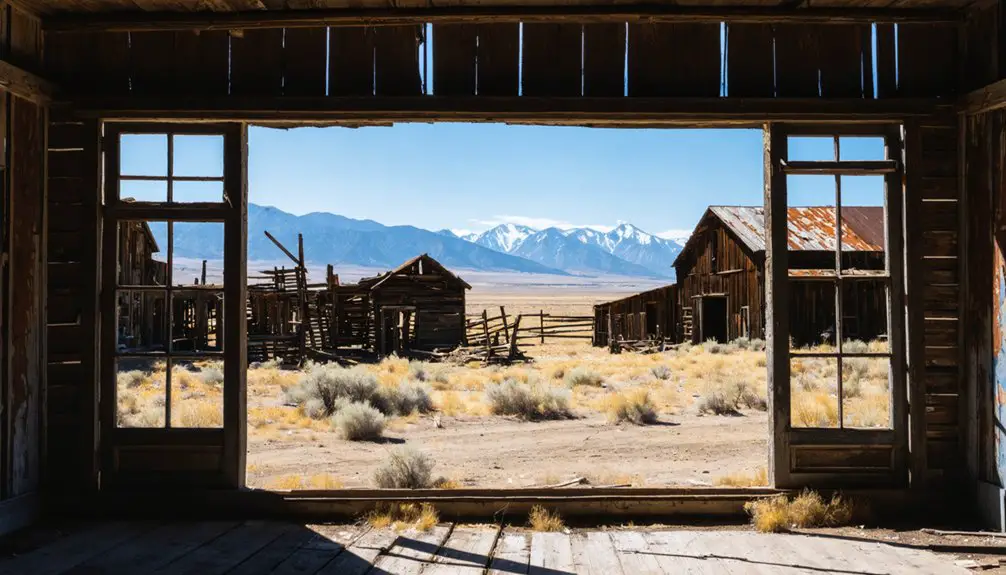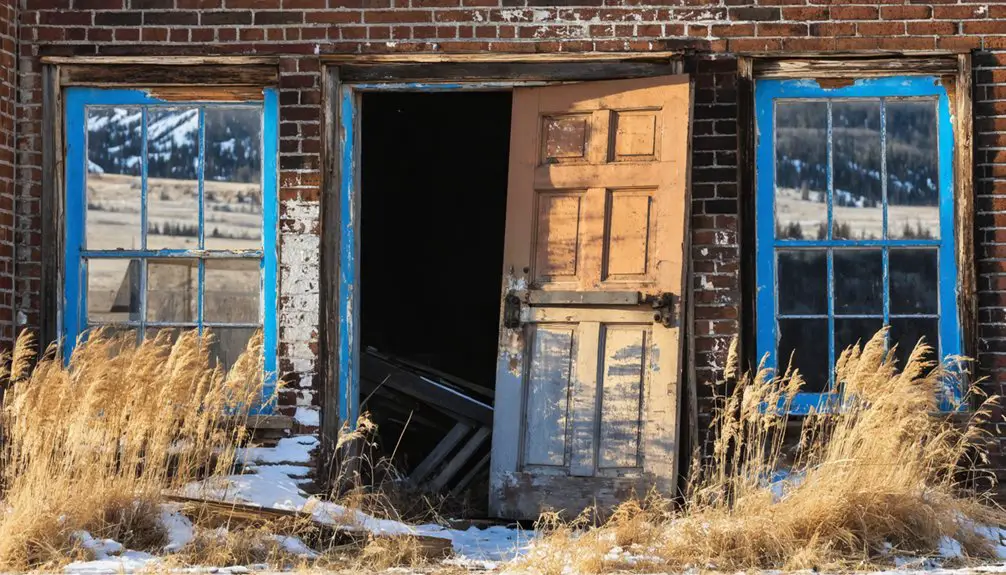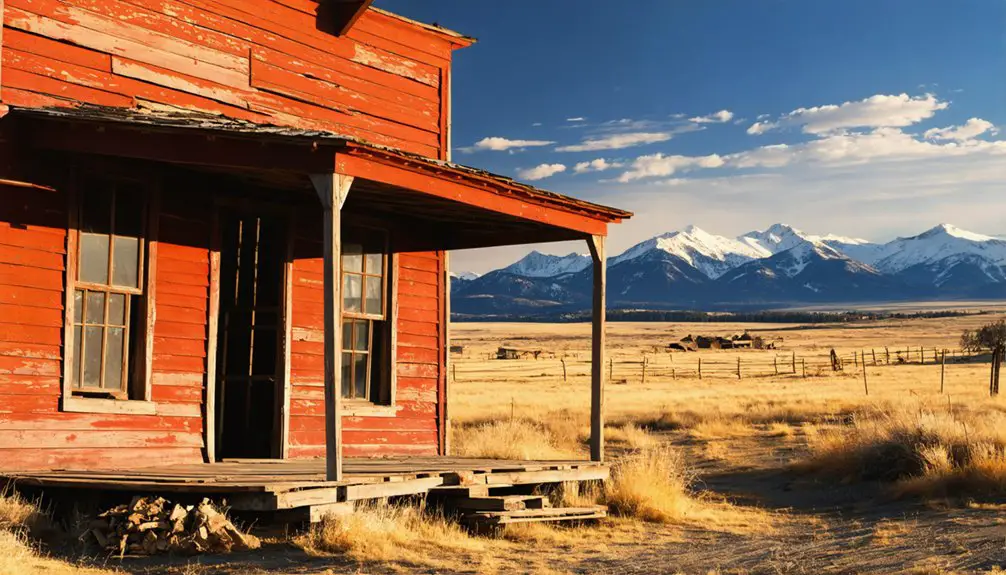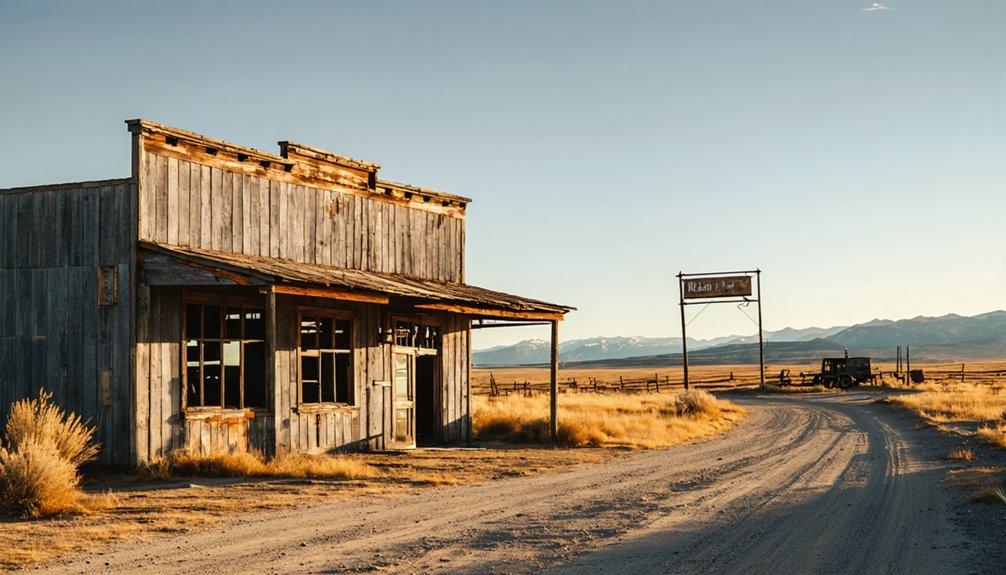
Planning a ghost town road trip to Hillsboro, Montana means heading south of Lovell, Wyoming on County Road 37 into Bighorn Canyon National Recreation Area. You’ll walk through quiet canyon country toward eight weathered structures that haven’t changed much since ranchers worked this land in the early 1900s. Time your visit for late May or June when roads are dry and the light is generous. There’s more to this place than a quick stop reveals.
Key Takeaways
- Hillsboro is located within Bighorn Canyon National Recreation Area, accessible via County Road 37 south of Lovell, Wyoming.
- Early summer (late May to June) offers the best road conditions, mild weather, and fewer crowds for visiting.
- Eight historic structures listed on the National Register of Historic Places remain standing, including the restored Hillsboro Post Office.
- A short hike from the parking area leads to Cedarvale Ranch remnants, offering scenic canyon views and historic buildings.
- Check road and weather conditions before traveling, as closures can occur without advance notice, especially outside summer months.
Hillsboro, Montana: A Ghost Town Actually Worth the Detour
When most ghost towns deliver little more than a collapsed wall and a weathered sign, Hillsboro, Montana actually earns the detour. Tucked inside Bighorn Canyon National Recreation Area near Trail Creek, this preserved historic district lets you walk through early 20th-century ranch life without needing a history degree to appreciate it.
You’ll find eight standing structures, including a restored Post Office that looks better now than it has in nearly a century. Pair your visit with wildlife watching along the canyon corridor, and stop somewhere nearby to sample local cuisine before heading down County Road 37.
Hillsboro isn’t a ruins field you photograph from the car — it’s a walkable, breathing piece of Western history that rewards the traveler willing to leave the highway behind.
How Cedarvale Ranch Became Hillsboro’s Founding Story
Before Hillsboro had a name, Grosvener W. Barry rode into Trail Creek valley in 1903 and saw something worth claiming. This local legend built Cedarvale from raw land into a destination, pulling visitors westward long before ghost-town tourism existed.
Before Hillsboro had a name, one man rode in and decided it was worth building.
His ambitions stretched across three ventures:
- Homestead ranching along the Bighorn River corridor
- Gold dredging tied to the mining industry, which never recovered its costs
- Cedarvale Ranch, the region’s first dude ranch, offering fishing, hunting, and boating
Barry died in 1920, but Cedarvale ran another decade under family and associates. What he left behind wasn’t just buildings — it was a blueprint for Western living that mixed commerce, land, and freedom. That legacy became Hillsboro’s founding story.
Eight Historic Structures Still Standing at Cedarvale
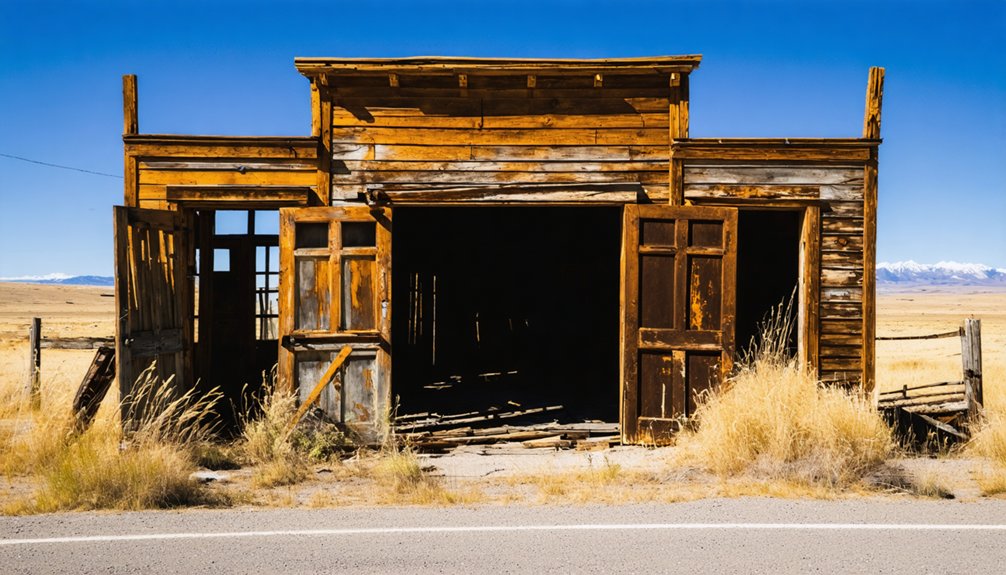
Though time has worn down most of what Barry built, eight historic structures still stand at Cedarvale, each one preserved and listed on the National Register of Historic Places. Walking among them, you’ll notice how frontier architectural styles blended practicality with permanence — built to last seasons, not just years.
The Hillsboro Post Office anchors the site, recently restored to its best condition in nearly a century. You’ll also find the Big Chicken House, Small Chicken House, milk house, and root cellar, each one quietly reflecting the farming techniques that sustained life in this remote canyon valley.
The National Park Service has worked steadily to stabilize and renovate these buildings, keeping their historic character intact. For you, it’s a rare chance to walk through living Western history.
Getting to Hillsboro in Bighorn Canyon National Recreation Area
Seeing those eight structures in person means finding your way to a corner of southern Montana that rewards the effort to get there. You’ll approach via County Road 37 south of Lovell, Wyoming, entering Bighorn Canyon National Recreation Area before reaching the parking area. From there, a short hike delivers you to Cedarvale’s weathered remnants.
Plan your route around these essentials:
- Fill your tank before leaving Lovell — services disappear fast in canyon country.
- Explore nearby Barry’s Landing for complementary views and wildlife encounters along the Bighorn River.
- Check Lovell for local dining before or after, since options near the site are nonexistent.
Early summer offers the most forgiving conditions, with open roads and clear skies framing the canyon’s rugged, unhurried beauty.
What the Walk Through Hillsboro Ghost Town Is Actually Like
From the parking lot, you’ll follow a short path that pulls you quickly into what feels like a frozen moment in early 20th-century ranch life, with the surviving structures appearing along the route in quiet succession.
You’ll pass buildings like the old Post Office, the chicken houses, the milk house, and the root cellar, each one telling a slightly different piece of Cedarvale’s story.
Bring a camera and take your time, because the light in canyon country shifts fast and these weathered structures reward a slow, attentive eye.
Parking Lot To Site
Once you step out of the parking lot, the walk to Hillsboro unfolds quietly, pulling you through open canyon country before the first weathered structures come into sight. Local parking is straightforward, and trail access stays manageable for most visitors. The short hike rewards patience.
Watch for these three moments as you approach:
- The canyon walls tighten, framing the valley like a forgotten painting
- The rooflines of surviving ranch buildings emerge against dry scrub and sky
- The stillness deepens, carrying the weight of early 20th-century life
Nothing about this walk rushes you. You’re moving through land that once hosted dude ranch guests, miners, and postmasters. That layered past lingers in every crumbling threshold and sun-bleached board you pass.
Buildings Along The Path
As you move deeper into the site, eight historic structures begin to materialize around you, each one holding its shape against decades of canyon wind and neglect. The Hillsboro Post Office stands restored, looking sharper than it has in nearly a century.
Nearby, the Big Chicken House and Small Chicken House carry quiet stories that feed local legends about what daily ranch life actually demanded. The milk house and root cellar sit low and practical, reminding you that survival here was never romantic.
Ghost town myths tend to picture total ruin, but Cedarvale defies that. These buildings feel preserved rather than abandoned, stabilized by the National Park Service with deliberate care.
Walking among them, you sense the ranch’s layered past — mining ambition, dude ranch hospitality, and slow, dignified decline.
Photography And Pacing Tips
The walk through Hillsboro moves at its own quiet pace, and you’ll want to let it. Light hits the old timber differently depending on the hour, so morning and late afternoon reward patient photographers. Watch for local wildlife near the creek edges — they’re part of the scene. Pause at scenic viewpoints before descending toward the structures.
Keep these tips in mind:
- Shoot the Post Office early before direct sun flattens its texture.
- Move slowly between buildings — details like weathered wood grain tell the real story.
- Face west for the best canyon backdrop shots.
You’re not rushing through a checklist here. You’re reading a place. Hillsboro asks for presence, and what you give it, you’ll carry out with you.
Best Time of Year to Visit Hillsboro, Montana
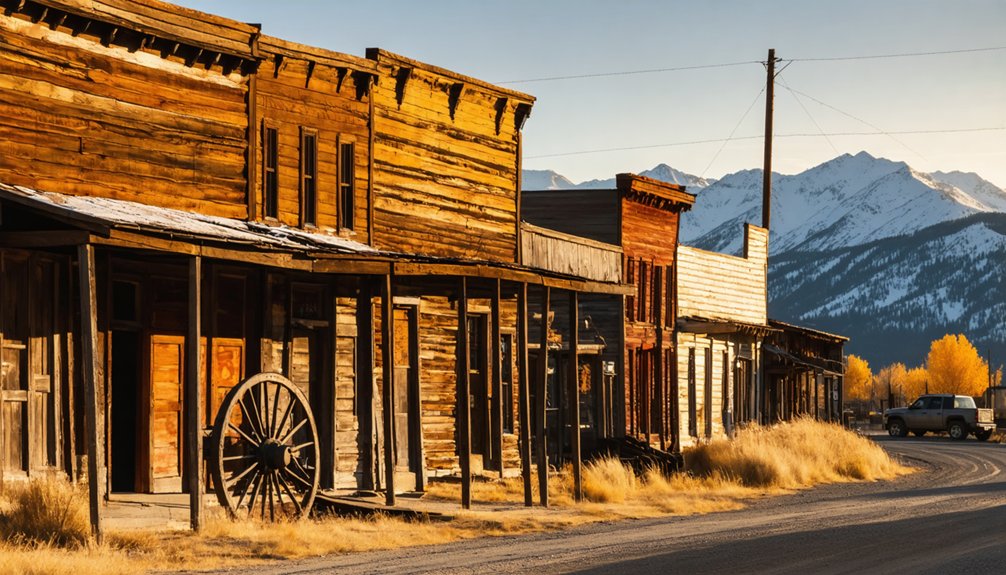
Early summer gives you the best shot at clear skies, mild temperatures, and dry county roads that make the drive into Bighorn Canyon feel effortless.
You’ll want to avoid the shoulder seasons, when unpredictable weather can turn access routes muddy and limit your time among the restored structures.
Plan your visit for late May through June, and the landscape around Trail Creek will match the unhurried, golden-era mood that Hillsboro’s history deserves.
Early Summer Weather Benefits
When you’re planning a visit to Hillsboro, early summer hits a sweet spot that’s hard to beat. The weather cooperates, the canyon roads open up, and the whole place feels alive again after winter’s grip.
Early summer gives you three distinct advantages:
- Mild temperatures make walking the historic district comfortable without the brutal midday heat of late summer.
- Wildlife observation peaks as animals move through Bighorn Canyon’s open terrain.
- Nearby Lovell’s local cuisine options are fully operational, letting you fuel up before or after your hike.
You’ll find the preserved structures easier to photograph in softer morning light, and the crowds haven’t arrived yet. That open-road freedom you’re chasing feels most genuine when the season still belongs to you.
Seasonal Access Considerations
Timing your visit to Hillsboro shapes everything from road conditions to how much of the site you actually get to explore. County roads leading into Bighorn Canyon can turn punishing after heavy snow, and winter accessibility drops sharply once temperatures bite hard across southern Montana. Seasonal closures aren’t always posted far in advance, so checking current conditions before you load the truck matters.
Early summer threads the needle perfectly — the roads are passable, the canyon air carries that clean, dry edge, and the preserved structures at Cedarvale stand quiet without summer’s peak crowds pressing in. You’ll move through the site at your own pace, camera in hand, stepping back into the early twentieth century without a schedule dictating your freedom.
Before You Go: Safety at Abandoned Sites
Ghost town structures have stood without maintenance for decades. Floors, stairs and roof timbers fail without warning, and a building that looks solid from outside may not hold your weight. Stay out of standing structures unless the site is actively maintained and open to visitors.
Mine workings are the more serious hazard. Vertical shafts can be hundreds of feet deep, are often unfenced, and may be hidden by brush or capped with rotted boards. Never enter an adit, tunnel or shaft: abandoned workings can hold oxygen-poor or toxic air that gives no warning before you lose consciousness.
Enclosed spaces with rodent droppings carry a risk of hantavirus, which is contracted by breathing contaminated dust. Do not sweep or stir up dust inside old cabins and outbuildings.
Cell coverage at these sites is usually poor or absent. Tell someone your route and expected return time, and carry more water than you think you need.
Frequently Asked Questions
Is There an Entrance Fee to Visit Hillsboro in Bighorn Canyon?
The knowledge doesn’t confirm a specific fee, but you’re entering Bighorn Canyon National Recreation Area, where visitor regulations apply. Check with the NPS to make certain historical preservation efforts continue welcoming free spirits like yours.
Can Visitors Enter the Restored Historic Buildings at Cedarvale Ranch?
The knowledge doesn’t confirm you can enter the buildings. Visitor regulations tied to historic preservation likely restrict interior access, but you’ll still soak up that nostalgic, free-spirited Western atmosphere wandering among Cedarvale’s beautifully stabilized, storied structures.
Are Pets Allowed on the Walking Trail to Hillsboro Ghost Town?
The knowledge doesn’t confirm pet policies for the trail, so check with the National Park Service directly. Trail accessibility details, including rules for your four-legged companions, guarantee you’re roaming Cedarvale’s storied grounds freely and without surprises.
Is the County Road to Hillsboro Accessible for Standard Passenger Vehicles?
Like an open door to the past, the county road welcomes you. Road conditions suit standard passenger vehicles, so you’ve no special vehicle requirements — just drive freely toward Hillsboro’s weathered history and let adventure find you.
Does the National Park Service Offer Guided Tours of the Cedarvale Structures?
The knowledge doesn’t confirm ranger-led tours, but the National Park Service manages Cedarvale’s historical preservation. You’ll want to contact Bighorn Canyon directly—they’ll guide you toward whatever access lets you roam these storied, sun-weathered structures freely.
References
- https://www.nps.gov/bica/learn/historyculture/hillsboro-historic-structures.htm
- https://www.youtube.com/watch?v=KNBpAP4pYWk
- https://visitmt.com/things-to-do/ghost-towns
- https://www.facebook.com/groups/americansouthwest/posts/1602232500406218/
- https://www.ghosttowns.com/states/mt/hillsboro.html
- https://www.calameo.com/books/0043699387169ffe58d0e
- https://www.familysearch.org/en/memories/memory/119096964
- https://tripbucket.com/dreams/dream/visit-hillsboro-cedarvale-bighorn-canyon-national-recreation/
- https://hillsborohistoricalsociety.com/gallery/