Hollands isn’t on most maps, but it rewards those who seek it out. Start at Shasta State Historic Park, head south through Sierra Nevada foothills, and cross-reference county records before leaving paved roads behind. Visit during spring or fall for bearable temperatures. Pack water, sturdy boots, and a paper map—cell service disappears fast out here. There’s far more to know before you load up the car and point it toward the forgotten California.
Key Takeaways
- Start from Shasta State Historic Park, navigating south via Highway 395, using USGS records and county maps for accurate route planning.
- Visit Hollands in spring or fall to enjoy comfortable temperatures, wildflowers, and golden light while avoiding extreme summer heat.
- Pack one gallon of water daily, carry GPS and paper maps, and wear sturdy boots for safe remote exploration.
- Book accommodations early in Ridgecrest, Lone Pine, or Barstow, or camp on BLM land near ghost town sites.
- Watch for rattlesnakes and scorpions, avoid disturbing wildlife, and leave no trace to preserve Hollands’ historical integrity.
Why Hollands Belongs on Your California Ghost Town Road Trip
Although California’s ghost town circuit draws most travelers toward marquee stops like Bodie and Calico, Hollands earns its place on your itinerary as a quieter, lesser-documented relic of the state’s boom-and-bust mining era. Abandoned structures and fading history reward the road tripper willing to venture off the well-worn route.
You’ll find that ghost town myths surrounding Hollands run deeper than surface-level legend. The abandoned structures here speak a raw, unpolished truth about communities that rose fast and collapsed faster when ore veins dried up and rails rerouted.
Unlike heavily trafficked preserves, Hollands hands you unfiltered access to California’s transient past. You choose your own pace, read the landscape on your terms, and leave with something the packaged tourist trail rarely delivers — genuine discovery.
How To Get To Hollands, California
Your journey to Hollands begins most naturally from Shasta State Historic Park, a fitting launchpad that connects California’s ghost town heritage to the open road ahead. You’ll navigate a stretch of Highway 395 and its tributaries, roads that once carried prospectors, freight wagons, and fading dreams through boom-and-bust country.
Use Bodie State Historic Park and the eastern Sierra Nevada as your navigational anchors, landmarks that’ll keep you oriented as the settlements grow sparse and the landscape turns raw.
Starting Your Journey Route
Tucked into California’s boom-and-bust mining heritage, Hollands rewards those who plan their approach carefully before hitting the road. Start your route from Shasta State Historic Park, the proven anchor of California’s ghost town corridor, then navigate southward through the Sierra Nevada’s sun-bleached foothills.
Historical documentation places Hollands within a network of dispersed mining settlements, so cross-reference USGS geographic records before departure. Local legends whisper of unmarked turnoffs and forgotten wagon trails that once connected these outposts, so don’t dismiss regional lore when plotting your course.
Carry detailed county maps alongside digital navigation, since remote terrain swallows cell signals without warning. You’re chasing living history across open country, and that freedom demands preparation, sharp instincts, and an appetite for roads that reward the genuinely curious traveler.
Key Highways And Roads
Once you’ve locked in your starting point at Shasta State Historic Park, the road network fanning southward becomes your primary tool for threading through California’s ghost town corridors. Geographic verification confirms these arteries carried miners, merchants, and dreamers through boom-and-bust terrain.
- US-99 – The historic spine connecting northern settlements to central valley crossroads
- CA-36 – A rugged eastward corridor through timber and mining country
- US-395 – The high desert highway tracing Sierra Nevada ghost economies
- CA-14 – Cutting through Mojave desert settlements toward southern endpoints
Historical accuracy demands you cross-reference county land records before committing to any unmarked turnoff.
These roads don’t forgive assumptions—they reward preparation, independent thinking, and a willingness to navigate terrain that swallowed entire communities whole.
Nearby Landmarks For Navigation
Moving toward Hollands means orienting yourself against landmarks that California’s ghost town corridors have preserved far more reliably than the settlements themselves. Location verification becomes your compass here — trust standing ruins over faded maps.
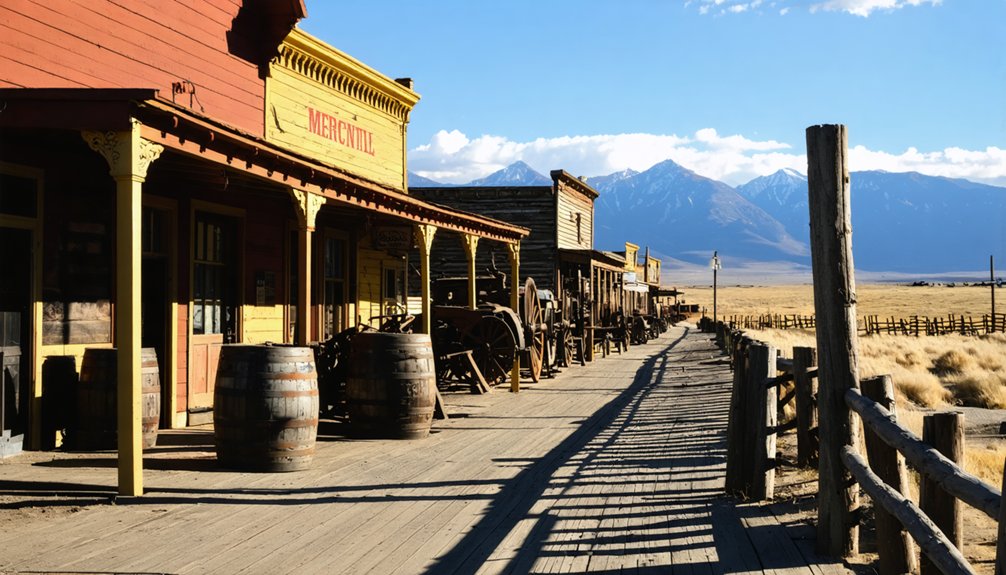
Bodie State Historic Park anchors the northern approach, its preserved Victorian streetscape confirming you’re tracking authentic mining country.
Rhyolite’s skeletal bottle house near Death Valley marks eastern orientation.
Calico Ghost Town, rising from San Bernardino’s badlands, grounds your southern bearings with historical accuracy that eroded settlements rarely offer.
Use these confirmed sites as triangulation points rather than decorative stops.
The Mojave’s rusting railways and Shasta County’s volcanic ridgelines further define corridor boundaries.
Navigate by what California’s boom-and-bust heritage left standing — those landmarks won’t disappear the way Hollands itself nearly has.
Best Time of Year To Visit Hollands Ghost Town
Spring and fall offer the most rewarding visits to Hollands, when mild temperatures make exploring crumbling structures and overgrown lots far more bearable than the region’s punishing summer heat. Ghost town architecture reveals itself differently across seasons, and abandoned mining equipment rusts beautifully under softer light.
Plan your visit around these ideal windows:
- March–May: Wildflowers frame decaying structures; cool mornings invite unhurried exploration.
- September–October: Crisp air and golden light enhance photography of weathered facades.
- November–February: Solitude peaks, though freezing nights demand preparation.
- June–August: Extreme heat makes midday exploration dangerous; arrive before 8 a.m.
You’ll move freely through the site without crowds dictating your pace when you choose shoulder seasons wisely.
Other Ghost Towns Worth Adding Near Hollands
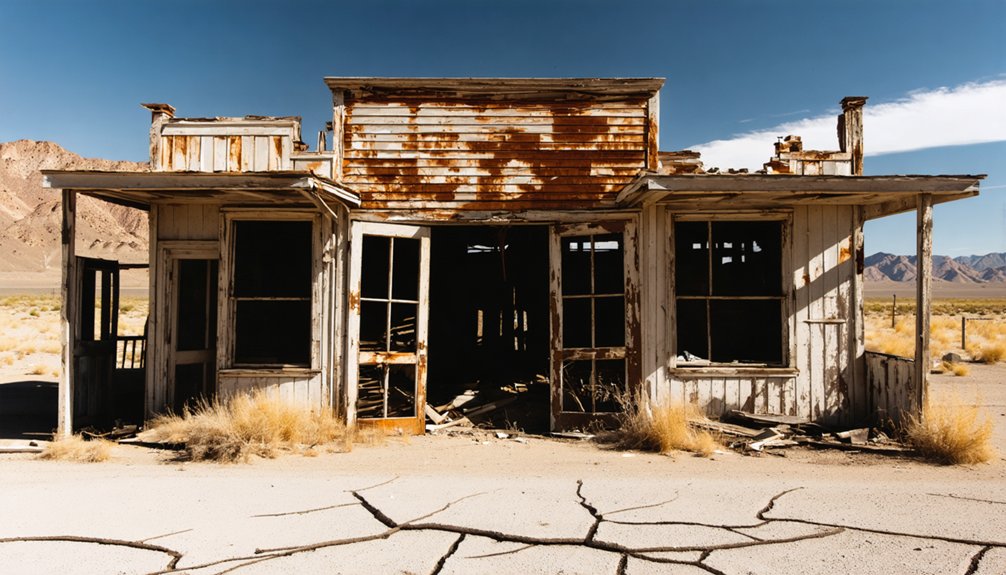
While Hollands anchors your itinerary, the surrounding region rewards detours into equally haunted terrain. Bodie State Historic Park delivers unmatched historical accuracy — its wind-scoured buildings frozen mid-abandonment, personal belongings still resting where miners left them. You’ll feel the weight of a vanished civilization without relying on urban legends to manufacture atmosphere.
Calico Ghost Town offers a contrasting experience: a restored silver camp where Mojave Desert heat amplifies every crumbling wall’s story.
Push toward Rhyolite near Death Valley, where concrete ruins and a bottle house challenge your assumptions about desert endurance. Each stop deepens your understanding of California’s boom-and-bust cycles.
Together, these towns transform your road trip from a single destination into a layered journey through forgotten American ambition.
What Hollands Looks Like When You Arrive
As you pull into Hollands, the silence hits you before anything else — a stillness broken only by wind threading through fractured walls and rusted ironwork left behind when the last residents walked away.
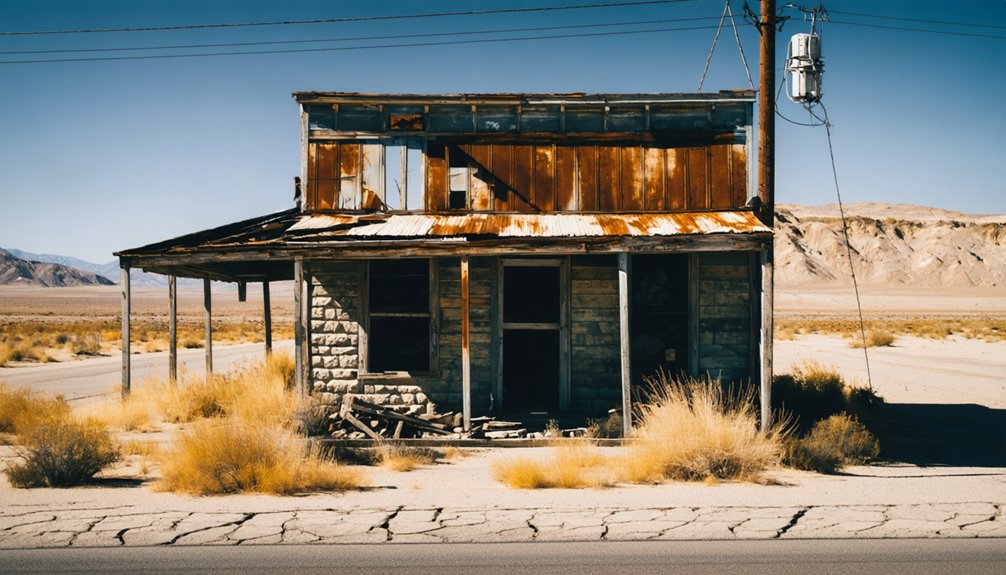
You’ll find a scattered collection of standing structures and partial ruins, their weathered timber and crumbling foundations testifying to the community’s former economic pulse.
The surrounding landscape frames it all in a kind of austere permanence, where scrubland and open sky make the abandonment feel both intimate and vast.
First Impressions Upon Arrival
When you first lay eyes on Hollands, the silence hits you before anything else — a deep, structural quiet that only abandoned places carry. Population decline didn’t just empty this place; it erased urgency entirely. Urban legends drift through what’s left, sharpening your curiosity.
You’ll notice four immediate details:
- Collapsed storefronts leaning into each other like exhausted sentinels
- Faded signage barely legible beneath decades of sun and dust
- Broken foundation lines mapping streets that commerce once filled
- Rusted hardware scattered across cracked earth, frozen mid-use
Nothing here was staged for your arrival. What remains is raw, unfiltered consequence — a town that simply ran out of reasons to stay occupied.
You’re walking through authentic American abandonment, and it demands your full attention.
Standing Structures And Ruins
Though the silence prepared you, the structures themselves deliver the real shock — Hollands doesn’t crumble uniformly, and that unevenness tells the story better than any archive could.
Some walls still stand with stubborn dignity, their timber frames warped but upright, while neighboring foundations have surrendered entirely to scrub and soil.
You’ll notice where preservation efforts stabilized certain facades, keeping them accessible without sanitizing their decay. The contrast is deliberate and honest.
Historical accuracy demands you resist romanticizing what you’re seeing — these weren’t monuments, they were working spaces where ordinary people chased economic survival.
Walk carefully through doorless entryways. Read the rust, the collapsed rooflines, the scattered hardware.
Each detail confirms that Hollands existed on its own relentless terms, and it still does.
Atmosphere And Surroundings
Arriving at Hollands, you feel the landscape before you fully register it — a flat, sun-hardened expanse where the light doesn’t so much illuminate as expose. Every surface tells the truth here.
Preservation efforts have kept enough intact that historical accuracy remains visible in the physical environment itself:
- Bleached timber frames cast long shadows across cracked alkaline soil
- Rusted metal catches afternoon light with an almost deliberate intensity
- Wind moves through structural gaps, producing a low, constant presence
- Dry brush presses against foundations, slowly reclaiming what people abandoned
You’re not visiting a reconstructed version of collapse — you’re standing inside the real thing. The silence isn’t empty; it carries weight.
Hollands doesn’t perform its history. It simply holds it, unapologetically, under an open California sky.
The Ruins and Historic Sites You Can Walk Through in Hollands
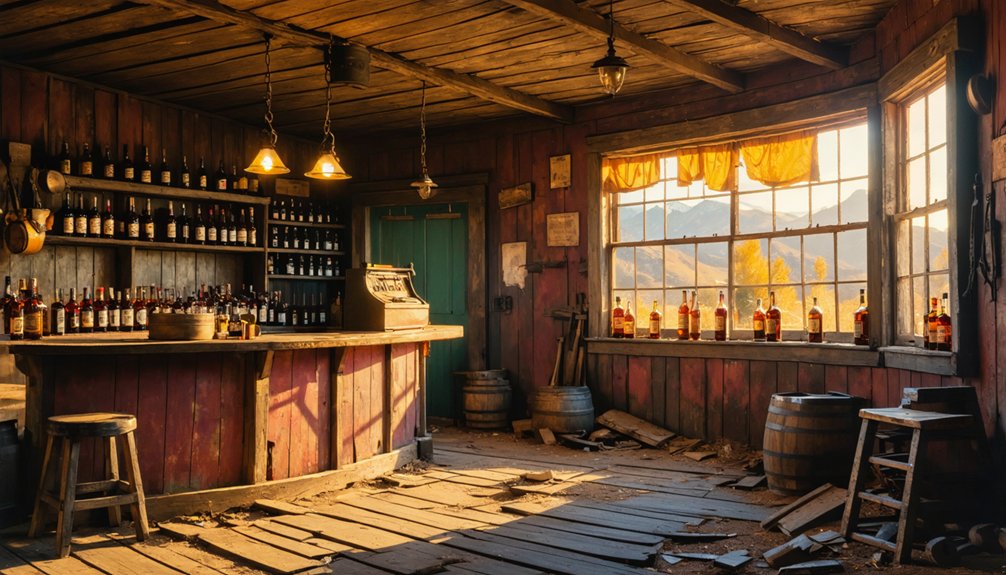
Stepping into Hollands, you’ll find yourself surrounded by the skeletal remains of a town that once hummed with the restless energy of California’s mining era. Crumbling storefronts, collapsed mine shafts, and weathered timber frames stand as raw testaments to boom-and-bust ambition.
Historical preservation efforts have kept key structures accessible without sanitizing their earned decay.
You can walk directly through what remains of the main commercial strip, where broken foundations trace the outlines of former saloons, assay offices, and supply stores. Visitor accessibility here feels refreshingly unguarded — no roped-off barriers, just open ground and honest ruin.
Run your hand along the splintered wood, study the rusted hardware still fixed to doorframes, and let the silence fill in what the history books can’t quite capture.
Where To Stay Along Your Hollands Ghost Town Route
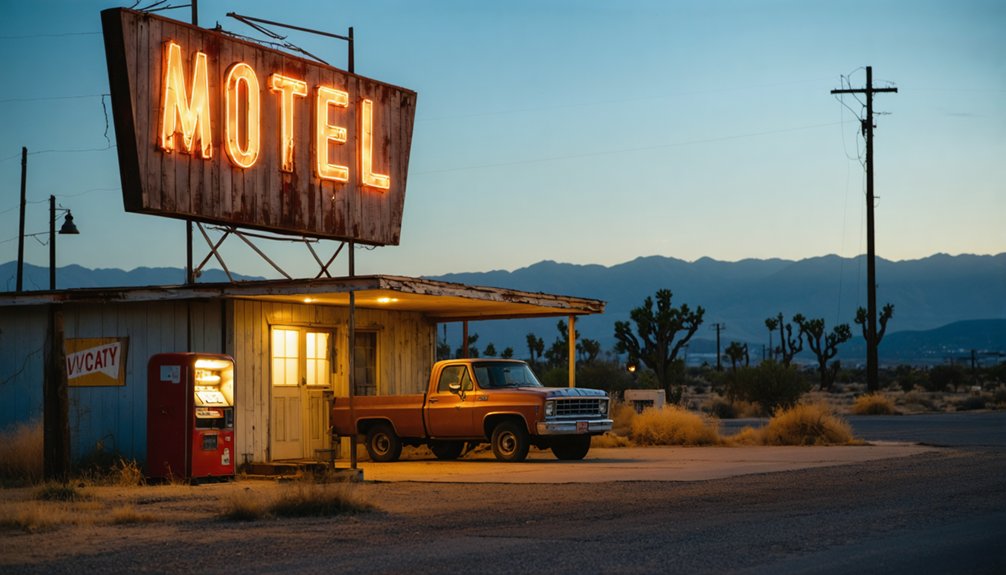
Whether you’re bunking in a rustic inn or pitching a tent beneath the same desert stars that once lit the way for 19th-century miners, your accommodations along the Hollands route shape the entire feel of the journey.
Several nearby towns offer motels, bed-and-breakfasts, and historic lodges that echo the region’s boom-era past.
If you’d rather sleep closer to the land, dispersed camping on Bureau of Land Management territory puts you within striking distance of the ghost town itself come morning.
Nearby Lodging Options
Since ghost towns like Hollands sit deep in California’s remote high desert and mountain corridors, you’ll want to lock down lodging well before you hit the road. Abandoned structures don’t offer shelter, and ghost town myths romanticize roughing it near ruins — reality demands a warm bed nearby.
Closest lodging options worth booking:
- Ridgecrest, CA — Gateway motels near the Mojave, ideal for desert-corridor exploration
- Lone Pine, CA — Historic inns beneath the Sierra Nevada, close to eastern corridor ghost towns
- Barstow, CA — Budget-friendly chains positioned between multiple abandoned settlement sites
- Victorville, CA — Larger hotel inventory with highway access toward high desert routes
Book early — remote California fills fast during cooler shoulder seasons.
Camping Along The Route
Motels and inns keep you comfortable, but camping along California’s ghost town corridor puts you closer to the silence these abandoned settlements left behind. Pitching a tent near Bodie State Historic Park means falling asleep where miners once chased fortune and woke to ruin.
You’ll find dispersed camping throughout Inyo and Mono counties, placing you within striking distance of local legends — stories of vanished families and desperate last winters that historic preservation efforts have carefully documented.
BLM land near the Mojave opens free camping beneath genuinely dark skies. Carry extra water, since services disappear fast once you leave paved corridors.
That isolation isn’t a drawback — it’s the whole point. The emptiness these towns radiated is exactly what you came to feel.
What To Pack Before Driving Out To Hollands Ghost Town
Packing smart makes the difference between a rewarding desert excursion and a dangerous one, so you’ll want to load your vehicle with essentials before heading out to Hollands Ghost Town.
Remote California ghost towns demand preparation rooted in historical accuracy — early settlers who underestimated these landscapes rarely survived comfortably. Pack your packing essentials deliberately:
- Water — carry at least one gallon per person daily; services vanish beyond civilization’s edge
- Navigation tools — paper maps and a GPS unit, since cell signals disappear in remote corridors
- First aid kit — desert terrain bites back through heat, cuts, and unexpected falls
- Camera and field journal — document abandoned structures before time erases them completely
You’re stepping into California’s boom-and-bust heritage, so respect the silence these forgotten streets still hold.
How To Photograph Hollands Ghost Town Without Losing the Atmosphere
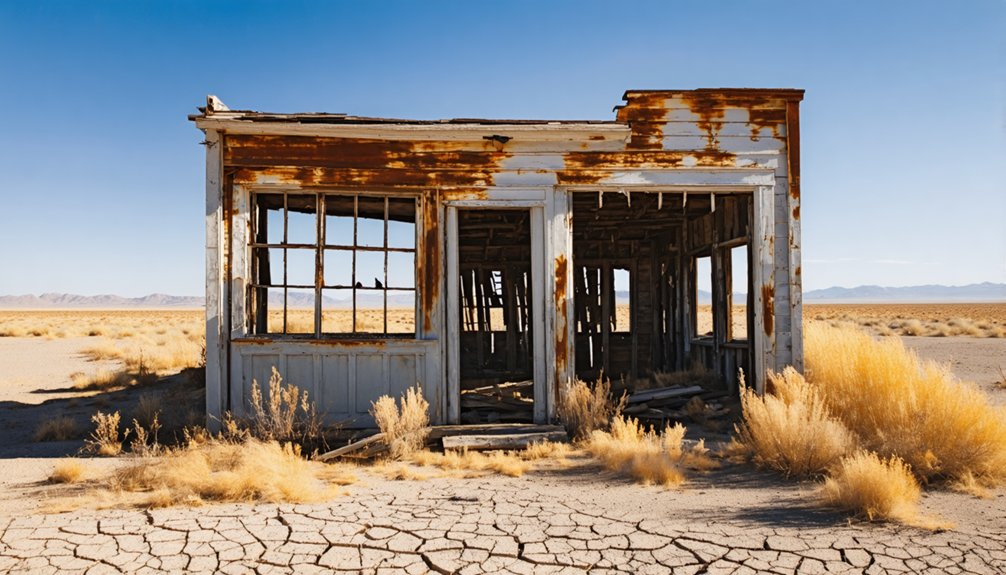
Capturing Holland’s Ghost Town on camera demands patience and a feel for light that honors what time has left behind. Shoot during golden hour, when long shadows carve depth into weathered wood and rusted metal, revealing textures that midday light erases.
You’ll want a wide aperture to isolate crumbling details against open sky, letting historical preservation breathe through your lens rather than compete with it.
Don’t over-edit. Heavy filters strip the authenticity that makes ghost town photography techniques worth practicing. Embrace grain, muted tones, and imperfect symmetry — these elements carry the weight of abandonment honestly.
Move slowly through each structure. Notice how silence shapes a frame. You’re not just documenting decay; you’re translating a community’s vanishing into something others can feel without standing there.
Staying Safe When You Explore Hollands and Other Remote Ghost Towns
Before you step through any doorway at Hollands or any other remote ghost town, understand that these sites don’t forgive carelessness the way populated places do. Abandoned structures carry real dangers beneath their haunted folklore mystique — rotted floors, unstable ceilings, exposed nails, and forgotten mine shafts.
Abandoned structures don’t forgive carelessness — rotted floors, unstable ceilings, and forgotten mine shafts punish the unprepared.
Protect your freedom to explore by preparing seriously:
- Wear sturdy boots and a hard hat before entering any abandoned structures.
- Carry water, a first-aid kit, and a charged satellite communicator — cell service vanishes in remote terrain.
- Never explore alone — partners catch what solo travelers miss.
- Research local wildlife hazards — rattlesnakes and scorpions inhabit California’s desert ghost towns year-round.
Respect these ruins as what they are: fragile historical survivors, not playgrounds. Carelessness ends trips permanently.
Frequently Asked Questions
Is Hollands Ghost Town Officially Recognized by California State Historical Records?
Over 800 California ghost towns exist, yet you won’t find Hollands among officially recognized historical preservation sites or tourist attractions — it doesn’t appear in any verified California state historical records.
Can Visitors Legally Access Private Land Surrounding the Hollands Ghost Town Area?
You can’t assume legal access to private property around Hollands, as no verified records confirm its existence. Always respect land boundaries, seek permits, and honor the freedom others hold over their historically-rooted ground.
Are Guided Tours Available Specifically for the Hollands Ghost Town Site?
No verified guided tours exist for Hollands, California, as it’s not a documented ghost town. You’d enhance your visitor experience by exploring confirmed historic sites like Bodie, where guided tours authentically breathe life into California’s wild, untamed past.
Does Hollands Ghost Town Have Any Connection to California’s Gold Rush Era?
Congratulations, you’ve discovered a gold rush connection that doesn’t exist! Hollands, California isn’t verified in historic preservation records, so you won’t find it among legitimate tourist attractions tied to California’s legendary 19th-century mining era.
Has Hollands Ghost Town Ever Appeared in Film or Television Productions?
You can’t find verified records of Hollands appearing in film or television, as it’s an unconfirmed location. Instead, explore California’s documented ghost towns, where urban exploration and photography opportunities await you around every weathered, historically-rich corner.
References
- https://www.visitcalifornia.com/road-trips/ghost-towns/
- https://www.wikiwand.com/en/articles/List_of_ghost_towns_in_California
- https://www.camp-california.com/california-ghost-towns/
- https://www.youtube.com/watch?v=nLDgQEDm5j4