Houghtonville, Vermont, is one of New England’s most accessible ghost towns, offering ten preserved 19th-century mill houses frozen in time along Houghtonville Road. You’ll reach it by heading west from Grafton Village via Route 121. Pack sturdy boots, offline maps, and a flashlight, since cell service drops fast out here. Respect posted boundaries, avoid removing artifacts, and bring your camera. There’s far more to this forgotten Vermont village than you’d expect.
Key Takeaways
- Houghtonville, located west of Grafton Village, is accessible via Vermont Route 121, which connects directly onto Houghtonville Road.
- The site features ten intact 19th-century houses listed on the National Register of Historic Places since 2015.
- Pack essentials including a flashlight, water, first aid kit, offline maps, and sturdy waterproof boots before visiting.
- Cell service is unreliable, so download offline maps and carry backup navigation tools before departing.
- Respect posted boundaries, avoid removing artifacts, and explore on foot due to uneven terrain throughout the historic district.
What Makes Houghtonville a Vermont Ghost Town Worth Visiting
Although Vermont claims over a dozen abandoned settlements, Houghtonville stands out as one of the most accessible and well-preserved ghost towns in the state. You’ll find ten intact 19th-century houses that showcase authentic architectural styles rooted in rural Vermont’s industrial past.
Ten intact 19th-century houses make Houghtonville one of Vermont’s most accessible and well-preserved ghost towns.
Unlike remote sites reduced to cellar holes and overgrown stone walls, Houghtonville offers visible structures you can actually explore and photograph.
Historical preservation efforts have kept these buildings structurally sound, giving you a rare glimpse into how mill village workers actually lived. The district earned National Register of Historic Places status in 2015, confirming its cultural significance.
You’re not just visiting ruins here — you’re walking through a genuine living snapshot of Vermont’s industrial heritage, all accessible directly from Vermont Route 121 west of Grafton Village.
How to Reach Houghtonville From Grafton Village
Getting to Houghtonville is straightforward once you’ve made your way to Grafton Village. From there, head west along Vermont Route 121, and you’ll connect directly onto Houghtonville Road, which leads straight into the historic district.
The drive itself sets the tone beautifully. Rural Vermont landscapes frame your approach, preparing you for the architectural styles you’re about to encounter — ten well-preserved 19th-century houses standing as quiet exemplars to historical preservation efforts that earned the district its 2015 National Register designation.
Pack sturdy shoes since exploring the area fully means walking uneven terrain. Download offline maps before leaving, as cell service gets unreliable in this region. Respect posted boundaries, stay on designated paths, and you’ll experience this remarkable living snapshot of Vermont’s industrial past on your own terms.
The 10 Historic Houses You’ll Find Along Houghtonville Road
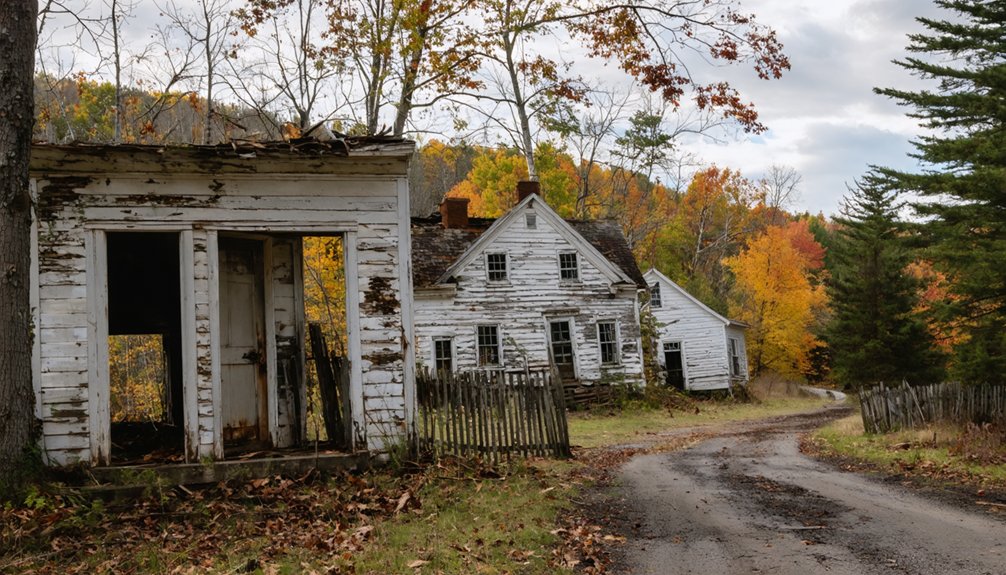
As you make your way along Houghtonville Road, you’ll encounter ten well-preserved 19th-century residential houses that once sheltered the workers of early industrial mills.
Each structure showcases exterior wood siding and stone foundations that have withstood Vermont’s harsh seasons for over a century.
Look closely and you’ll notice original interior layouts still intact, offering a rare, unfiltered glimpse into the daily lives of the people who built this community.
Houses Along Houghtonville Road
When you drive along Houghtonville Road, ten well-preserved 19th-century houses line your path, each one a surviving relic of Vermont’s rural mill village era. These structures stand within the designated historic boundary, listed on the National Register of Historic Places since 2015.
You’ll notice original wood siding, stone foundations, and interior layouts that once shaped workers’ daily lives. Local folklore ties these homes to the industrial mills that operated on these very properties before fading into history.
Preservation challenges remain real here — harsh Vermont winters test structural integrity every season. Exterior materials demand constant attention to prevent deterioration.
You can photograph freely, but avoid physical contact with any structure. These ten houses aren’t just buildings; they’re living evidence of a working community that time nearly erased.
Architectural Features Worth Noting
Each of the ten houses along Houghtonville Road tells its own architectural story, yet together they form a cohesive portrait of 19th-century Vermont mill village construction. You’ll notice wood siding weathered by generations of harsh winters and stone foundations pulled directly from local land. These details reflect authentic craftsmanship that modern building simply can’t replicate.
Heritage conservation efforts have kept structural integrity surprisingly intact, letting you read the original floor plans as workers once lived them. Architectural restoration work here prioritizes authenticity over modernization, preserving proportions, materials, and construction methods faithful to the era.
Look closely at rooflines, window placements, and foundation stonework. Every choice made by original builders had practical purpose. Walking this road, you’re fundamentally studying a living textbook of rural Vermont vernacular architecture.
The Mill Village Architecture That Survived 150 Years
What you’ll find standing along Houghtonville Road are ten remarkably well-preserved 19th-century homes that have outlasted the mills they once supported. These structures showcase wood siding and stone foundations built by workers who shaped rural Vermont’s industrial era.
Historic preservation efforts have kept these buildings structurally sound against harsh Vermont winters and decades of neglect that claimed similar villages elsewhere. You can see original construction techniques in every exterior detail, from hand-cut timber framing to carefully laid foundation stones.
Architectural restoration hasn’t stripped away authenticity here. Interior layouts still reflect how mill workers actually lived, giving you a direct connection to 19th-century daily life.
Walk along the road slowly, study each façade carefully, and you’ll understand why this district earned its National Register listing in 2015.
What to Pack for a Remote Vermont Ghost Town Visit

Before heading out to Houghtonville, you’ll want to pack a flashlight, first aid kit, and plenty of water since the area’s remote location means you’re on your own if something goes wrong.
Download offline maps ahead of time because cell service is unreliable, and bring a paper backup so you’re never left guessing which trail leads where.
Wear sturdy hiking boots and layer your clothing, as Vermont’s weather shifts quickly and uneven terrain around old mill foundations demands solid ankle support.
Essential Safety Gear
Exploring remote Vermont ghost towns like Houghtonville means venturing into areas with no cell service, unpredictable weather, and uneven terrain, so you’ll want to pack smart before you head out.
Historical preservation rules prohibit touching structures, but wildlife observation opportunities reward prepared visitors who linger quietly on the trails.
Pack these four essentials before leaving:
- Offline maps and a compass — cell service disappears fast in rural Vermont
- Sturdy waterproof boots — uneven terrain and wet conditions demand reliable footwear
- Flashlight with extra batteries — dim interiors and overcast skies reduce visibility quickly
- First aid kit and water — remote sites sit far from emergency services
Freedom means exploring confidently, and smart preparation lets you focus on the experience rather than surviving it.
Getting lost on a remote Vermont trail isn’t an adventure — it’s a liability, so you’ll want reliable navigation tools before you set foot on Houghtonville Road. Download offline topographic maps through apps like Gaia GPS or AllTrails before leaving cell range, since remote areas rarely offer signal.
Carry a physical USGS topo map as backup — digital batteries die, paper doesn’t. A compass remains essential for orienting yourself when trail markers fade or disappear entirely.
Because historical preservation boundaries aren’t always clearly posted, knowing your exact location helps you respect private property lines and designated visitor corridors. Unlike sites with developed visitor amenities, Houghtonville offers no ranger stations or information kiosks.
Your navigation tools aren’t optional extras — they’re your primary safety system in Vermont’s dense backcountry forest.
Clothing And Footwear
Rugged terrain and unpredictable New England weather make proper clothing and footwear non-negotiable on any Houghtonville excursion. While you’re exploring homes where historical clothing once dried on lines and workers trudged muddy paths, you’ll need modern gear built for genuine adventure.
Pack smart with these essentials:
- Rugged footwear with ankle support and waterproof soles handles wet trails and uneven ground
- Moisture-wicking base layers regulate your body temperature during sudden weather shifts
- Waterproof outer shell jacket shields you from Vermont’s notorious rain and wind
- Wool or synthetic hiking socks prevent blisters during extended trail exploration
Skip cotton entirely since it stays wet and cold against your skin. Dress in breathable, layered systems that let you move freely, adapt quickly, and stay comfortable throughout your entire ghost town road trip.
Rules Every Visitor Must Follow at Houghtonville
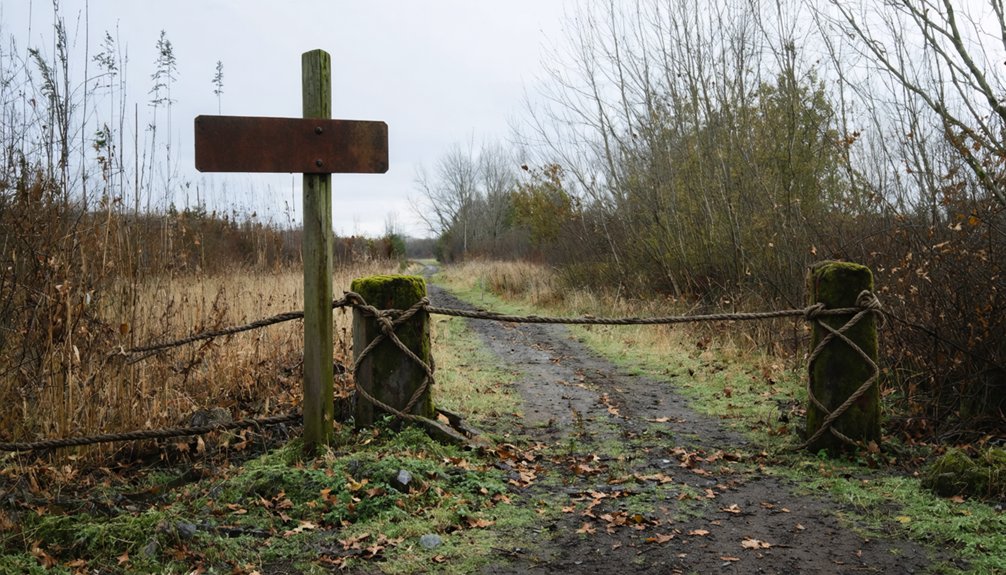
While Houghtonville’s quiet roads and weathered houses make for an unforgettable step back in time, you’ll need to follow a few essential rules to keep the site protected. Ghost town myths often romanticize these places, tempting visitors to take “souvenirs,” but removing artifacts, bottles, or debris is illegal and directly fuels preservation challenges that threaten the district’s future.
Stay on designated paths and avoid physically touching the structures, since even minor contact accelerates deterioration. Photography is fully encouraged, so capture everything your lens can find.
Respect every posted boundary marker, and never cross onto private property. Carry water, a flashlight, and an offline map, because cell service is unreliable here.
Following these rules guarantees Houghtonville remains accessible for every freedom-seeking explorer who comes after you.
Vermont Ghost Towns Near Houghtonville Worth Visiting
Houghtonville makes a perfect base for exploring Vermont’s broader ghost town circuit, and several abandoned settlements within striking distance deserve a spot on your itinerary. Local legends surround these sites, giving each destination its own eerie character worth experiencing firsthand.
Houghtonville sits at the heart of Vermont’s ghost town circuit, where local legends transform every abandoned settlement into an eerie destination.
- Glastenbury – Vermont’s most famous ghost town carries haunted legends tied to the mysterious Bennington Triangle.
- Somerset – An abandoned reservoir settlement offering water access and documented historical ruins.
- Glastenbury Mountain Trail – Deep forest paths reveal cellar holes and crumbling stone walls.
- Tyron Furnace – Industrial ruins along Route 100 between Ludlow and Plymouth showcase Vermont’s manufacturing past.
Pack offline maps since cell service disappears fast in these remote areas. Respect posted boundaries, leave artifacts untouched, and let these forgotten places speak entirely for themselves.
How to Plan a Vermont Ghost Town Weekend
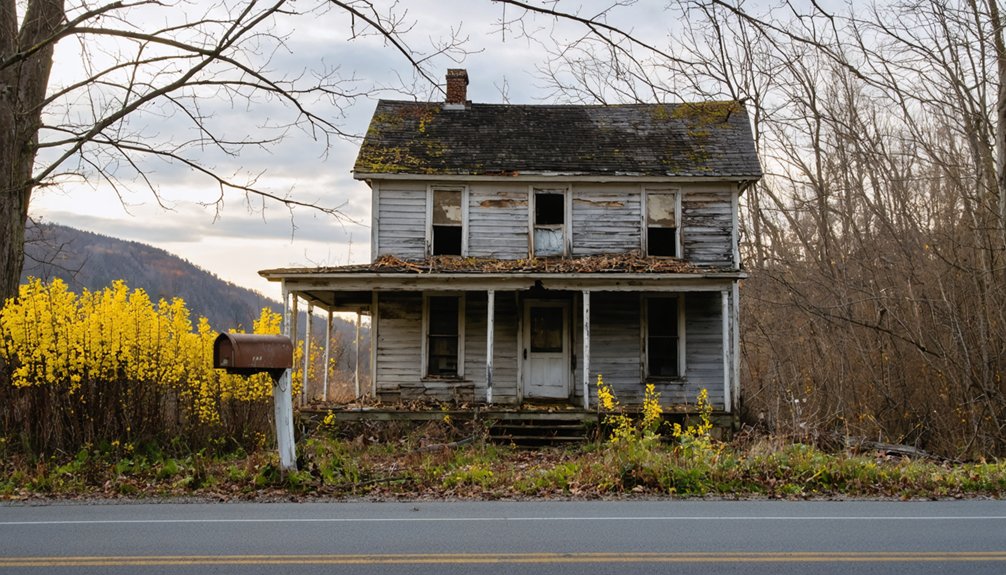
Planning a Vermont ghost town weekend takes preparation, but the payoff delivers history, scenery, and genuine solitude you won’t find at crowded tourist destinations. Start by downloading offline maps since cell service disappears quickly in remote areas. Pack flashlights, water, and a first aid kit before hitting the road.
Base yourself in Grafton Village and use Vermont Route 121 to reach Houghtonville. Then branch outward toward Glastenbury, where urban legends surrounding the Bennington Triangle add a compelling layer to your exploration.
Research preservation techniques used at each site beforehand so you understand what you’re actually seeing.
Respect posted boundaries, never remove artifacts, and photograph freely. Moving between multiple sites across one weekend gives you a complete picture of Vermont’s forgotten industrial past.
Frequently Asked Questions
Is Houghtonville Historic District Open to Visitors Year-Round?
You can visit Houghtonville Historic District year-round! Explore its haunting local ghost stories while respecting historic preservation efforts. Sturdy shoes and offline maps are your best companions for this rural Vermont adventure.
Are Guided Tours Available at Houghtonville Historic District?
While guided tours aren’t officially listed, you’ll still uncover ghost town legends independently. Historic preservation efforts protect these ten remarkable structures, so you’re free to explore Houghtonville’s atmospheric 19th-century district at your own adventurous pace.
When Was Houghtonville Added to the National Register of Historic Places?
You’ll love knowing that Houghtonville joined the National Register of Historic Places in 2015! This milestone celebrates its rich ghost town history and ongoing preservation efforts, ensuring you can freely explore these stunning 19th-century structures for generations to come.
Is There an Admission Fee to Visit Houghtonville Historic District?
You don’t pay an admission fee to explore Houghtonville’s ghost town attractions! As a free historic site preservation treasure, you’re welcome to visit, but you’ll want to respect posted rules and private property boundaries throughout your adventure.
Are Pets Allowed When Visiting Houghtonville Historic District?
Over a dozen Vermont ghost towns await exploration! Pet policies and animal accommodations for Houghtonville Historic District aren’t documented in available sources, so you’ll want to contact local Grafton authorities directly before bringing your furry companion along.
References
- https://www.theparanormal.net/haunted-houghton-mansion/
- https://en.wikipedia.org/wiki/List_of_ghost_towns_in_Vermont
- https://en.wikipedia.org/wiki/Category:Ghost_towns_in_Vermont
- https://en.wikipedia.org/wiki/Houghtonville_Historic_District
- https://ghost-towns.close-to-me.com/states/vermont/
- https://www.tripadvisor.com/Attractions-g28966-Activities-c47-t14-Vermont.html
- https://www.donnaramadishes.com/post/vt-251-from-grafton-to-weston-and-a-little-beyond
- https://kids.kiddle.co/List_of_ghost_towns_in_Vermont
- https://www.youtube.com/watch?v=4_08QSiNqkY
- https://www.educationdirectory.net/articles/are-there-ghost-towns-in-vermont