Planning a ghost town road trip to Ruby City means heading deep into Okanogan County, Washington, where silver fever once drove 700 souls into the sagebrush hills near Salmon Creek. You’ll find stone foundations and rock markers where 70 buildings once stood before the Panic of 1893 erased it all. Visit in fall or spring for the best experience, and use Omak as your base. There’s far more to this forgotten boomtown than the silence suggests.
Key Takeaways
- Ruby City, a ghost town in Okanogan County, Washington, is located 25 miles northeast of Omak near Ruby Mountain and Salmon Creek.
- Only stone foundations and rock markers remain from the once-bustling silver boomtown that held 700 residents and 70 buildings by 1888.
- Visit in fall or spring for ideal weather, accessibility, and scenic beauty; avoid winter due to snow and road closures.
- Use Omak as your lodging base, choosing from chain motels, independent inns, or valley vacation rentals—book early during peak seasons.
- Bring offline maps due to unreliable GPS signals, and explore nearby sites like the China Wall and Arlington Mine area.
Where Is Ruby City in Okanogan County?
Tucked into the foothills of Ruby Mountain and Peacock Hill in Okanogan County, Washington, Ruby City rests beside Salmon Creek near the Canadian border — a remote stretch of North Central Washington that once drew over a thousand prospectors chasing silver dreams.
You’ll find the site close to Omak, making it an accessible stop on any ghost town road trip. The Old Ruby State Park Heritage Site preserves what little remains — stone foundations, rock markers, and historical artifacts scattered across a landscape nature has quietly reclaimed.
Standing there, you can almost picture the mining techniques that once carved wealth from these hills, the 70 buildings lining a rowdy main street, and a population of 700 living boldly on Washington’s untamed frontier before statehood ever arrived.
What Made Ruby City Washington’s Most Lawless Boomtown
Once you get a feel for the remote quiet of Ruby City today, it’s almost impossible to imagine what this same stretch of Okanogan County looked like in 1888 — six general stores, saloons running at full tilt, and over 1,000 prospectors packed into 70 buildings along a main street that earned the settlement its unforgettable nickname: “Babylon of Washington Territory.”
Silver drew them here fast and in enormous numbers after the federal government opened North Central Washington to mining on May 1, 1886, and where silver went, lawlessness followed.
What fueled this wild concentration of ambition and disorder:
- Primitive mining technology that rewarded speed over safety
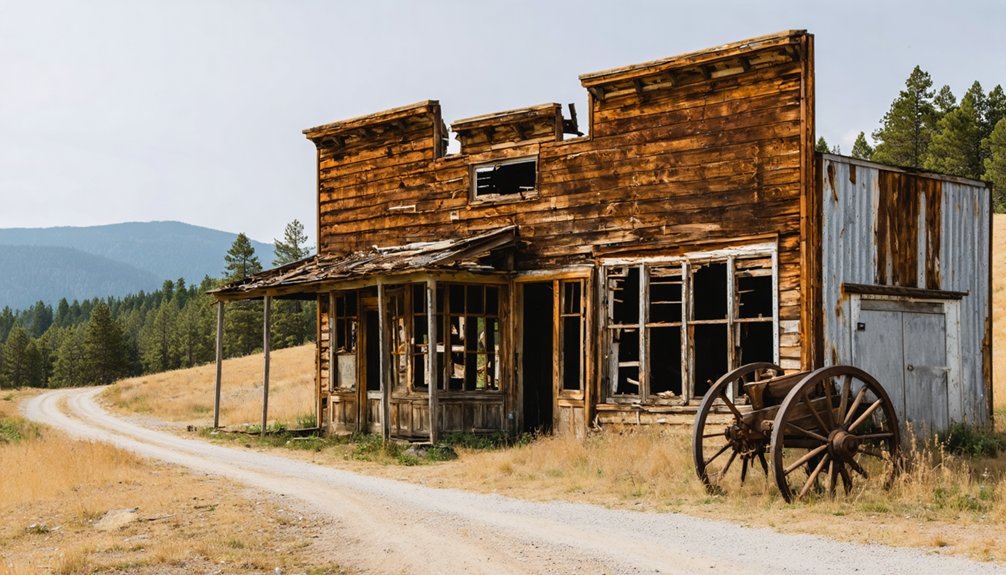
- Rough-hewn town architecture built for boom, not permanence
- No meaningful law enforcement to contain 1,000 restless prospectors
Freedom here meant danger.
How Silver Mining Built and Buried Ruby City by 1900
When silver ore turned up on Ruby Mountain’s slopes in 1886, prospectors flooded in so fast that the settlement swelled to 700 residents and 70 buildings within just two years. You can almost picture the six general stores and rowdy saloons humming with the energy of over 1,000 miners who’d staked their futures on every ounce of ore pulled from the earth.
Then the Panic of 1893 hit hard, dropping silver to $0.63 per ounce and gutting the economy so completely that Ruby City went from boomtown to ghost town before the century turned.
Silver Discovery Fuels Growth
Silver ore’s discovery on Ruby Mountain’s slopes in 1886 sparked one of Washington Territory’s most dramatic boom-and-bust stories. When the federal government opened mining on May 1, 1886, prospectors flooded in fast, hungry for fortune and freedom.
By 1887, 700 residents had already claimed their stake beside Salmon Creek.
Three milestones define Ruby City‘s explosive rise:
- 1886: Silver ore discovered, triggering an immediate rush of independent-minded prospectors
- 1887: Population hit 700, establishing the mining district in Okanogan County
- 1888: 70 buildings lined the main street, cementing the town’s cultural significance
Today, historical preservation efforts at Old Ruby State Park honor this raw, restless chapter. You can still walk those silent grounds and feel the ambition that once shaped Washington before statehood.
Peak Mining Era Prosperity
By 1888, Ruby City had outgrown its rough beginnings and turned into something that looked almost like permanence. Seventy buildings lined the main street, six general stores stocked supplies, and saloons ran loud into the night. The *Ruby Miner* kept investors hungry, promising riches buried deep beneath Ruby Mountain and Peacock Hill.
Mining technology of the era drove men to extract silver faster than anyone could track. Over 1,000 prospectors had transformed Thomas Fuller’s lone 1885 cabin into a roaring, lawless settlement earning the nickname “Babylon of Washington Territory.” You can almost hear the chaos standing there today.
Ghost town preservation efforts now mark what ambition built and silver prices destroyed. That energy, reckless and electric, still lingers across the quiet foothills.
Economic Collapse And Abandonment
The Panic of 1893 didn’t just slow Ruby City down — it gutted it. Silver crashed to $0.63 per ounce, and overnight, the mining legends who’d built this rowdy settlement packed up and vanished. By 1900, Ruby City existed in name only.
What the economy didn’t take, time did:
- Vandals stripped whatever prospectors left behind
- Fire and weather devoured 70 wooden buildings without mercy
- Neglect erased nearly every trace of 1,000 former inhabitants
Ghost town preservation efforts saved little — only stone foundations survived. If you crave wide-open spaces with real history beneath your boots, standing where Ruby City once roared delivers something unforgettable: a raw, honest reminder that booms never last forever.
What’s Left to See at Old Ruby State Park Today
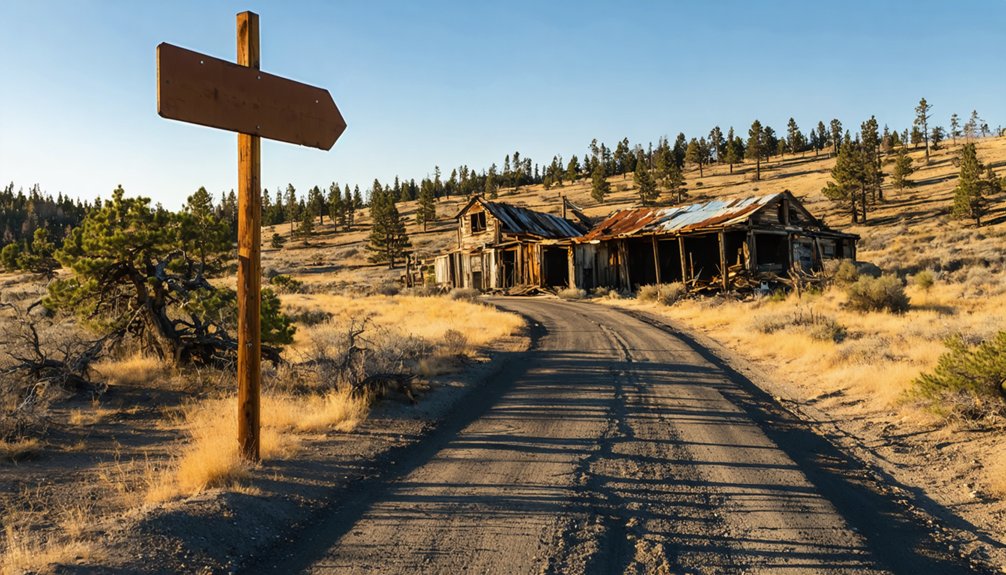
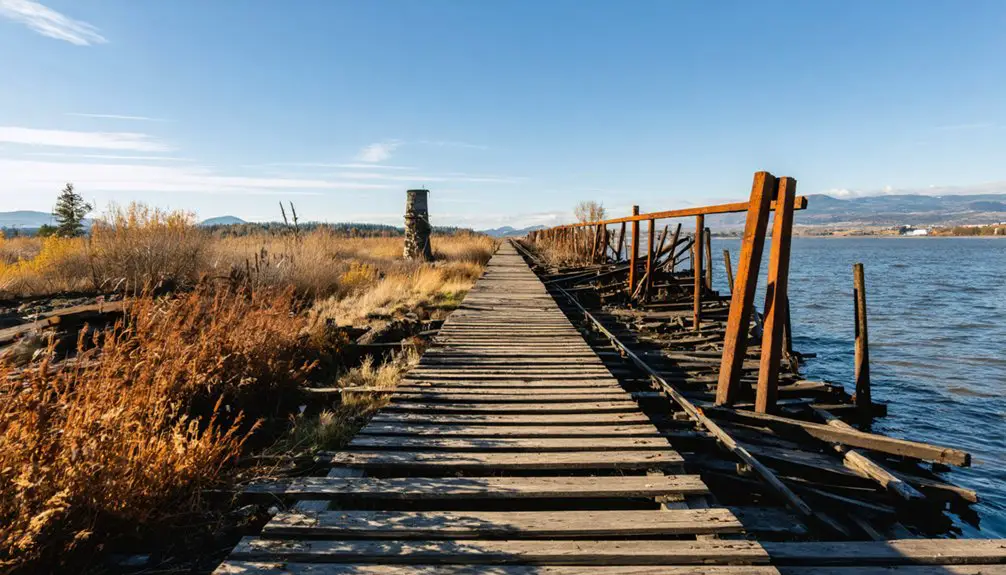
What remains of Ruby City today tells a quiet, humbling story. You’ll find stone foundations and rock markers scattered along Salmon Creek, silent witnesses to the ghost town architecture that once lined a bustling main street.
The mining history embedded in this land speaks through crumbling outlines where 70 buildings once stood, now reclaimed by grass and wild brush.
The site carries the designation of Old Ruby State Park Heritage Site, where historical markers trace original streets and community spaces. A sign near Ruby Mountain’s slopes points you toward what’s left.
No crowds, no noise — just open landscape and honest remnants. For travelers craving unfiltered history and freedom to explore on your own terms, this quiet valley delivers something most tourist sites simply can’t replicate.
What to Explore Near Ruby City on the Same Trip
Ruby City doesn’t have to be the only stop on your itinerary, and the surrounding Okanogan County landscape rewards those willing to wander a little further. Pack your curiosity and hit the open road — there’s more history waiting just beyond the foundations.
Here’s what you shouldn’t miss nearby:
- The China Wall — a mysterious geological formation hiding just a few miles south, perfect for independent explorers
- Omak — your base camp for lodging, supplies, and local culture connecting you to the region’s past
- The Arlington Mine area — scan for remnants of old mining equipment and imagine the historical reenactments that once brought this landscape to life
Each stop deepens your understanding of the silver rush that shaped Washington long before statehood.
How to Get to Ruby City From Omak
Once you’ve soaked in the surrounding stops, finding your way to Ruby City itself is straightforward — Omak sits roughly 25 miles southwest of the townsite, making it the natural launching point for the final leg of your journey.
Head northeast through the rolling sagebrush foothills, following routes that wind toward Salmon Creek and Ruby Mountain’s slopes. The road carries a quiet weight — these same paths once echoed with prospectors chasing silver dreams, haunted by town legends of shootouts and sudden fortune.
Mining accidents claimed lives along these ridgelines, leaving behind more than stone foundations. You’ll feel the past pressing close as the landscape opens up.
No GPS guarantee exists out here, so download offline maps before you leave Omak’s last gas station behind.
When Is the Best Time to Visit Ruby City?
Autumn pulls Ruby City’s ghost town landscape into its sharpest focus, draping the sagebrush foothills in amber and rust while the summer crowds thin to almost nothing. You’ll move freely through the silence, reading stone foundations like ancient artifacts without another soul nearby.
Autumn sharpens Ruby City’s silence — sagebrush hills burning amber, stone foundations waiting, and no one else around.
Plan your visit around these seasonal advantages:
- Fall (September–October): Crisp air, vivid colors, and uncrowded trails make exploration effortless
- Spring (April–May): Wildflowers frame the ruins before summer heat settles across Okanogan County
- Avoid Winter: Snow obscures foundations and closes access roads near Ruby Mountain
Omak hosts cultural festivals throughout autumn, giving your road trip a living counterpoint to Ruby City’s haunted quiet.
Time it right, and you’ll leave carrying something rare — genuine solitude alongside genuine history.
How to Spend a Night Near Ruby City Without Camping
After a day wandering Ruby City’s silent foundations, you’ll want a real bed waiting for you. Omak is your closest and most practical overnight option.
You’ll find local lodging there that keeps you within easy striking distance of the ghost town without sacrificing comfort for authenticity.
Plan your overnight stop in Omak before you leave home, since smaller-town accommodations fill faster than you’d expect, especially during autumn when road-trippers converge on Washington’s historic mining sites.
Stay In Nearby Omak
Since Ruby City offers no lodging of its own, Omak serves as your natural basecamp for the night. It’s a practical stop that keeps you close to the ghost town’s silent foundations without sacrificing comfort.
Omak supports the region’s tourism development while honoring the spirit of historical preservation that makes Ruby City worth visiting.
Pack your evenings in Omak with intention:
- Rest up at a local motel after a long day walking Ruby Mountain’s foothills
- Grab a meal at a downtown diner and swap ghost town stories with locals who know the land
- Plan tomorrow’s route toward the China Wall or Arlington Mine before daylight slips away
Omak gives you the freedom to roam without rushing.
Local Lodging Options
Omak’s modest skyline won’t dazzle you, but it’ll shelter you well after a day spent wandering Ruby City’s crumbled foundations. The town sits close enough to the ghost town that you can chase historical artifacts by morning and unwind by evening without burning extra road miles.
Chain motels and small independently owned inns line the main corridor, offering clean rooms, hot showers, and basic visitor amenities that restore tired legs. Nothing about Omak screams luxury, and that suits the spirit of this trip perfectly.
You’re here chasing silver-rush ghosts, not thread counts. Book a room early if you’re traveling in autumn, when Washington road trippers flood the region.
Omak keeps you grounded, fed, and rested — ready to return to Salmon Creek one more time.
Plan Your Overnight Stop
When the last light fades over Ruby Mountain and Salmon Creek goes quiet, you’ll want a real bed waiting somewhere nearby. Omak sits close enough to serve as your basecamp without pulling you far from Ruby City’s spirit of historical preservation.
A few options worth considering:
- Omak motels offer straightforward, no-fuss rooms after a long day of exploration
- Oroville lodges near the British Columbia border blend visitor amenities with frontier character
- Vacation rentals in the Okanogan Valley let you settle in at your own pace
You’ll wake refreshed, ready to return to those silent foundations before the crowds arrive. Plan ahead, especially during autumn, when ghost town road trips draw fellow wanderers chasing Washington’s vanished past.
Frequently Asked Questions
Was Ruby City Ever Considered for Permanent County Seat Status?
Ruby City didn’t hold permanent county seat status — it served briefly in 1888. You’ll find historical artifacts and local legends whispering of its fleeting glory, where freedom-seekers once dreamed of lasting roots along Salmon Creek.
Did the *Ruby Miner* Publication Survive After the Town’s Decline?
The *Ruby Miner* didn’t survive town decline — when historical mining collapsed after 1893, it faded like Ruby City itself. You’d find no surviving issues today, just nostalgic echoes of silver dreams dissolving into Okanogan’s untamed, forgotten wilderness.
Are Guided Tours Available at Old Ruby State Park Heritage Site?
Like a trail left untamed, no guided tours await you here. You’ll explore historical artifacts and minimal visitor amenities freely, wandering stone foundations where silver dreams once echoed, letting nostalgia guide your independent journey through Ruby City’s haunting silence.
What Happened to Thomas Fuller After Ruby City Was Abandoned?
The records don’t tell you what happened to Thomas Fuller after Ruby City’s abandonment. His mining legacy fades like the town itself, leaving historic preservation efforts to honor the freedom-seeking spirit he once embodied there.
Is the China Wall Accessible to Visitors Without Crossing Private Property?
Like Frost’s road less traveled, the China Wall beckons you freely — but tread carefully. Visitor access remains limited, as private property boundaries nearby demand your respect before you wander toward this mysterious hidden gem.
References
- https://en.wikipedia.org/wiki/Ruby
- https://www.youtube.com/watch?v=rsV_cHE7u1U
- https://www.facebook.com/ghosttownsofwashington/posts/ruby-okanogan-county-wa-silver-was-discovered-in-1886-on-the-slopes-of-ruby-moun/796325355857214/
- https://www.islands.com/2023267/abandoned-mining-town-ruby-washington-mystery-rugged-beauty/
- http://www.ghosttownsusa.com/ruby2.htm
- http://www.ghosttownsusa.com/bttales39.htm
- https://okanogancountry.com/ghost-towns
- https://parks.wa.gov/about/news-center/field-guide-blog/old-ruby-state-park-heritage-site-history
- https://www.seattletimes.com/sponsored/autumn-road-trips-to-washington-ghost-towns/
- https://en.wikipedia.org/wiki/Ruby_City