Planning a ghost town road trip to Jugtown, Illinois, starts with heading about 50 miles southwest of Chicago to Grundy County’s Goose Lake Prairie State Natural Area. You’ll find a vanished pottery settlement that thrived briefly in the 1850s before collapsing by 1866. No buildings remain, just open prairie, subtle archaeological traces, and rich industrial history waiting beneath your feet. Wear sturdy shoes, bring water, and prepare for an honest, unfiltered glimpse into early Illinois—there’s much more to uncover ahead.
Key Takeaways
- Jugtown is located within Goose Lake Prairie State Natural Area, about six miles east of Morris and 50 miles southwest of Chicago.
- The site features two key stops: the Pottery Works Site and Tile Works Site, both along Pine Bluff Road.
- No reconstructed buildings exist; visitors explore subtle archaeological remains through open prairie landscape with interpretive signage.
- Wear sturdy shoes, bring water, and expect unmarked natural terrain with no guided tours or curated exhibits.
- Nearby ghost towns like Aux Sable and Gebhard Woods make excellent additions to a canal corridor road trip itinerary.
What Was Jugtown, Illinois?
Though it never appeared on most maps, Jugtown was a small industrial settlement in Grundy County, Illinois, about six miles east of Morris and roughly 50 miles southwest of Chicago. It grew up around a historical pottery operation established in 1856 by William White and Charles Walker, formally called the Goose Lake Stoneware Manufactory and Tile Works.
Jugtown never made the maps — but it was real, built on clay, ambition, and stoneware.
The settlement sat near Goose Lake, where rich clay deposits fueled stoneware and drainage tile production. With six workers turning out roughly 75 tons annually, Jugtown represented one of Illinois’s earliest industrialized pottery ventures.
The Illinois and Michigan Canal gave the operation a transportation edge.
But industrial decline came quickly. By 1866, production had ceased, the economic base collapsed, and Jugtown simply vanished, leaving behind only archaeological traces along Pine Bluff Road.
Where Jugtown Sits in Grundy County
When you set out to find Jugtown, you’re heading into the flat, open prairie country of Grundy County, Illinois. The settlement sat about six miles east of Morris, tucked near the western edge of what was once Goose Lake.
You’ll find the area today within the Goose Lake Prairie State Natural Area, roughly 50 miles southwest of Chicago.
Grundy County Prairie Location
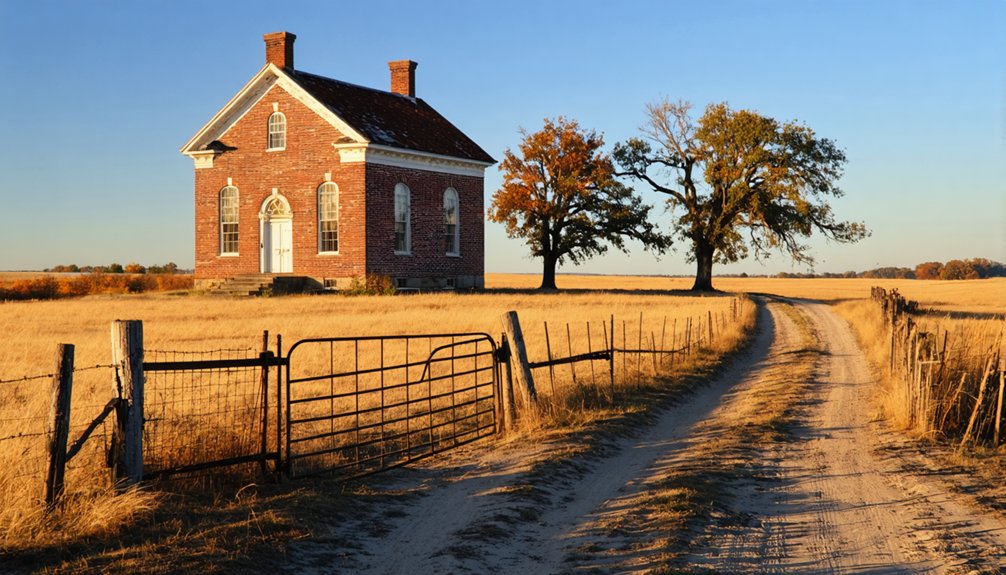
Nestled about six miles east of Morris in Grundy County, Jugtown sits within the broad, flat prairie landscape that surrounds the Goose Lake Prairie State Natural Area. You’ll find the site roughly 50 miles southwest of Chicago, tucked along the western edge of what was once Goose Lake.
That lake fed the clay-rich deposits that made this remote spot industrially valuable in the nineteenth century. Local folklore ties the settlement’s nickname directly to the jugs and stoneware vessels that potters shaped here using pottery techniques refined for frontier production.
The surrounding prairie landscape feels open and unhurried today, giving you a strong sense of the isolation early workers experienced. That geographic context matters when you’re trying to understand why this small industrial community rose and then quietly vanished.
Distance From Morris
Sitting about six miles east of Morris, Jugtown occupies a quiet stretch of Grundy County prairie that feels far removed from the industrial ambition it once represented. Morris serves as your practical anchor point when you’re planning the drive out, giving you a familiar reference before you head into open farmland.
The six-mile gap between town and site tells its own story — clay deposits drew workers and entrepreneurs to this remote location, building something from scratch on the prairie edge. Industrial decline eventually swallowed that ambition whole, leaving no streets or storefronts behind.
What remains sits near Pine Bluff Road, tucked within the Goose Lake Prairie State Natural Area. You’re not driving toward a town here — you’re driving toward a memory embedded in the landscape itself.
The Pottery Works That Defined the Settlement
When you look into what actually built Jugtown, you’ll find two men at the center of it: William White and Charles Walker, whose 1856 pottery operation gave the settlement both its name and its purpose.
Their Goose Lake Stoneware Manufactory and Tile Works turned out roughly 75 tons of stoneware and drainage tile annually, employing skilled potters to supply farms and households across the region.
The enterprise never found solid financial footing, though, and by 1866 the works had shut down, taking the community with it.
White And Walker’s Vision
Though Jugtown carried a humble name, it owed its entire existence to an ambitious industrial vision. William White and Charles Walker saw something valuable beneath the Illinois prairie — workable clay sitting near a major transportation corridor.
In 1856, they established the Goose Lake Stoneware Manufactory and Tile Works, putting historical pottery techniques to use on a scale few Illinois settlements had attempted before.
Their clay extraction methods drew directly from the rich Goose Lake deposits, giving them a reliable raw material close to the operation. Six skilled workers produced roughly 75 tons of stoneware annually, generating around $5,000 in value each year.
White and Walker weren’t simply making jugs — they were building an early industrial enterprise on open prairie land, fueled by clay, canal access, and calculated ambition.
Stoneware And Tile Production
What White and Walker built at Jugtown wasn’t a simple country pottery shed — it was one of Illinois’s earliest attempts at industrialized clay production. Understanding that historical background helps you appreciate just how ambitious this operation really was.
They pulled rich clay straight from the Goose Lake deposits and put it to serious use. Six skilled workers ran the operation, producing roughly 75 tons of stoneware annually — farm crocks, household vessels, and drainage tile built for practical frontier life.
That annual output carried a value near $5,000, a meaningful figure for the era.
Their industrial techniques separated Jugtown from backyard pottery traditions. This wasn’t craft for craft’s sake — it was manufacturing.
When you visit today, you’re standing on ground where Illinois’s industrial clay story quietly began.
Why The Works Failed
Despite that output and ambition, the Jugtown operation couldn’t sustain itself financially. The backers behind White and Company’s Pottery and Tile Works watched their investment crumble through years of economic failure. By 1866, production had stopped entirely.
You might wonder what broke a venture with skilled workers, rich clay deposits, and canal access. The honest answer is that industrial decline rarely has a single cause. Market pressures, operational costs, and frontier-era financial instability all played roles in grinding Jugtown down.
Once the pottery closed, the settlement lost its only reason to exist. Workers left, structures deteriorated, and the community simply vanished into the prairie. What you visit today isn’t a faded town — it’s an absence, which makes the story even more compelling.
Why the Operation Collapsed After Ten Years
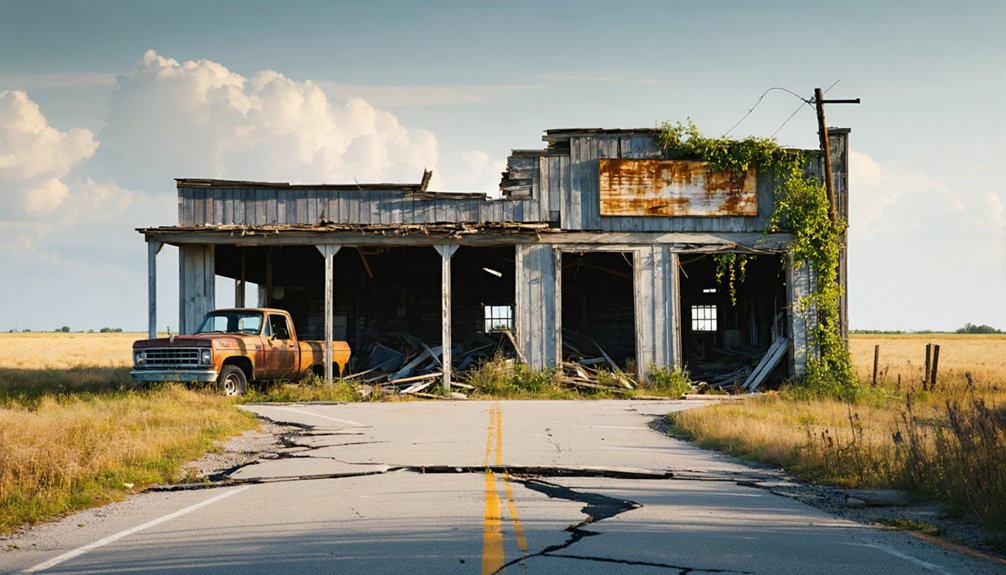
The pottery works at Jugtown lasted only a decade before the enterprise collapsed under financial pressure. By 1866, industrial decline had overtaken what once seemed like a promising rural manufacturing venture.
Economic factors worked against the operation from multiple directions — clay extraction costs, limited markets, and the challenges of sustaining skilled labor in an isolated prairie settlement all chipped away at profitability.
You can think of Jugtown as a cautionary tale about frontier industrialism. The Illinois and Michigan Canal offered transportation advantages, but those advantages weren’t enough to keep the business solvent.
When the money dried up, the workers left, the kilns went cold, and the settlement simply vanished. Nothing anchored the community once the pottery stopped producing, leaving only clay-rich soil and silence behind.
What the Two Archaeological Sites Look Like Today
Today, Jugtown survives as two distinct archaeological sites — the Pottery Works Site and the Tile Works Site — both sitting along the north side of Pine Bluff Road within the Goose Lake Prairie State Natural Area.
Two ghost town remnants endure as archaeological sites tucked within Goose Lake Prairie State Natural Area along Pine Bluff Road.
Researchers used archaeological methods to uncover their cultural significance, revealing nineteenth-century production techniques and workers’ daily lives.
When you visit, expect:
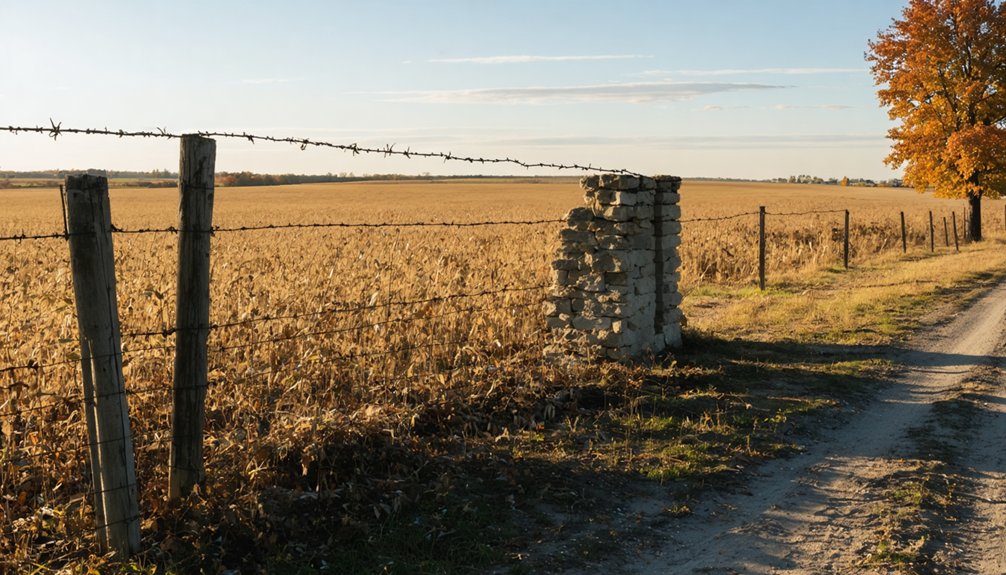
- Open prairie landscape replacing any standing structures
- No visible buildings, only subtle ground-level traces
- Interpretive context drawn from excavation findings rather than restored exhibits
- Natural surroundings that frame the site within Illinois’s broader industrial heritage
You won’t find a traditional ghost town streetscape here. Instead, you’ll walk terrain where potters once worked clay, letting the landscape itself tell a story that standing walls never could.
Getting to Jugtown: Directions, Parking, and Access
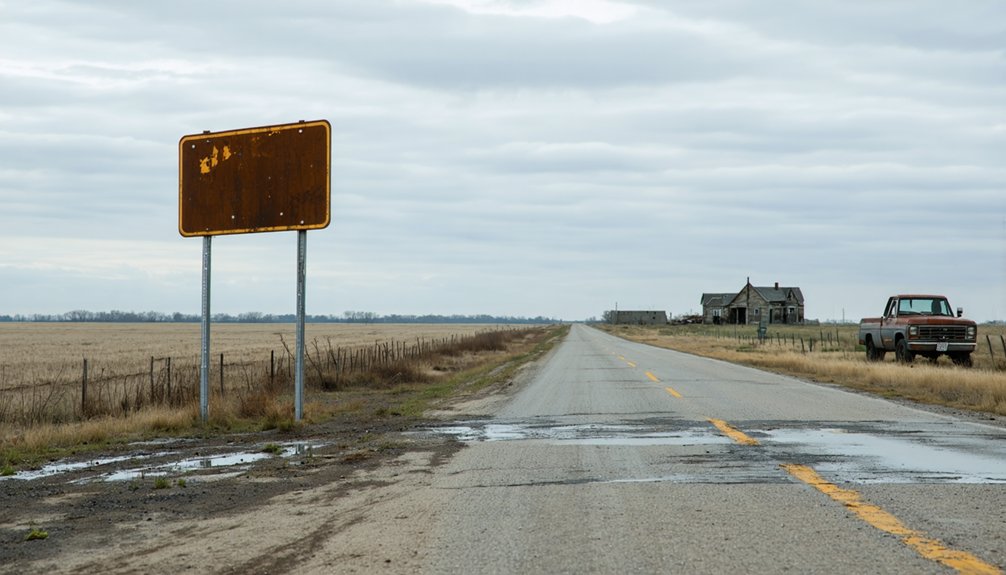
Reaching Jugtown means heading to the Goose Lake Prairie State Natural Area, roughly six miles east of Morris, Illinois, and about 50 miles southwest of Chicago. Take Pine Bluff Road and watch for the natural area entrance — that’s your landmark for locating both archaeological sites along the road’s north side.
Parking is available at the Goose Lake Prairie visitor area, giving you a free, open-air base for exploring. You won’t find marked pottery craftsmanship exhibits or industrial decline monuments here — this is raw historical landscape, not a curated attraction.
Wear sturdy shoes, bring water, and expect an unhurried walk through prairie terrain. Cell service can be spotty, so download directions beforehand. The freedom of this stop is exactly that — wide open land and honest history without hand-holding.
Exploring Goose Lake Prairie on the Same Visit
Since you’re already at the site, folding a Goose Lake Prairie exploration into your visit is a natural move. The state natural area surrounds Jugtown’s archaeological remains, offering open prairie that connects you directly to the landscape that once fed the pottery industry.
Keep these priorities in mind:
- Respect artifact preservation boundaries — don’t disturb soil or remove anything
- Walk the interpretive trails to understand the original Goose Lake clay deposits
- Use signage to support your cultural preservation awareness of the settlement’s context
- Photograph the landscape rather than collecting physical souvenirs
The prairie itself tells the story that standing buildings can’t.
You’ll leave with a genuine sense of how geography, clay, and ambition briefly built something real here before the land reclaimed it.
Other Ghost Towns Along the Illinois and Michigan Canal Corridor
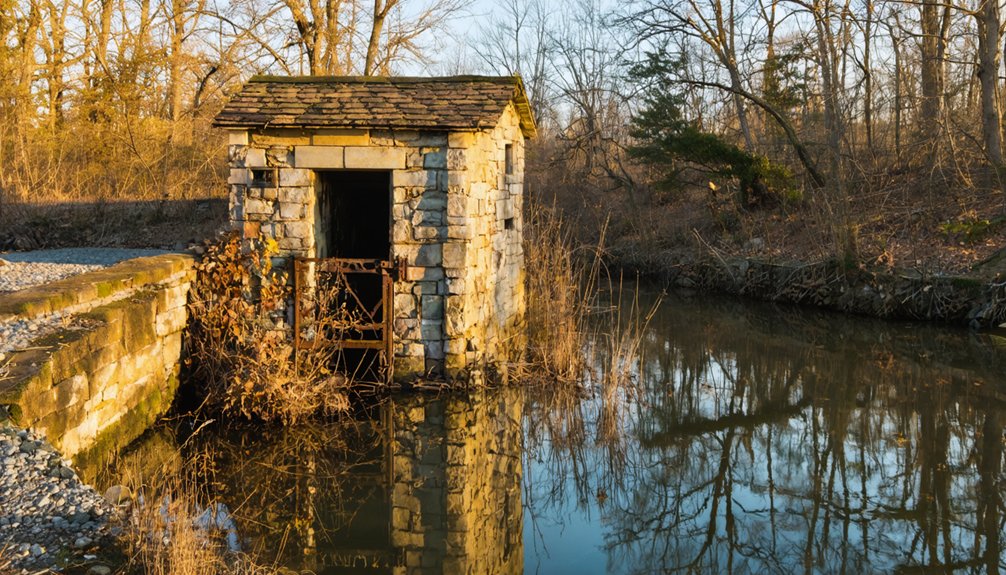
The Illinois and Michigan Canal corridor stretches through a string of forgotten settlements that make Jugtown feel like the start of something bigger. As you drive the corridor, you’ll encounter sites where industrial archaeology reveals layers of nineteenth-century ambition.
Towns like Aux Sable and Gebhard Woods once hummed with canal traffic, mills, and trade before economic shifts silenced them. Historical artifacts surface across these sites, connecting you directly to the workers and industries that built early Illinois.
Many locations sit within easy driving distance of Jugtown, letting you chain multiple stops into a single route. You’re not chasing reconstructed history here — you’re reading a raw landscape that still holds the evidence.
The canal corridor rewards curious travelers who want substance over spectacle.
Frequently Asked Questions
Is There an Entry Fee to Visit Goose Lake Prairie State Natural Area?
You’ll find no entrance fee to explore Goose Lake Prairie State Natural Area — it’s free and open to all. Check parking regulations before you arrive, so you can roam this historic landscape without restrictions holding you back.
What Is the Best Time of Year to Visit Jugtown?
Spring and fall offer the best seasonal weather for your visit. You’ll avoid summer’s heat and enjoy clearer sightlines across the prairie. Peak visiting times are April through May and September through October.
Are Guided Tours of the Jugtown Archaeological Sites Available?
You won’t find formal guided tour options at Jugtown’s archaeological site access points. Instead, you’ll explore the Goose Lake Prairie State Natural Area independently, piecing together the settlement’s fascinating pottery history through interpretive signage and open landscape.
Can Visitors Legally Collect Pottery Fragments Found at the Site?
You can’t collect pottery fragments here. Collecting regulations protect every shard for pottery preservation, keeping history intact for future explorers. Respect the site, soak in the story, and leave the past exactly where you found it.
Is the Jugtown Site Accessible for Visitors With Mobility Limitations?
Coincidentally, accessible pathways and wheelchair accommodations aren’t guaranteed here. You’ll navigate uneven prairie terrain at Goose Lake Prairie State Natural Area, so contact the park directly before visiting to confirm what mobility-friendly options they’ve currently got available.
References
- https://dnr.illinois.gov/naturalresources/cultural/jugtown.html
- https://drloihjournal.blogspot.com/2022/09/lost-towns-of-illinois-jugtown-illinois.html
- https://en.wikipedia.org/wiki/List_of_ghost_towns_in_Illinois
- https://kids.kiddle.co/List_of_ghost_towns_in_Illinois
- https://www.youtube.com/watch?v=H-Kmi4DDl5c
- https://en.wikipedia.org/wiki/Goose_Lake_Township
- https://www.facebook.com/groups/1535922739885414/posts/4099416636869332/
- https://drloihjournal.blogspot.com/p/lost-towns-of-illinois-series.html
- https://www.chicagotribune.com/1991/05/30/jug-town-revival/