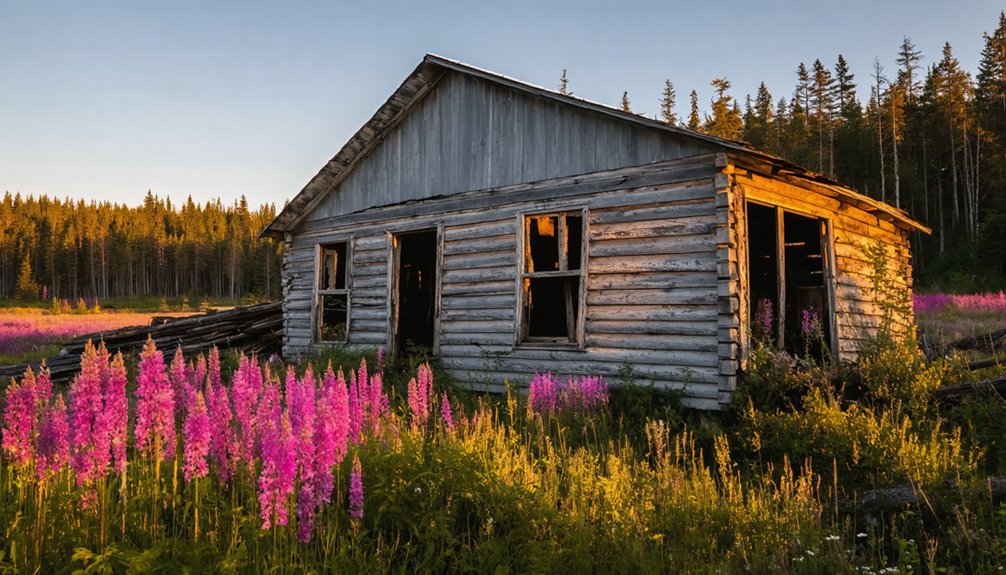
Planning a ghost town road trip to Kijik, Alaska isn’t like any other — there’s no road to follow. This abandoned Dena’ina Athabascan village sits along Lake Clark, accessible only by small aircraft or air taxi from Anchorage. You’ll find remnants of log cabins, a Russian Orthodox church, cache pits, and a historic cemetery spread across 1,920 acres of wilderness. Summer offers the best conditions for exploring. Stick around to uncover everything you need to know before you go.
Key Takeaways
- Kijik, Alaska, is inaccessible by road, making a traditional road trip impossible; reaching it requires a charter flight or air taxi from Anchorage.
- Small aircraft typically land near Port Alsworth at Lake Clark National Park headquarters, serving as the primary entry point to Kijik.
- The best time to visit is late June through August, offering mild temperatures between 55–75°F and nearly 20 hours of daylight.
- Visitors should book air taxis early, pack rain gear, and follow bear safety protocols given active wildlife in the area.
- Kijik spans 1,920 acres and features remnants including a Russian Orthodox church, 12 cabins, 29 caches, and a historic Dena’ina cemetery.
Why Kijik Is Not Your Average Ghost Town
When most people picture a ghost town, they imagine crumbling saloons and rusted sheriff’s badges somewhere in the American Southwest — but Kijik shatters that stereotype entirely. Tucked along the shores of Lake Clark in Alaska, this abandoned Dena’ina Athabascan settlement carries a history far older and richer than any frontier mining camp.
You’re not walking through Hollywood’s version of the Wild West here. You’re stepping into a place where cultural preservation matters deeply, where indigenous traditions, Russian Orthodox influences, and trade networks once converged powerfully.
Archaeological excavations have uncovered extraordinary historical artifacts, including the largest cache of Russian trade goods ever found in the region. Kijik doesn’t just tell one story — it tells layers of stories that most ghost towns simply can’t match.
The Rise and Fall of a Dena’ina Village
At its peak between 1875 and 1890, Kijik thrived as a vibrant Dena’ina Athabascan community, supporting up to 175 residents who built log cabins, maintained a Russian Orthodox church, and participated in regional trade networks that stretched far beyond Lake Clark’s shores.
At its peak, Kijik was home to 175 Dena’ina Athabascan residents who built, traded, and thrived.
The 1880 census counted 91 people living full, connected lives here.
Then devastation arrived. Epidemics in 1900 and 1901 shattered the population, dropping it to roughly 25 survivors. Residents dismantled their homes and carried the logs to Old Nondalton, refusing to leave their heritage behind.
By 1910, only the church, two houses, and a cemetery remained.
Today, the site’s archaeological significance draws researchers committed to cultural preservation, uncovering 12 cabins, 29 caches, and trade goods that tell a story no road could ever lead you to forget.
What Can You Still See at Kijik Today?
Though the village itself is largely gone, Kijik still holds fragments of its past you can witness firsthand. Walking this land means stepping into a story written across centuries of Dena’ina life, trade, and survival.
You’ll find these remnants scattered across the 1,920-acre site:
- A partially standing Russian Orthodox church, now used as a storage shed
- Cache pits that once stored food and trade goods
- A historic cemetery honoring Dena’ina ancestors
- Evidence of 29 caches and 5 bathhouses through archaeological preservation efforts
- Abundant local wildlife roaming freely across the protected landscape
The silence here speaks volumes. You’re not just visiting ruins — you’re exploring living history that Alaska’s wilderness has quietly kept safe for those bold enough to seek it.
How Do You Actually Get to Kijik, Alaska?
Despite the “road trip” in the title, you won’t actually drive to Kijik — the park sits entirely off Alaska’s road system. To reach this remote ghost town, you’ll need to book a small aircraft or air taxi service, which serves as the primary means of entry into Lake Clark National Park.
Once you arrange your flight, you’ll typically land near the park’s field headquarters in Port Alsworth before making your way to the historic site.
No Road Access Available
Getting to Kijik isn’t like planning a typical road trip — there are no highways, no scenic byways, and no gravel roads leading to this remote ghost town. Lake Clark National Park sits entirely off Alaska’s road system, making air travel your only option for reaching this site of deep archaeological significance and cultural preservation.
Here’s what you need to know before you go:
- Small aircraft and air taxi services operate as your primary transportation
- Port Alsworth serves as the park’s field headquarters and your likely landing point
- Charter flights depart from Anchorage regularly
- Weather conditions heavily influence flight schedules and availability
- No roads connect surrounding communities to the park
Embrace the remoteness — it’s part of what makes Kijik’s untouched history so powerfully worth experiencing.
Flying In By Aircraft
Since no roads lead to Kijik, you’ll be booking a flight — and that opens up one of Alaska’s most thrilling travel experiences. Small aircraft and air taxi services operating out of Anchorage or nearby communities handle all flight logistics into the region, dropping you close to Lake Clark’s remote shores.
The aerial views alone justify the journey. You’ll witness sprawling wilderness, jagged peaks, and glacial lakes stretching endlessly below — scenery most travelers never access.
Field headquarters in Port Alsworth serve as your operational base once you land, offering visitor support before you push further toward the ghost town site.
Plan your flight windows carefully, since Alaska’s weather shifts fast and pilots make the final call on departures. Flexibility isn’t optional here — it’s essential.
When Should You Visit Kijik?
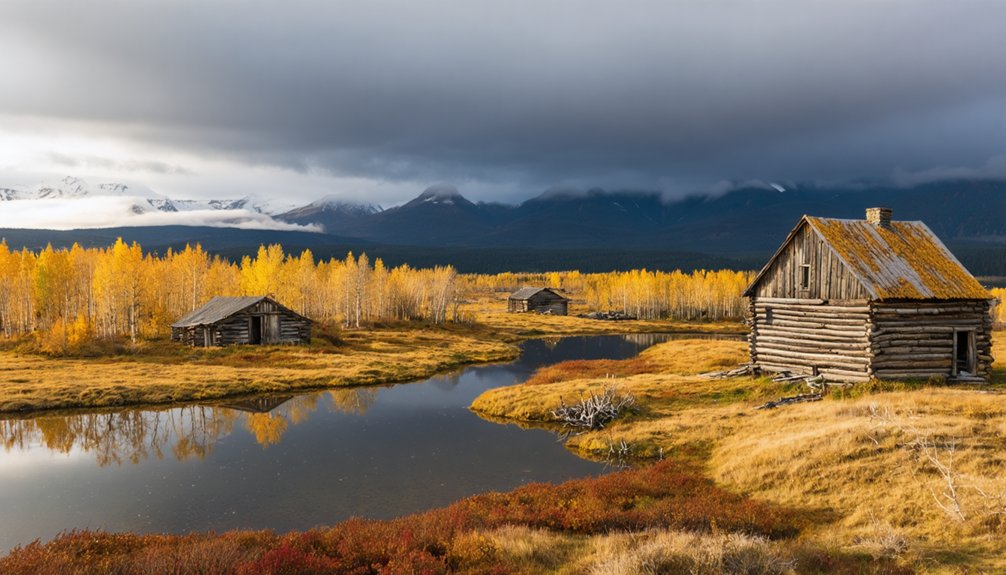
Summer offers the best window for visiting Kijik, typically from late June through August, when temperatures are milder and daylight stretches for nearly 20 hours. You’ll have maximum freedom to explore archaeological discoveries and absorb local folklore surrounding this haunting Dena’ina settlement.
Late June through August unlocks Kijik’s full potential — long days, milder temperatures, and unobstructed access to Dena’ina history.
Plan around these key considerations:
- Weather: Expect temperatures between 55–75°F, though rain gear remains essential.
- Daylight: Nearly 20 hours of light means extended exploration time.
- Wildlife: Bears are active, so carry protection and stay alert.
- Air Access: Book your air taxi early since summer slots fill quickly.
- Crowds: Visiting mid-week gives you quieter, more intimate access to the site.
Avoid winter entirely — brutal conditions and extreme darkness make meaningful exploration nearly impossible.
Permits, Gear, and Safety Rules for Lake Clark
Once you’ve locked in your travel window, preparing for the realities of Lake Clark becomes your next priority. No road connects you to this wilderness, so you’re arriving by small aircraft or air taxi. Check local permits requirements before you land, since certain areas within the 2.6-million-acre park carry specific access regulations.
Pack essential safety gear without compromise: bear spray, a satellite communicator, waterproof layers, and reliable navigation tools. Weather shifts fast in Alaska, and conditions can strand even experienced travelers. The park’s field headquarters in Port Alsworth offers guidance, so contact rangers there before your trip.
Respect posted boundaries near the Kijik Archeological District, since it’s a protected National Historic Landmark. Your freedom here depends on smart preparation and honest awareness of the terrain.
Frequently Asked Questions
What Indigenous Language Did the Dena’ina People Speak at Kijik?
You’ll find the Dena’ina people gracefully expressed themselves through the Athabascan tongue. Indigenous language preservation remains essential to Kijik’s cultural significance, connecting you to a thriving civilization that once flourished freely along Alaska’s breathtaking Lake Clark shores.
How Many Total Structures Were Archaeologically Confirmed at Kijik?
You’ll find archaeologists confirmed 46 total structures at Kijik using advanced archaeological techniques — 12 log cabins, 29 caches, and 5 bathhouses. Historical preservation efforts guarantee these discoveries keep revealing the site’s remarkable, freedom-filled indigenous heritage.
Who Is the Homesite Act Claimant Currently Using the Former Church?
The available records don’t identify the Homesite Act claimant by name. You’ll find that someone’s using this site of historic preservation and cultural significance as a storage shed, diminishing Kijik’s remarkable Dena’ina Athabascan heritage.
What Specific Russian Trade Goods Were Discovered During Excavations?
The records don’t detail specific Russian trade excavations artifacts found at Kijik, but you’ll discover the site yielded the region’s largest cache of Russian trade goods, hinting at remarkable historical commerce waiting for your exploration.
Which Books Document Native Elder Accounts of Kijik’s History?
The knowledge doesn’t specify which books document these accounts, but you’ll find that native elders’ traditional storytelling and oral history preservation efforts have inspired several publications — seek local Alaska Native cultural centers for the most accurate recommendations.
References
- https://en.wikipedia.org/wiki/Kijik
- https://www.nps.gov/places/kijik-archeological-district.htm
- https://npshistory.com/publications/lacl/nr-kijik-hd.pdf
- https://alaskapublic.org/news/2016-07-08/ak-the-denaina-culture-camp-of-kijik
- https://www.nps.gov/lacl/learn/historyculture/kijik.htm
- https://en.wikipedia.org/wiki/List_of_ghost_towns_in_Alaska
- https://home.nps.gov/articles/lakeclark.htm
- https://journalhosting.ucalgary.ca/index.php/arctic/article/download/66366/50279/187418
- https://denaina.anchoragemuseum.org/pdfs/timelines/TT6 Territory of Alaska.pdf
- https://core.tdar.org/document/150685/qizhjeh-the-historic-tanaina-village-of-kijik-and-the-kijik-archeological-district