Planning a ghost town road trip to Kwigiumpainukamiut, Alaska, means ditching the road map entirely. No roads connect this hauntingly remote Kuskokwim River site to the outside world, so you’ll need a bush plane or river journey to get there. What awaits isn’t crumbling buildings but a haunting clearing of ground depressions and cultural layers stretching back centuries. Time your visit right, respect the land, and there’s far more to this extraordinary destination than meets the eye.
Key Takeaways
- Kwigiumpainukamiut has no road access; visitors must arrive by charter bush plane or river travel along the Kuskokwim River.
- The nearest bases are Chuathbaluk and Napaimute, offering limited rustic accommodations; contact community offices in advance.
- Early spring is the best visit time, when flattened grasses reveal ground depressions marking former structures.
- No standing buildings remain; the site features a 200-yard clearing with shallow depressions indicating buried archaeological remains.
- Respect cultural sensitivity, as the site holds Yup’ik, Athabascan, and Russian heritage with repatriated ancestral remains.
Why Kwigiumpainukamiut Is Worth the Remote Journey
Though little remains above ground at Kwigiumpainukamiut, the site’s layered history makes it one of Alaska’s most compelling ghost town destinations. You’re stepping into a place where Yup’ik, Athabascan, and Russian cultures once intersected along the Kuskokwim River, creating a rich cultural heritage unlike anything you’ll find elsewhere.
This wasn’t just a village — it was a thriving trade hub with strategic defenses and multi-ethnic communities living side by side.
Archaeological exploration here has uncovered artifacts revealing the rhythms of daily life from a world long gone.
The remoteness isn’t a drawback; it’s part of the appeal. No crowds, no development — just untouched wilderness and centuries of history waiting beneath your feet.
If you crave authentic discovery, Kwigiumpainukamiut delivers exactly that.
What’s Left at the Kwigiumpainukamiut Ghost Town Today?
When you arrive at Kwigiumpainukamiut, you won’t find crumbling walls or weathered structures — zero standing buildings remain. What greets you instead is a 200-yard clearing, tan-colored grass in early spring, and shallow ground depressions marking where a thriving multicultural settlement once stood.
Historic artifacts and archaeological remnants tell the real story beneath your feet.
Here’s what you’ll actually encounter:
- Subtle ground depressions where buildings once stood
- Historic artifacts uncovered through the Kwig Dig project revealing daily life
- Archaeological remnants showing Yup’ik, Athabascan, and Russian cultural layers
- A quiet, untouched landscape free from modern development’s interference
Climate change and freeze-thaw cycles are actively accelerating the site’s decay, making every visit a rare window into disappearing history.
How to Actually Get There Without a Road?
Reaching Kwigiumpainukamiut means embracing Alaska’s raw remoteness — no roads connect this ghost town to the outside world, so you’ll need to arrive by river or air. Local transportation options include chartered bush planes flying into nearby Chuathbaluk or Napaimute, both small communities offering minimal but essential support.
Alternatively, navigate the Kuskokwim River by boat, experiencing the same waterway that once carried Yup’ik traders and Russian merchants to this very site. That river journey connects you physically to the cultural preservation story embedded in this land.
Either route demands serious preparation — unpredictable weather, wild terrain, and roughly 200 people inhabiting the surrounding region mean you’re genuinely on your own. Pack smart, respect the environment, and embrace the freedom that true frontier travel delivers.
Your Only Lodging Options: Chuathbaluk and Napaimute
Once you’ve made it out to Kwigiumpainukamiut, you’ll need to base yourself in either Chuathbaluk or Napaimute, the two nearest communities flanking the site along the Kuskokwim River.
Both villages offer extremely limited accommodations, so you’ll want to contact local community offices well in advance to arrange a place to stay.
Don’t expect hotels or vacation rentals — remote Alaska hospitality runs on personal connections, so reach out early and come prepared for a no-frills experience.
Chuathbaluk Lodging Options
Since Kwigiumpainukamiut sits in one of Alaska’s most remote corners, you’ll need to plan your lodging carefully—Chuathbaluk and Napaimute are your only realistic options nearby.
Chuathbaluk offers a small but welcoming base where you’ll experience the area’s deep cultural significance firsthand while preparing for wildlife encounters along the Kuskokwim River.
Consider these essentials before settling in Chuathbaluk:
- Community lodging is limited, so contact village councils well ahead of your visit
- Supplies are scarce, meaning you’ll want to pack everything critical before arriving
- River transportation connects you directly to the ghost town site
- Local knowledge from residents *unlocks* hidden stories about the surrounding wilderness
Embrace the rawness—Chuathbaluk isn’t a resort destination, but that’s exactly what makes it unforgettable.
Napaimute Accommodations Available
Napaimute, though even smaller than Chuathbaluk, serves as your other realistic base when exploring Kwigiumpainukamiut’s ghost town remnants along the Kuskokwim River.
You’ll find extremely limited accommodations here, so contact community representatives well before arriving. Locals understand the area’s cultural significance deeply, connecting you to stories that historical artifacts alone can’t fully communicate.
Since no roads reach Napaimute, you’re arriving by small aircraft or riverboat, which immediately sets the tone for this untamed adventure.
Expect rustic, bare-bones lodging that prioritizes function over comfort. Embrace that reality rather than resist it.
Your isolation here isn’t a drawback — it’s precisely the freedom you came seeking.
Napaimute positions you quietly beside one of Alaska’s most overlooked and genuinely fascinating archaeological landscapes.
Booking Remote Stay Advice
Booking your stay in either Chuathbaluk or Napaimute demands serious advance planning — these aren’t places with vacancy signs or online reservation portals. You’re entering territory where community connections matter more than credit cards.
Reach out directly to local contacts before your archaeological exploration begins.
- Contact village councils months ahead; they control accommodation access
- Explain your purpose — cultural significance resonates with locals who protect this land
- Arrange river or air transport simultaneously with lodging, since both disappear fast
- Pack self-sufficiency gear regardless, because plans unravel in remote Alaska
You’ll need flexibility and patience. Communities here aren’t tourist infrastructure — they’re living cultures with priorities beyond hosting visitors.
Respect that reality, communicate honestly, and you’ll find doors opening that no booking platform could ever release.
When Does Kwigiumpainukamiut Become Visible?
If you’re hoping to spot Kwigiumpainukamiut, you’ll want to time your visit for early spring. That’s when the site’s tan-colored grass makes the 200-yard clearing stand out against the surrounding landscape.
This contrast gives you your best chance of identifying where the settlement once stood. Miss that narrow window, and the site blends back into the terrain, becoming nearly impossible to distinguish.
Early Spring Visibility Window
Though Kwigiumpainukamiut lies hidden beneath dense summer vegetation for much of the year, early spring reveals the site in its clearest form. The tan-colored grasses flatten and expose the 200-yard clearing before new growth conceals it again. This brief window is your best chance to witness archaeological discoveries and appreciate ongoing cultural preservation efforts firsthand.
Plan your visit around these early spring advantages:
- Ground depressions become visible, marking where structures once stood
- Frost conditions firm the terrain, making foot travel more manageable
- Low vegetation exposes subtle landscape features otherwise swallowed by summer growth
- Clear sightlines across the Kuskokwim River reveal Kolmakoff Island directly opposite
Miss this window, and the site disappears into green obscurity until the cycle repeats.
Tan Grass Reveals Site
Early spring transforms Kwigiumpainukamiut from an invisible stretch of riverbank into a readable landscape. Tan grasses flatten across the 200-yard clearing, exposing ground depressions and subtle terrain features that summer vegetation completely swallows.
Vegetation patterns become your primary navigation tool here. Those irregular dips and sunken outlines you’re spotting aren’t random erosion; they’re shallow footings marking where structures once stood.
Ground depression interpretation requires patience and a sharp eye. You’ll want to arrive before new growth obscures everything again, because once green vegetation surges through, the site fundamentally disappears.
That narrow seasonal window gives you a rare, unfiltered glimpse into a landscape that holds centuries of Yup’ik, Athabascan, and Russian history beneath your feet—visible only to those who time their visit right.
Can You Visit an Indigenous Heritage Site Here?
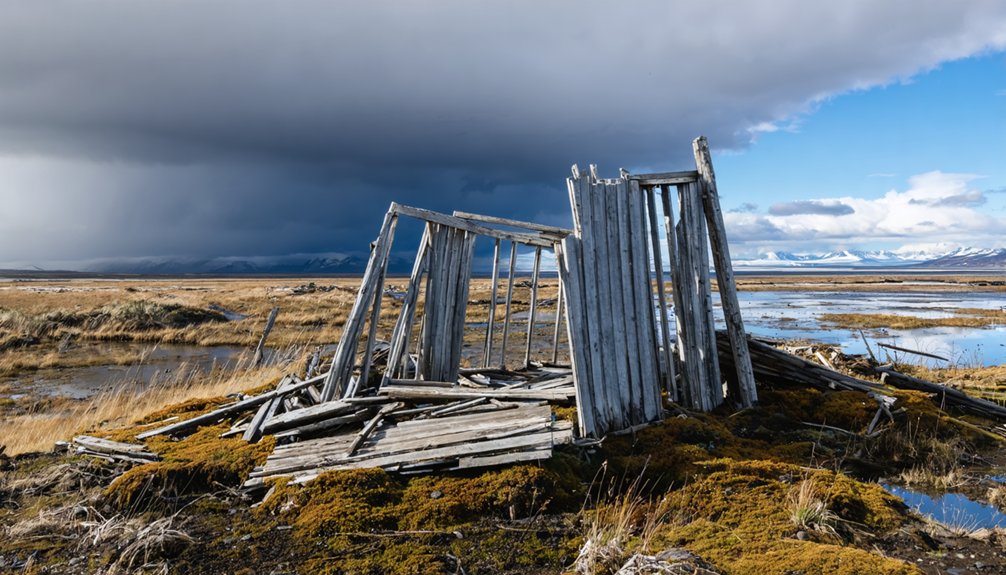
While Kwigiumpainukamiut doesn’t offer a traditional visitor experience, you can still make the journey to this remote archaeological site along the Kuskokwim River. Its cultural significance runs deep, making heritage preservation an ongoing priority for indigenous communities and researchers alike.
Kwigiumpainukamiut may not welcome visitors in the traditional sense, but its cultural significance makes the remote journey worthwhile.
Before you go, keep these essentials in mind:
- No roads reach the site — you’ll travel by river or small aircraft only
- Respect the land — ancestral remains were repatriated here with Orthodox ceremonies
- Plan around nearby communities — Chuathbaluk and Napaimute offer limited support
- Visit in early spring — tan grass makes the 200-yard clearing most visible
You’re stepping onto ground where Yup’ik, Athabascan, and Russian cultures once intersected. Treat it accordingly.
Frequently Asked Questions
What Artifacts Were Discovered During the Kwig Dig Archaeological Project?
Swipe right on history! The Kwig Dig’s unearthed ancient tools and burial sites, revealing daily life artifacts that’ll transport you straight into the merging worlds of Yup’ik, Athabascan, and Russian cultures you’re free to explore.
How Does Climate Change Specifically Threaten Kwigiumpainukamiut’s Buried Remains?
You’ll find that permafrost melting destabilizes buried artifacts, while freeze-thaw cycles and coastal erosion actively destroy irreplaceable subsurface remains. Climate change is accelerating this decay, threatening to erase Kwigiumpainukamiut’s hidden cultural treasures before archaeologists can uncover them.
Were Ancestral Remains Found at Kwigiumpainukamiut Repatriated to Indigenous Communities?
You’ll find that repatriation processes returned ancestral remains to their communities, honoring Indigenous heritage through solemn Orthodox ceremonies—imagine bones finally resting where they belong, reclaiming freedom, dignity, and connection to the sacred Kuskokwim River homeland.
What Defensive Features Were Built to Protect the Kwigiumpainukamiut Settlement?
When you explore Kwigiumpainukamiut’s history, you’ll discover that strategic defensive structures, specifically protective ridges, served as the settlement’s primary defenses, shielding its diverse Yup’ik, Athabascan, and Russian inhabitants from potential threats across the Kuskokwim River region.
How Many Ethnic Groups Once Lived Separately Within Kwigiumpainukamiut’s Boundaries?
Three ethnic groups once lived separately there! You’ll discover countless layers of Indigenous cultural practices and settlement architectural styles, where Yup’ik, Athabascan, and Russian cultures each claimed their own distinct living areas within Kwigiumpainukamiut’s boundaries.
References
- https://en.wikipedia.org/wiki/Kwigiumpainukamiut
- https://kids.kiddle.co/Kwigiumpainukamiut
- https://www.youtube.com/watch?v=GNjMpM6b58o
- https://en.wikipedia.org/wiki/List_of_ghost_towns_in_Alaska
- https://de.frwiki.wiki/wiki/Kwigiumpainukamiut
- https://en.wikipedia.org/wiki/Chuloonawick