La Lomita isn’t your typical ghost town stop—you won’t find crumbling saloons or dusty streets. What you’ll discover is a beautifully preserved white chapel near Mission, Texas, perched on a gentle rise just miles from the Rio Grande. Built by Oblate missionaries who once rested their horses here, this National Register site offers a quiet, reflective experience best explored in 30–45 minutes. There’s far more to this compelling South Texas landmark than first meets the eye.
Key Takeaways
- La Lomita is located near Mission, Texas, accessible via Farm Road 1016 heading south toward the Rio Grande River.
- The site features a preserved white chapel on a gentle rise, listed on the National Register of Historic Places since 1975.
- Built by Missionary Oblates of Mary Immaculate, La Lomita served as a critical rest stop for frontier missionaries in South Texas.
- Plan a 30–45 minute visit, ideally on weekdays during fall or winter for cooler temperatures and a quieter experience.
- Combine La Lomita with Mission’s historic downtown, Bentsen-Rio Grande Valley State Park, and Roma Historic District for a fuller heritage loop.
La Lomita: South Texas Ghost Town or Historic Chapel Stop
When most people picture a ghost town, they imagine crumbling storefronts and tumbleweeds — but La Lomita, tucked just a few miles south of Mission, Texas, tells a quieter story. Here, history survives through a small white chapel perched on a gentle rise, not through ruins.
Local legends tie this site to the Missionary Oblates of Mary Immaculate, who once rode horseback across the Rio Grande Valley spreading their faith. Preservation efforts kept that memory alive, earning La Lomita a spot on the National Register of Historic Places in 1975.
Where La Lomita Sits in Hidalgo County
Nestled in the southern tip of Hidalgo County, La Lomita sits just a few miles south of Mission, Texas, deep in the Rio Grande Valley. You won’t find sprawling abandoned structures here like classic ghost towns out west, but the location carries its own quiet weight.
The surrounding landscape blends farmland, river history, and local legends tied to Oblate missionaries who once rode on horseback across this rugged terrain. The Rio Grande runs nearby, shaping the region’s identity for centuries.
You can reach La Lomita easily from Mission, making it a practical detour rather than a remote expedition. Its position in South Texas places it within a broader valley itinerary, connecting heritage stops across one of the state’s most historically layered corridors.
What You’ll Actually See When You Arrive
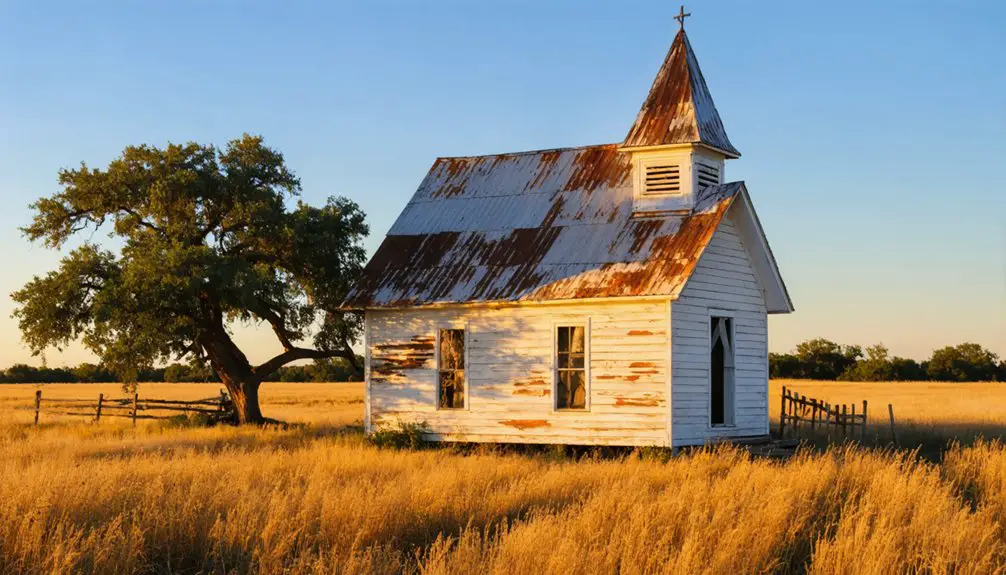
Arriving at La Lomita after the short drive south from Mission, you’ll notice the site almost before you expect it. A small white chapel sits atop a gentle rise, quietly anchoring the surrounding park grounds. The structure reflects serious preservation efforts — it’s restored, maintained, and listed on the National Register of Historic Places since 1975.
Step closer and you’ll absorb real cultural insights into the Oblate missionaries who once traveled this region on horseback, spreading faith across a rugged frontier. The chapel’s interior is compact but purposeful, and the park setting makes the stop comfortable without demanding much time.
Don’t rush past it from the road — the chapel blends into the landscape easily. Slow down, pull in, and let the history speak for itself.
The Oblate Missionaries Who Built La Lomita Chapel
Before Spanish land grants and railroad towns reshaped South Texas, the Missionary Oblates of Mary Immaculate were already moving through the Rio Grande Valley on horseback, carrying the Catholic faith across remote ranchland and river settlements.
La Lomita Chapel stands as their most enduring legacy. Its cultural significance runs deep, connecting local legends of frontier faith to a preserved landmark you can still visit today.
La Lomita Chapel endures — a frontier faith made visible, preserved, and still waiting to be witnessed.
The Oblates shaped this region in ways worth understanding before you arrive:
- They traveled rugged terrain without roads or infrastructure.
- La Lomita served as a critical rest stop between mission stations.
- Their presence influenced the spiritual and cultural identity of the entire Valley.
Knowing this history makes your stop feel less like sightseeing and more like witnessing something that genuinely mattered.
Why La Lomita Earned a Spot on the National Register
When a site earns a place on the National Register of Historic Places, it’s because something real and lasting happened there. La Lomita Chapel received that recognition in 1975, and it wasn’t by accident. The designation reflects both its religious significance and its role in shaping the Rio Grande Valley’s missionary history.
You’re looking at a structure tied directly to the Oblate missionaries who traveled this region on horseback, serving isolated communities long before modern infrastructure existed. That history matters.
Historical preservation efforts here protect more than an old building — they protect a story about faith, persistence, and regional identity.
When you visit, you’re standing on ground that federal historians officially recognized as worth protecting. That’s a strong reason to add La Lomita to your road trip route.
Where La Lomita Fits on a Rio Grande Valley Road Trip
La Lomita works best as one stop on a longer Rio Grande Valley loop rather than a destination on its own, so plan your route out of Mission and layer in nearby towns, historic sites, or river overlooks to build a fuller day.
You’ll want to sequence La Lomita early or mid-route since the visit runs short, leaving time for additional stops without rushing.
Pairing it with other Mission-area landmarks keeps the itinerary tight and rewards you with a richer picture of South Texas heritage than any single stop could offer.
Pairing Nearby Valley Stops
Since La Lomita makes for a compact visit, it pairs naturally with other stops along the Rio Grande Valley to build a full day of South Texas heritage. Mission and the surrounding area offer enough history to keep you exploring without backtracking far.
Consider adding these nearby stops to your route:
- Mission’s historic downtown, where local legends tied to the region’s ranching and missionary past come alive through preserved architecture.
- Bentsen-Rio Grande Valley State Park, ideal for stretching your legs along the river corridor.
- Roma Historic District, a National Historic Landmark where preservation efforts have protected one of the Valley’s most authentic frontier townscapes.
Combining these stops with La Lomita creates a road trip that feels intentional, rewarding, and genuinely connected to the land you’re crossing.
Route Planning From Mission
Pulling all these stops together is easier than it sounds once you know where Mission sits on the map. It hugs the Rio Grande near the southern tip of Texas, putting you within easy reach of McAllen, Reynosa border crossings, and dozens of hidden gems scattered across Hidalgo County.
La Lomita sits just a few miles south of Mission’s downtown core, making it a natural anchor for your morning or afternoon loop. Build your route outward from the chapel, then follow Farm-to-Market roads east or west depending on which local legends and heritage sites catch your interest.
You won’t need much time at La Lomita itself, so use that flexibility to stretch your drive deeper into the Valley without feeling rushed.
Best Stop Sequencing Tips
Sequencing your stops wisely can mean the difference between a satisfying heritage loop and a backtracking mess. Place La Lomita mid-route so its historical preservation story and quiet architectural style land with full context behind them.
Consider this order:
- Start in Mission to orient yourself with the region’s Oblate mission history before heading south toward the chapel.
- Visit La Lomita Chapel as your anchor stop, where the compact grounds reward a focused, unhurried look.
- Continue toward the Rio Grande to round out the valley’s layered landscape without doubling back unnecessarily.
This sequence lets each stop build meaning rather than interrupt it. La Lomita isn’t a long visit, but positioned correctly, it becomes the emotional centerpiece your whole Rio Grande Valley loop remembers.
What to Know Before You Visit La Lomita Near Mission
La Lomita sits just a few miles south of Mission, Texas, making it an easy add to any Rio Grande Valley itinerary. You’ll want to visit during cooler months, since South Texas heat can make even a short outdoor stop uncomfortable.
Once you arrive, expect a compact, peaceful site centered on the restored chapel and the park grounds the city of Mission developed around it.
Getting There Easily
Getting to La Lomita couldn’t be simpler — it sits just a few miles south of Mission, Texas, in Hidalgo County, deep in the Rio Grande Valley. Pair it with other regional stops to make the most of your drive. Watch the roadside carefully, though — the chapel’s easy to miss without close attention.
Here’s what helps you arrive ready:
- Follow local legends — ask Mission residents for tips, since longtime locals often know shortcuts and hidden context preservation efforts can’t fully capture
- Head south from Mission on Farm Road 1016 toward the Rio Grande
- Look for the white chapel on a slight rise — that’s your landmark
The site’s accessible, low-key, and worth every mile.
Best Time To Visit
Once you’ve mapped your route south from Mission, timing your visit makes the difference between a rushed stop and a genuinely memorable one. Fall and winter offer the most comfortable conditions for exploring this South Texas landmark, with cooler temperatures making outdoor walking far more enjoyable.
Spring brings wildflowers to the Rio Grande Valley, adding a scenic backdrop that enhances the historical preservation atmosphere surrounding the chapel grounds.
Summer heat can be intense, so early morning arrival is your best strategy if you’re visiting between June and August.
Weekday visits keep crowds thin, giving you quieter access to one of the area’s most underrated tourist attractions.
The municipal park setting means the site stays accessible year-round, so your schedule ultimately drives the decision more than seasonal closures ever will.
What To Expect Onsite
Stepping onto the grounds at La Lomita, you’ll find a compact, unhurried stop rather than an expansive ghost-town complex. The restored white chapel sits on a gentle rise, quietly holding centuries of missionary history.
Don’t expect local legends or ghost stories around every corner — the atmosphere here is more reflective than eerie.
Here’s what you’ll actually encounter:
- The chapel itself, a small, well-preserved structure listed on the National Register of Historic Places since 1975
- Park amenities added after Mission developed the grounds in 1976, making it accessible and family-friendly
- Open surroundings suited for a short, peaceful walk rather than lengthy exploration
Plan roughly 30–45 minutes here, then pair it with nearby Rio Grande Valley stops to build a fuller road trip itinerary.
Frequently Asked Questions
Is La Lomita Chapel Open to Visitors Every Day of the Week?
The knowledge doesn’t confirm La Lomita Chapel’s exact daily hours, so you’ll want to verify before visiting. While exploring this historical landmark, don’t miss savoring local cuisine nearby—it’s your freedom to make the trip unforgettable!
Can You Attend a Religious Service at La Lomita Chapel Today?
“When in doubt, check it out!” You’d need to verify current schedules directly, as La Lomita Chapel’s historical significance shines through community events and occasional services — but daily worship access isn’t guaranteed, so plan ahead before visiting.
Is There an Admission Fee to Enter the La Lomita Park?
You’ll find no admission fee to explore this stunning historical landmark! Stroll freely through La Lomita’s park grounds, soak up the rich mission history, then reward yourself with authentic local dining nearby in Mission.
Are Pets Allowed on the La Lomita Municipal Park Grounds?
Roaming free like the spirit of the Rio Grande, you’ll want to check current pet policies and leash regulations directly with Mission’s parks department, as the knowledge base doesn’t confirm specific pet rules for La Lomita.
How Long Does a Typical Visit to La Lomita Usually Take?
You’ll typically spend 30–60 minutes exploring La Lomita’s historical landmarks and scenic viewpoints. It’s a compact stop, so you can soak in the chapel’s rich heritage and peaceful surroundings without sacrificing much of your adventurous road trip day.
References
- https://www.texasescapes.com/SouthTexasTowns/La-Lomita.htm
- https://exploretexas.blog/2017/12/31/la-lomita-chapel/
- https://www.reddit.com/r/roadtrip/comments/1fblvhm/ghost_towns_or_weird_stops/
- https://en.wikipedia.org/wiki/List_of_ghost_towns_in_Texas
- https://texashighways.com/travel/getaways/an-unplugged-travel-challenge-through-the-rio-grande-valley-leads-to-unexpected-detours-and-rewards/
- https://www.jjsteampunk.com/11-amazing-authentic-ghost-towns-worth-a-road-trip-from-l-a/
- https://www.reddit.com/r/darktourism/comments/1gomwlf/la_to_texas_dark_tourism_route/
- https://www.hipcamp.com/journal/camping/texas-ghost-towns