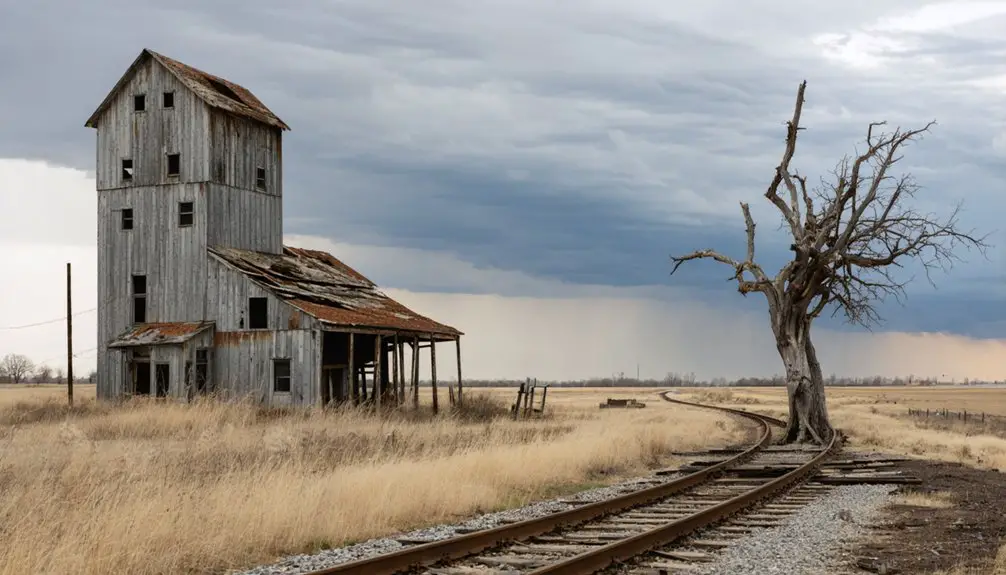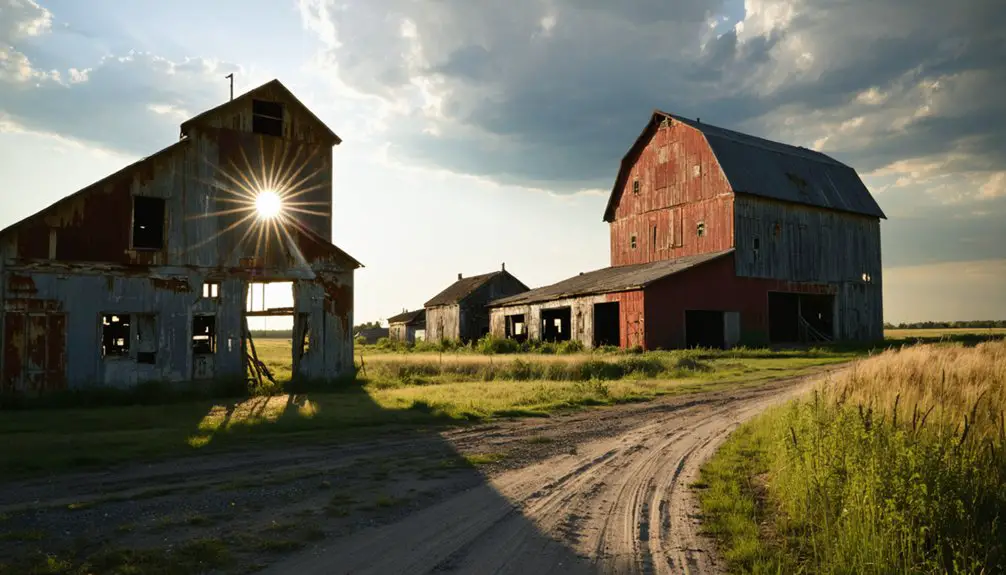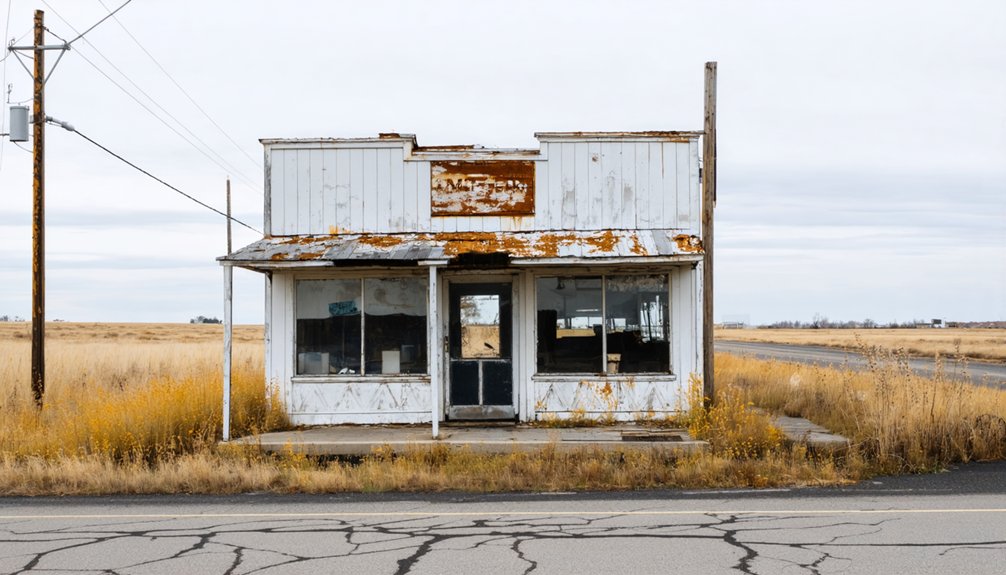
Lewisville, Minnesota isn’t your typical ghost town—it’s a layered, living community that nearly disappeared but held on. Founded in 1844 and reshaped by an 1881 railroad shift and a destructive 1895 fire, this small south-central Minnesota town still holds visible scars and a remarkable 1885 structure housing an active community theater. You’ll find open streets, minimal signage, and a quiet rural atmosphere rich with discoverable history. Stick around, and you’ll uncover exactly how this town refused to vanish.
Key Takeaways
- Lewisville, Minnesota, founded in 1855, offers a layered ghost town experience shaped by railroad shifts, an 1895 fire, and gradual urban decay.
- The oldest standing structure, built in 1885, now houses the Greater Lewisville Community Theater and remains actively accessible to visitors.
- Minimal signage encourages self-guided exploration; bring fuel and snacks, as modern amenities are limited in this rural town.
- Lewisville connects to a broader south-central Minnesota heritage route, linking Watonwan County sites, grain elevators, and railroad-era communities via county roads.
- Open lots, fire scars, and gaps along Main Street serve as visible historical markers of the town’s pivotal 1895 fire.
Is Lewisville, Minnesota Really a Ghost Town?
Although Lewisville appears on Minnesota’s ghost town lists, it’s not an abandoned settlement frozen in time — it’s a living city in Watonwan County with a 2020 population of 204.
So why does it earn the ghost town label? Think of it as a “nearly lost” town shaped by industrial decline and shifting population trends that hollowed out its commercial core over generations.
When the railroad redirected development in 1881 and a fire gutted Main Street in 1895, Lewisville lost momentum it never fully recovered. Those turning points left visible marks on the landscape you can still read today.
That layered history — part survivor, part relic — is exactly what makes Lewisville worth pulling off the highway to explore on your own terms.
Lewisville at Its Peak: What Made This Town Matter
When you trace Lewisville’s story back to 1844, you find two pioneering families—the Holfords and the Kings—carving out what they called Holford Prairie Settlement in south-central Minnesota.
By 1881, the Wichita Railroad’s arrival reshaped the town’s growth pattern, pulling development toward Old Town and locking Lewisville into the familiar story of communities remade by changing transportation routes.
Then, in 1895, a fire tore through the north side of Main Street, forcing residents to rebuild and prompting the formation of a local water company that would define the town’s next chapter.
Early Settlement Roots
Every ghost town starts somewhere, and Lewisville‘s story begins in 1844, when the Holford and King families put down roots on what they called Holford Prairie Settlement.
By 1855, Basdeal Lewis purchased the land, platted a town, and established the first post office, giving Lewisville its name and identity.
Understanding these early layers helps you see urban decay not as sudden collapse but as a long, slow drift from promise.
Three milestones shaped Lewisville’s foundation:
- 1844 – Holford and King families establish the settlement, planting the first seeds of community.
- 1855 – Basdeal Lewis names and formally platts the town.
- 1877 – The first public school opens, signaling organized civic growth before economic decline quietly began reshaping the town’s future.
Railroad Era Influence
Lewisville’s early decades built a quiet foundation, but 1881 cracked it open. That year, the Wichita Railroad extended nearby, and the town’s center of gravity shifted dramatically toward Old Town. Rail access rewrote everything — commerce, population movement, and long-term survival.
You can still feel that tension when you walk the area today. Development chased the tracks, leaving older civic layers behind like sediment. Local legends grew around that split, and folklore stories about abandoned storefronts and relocated families passed between generations.
For a freedom-minded road tripper, that’s exactly the kind of layered history worth chasing. You’re not just looking at a quiet street — you’re standing inside a decision point that determined whether Lewisville thrived, faded, or landed on a ghost-town list.
Fire And Rebuilding
Just fourteen years after the railroad reshaped the town, a fire tore through the north side of Main Street in 1895 and forced Lewisville to make another hard choice — collapse or rebuild. The community chose to fight back, forming a water company to protect what remained.
That resilience still echoes today through:
- Local cuisine spots rooted in community pride, where neighbors have gathered for generations after major community events
- Historic infrastructure born directly from post-fire planning, including organized water systems that stabilized the town
- A living civic identity that transforms every community event into a quiet act of remembrance
When you walk Main Street, you’re tracing ground that survivors literally rebuilt. That kind of history doesn’t just inform — it moves you.
How the 1881 Railroad Shift Quietly Hollowed Out Lewisville
When the Wichita Railroad extended its line in 1881, it didn’t run straight through Lewisville’s heart — it curved toward Old Town instead, and that subtle geographic decision quietly rewrote the town’s future.
Commerce, foot traffic, and opportunity followed the rails, leaving original Lewisville standing but slowly draining of its economic pulse.
The rails carried everything with them — leaving Lewisville upright, but hollow, and slowly forgotten.
You’ll notice this pattern threading through the local legends surrounding the town — stories about merchants who packed up overnight and buildings that emptied before anyone thought to document them.
Whether or not the ghost stories carry truth, the railroad’s redirection created the conditions that earned Lewisville its ghost-town reputation.
When you visit, walk the original street grid and imagine the version of Lewisville that almost thrived. The silence you’ll find there isn’t accidental — it was engineered by a single track.
The 1895 Fire That Forced Lewisville to Rebuild
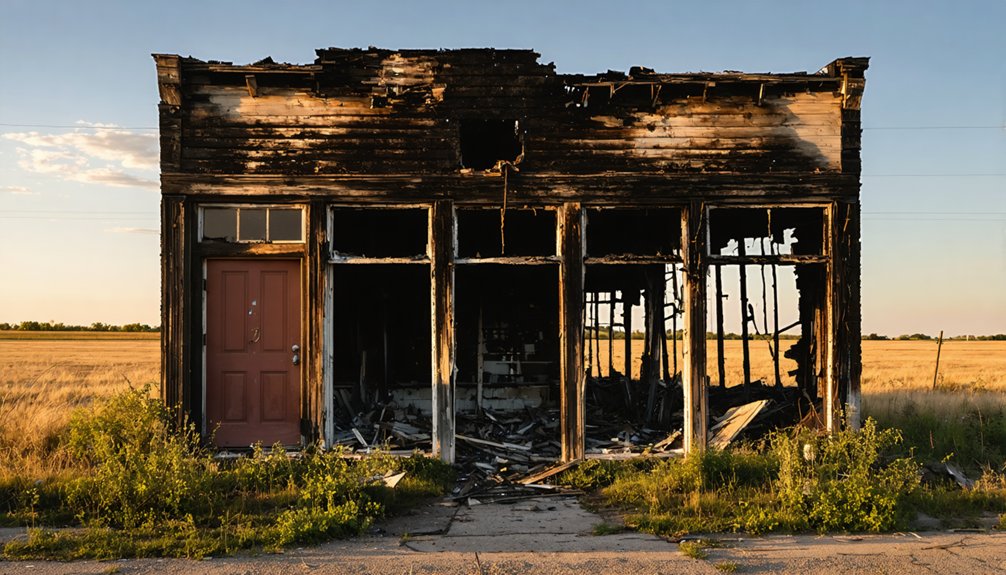
Fourteen years after the railroad reshaped Lewisville’s future, fire finished what economic drift had started. In 1895, flames tore through the north side of Main Street, accelerating both economic decline and population shifts that were already underway.
Yet the town didn’t vanish — it adapted.
From that fire, three lasting changes emerged:
- Infrastructure response — Residents formed a water company specifically to prevent future destruction, wiring the community toward resilience.
- Commercial reset — Burned lots forced property owners to rethink investment, reshaping the town’s physical footprint permanently.
- Community identity — Choosing to rebuild rather than abandon defined Lewisville’s character for generations.
When you walk those streets today, you’re tracing the outline of a town that refused to disappear quietly.
Lewisville’s 1885 Theater and What Still Stands Today
When you walk through Lewisville today, the oldest standing structure you’ll encounter dates to 1885 and now houses the Greater Lewisville Community Theater — a living reminder that this town never fully disappeared.
That single building anchors your visit, giving you a concrete point of reference against which you can measure how much the town has changed since the railroad shift of 1881 and the fire of 1895.
Keep your camera ready, because surviving landmarks like this one tell the story of Lewisville’s resilience far more effectively than any ghost-town label can.
Theater’s 1885 Origins
Among Lewisville’s most striking survivors is the oldest standing structure in town, a building dating back to 1885 that now houses the Greater Lewisville Community Theater. It predates the 1895 fire and weathered the urban development shifts that reshaped Main Street.
Despite population decline, this structure endured where others didn’t.
When you visit, keep these three facts in mind:
- Built in 1885, the structure predates Lewisville’s most destructive fire by a full decade.
- It survived railroad-era disruption, when shifting transport routes pulled commercial energy away from the original town core.
- It still serves the community actively, hosting the Greater Lewisville Community Theater rather than sitting vacant.
That living use makes it one of the most honest ghost-town landmarks you’ll find anywhere in Minnesota.
Surviving Historic Landmarks
The 1885 theater building doesn’t stand alone as a relic worth your attention—it anchors a broader story about what Lewisville managed to hold onto despite railroad shifts, fire, and population loss. Urban decay claimed plenty here, but modern preservation efforts kept key structures upright and readable as history.
Walk the street grid and you’re tracing a layout shaped by 19th-century decisions—where commerce clustered, where fire erased the north side of Main Street in 1895, and where rebuilding shifted the town’s character permanently.
The theater remains your clearest landmark, still functioning after nearly 140 years. Use it as your orientation point, then read the surrounding blocks as chapters.
Lewisville rewards visitors who look carefully rather than those expecting dramatic ruins.
What Remains Visible on a Walk Through Lewisville Now
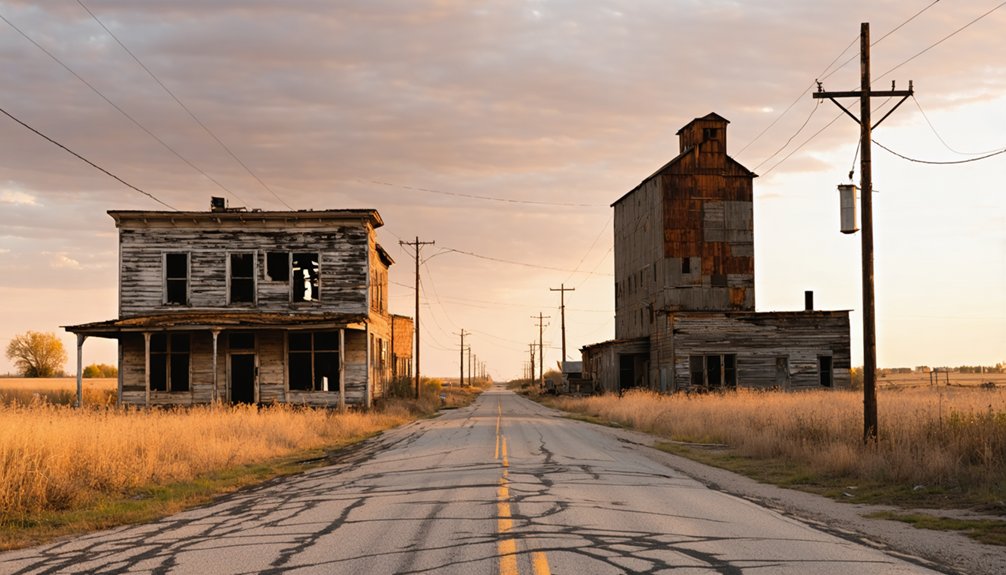
Despite its small footprint, Lewisville rewards a slow walk with visible layers of history that most passersby would miss entirely. Street patterns still echo the original 1855 town plat, and gaps in the building line hint at where the 1895 fire reshaped the north side of Main Street. Local legends tied to those lost storefronts add texture you won’t find on any marker.
Lewisville’s small streets hold more history than most visitors will ever slow down enough to find.
Watch for these three anchors during your walk:
- The 1885 structure housing the Greater Lewisville Community Theater, a living venue still driving community events today.
- The street grid shift near Old Town, marking where railroad development pulled growth away from the original core.
- Open lots along Main Street, silent evidence of fire-era loss that photographs powerfully in flat midday light.
How to Add Lewisville to a South-Central Minnesota Ghost Town Route
Once you’ve photographed those fire-era lots and noted the theater’s 1885 stonework, Lewisville becomes a natural anchor for a longer south-central Minnesota loop rather than a standalone detour.
Watonwan County holds additional heritage stops worth linking together, so map your route before you leave home. Drive the county roads connecting small railroad-era communities, pausing wherever old grain elevators or brick storefronts signal a similar story of transportation-driven change.
Break up the history with outdoor activities along the Watonwan River, where fishing and walking trails offer genuine breathing room between stops. Refuel with local cuisine at any diner still serving the agricultural communities nearby, since those spots often hold their own unofficial history.
Keep the loop flexible, and you’ll cover meaningful ground without rushing any single stop.
Signage, Access, and What Lewisville Actually Offers Visitors
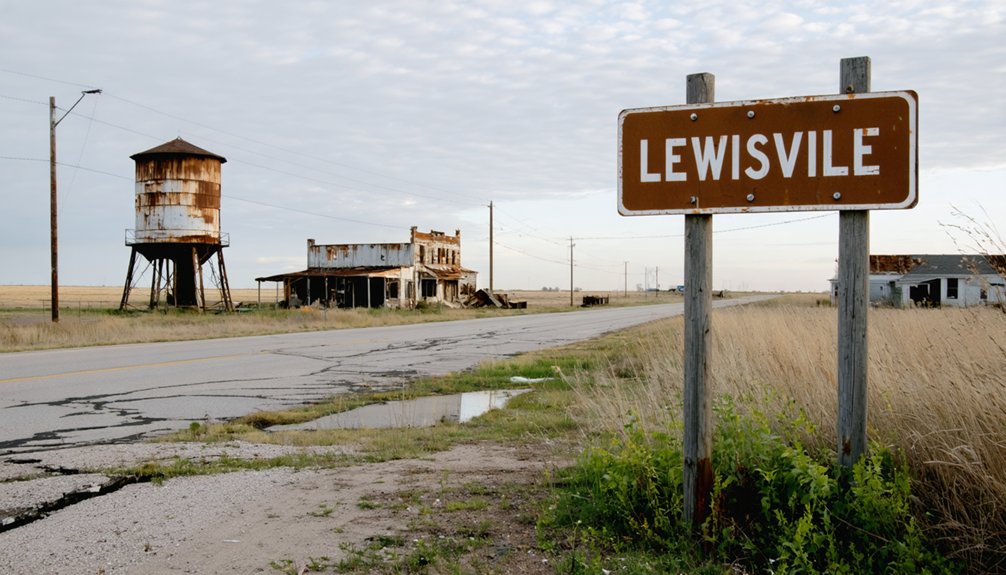
Before you load the car, it’s worth knowing what Lewisville actually puts in front of you when you arrive. Formal signage is minimal, so you’ll navigate more by curiosity than by markers. Modern amenities are limited, meaning you should fuel up and pack snacks before entering Watonwan County’s quieter stretches.
What Lewisville genuinely offers:
- The 1885 community theater building, still standing and functioning — a rare survivor that local legends credit with anchoring the town through decades of decline.
- Unobstructed street-level exploration, ideal for heritage photography without crowds or restrictions.
- A living “nearly lost town” contrast — a populated city carrying a ghost-town label, giving you a story most roadside stops can’t deliver.
Come with a full tank and an open schedule.
Frequently Asked Questions
What Is the Best Time of Year to Visit Lewisville?
With only 204 residents, you’ll find Lewisville gloriously uncrowded year-round. Summer’s your best bet—seasonal weather stays mild, and local festivals bring this quiet ghost town surprisingly alive with authentic Minnesota charm.
Are There Any Restaurants or Cafes Open in Lewisville?
With a population of just 204, you won’t find much local cuisine or cafe ambiance in Lewisville itself. Pack your own provisions or explore nearby Watonwan County towns for dining options before arriving.
Is There Overnight Lodging Available Near Lewisville, Minnesota?
You won’t find local lodging directly in Lewisville, but nearby towns offer comfortable stays. Explore campsite options along the Minnesota River valley or check St. James for hotels, giving you the freedom to roam Watonwan County freely.
How Long Does a Typical Self-Guided Lewisville Visit Usually Take?
You won’t need to book a week off work! A self-guided Lewisville visit typically takes one to two hours, giving you enough time to explore local history and capture meaningful photo opportunities at your own pace.
Is Lewisville Accessible for Visitors With Mobility Limitations?
You’ll find Lewisville’s historical landmarks generally accessible, though you should verify current accessibility improvements before visiting. Its small size and low traffic make traversing the area easier for visitors with mobility limitations.
References
- https://en.wikipedia-on-ipfs.org/wiki/List_of_ghost_towns_in_Minnesota
- https://www.cityoflewisville.com/about-lewisville/our-history/timeline
- https://en.wikipedia.org/wiki/List_of_ghost_towns_in_Minnesota
- https://en.wikipedia.org/wiki/Lewisville
- https://lewisvillein.net/town-history
- https://dentoncountyhistoryandculture.wordpress.com/author/dentoncountyhistoryandculture/
- https://www.lakesnwoods.com/Lewisville.htm
- http://genealogytrails.com/minn/watonwan/history.htm
- https://pastmaps.com/explore/us/minnesota/watonwan-county/lewisville
- https://www.wisdomlib.org/cities/lewisville-124087