Planning a ghost town road trip to Luffman, South Dakota means preparing for remote terrain, unreliable cell service, and breathtaking frontier history. You’ll find crumbling foundations, rusted equipment, and weathered structures that tell the story of a boomtown that peaked around 1905 before vanishing almost overnight. Visit between May and October for the best road conditions, pack offline maps, and bring plenty of water and sturdy boots. There’s far more to this forgotten settlement than first meets the eye.
Key Takeaways
- Visit between May and September for the best weather, avoiding winter’s dangerous icy roads and snowfall in South Dakota’s remote areas.
- Use GPS with offline maps and printed directions, as cell service is unreliable on Forest Service roads near Luffman.
- Pack two liters of water per person, sturdy boots, a first-aid kit, gloves, and backup batteries for all devices.
- Combine your visit with nearby ghost towns like Lounsberry and Spokane, SD, for a richer regional exploration experience.
- Luffman peaked around 1905, declining rapidly due to resource depletion and railroad rerouting, leaving ruins reflecting South Dakota’s boom-and-bust history.
What’s Left to See at Luffman, South Dakota?
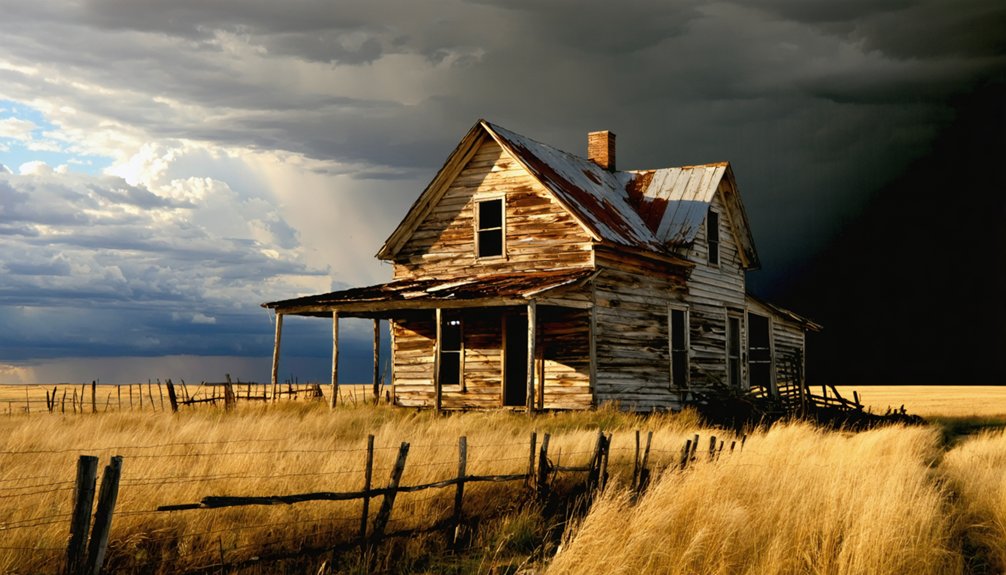
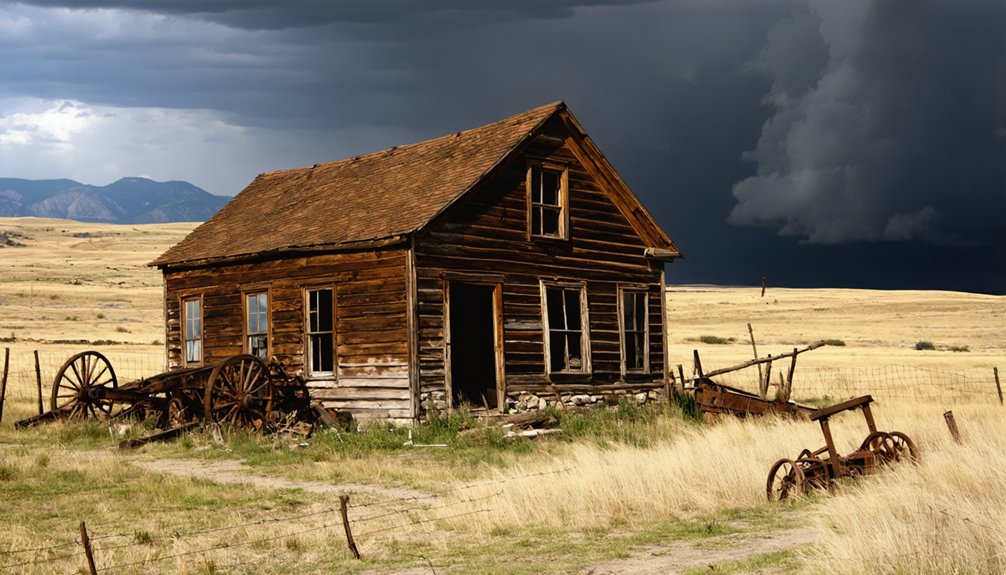
Although Luffman, South Dakota doesn’t appear in verified historical records or established ghost town databases, travelers drawn to the region’s abandoned settlements will find no shortage of comparable sites worth exploring. You’ll encounter roofless structures, crumbling foundations, and overgrown lots that speak louder than any written record.
Local folklore fills the gaps where documentation falls short, painting vivid pictures of miners, failed harvests, and vanished families. Ghost stories circulate among longtime residents who remember hearing tales passed down through generations.
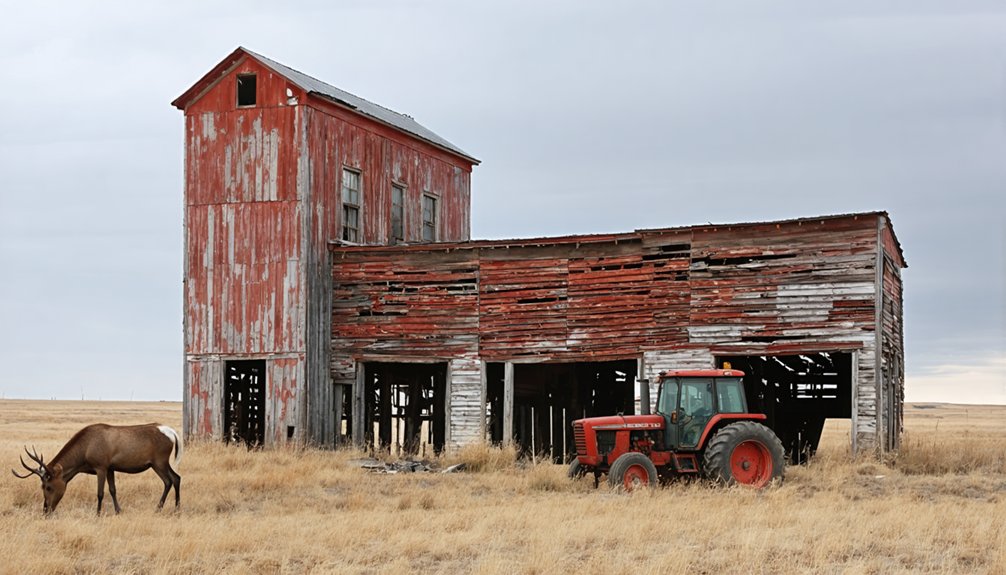
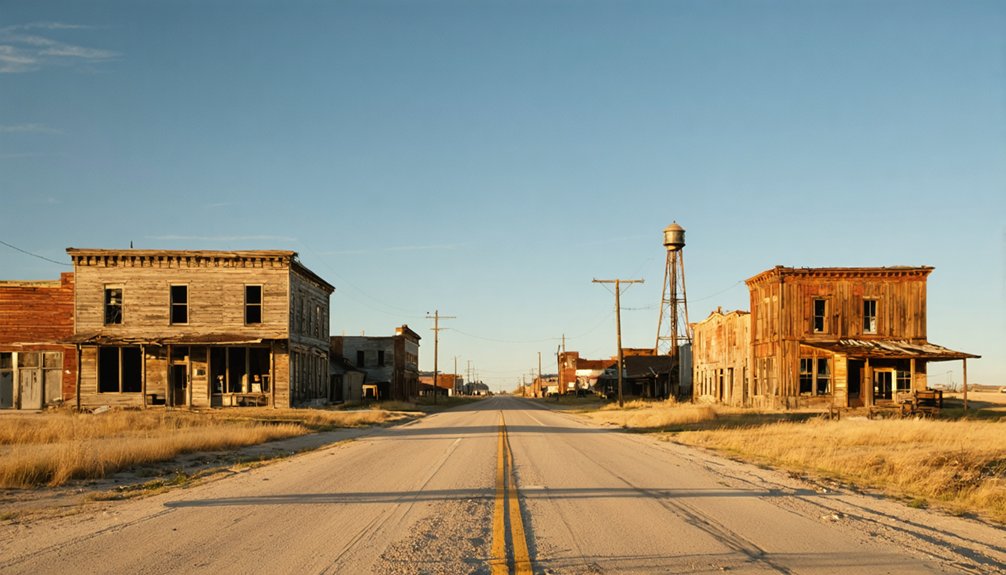
Sites like Spokane and Lounsberry offer tangible remnants — standing walls, rusted equipment, and weathered wood — that reward curious explorers willing to venture off paved roads. Bring your GPS coordinates, pack essentials, and treat every crumbling structure as a chapter in South Dakota’s raw, unfiltered frontier history.
How Luffman Went From Boomtown to Ghost Town
Luffman’s rise was swift, fueled by the promise of resources that drew settlers and businesses into the region almost overnight.
When those economic engines stalled — whether from depleted minerals, railroad rerouting, or shifting markets — residents had little reason to stay, and the population drained away just as quickly as it had arrived.
You’ll want to understand this boom-and-bust pattern before you visit, because it explains why so little remains standing today.
Economic Decline Factors
Like many boomtowns of its era, Luffman rose fast and collapsed faster once the economic forces that built it reversed course. You can trace the historical economic impacts directly to the mines themselves — early strikes drew ambitious settlers who bet everything on the land’s promise.
But resource depletion factors hit hard when gold yields thinned and miners uncovered more mica and graphite than profitable ore. Without steady mineral returns, businesses lost their customer base overnight.
The railroad never extended a line close enough to offset shipping costs, strangling commerce further. Families packed up, the post office shuttered, and Luffman’s population evaporated within a single generation.
What you’ll find today is the skeleton of ambition — proof that boom cycles don’t forgive towns that depend on a single, exhaustible resource.
Population Abandonment Timeline
Tracing Luffman’s collapse reveals a timeline that moved with brutal efficiency. The historical population peaked around 1905, when families, merchants, and miners crowded its streets with genuine optimism. Within three years, the resource depletion that defined the previous era accelerated departures dramatically.
By 1908, you’d have counted fewer than forty residents holding on. The abandonment timeline sharpened after the railroad rerouted supply lines away from Luffman’s corridor, cutting the town’s commercial lifeline completely. Families packed wagons first, then business owners shuttered storefronts without ceremony.
Best Time of Year to Visit Luffman
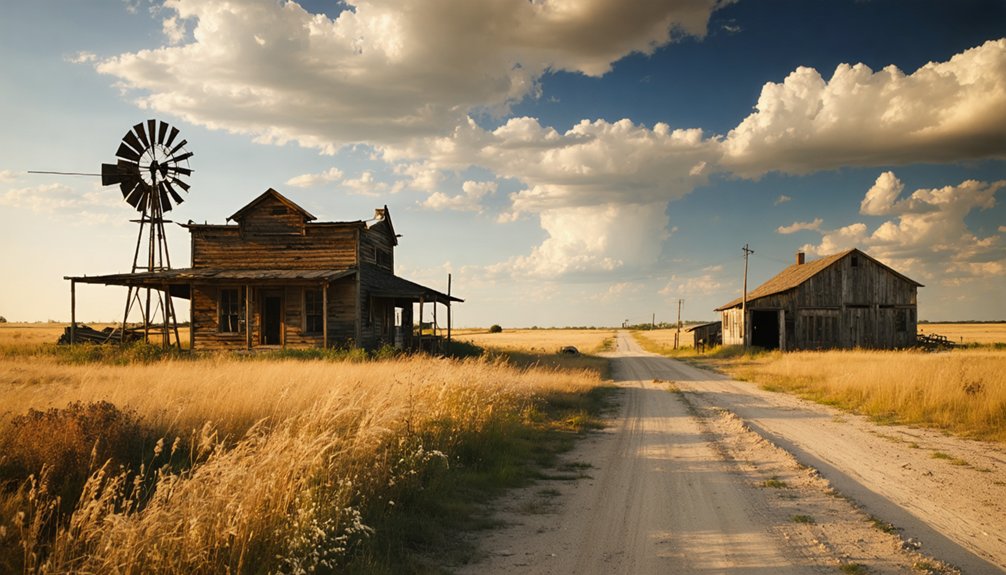
Timing your visit to Luffman can make or break the experience, so you’ll want to plan around South Dakota’s temperamental seasons. Late spring through early fall offers the most accessible conditions, with May and September hitting the sweet spot for seasonal weather — warm enough to explore comfortably without summer’s brutal heat.
June through August brings peak visitor crowds to South Dakota’s ghost town corridors, so you’ll sacrifice solitude if you travel then. Winter locks down rural roads with ice and heavy snowfall, making remote access genuinely dangerous.
Early October delivers dramatic skies, thinning crowds, and crisp air that suits unhurried exploration perfectly. Whatever month you choose, check local road conditions beforehand — South Dakota’s weather shifts fast, and getting stranded near an abandoned settlement isn’t romantic, it’s just inconvenient.
How to Get to Luffman Without Getting Lost
Before you hit the road toward Luffman, you’ll want to map your route carefully using a combination of GPS technology and printed backup directions, since remote South Dakota forest roads can lose cell signal fast.
You’ll navigate winding Forest Service roads where road signage is sparse or nonexistent, so downloading offline maps ahead of time is essential.
Lock in verified GPS coordinates before you leave, and cross-reference them with Forest Service Road markers to keep yourself oriented throughout the journey.
Starting Your Route Planning
Reaching Luffman takes some advance preparation, since this remote South Dakota ghost town sits well off any major highway and lacks road signage to guide you in. Download offline maps before you leave cell range, because service disappears fast once you head into the backcountry.
Mark your GPS coordinates manually and cross-reference them against Forest Service road numbers. Historical myths about easy access have misled travelers into dead ends and wasted hours, so don’t rely on secondhand accounts alone.
Preservation efforts in the region have improved some trail conditions, but road surfaces shift seasonally, making a high-clearance vehicle your smartest choice. Pack a paper map as backup, note your nearest fuel stop, and share your itinerary with someone reliable before you roll out.
Navigating Remote Forest Roads
Once your route’s mapped and your gear’s loaded, the real challenge begins: reading forest roads that don’t always behave like roads. Forest road navigation near Luffman demands more than a standard GPS app — many routes drop signal without warning, leaving you reliant on downloaded offline maps or paper topographic guides.
Vehicle preparation essentials matter here. High-clearance trucks or SUVs handle rutted two-tracks far better than sedans. Pack a full-size spare, recovery strap, and portable air compressor before you leave pavement behind.
Watch for Forest Service road markers — small brown posts that replace conventional street signs. Speed stays low, typically under 15 mph, protecting both your suspension and the terrain. When roads fork without signage, trust your coordinates over instinct and you’ll stay on track.
Essential GPS Coordinates Needed
Getting to Luffman without a reliable set of GPS coordinates is like steering a maze blindfolded — the surrounding Black Hills terrain offers few landmarks and even fewer road signs to correct your course. You’ll want to cross-reference modern GPS data with historical maps, since preservation efforts have occasionally restored or marked access points that newer digital tools miss entirely.
Pin your coordinates before leaving cell service behind — coverage drops fast once you’re deep into Forest Service territory. Keep a downloaded offline map as backup, and note nearby reference points like Spokane Creek Campground at N43.840657, W103.376041, which sits within the broader region.
From verified anchor points like these, you can triangulate your approach and move confidently through the backcountry toward your destination.
What to Pack for Your Luffman Ghost Town Visit?
Packing smart makes all the difference when you’re heading out to a remote site like Luffman, where there’s no convenience store around the corner and cell service can be unreliable.
Bring enough water for the full day — at least two liters per person — plus high-energy snacks, a first-aid kit, and sturdy boots for uneven terrain.
Your photography gear is essential here; a wide-angle lens captures abandoned structures beautifully, while a macro lens reveals fine details on historical artifacts you’ll encounter along the way.
Pack extra batteries since you won’t find an outlet nearby.
A printed map backs up your GPS, and a portable charger keeps devices alive.
Gloves protect your hands if you’re examining weathered wood or rusted metal remnants throughout the site.
Nearby Ghost Towns Worth Adding to Your Route
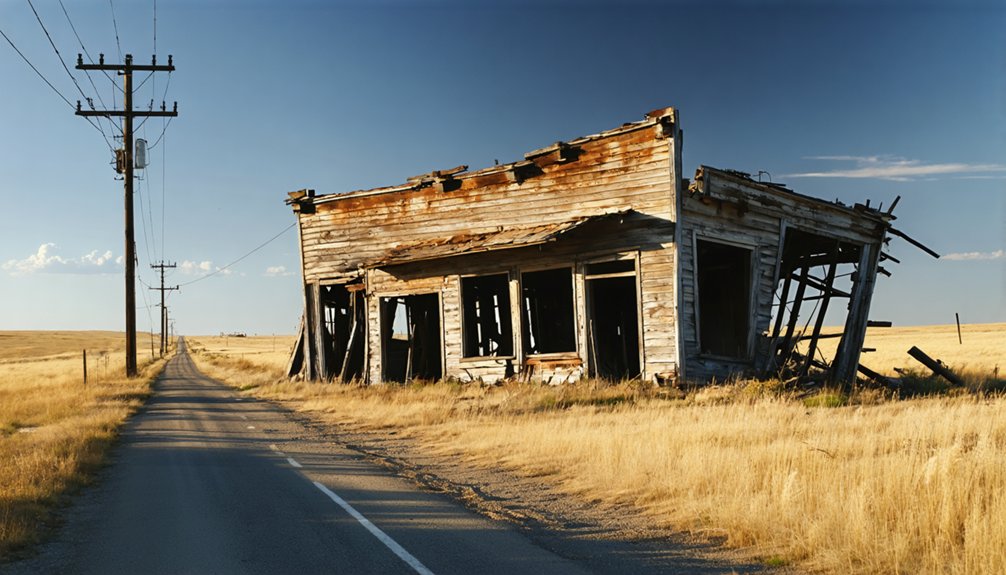
While Luffman anchors your itinerary, the surrounding region rewards explorers who extend their route to take in neighboring ghost towns with equally compelling histories. Lounsberry operated a post office in the early 20th century and carries local legends about its quiet decline after resource depletion shifted economic tides.
Spokane, South Dakota, sits at coordinates N43.840657, W103.376041, offering standing structures you can actually photograph and explore.
Historical mapping of Marshall County reveals several forgotten settlements clustered within driving distance, making multi-stop planning both practical and rewarding.
You’ll want Forest Service roads and a reliable GPS to connect these sites efficiently.
Each town adds a distinct chapter to your understanding of South Dakota’s boom-and-bust settlement patterns, turning a single-destination trip into a genuinely immersive regional experience.
Frequently Asked Questions
Is There an Entry Fee or Permit Required to Visit Luffman?
We couldn’t verify Luffman’s existence, but you’ll typically find no entry fees at South Dakota ghost towns. Check visitor regulations and historical preservation guidelines with local authorities before you head out exploring freely.
Are Pets Allowed When Exploring the Luffman Ghost Town Site?
Since Luffman’s existence isn’t verified, you can’t confirm its pet policies or animal restrictions. We’d recommend checking a validated South Dakota ghost town site, where you’ll often find pet-friendly exploration opportunities awaiting your adventurous spirit!
Can You Metal Detect or Collect Artifacts at Luffman Legally?
Since over 600 South Dakota ghost towns exist, you’ll want to know artifact regulations and metal detecting rules before visiting. Unfortunately, Luffman’s validity can’t be confirmed, so verify the site legally before you collect anything there.
Is Luffman Suitable for Children or Elderly Visitors to Explore?
Since Luffman’s existence isn’t verified, you’d want to confirm it’s a real site first. Historical preservation efforts and visitor safety concerns mean unverified ghost towns aren’t suitable destinations for children or elderly explorers.
Are There Guided Tours Available Specifically for the Luffman Site?
You won’t find guided tours with formal tourist amenities at Luffman, as it’s an unverified site. Instead, explore verified South Dakota ghost towns where historical preservation efforts support ranger-led tours and enriching, freedom-filled adventures await you.
References
- https://en.wikipedia.org/wiki/List_of_ghost_towns_in_South_Dakota
- https://myxoadventures.com/the-ghost-town-of-spokane-south-dakota/
- https://www.sdhspress.com/journal/south-dakota-history-2-2/some-black-hills-ghost-towns-and-their-origins/vol-02-no-2-some-black-hills-ghost-towns-and-their-origins.pdf