Planning a ghost town road trip to Brownsville, Illinois means tracing the rise and fall of what was once the state’s third-largest settlement. You’ll follow Illinois Route 149 west from Murphysboro, exploring overgrown foundations, weathered markers, and quiet cemeteries that whisper of a thriving 1800s community destroyed by a single courthouse fire in 1843. Pack sturdy boots, bring a camera, and prepare for an experience that goes far deeper than you’d expect.
Key Takeaways
- Brownsville sits approximately 3.25 miles west and 0.75 miles south of Illinois Route 149 near Murphysboro, accessible via public roads with signage.
- The site contains no standing buildings, only overgrown land, foundation traces, and historical markers commemorating Dr. Conrad Will and the 1843 fire.
- Wear sturdy boots, bring printed maps, water, insect repellent, and a camera, as cell service and amenities are unreliable or absent.
- Extend your road trip by visiting nearby ghost towns like Kaskaskia, Old Shawneetown, and Equality for a fuller Southern Illinois experience.
- Begin your day at Murphysboro’s local museums to gain historical context before heading west toward the Brownsville site.
How Brownsville Became Illinois’ Third-Largest Settlement
When Dr. Conrad Will donated 20 acres along the Big Muddy River in 1816, he sparked something remarkable. You’d have found Brownsville buzzing with salt works, commerce, and ambition that rivaled any frontier settlement.
By the early 1800s, it had grown into Illinois’ third-largest town, drawing settlers hungry for opportunity and independence.
By the early 1800s, Brownsville had become Illinois’ third-largest town, a magnet for settlers chasing opportunity on the frontier.
As Jackson County’s first county seat from 1817, Brownsville carried serious political weight. Its historical architecture housed courthouses, businesses, and homes that locals still reference in regional legends today.
Local legends describe streets packed with traders, miners, and families carving out lives near Salt Creek.
The town’s rise wasn’t accidental — its strategic location near river transport and coal deposits made it essential. You’re fundamentally standing at the birthplace of an entire county’s identity.
Why the 1843 Courthouse Fire Ended Brownsville for Good
On January 10, 1843, fire tore through Brownsville’s courthouse, and the town never recovered.
With the courthouse gone, officials moved the county seat to nearby Murphysboro, pulling government offices and businesses out of Brownsville almost overnight.
Residents didn’t wait long — they dismantled their own homes and rebuilt in Murphysboro, leaving Brownsville an empty shell within just a few years.
The Fire’s Devastating Impact
The courthouse fire of January 10, 1843, didn’t just destroy a building — it ripped out Brownsville’s political heart. Once that historical architecture crumbled into ash, the county seat relocated to Murphysboro, and everything followed. Businesses packed up. Government offices moved. Residents literally dismantled their homes and hauled them to the new seat of power.
You can almost hear the local legends — neighbors loading wagons, streets emptying within months. What had been Illinois’ third-largest settlement became silence and overgrown lots. The coal veins were already running dry, and railroads had undercut river commerce. The fire simply delivered the final blow.
Brownsville didn’t fade slowly; it collapsed with stunning speed, leaving only foundations and memories buried beneath Jackson County soil.
County Seat Relocates
Losing the county seat wasn’t just a political technicality — it was Brownsville’s death sentence. When the courthouse burned on January 10, 1843, officials wasted no time shifting power to Murphysboro. Government offices relocated, businesses followed, and residents dismantled their homes board by board, hauling what remained of Brownsville’s historical architecture to the new county seat.
You can almost hear local legends echo through the silence — stories of neighbors loading wagons overnight, abandoning streets that once buzzed with commerce and ambition. Within a few short years, nothing remained. No courthouse, no shops, no community.
The relocation wasn’t gradual; it was a clean, decisive break. Brownsville didn’t fade — it was methodically emptied, leaving only foundations buried beneath decades of soil and overgrowth.
Brownsville’s Rapid Decline
Few single events have so cleanly erased a town from the map as the courthouse fire that tore through Brownsville on January 10, 1843. Once Illinois’ third-largest settlement, Brownsville collapsed almost overnight. Without cultural preservation efforts, nearly every trace vanished.
Here’s what dismantled Brownsville for good:
- County seat status transferred to Murphysboro, pulling government and commerce away instantly.
- Residents physically dismantled their homes, hauling lumber to rebuild elsewhere.
- Coal veins ran dry, stripping the town’s economic foundation completely.
- Railroads replaced river transport, making Brownsville’s location irrelevant to urban development patterns.
You’re looking at a town that didn’t slowly fade — it was actively disassembled. What remained disappeared beneath overgrowth, leaving only foundations and markers behind.
What Happened to Brownsville After the County Seat Moved
Once Brownsville lost its county seat status to Murphysboro in 1843, you’d have witnessed a rapid and total collapse unfold.
Residents didn’t wait around — they dismantled their own homes and rebuilt them in Murphysboro, taking the town’s lifeblood with them.
Businesses, government offices, and economic activity followed, leaving Brownsville with nothing to sustain it.
County Seat Lost
The moment Brownsville lost its county seat status in 1843, the town’s fate was effectively sealed. Government offices, businesses, and residents packed up and followed the power to Murphysboro.
The historical architecture that once defined this thriving hub simply vanished as people dismantled their own homes brick by brick. Local legends say the exodus happened almost overnight.
Here’s what triggered the collapse:
- The courthouse fire on January 10, 1843 destroyed the town’s civic core
- County operations relocated to Murphysboro immediately after
- Businesses followed government offices, draining commerce
- Residents physically moved their structures to nearby Murphysboro
You’re fundamentally looking at a community that didn’t slowly fade — it was deliberately disassembled. That chain reaction transformed a once-thriving settlement into the ghost town you can explore today.
Residents Abandoned Homes
What followed the county seat’s relocation wasn’t a slow, mournful departure — it was deliberate demolition. Residents didn’t simply leave; they dismantled their own homes board by board and rebuilt them in Murphysboro.
No urban decay lingered here — there was nothing left to decay. People took everything useful and abandoned the rest.
You’re looking at a town that fundamentally erased itself. Historical preservation wasn’t a priority when survival demanded practicality.
Families chose opportunity over sentiment, stripping Brownsville down to bare foundations and overgrown lots.
When you visit today, that purposeful erasure becomes striking. The emptiness isn’t accidental — it’s the direct result of hundreds of people making a hard, calculated choice to walk away and never look back.
Economic Collapse Followed
Losing the county seat didn’t just wound Brownsville — it gutted it economically. Every major industry collapsed in rapid succession, leaving nothing behind worth staying for. Here’s what sealed the town’s fate:
- Government offices relocated to Murphysboro, pulling stable income and foot traffic away instantly.
- Businesses followed the population shift, chasing customers who’d already packed up and left.
- Coal veins ran dry mid-century, ending Brownsville’s role as a regional mining hub.
- Railroads replaced river transport, making Brownsville’s riverside location economically irrelevant.
The economic decline happened fast and hit hard. You won’t find a slow fade here — you’ll find a community that lost every lifeline within years.
What once housed thousands became silent farmland almost overnight.
How to Get to the Brownsville Ghost Town Site Today
Although no buildings remain to greet you, getting to the Brownsville ghost town site is straightforward if you use Murphysboro as your starting point. Head west roughly 3.25 miles, then travel 0.75 miles south of Illinois Route 149.
Historical markers along public roads guide you to where historical architecture once defined Jackson County’s earliest county seat.
You won’t need a guided tour to feel the weight of local legends surrounding Dr. Conrad Will and the devastating 1843 courthouse fire. The markers tell the story clearly.
Since the archaeological remains sit on private land, stick to public roads and let the signage do the work. Bring a GPS or printed map to avoid confusion, and you’ll reach this forgotten corner of Illinois history without hassle.
What You’ll Actually See at the Brownsville Site
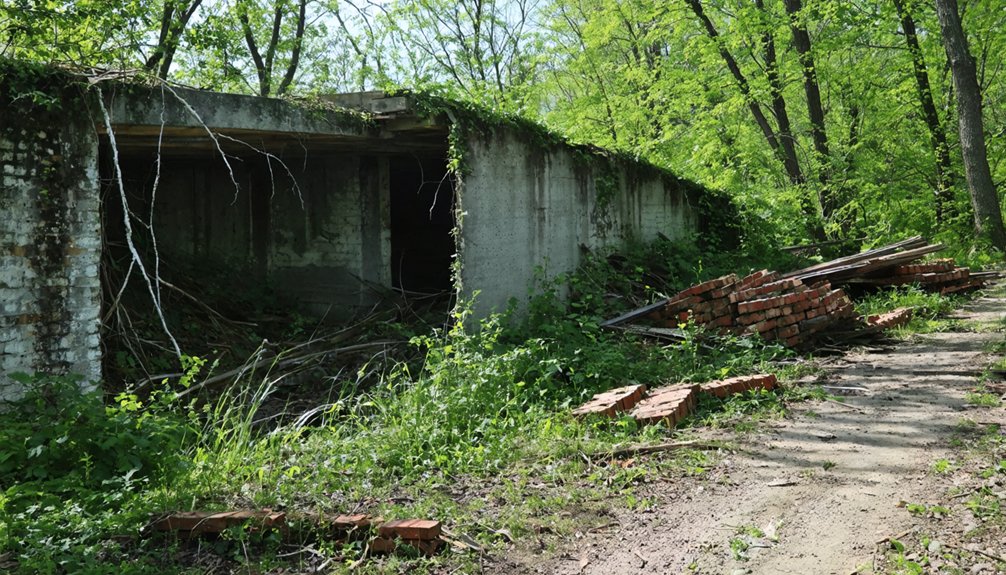
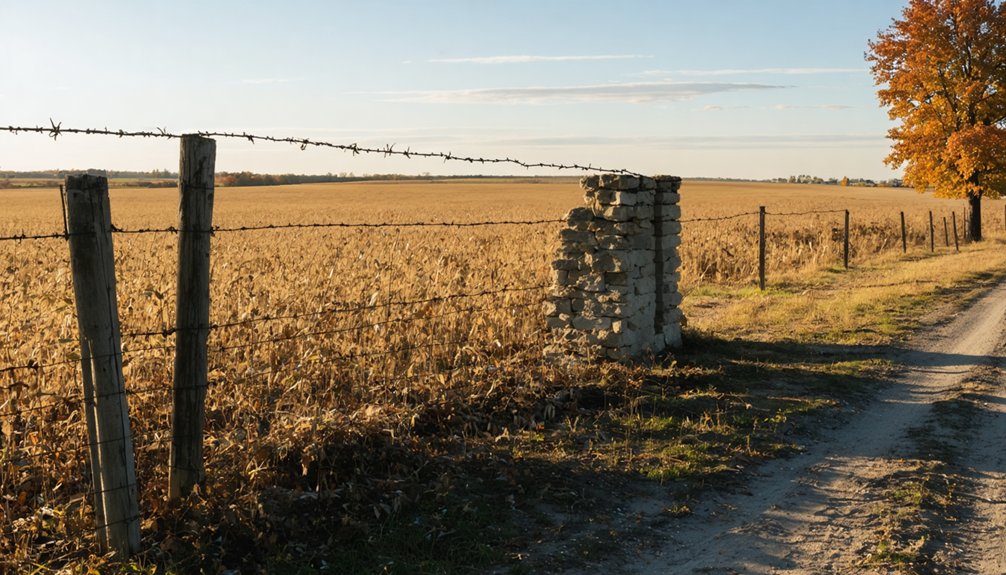
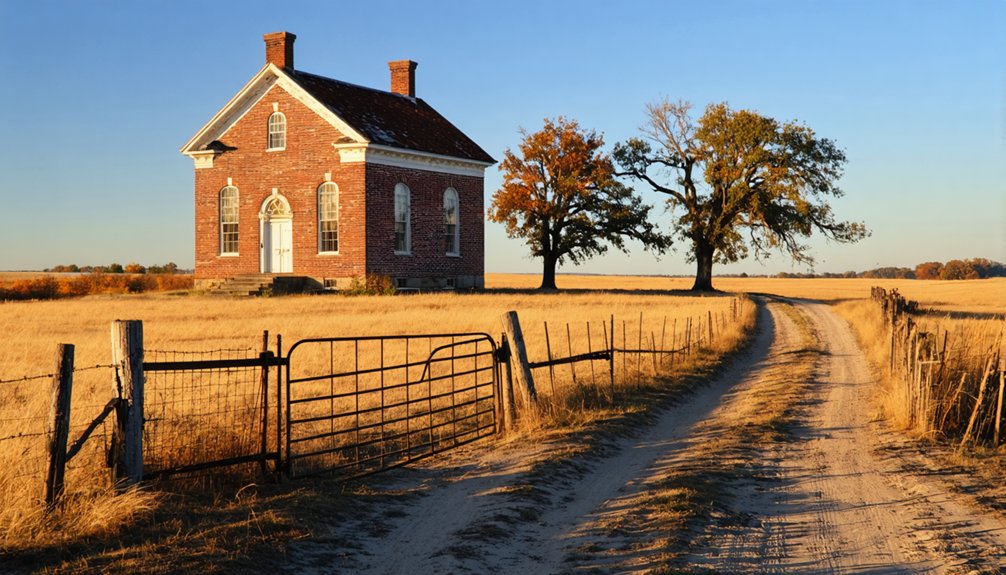
Once you arrive at the Brownsville site, don’t expect standing structures or dramatic ruins—what greets you instead is a quiet stretch of overgrown land marked by scattered foundation traces and weathered historical markers. Local legends surrounding the 1843 courthouse fire and historical architecture that once defined Illinois’ third-largest settlement live only in these subtle remnants.
Here’s what you’ll actually encounter:
- Historical markers commemorating Dr. Conrad Will and the 1843 fire
- Underground foundation traces hinting at the town’s original layout
- Overgrown cemeteries where former residents rest
- Open land shaped by Kincaid Lake’s natural spread
Bring curiosity and a sharp eye—this site rewards those who appreciate reading landscapes rather than touring preserved buildings.
What to Pack Before You Drive Out to Brownsville
Since Brownsville sits on private land with no standing structures, amenities, or paved pathways, you’ll want to pack smart before heading out. Wear sturdy boots for uneven, overgrown terrain, and bring long pants to navigate dense brush surrounding scattered foundations.
Carry a printed map or fully charged GPS, since cell service can be unreliable in rural Jackson County. Pack water, sunscreen, and insect repellent, especially during warmer months when vegetation grows thick over buried historical artifacts and foundation traces.
Bring a notebook to document what you observe, and a camera to capture marker inscriptions detailing local legends like the 1843 courthouse fire and Dr. Conrad Will‘s legacy. Binoculars help spot subtle landscape shifts revealing where structures once stood across this eerily quiet, forgotten ground.
Ghost Towns Near Brownsville Worth Adding to Your Route
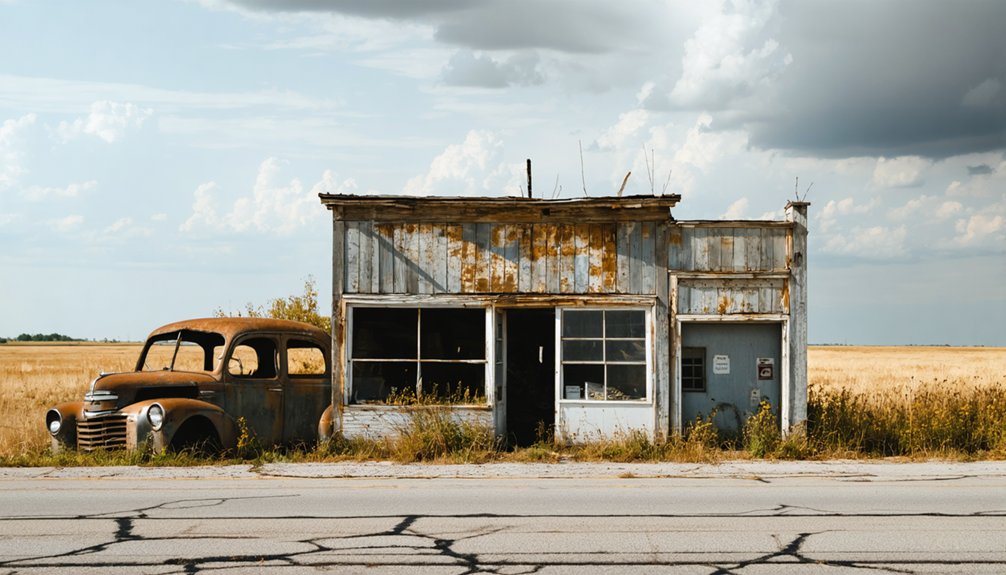
While Brownsville makes a compelling centerpiece for your Jackson County ghost town tour, several forgotten settlements nearby deserve a spot on your route. Urban decay and historical preservation tell powerful stories across this region, and combining stops maximizes your time on the road.
Here are four nearby ghost towns worth adding:
- Kaskaskia – Illinois’ original state capital, now nearly swallowed by the Mississippi River
- Equality – a salt-works town that boomed and faded alongside regional industry
- Jonesboro-area settlements – scattered remnants reflecting southern Illinois’ rural decline
- Old Shawneetown – a once-thriving river port abandoned after catastrophic flooding
Each site layers onto your understanding of how entire communities vanished. Pack your GPS, respect private property boundaries, and let southern Illinois’ forgotten history guide your freedom-driven adventure.
How to Build a Full Day Around Brownsville From Murphysboro
Murphysboro serves as your natural launchpad for a full day centered on Brownsville’s ghost town history, sitting just 3.25 miles east of the site.
Start your morning exploring Murphysboro‘s local museums, where historical artifacts connect directly to Brownsville’s courthouse fire and Dr. Conrad Will’s founding legacy.
By midday, head west on local roads, using Illinois Route 149 as your guide before turning 0.75 miles south toward the historical markers.
Spend the afternoon reading commemorative signs, absorbing local legends about the town’s rapid collapse after 1843, and scanning subtle foundation traces along the roadside.
Since much of the site sits on private land, respect boundaries while soaking in the atmosphere.
Wrap up your day by combining Brownsville with nearby Jackson County ghost towns you’ve already mapped out.
Frequently Asked Questions
Is the Brownsville Ghost Town Site Open to Visitors Year-Round?
You can visit Brownsville’s ghost town site year-round via public roads! Explore historical markers steeped in local legends and historical myths, but remember you’re steering through private land, so respect boundaries while uncovering this hauntingly rich Illinois history.
Are There Guided Tours Available at the Brownsville Ghost Town Site?
You won’t find formal guided tours or visitor amenities at Brownsville’s ghost town attractions, but you’re free to explore historical markers along public roads, uncovering this fascinating site’s rich past independently on your own terms.
Is Metal Detecting or Artifact Collecting Permitted at the Brownsville Site?
Like Indiana Jones, you’ll feel the urge to dig, but metal detecting regulations and artifact collection policies prohibit it here. You can’t collect on private land, so respect the site’s historical boundaries.
Was Brownsville Ever Considered for Restoration or Historical Preservation Efforts?
You’ll find that Brownsville’s historical significance is recognized through markers, but restoration challenges—private land ownership and no standing structures—have prevented full preservation efforts. Only archaeological records and roadside commemorations actively keep its memory alive.
Does the Brownsville Site Have Any Connection to Native American History?
The records don’t highlight direct Native American artifacts or Indigenous history at Brownsville, but the Big Muddy River region you’re exploring likely holds ancient connections worth investigating through local historical societies and archaeological research.
References
- https://drloihjournal.blogspot.com/2022/08/lost-towns-of-illinois-brownsville-illinois.html
- https://www.youtube.com/watch?v=BXYgW_veeVo
- https://kids.kiddle.co/Brownsville
- https://www.youtube.com/watch?v=X-k9IxjPWqc
- https://everafterinthewoods.com/8-forgotten-ghost-towns-in-illinois-that-are-quietly-fascinating/
- https://en.wikipedia.org/wiki/Brownsville