Planning a ghost town road trip to Amidon, North Dakota means heading to one of America’s smallest county seats, home to just 20 residents nestled near the rugged Badlands. You’ll wind through scenic highways, pass striking landmarks like White Butte, and uncover a town frozen in time since its 1930 peak. Pack your emergency kit, call ahead for dining at George’s or the Owl, and prepare for an unforgettable slice of frontier history—there’s far more to this story than meets the eye.
Key Takeaways
- Amidon, North Dakota, is America’s smallest county seat with only 20–23 residents, sitting near the Badlands and White Butte.
- Standard 2WD vehicles suffice for reaching Amidon via rural highways; pack emergency supplies, water, and navigation tools beforehand.
- Visit George’s and the Owl for simple local dining, but call ahead due to limited seating and irregular hours.
- Nearby landmarks include the HT Ranch, Logging Camp Ranch, Burning Coal Vein, and White Butte, preserving authentic frontier history.
- Summer offers ideal travel conditions; winter snow complicates access, while spring and fall provide milder weather with fewer visitors.
Why Amidon, North Dakota Is Worth the Ghost Town Drive?
Tucked along the edge of the Badlands where the Little Missouri River carves its way through Slope County, Amidon, North Dakota isn’t your typical road trip destination — and that’s exactly what makes it worth the drive.
With only 20 residents, it holds the remarkable title of America’s smallest official county seat, teetering on the edge of ghost town status. You’ll find original settlement-era buildings still standing, rich local folklore tied to the surrounding ranches, and sweeping Badlands scenery near White Butte.
It’s the kind of place that rewards vintage photography with every weathered façade and open horizon. If you crave authentic, off-the-beaten-path freedom over crowded tourist traps, Amidon delivers a raw, quietly compelling slice of American history you won’t find anywhere else.
How to Get to Amidon, North Dakota
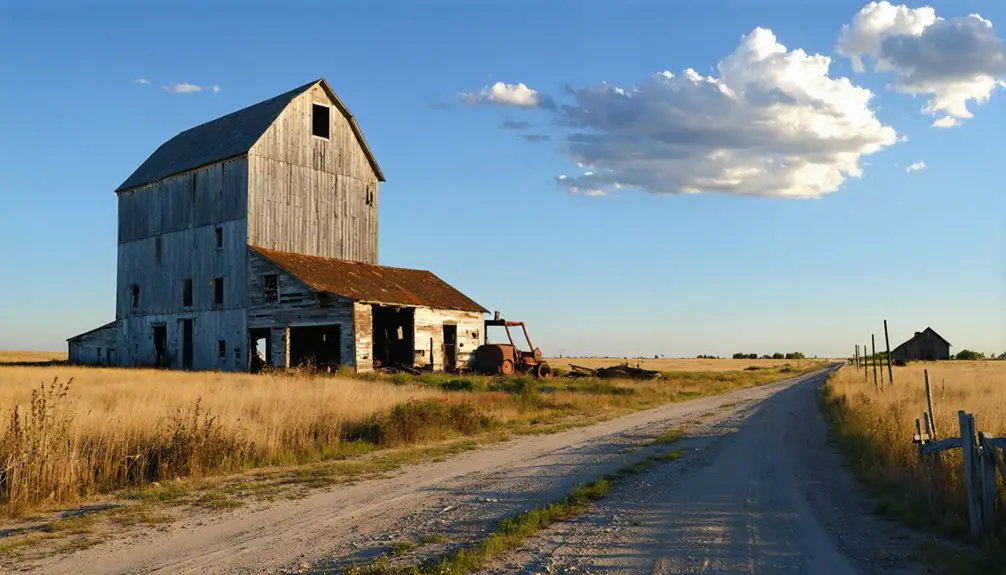
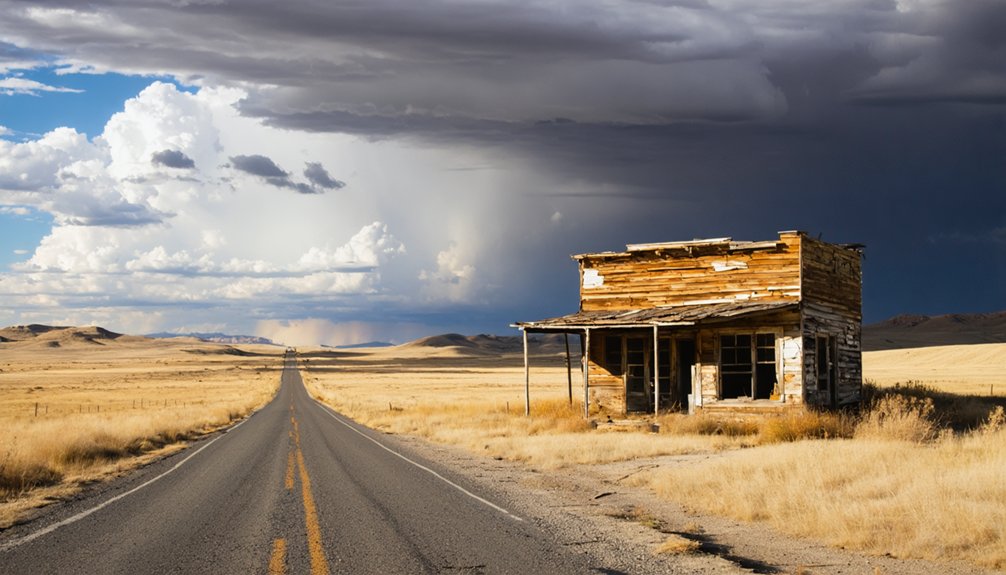
Getting to Amidon isn’t complicated, but it does require a willingness to embrace rural driving. You’ll connect through rural highways that wind past Theodore Roosevelt National Park, offering scenic viewpoints of the Badlands that reward every mile you commit to.
The roads to Amidon wind past the Badlands — every mile offering a scenic reward worth committing to.
Standard 2WD vehicles handle the roads just fine, so you don’t need a specialized rig.
Coming from the north, you’ll pass near the Little Missouri River, where local wildlife — deer, hawks, and prairie dogs — frequently appear roadside. Keep your eyes open and your speed measured.
The HT Ranch marks a reliable landmark as you approach town.
Pack supplies before you leave the last sizable town. Amidon offers almost nothing commercial, and that raw, self-reliant quality is exactly the freedom this drive delivers.
The Best Time of Year to Visit Amidon
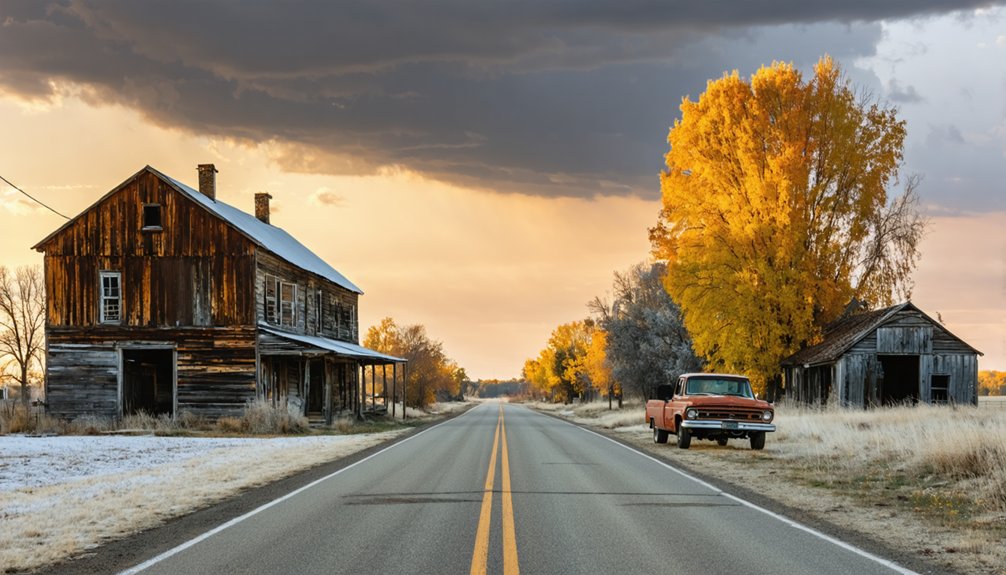
Amidon welcomes visitors year-round, but each season brings its own trade-offs you’ll want to weigh before hitting the road.
Winter dumps heavy snow across the Badlands, making rural roads challenging even for prepared drivers.
Summer turns warm and humid, but longer daylight hours give you more time to explore White Butte and scan the open terrain for local wildlife, including pronghorn and prairie birds common to the region.
Spring and fall offer milder weather patterns with fewer visitors, letting you experience the landscape’s raw solitude at its finest.
Since Amidon has no lodging or significant services, plan your supplies carefully regardless of when you go.
Every season reveals a different side of this near-ghost town worth discovering on your own terms.
From Boom Town to Near Ghost Town: Amidon’s Decline
When Amidon was founded in 1910, it carried the promise of a thriving agricultural future on the edge of North Dakota’s Badlands. By 1930, 162 residents called it home, and local folklore painted it as a resilient frontier community built to last.
Amidon rose from the Badlands in 1910, bright with agricultural promise and the stubborn confidence of frontier optimism.
Then the railroad plans collapsed during World War I, stripping away the town’s economic backbone almost overnight.
The population spiraled downward decade after decade. Today, only 20 to 23 residents remain, most over age 65, with barely any young families putting down roots. Wildlife sightings along the Little Missouri River now outnumber daily human activity.
The wooden courthouse, once a symbol of civic pride, fell to demolition in 2014. Amidon didn’t vanish completely, but it stands just one generation away from becoming another name on North Dakota’s ghost town list.
White Butte, Burning Coal Vein, and What’s Worth the Detour
Just outside Amidon, three natural landmarks make the detour genuinely worth your time. White Butte rises as North Dakota’s highest point, rewarding you with unobstructed scenic overlooks that stretch across the rugged Badlands. It’s an easy enough hike, but the view feels earned.
Burning Coal Vein adds a stranger dimension to your trip. Underground lignite seams have smoldered here for centuries, cracking the earth and baking surrounding clay into vivid brick-red scoria. Local legends say the land itself is restless, and standing there, you’ll understand why.
Chalky Butte rounds out the trio, offering pale, dramatic formations that contrast sharply with the surrounding landscape. Together, these three sites give you raw, unfiltered access to terrain that most travelers never bother to find.
What’s Left Standing in Amidon Today?
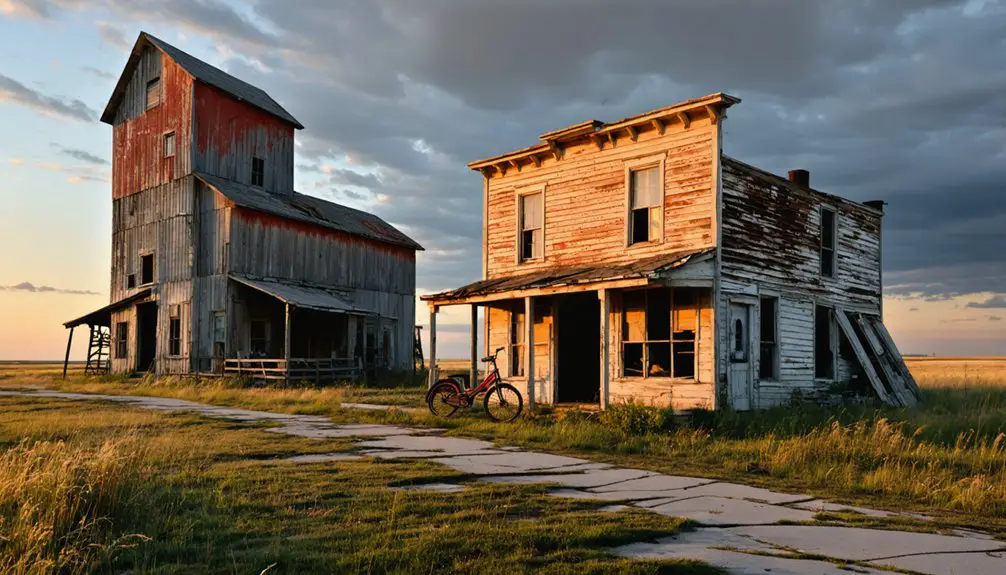
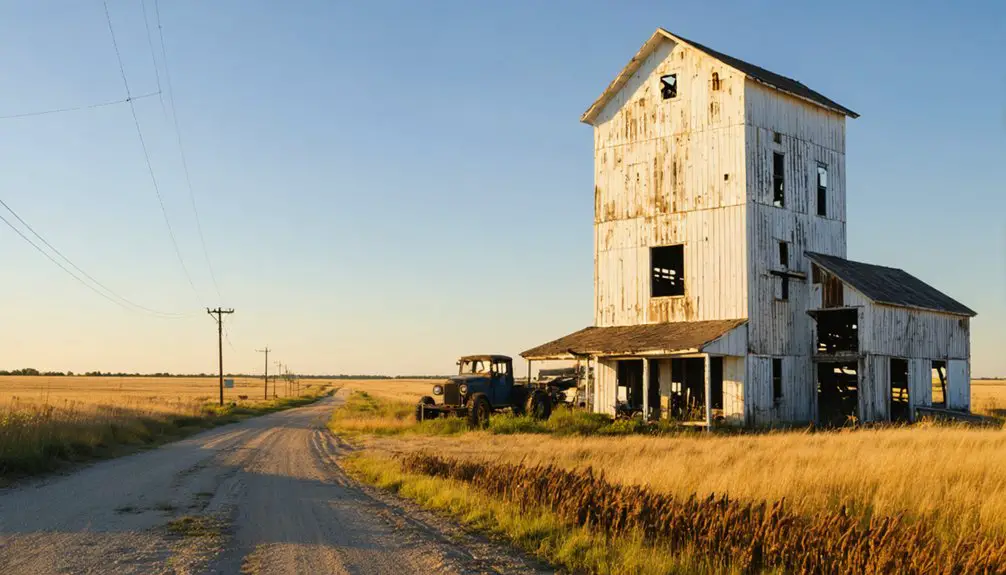
When you walk through Amidon, you’ll find several original buildings still standing from the town’s 1910 founding, giving the streets an eerie sense of frozen time.
The nearby HT Ranch and Logging Camp Ranch offer well-preserved architectural landmarks worth a quick detour from the main drag.
However, you’ll notice gaps where history once stood — most significantly the wooden courthouse, demolished in 2014, leaving the town’s built legacy a little thinner than it used to be.
Original Buildings Still Standing
Though time and neglect have claimed many of Amidon’s earliest structures, a handful of original buildings still stand, giving the town its unmistakable early settlement character. You’ll notice the historical architecture immediately — weathered facades that speak to generations of rural resilience.
Preservation challenges, however, have taken their toll, most *particularly* the 2014 demolition of the original wooden courthouse.
Still, several landmarks reward the curious traveler:
- HT Ranch — a historically preserved property near Amidon, showcasing authentic frontier-era construction
- Logging Camp Ranch — another preserved site reflecting the region’s working heritage
- Occupied original buildings — some early structures remain lived-in, preventing total decay
That continued habitation is what separates Amidon from a full ghost town, making your visit feel genuinely alive rather than purely archaeological.
Historic Ranch Landmarks Nearby
Beyond the town’s occupied structures, the surrounding landscape holds its own architectural story through two ranches that have outlasted the boom-and-bust cycles that emptied so much of the region. The historically preserved HT Ranch and Logging Camp Ranch stand as tangible reminders of the working frontier life that once defined this corner of North Dakota.
You’ll find both sites sitting within a landscape that rewards slow exploration. Scenic overlooks reveal the Badlands stretching endlessly in every direction, and wildlife sightings — mule deer, pronghorn, and prairie birds — are common along the rural roads connecting these landmarks.
These ranches aren’t museum pieces behind velvet ropes; they’re embedded in active, open country. That rawness is exactly what makes reaching them feel like a genuine discovery rather than a scheduled stop.
Lost Structures Over Time
Amidon’s built history has been whittled down steadily by demolition and decay, but what remains still tells a story worth reading in person. Urban decay claimed the wooden courthouse in 2014, stripping away one of the town’s most defining early structures.
You’ll notice gaps where buildings once stood, silent evidence of a community that never fully realized its potential.
Still, preservation efforts have kept portions of Amidon’s character alive:
- Original settlement-era buildings still occupy parts of town
- Some structures remain actively lived in, slowing further loss
- The surrounding historic ranches anchor the area’s architectural identity
Walk these streets and you’re reading a timeline written in weathered wood and empty lots. What’s left standing rewards the curious traveler willing to look closely.
Where to Eat in Amidon and What to Expect
Despite its tiny population, Amidon has a couple of dining options that punch above their weight in character. George’s and the Owl are the town’s go-to spots, drawing not just hungry travelers but paranormal enthusiasts chasing the area’s eerie reputation.
Don’t expect elaborate menus or fine dining — these places offer simple, unpretentious local cuisine that fits the rugged Badlands setting perfectly.
You’ll likely rub elbows with longtime locals who know everyone by name. Seating is limited, hours may be irregular, so call ahead if possible.
These dining options aren’t just about food — they’re part of Amidon’s living history. Grabbing a meal here means you’re participating in the survival story of America’s smallest county seat, one bite at a time.
HT Ranch, Logging Camp Ranch, and Historic Stops Nearby
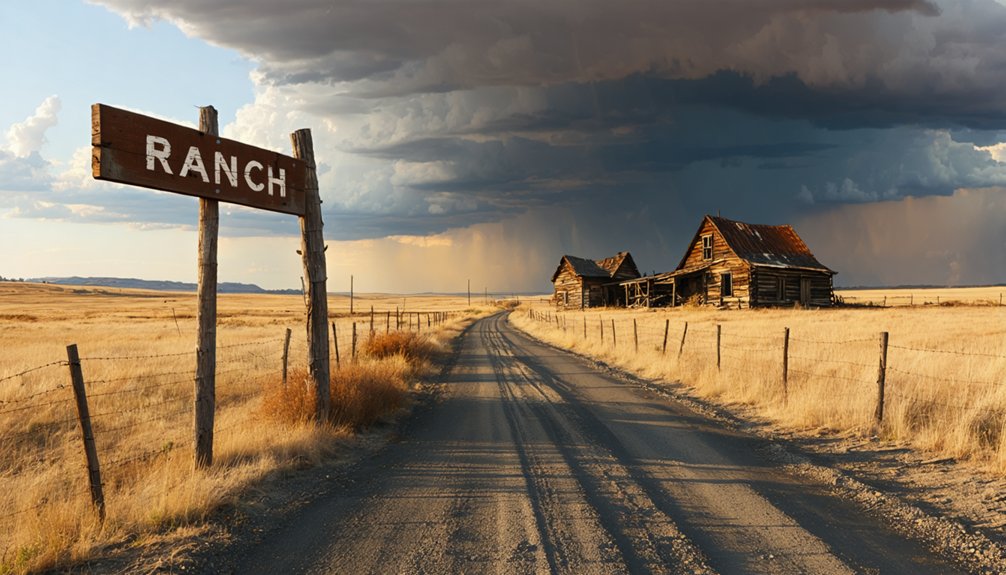
Just outside Amidon, you’ll find two historic ranches that add serious depth to your road trip. The HT Ranch stands as a key architectural landmark, preserving the rugged character of early settlement life in the Badlands.
Logging Camp Ranch also sits nearby, giving you another authentic glimpse into the region’s working pioneer past.
HT Ranch’s Historical Significance
Sitting near Amidon, the historically preserved HT Ranch offers one of the most tangible connections to the region’s early ranching heritage. Architectural preservation efforts here keep the past alive, letting you walk through spaces where ranchers once built their lives from raw land.
Local folklore woven into the ranch’s story adds depth beyond what any museum display could offer.
When you visit, you’ll discover:
- Structures that reflect authentic frontier-era construction techniques
- Stories tied to the ranching culture that shaped Slope County’s identity
- A landscape largely unchanged from its early settlement days
You don’t need a guided tour to feel the weight of history here. The ranch speaks for itself, making it an essential stop on any honest road trip through this remote, unapologetic corner of North Dakota.
Logging Camp Ranch Nearby
Tucked alongside HT Ranch in the landscape surrounding Amidon, Logging Camp Ranch rounds out a pair of historic stops that reward curious road trippers willing to explore beyond the main pull of Theodore Roosevelt National Park. Both sites sit within reach of Amidon’s rural highways, letting you move freely between landmarks without backtracking.
As you walk the grounds, you’ll encounter traces of early ranching life etched into weathered structures that locals still reference when sharing town legends about Slope County’s rugged settlers.
Local wildlife roams the surrounding Badlands terrain, so keep your eyes open for deer, hawks, and prairie dogs as you explore.
These two ranches together paint a fuller picture of the land’s history than any single stop could offer on its own.
What to Pack for the Drive Out to Amidon?
Since Amidon sits on the edge of the Badlands with limited local services and long stretches of rural highway between you and the nearest town, packing smart isn’t optional — it’s essential. Travel safety starts before you leave the driveway, and your packing essentials should reflect the region’s remoteness.
Packing smart isn’t optional in Amidon — the Badlands’ remoteness demands it before you ever leave the driveway.
Toss these into your vehicle before heading out:
- Emergency kit — jumper cables, a spare tire, and basic tools handle the unexpected on rural 2WD roads
- Water and snacks — no corner stores exist nearby, so fuel yourself independently
- Navigation tools — cell service is unreliable, making a paper map or offline GPS non-negotiable
Warm summers and snowy winters mean layering clothing matters too. Pack light, pack purposefully, and you’ll move through this landscape on your own terms.
Frequently Asked Questions
Is Amidon, North Dakota Still Considered an Official U.S. County Seat?
Yes, Amidon’s still an official U.S. county seat! You’ll discover fascinating historical landmarks and savor local cuisine while exploring this freedom-loving town, proudly holding its title as America’s smallest county seat with just 22–23 residents.
How Many Residents Currently Live in Amidon, North Dakota Today?
You’ll find roughly 20–23 residents calling Amidon home today. While exploring its historical landmarks, you’re free to savor local cuisine at George’s or the Owl, experiencing this remarkably tiny, spirited community that’s defying ghost town status!
Are There Any Paranormal or Ghost Hunting Events Held in Amidon?
Tiny town, big mystery — you won’t find formal paranormal investigations or ghost hunting events in Amidon, but locals at George’s and the Owl already attract enthusiasts craving that eerie, wide-open freedom of North Dakota’s haunted history.
What Is the Average Property Value for Homes in Amidon, North Dakota?
You’ll find Amidon’s average home value sits around $75,000, reflecting modest real estate trends shaped by historical architecture and rural isolation. It’s an affordable slice of American freedom where you can own a genuine piece of frontier history!
When Was Amidon, North Dakota Officially Founded as a Town?
With only 20 residents today, you’ll find Amidon’s ghost town history traces back to 1910, when pioneer settlement patterns shaped this agricultural community — a founding that’s lasted over a century despite dramatic population decline.
References
- https://freepages.history.rootsweb.com/~gtusa/usa/nd.htm
- https://www.youtube.com/watch?v=gNiAASCDtsI
- https://www.kxnet.com/news/top-stories/ghost-towns-of-north-dakota-the-past-present-and-future-of-arena/
- https://www.ghosttowns.com/states/nd/amidon.html
- https://en.wikipedia.org/wiki/Amidon
- https://slopecountynd.gov/resident/city_of_amidon.php