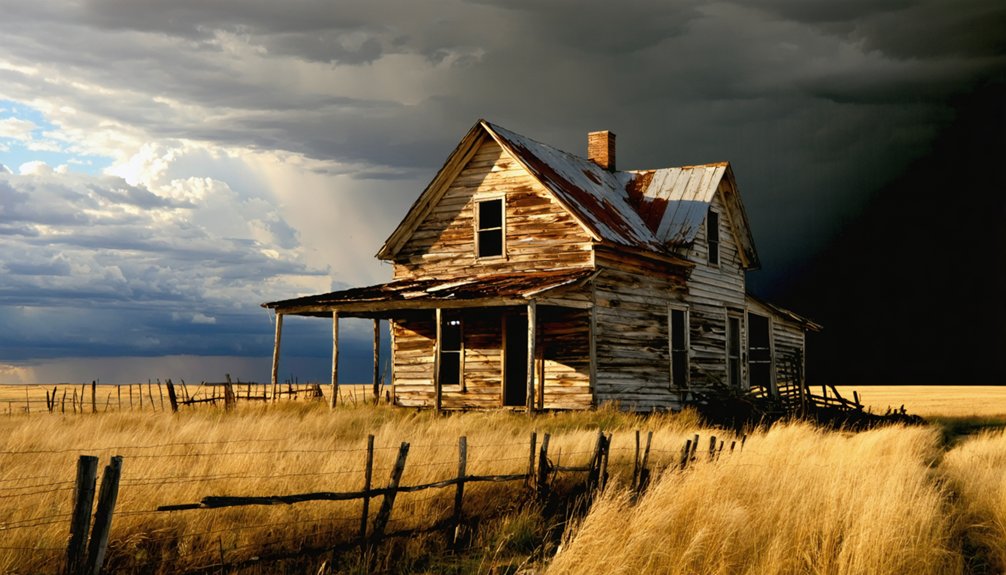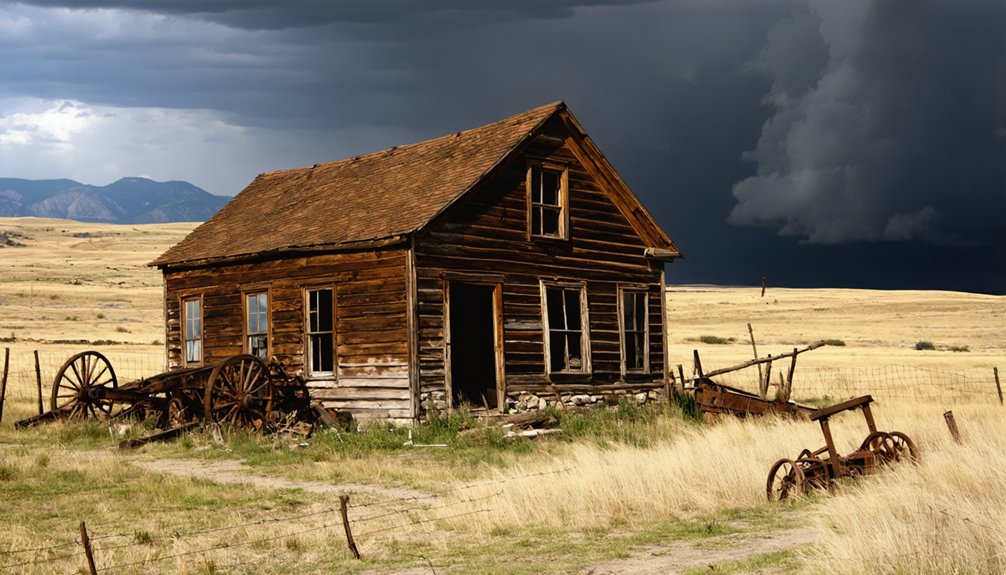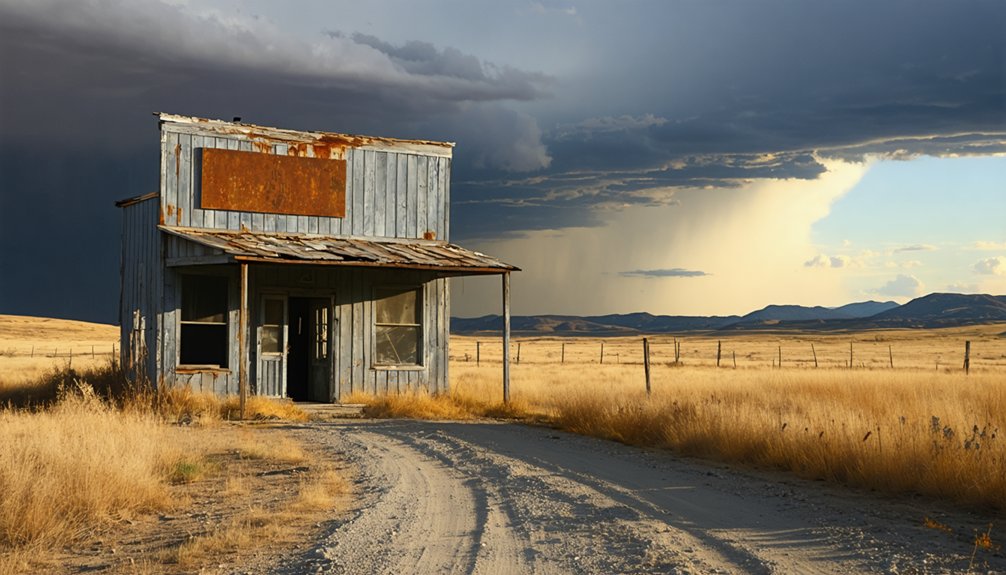
Planning a ghost town road trip to Maurice, South Dakota means embracing a different kind of history hunt. You won’t find crumbling saloons or weathered storefronts—Maurice was absorbed by the Homestake Mine’s industrial infrastructure, erasing its original community footprint entirely. It’s located near Lead and Deadwood in Lawrence County, so you’ll want detailed maps and a high-clearance vehicle for unpaved roads. Stick around, and you’ll uncover everything you need to make this road trip unforgettable.
Key Takeaways
- Maurice, located near Lead and Deadwood in Lawrence County, requires intentional planning using detailed maps, as it lacks well-marked tourist routes.
- The site has no standing structures; visitors must interpret the landscape by understanding its industrial and mining history.
- Use unpaved county and forest roads to reach Maurice, requiring high-clearance vehicles and confirmed permissions for private or restricted land.
- Visit during spring or fall for optimal conditions, as winters close roads and summers bring crowds.
- Combine Maurice with nearby ghost towns like Carbonate, Galena, and Roubaix for a comprehensive Lawrence County historical road trip.
What Kind of Ghost Town Is Maurice, South Dakota?
Maurice, South Dakota isn’t your classic ghost town full of weathered storefronts and crumbling saloons — it’s something more industrial and, in some ways, more telling. What you’ll find here isn’t cultural preservation in the traditional sense, with restored buildings frozen in time for curious visitors.
Instead, Maurice represents a former town site absorbed entirely by industrial purpose — specifically, the power plant that once served the legendary Homestake Mine. The original settlement footprint has disappeared beneath infrastructure rather than decay.
That distinction matters when you’re planning your route. Unlike tourist attractions built around dramatic ruins, Maurice asks you to read the landscape differently, tracing what’s gone by understanding what replaced it. It’s a ghost town you experience through history and context, not through crumbling walls.
The Homestake Mine Connection That Shaped Maurice
When you visit Maurice, you’re stepping onto ground that the Homestake Mine fundamentally claimed and transformed.
The mine’s operation demanded serious power infrastructure, and the original settlement gave way to a functional power plant serving that industrial need.
What once existed as a community now serves as evidence of how thoroughly a major mining operation could reshape a place.
Homestake Mine’s Industrial Legacy
Few ghost towns carry an industrial footnote quite like Maurice. When the original settlement faded, the land didn’t simply go quiet. Instead, it transformed into something functional — a power plant serving the Homestake Mine, one of the most significant gold-mining operations in American history.
That shift from town to utility site represents a fascinating form of industrial transformation. You won’t find crumbling storefronts or weathered homesteads here.
What replaced Maurice speaks to how relentlessly the mining industry reshaped the Black Hills landscape.
Historical preservation looks different at a place like Maurice. There’s no museum or marker trail — just land repurposed to serve an industrial giant.
For road-trippers who appreciate layered history, that contrast between what was and what became makes Maurice genuinely worth the detour.
Power Plant Replaced Settlement
How does a ghost town stop being a ghost town? At Maurice, the answer involves industrial reuse. When the original settlement faded, Homestake Mine stepped in and repurposed the land for its power plant operations. That urban transformation erased much of what once stood here, replacing wooden structures and community footprints with industrial infrastructure.
You won’t find crumbling storefronts or weathered homesteads waiting for your camera. What you’ll find instead is a landscape reshaped by purpose — a site that powered one of America’s most significant gold-mining operations.
Maurice teaches you something most ghost town guides skip: abandonment doesn’t always mean preservation. Sometimes industry moves in and rewrites the story entirely. That shift makes Maurice a genuinely useful stop for understanding how Black Hills communities lived, declined, and transformed.
How Gold Mining Built and Abandoned Lawrence County’s Towns
When you trace Lawrence County’s history, you’ll find that gold discovery in the Black Hills during the 1870s triggered an explosive wave of settlement, drawing thousands of miners, merchants, and speculators into the region almost overnight.
Towns like Maurice didn’t grow slowly — they burst into existence around economic opportunity, built on the assumption that the ore would never run out. Once extraction slowed or operations consolidated, however, the people left just as fast as they arrived, leaving behind empty lots, repurposed land, and the quiet evidence of communities that once thrived.
Gold Rush Town Origins
Gold transformed Lawrence County almost overnight, drawing thousands of prospectors, merchants, and laborers into the Black Hills after the 1870s gold rush ignited the region. These weren’t slow-growing settlements — they exploded into existence wherever ore promised fortune.
Four realities shaped every town born from that rush:
- Strikes created instant communities where nothing existed days before.
- Exhausted veins emptied those same communities just as fast.
- Historic preservation became impossible when survival meant moving on.
- Industrial transformation swallowed remaining sites, erasing original footprints entirely.
You’re retracing lives built on risk and abandoned through necessity. Lawrence County’s ghost towns aren’t failures — they’re proof that people chased freedom boldly, staked everything on uncertain ground, and moved forward when the land stopped delivering. Maurice stands as one powerful example.
Mining Decline And Abandonment
The same ore veins that built Lawrence County’s towns ultimately destroyed them. When gold yields dropped, miners moved on, merchants followed, and communities hollowed out almost overnight. Towns that once hummed with saloons, supply stores, and boarding houses fell silent within a generation.
Maurice followed a similar trajectory, but with a twist — rather than fading into empty fields and rotting timber, the site absorbed modern industry. The Homestake Mine claimed the land for its power plant, making Maurice a case study in land reuse rather than romantic ruin.
You won’t find crumbling storefronts here. Instead, you’ll find a landscape reshaped by industrial necessity, where a former settlement became infrastructure. That transformation tells a story just as compelling as any ghost town with standing walls.
Maurice and the Larger Pattern of Black Hills Boom-and-Bust Towns
Maurice didn’t vanish in isolation—it followed a pattern that played out across hundreds of Black Hills communities. The region’s cultural significance lies in these layered stories of ambition, labor, and loss. Preservation challenges make many of these towns nearly invisible today.
You’re traveling through a landscape shaped by four shared forces:
- Gold rushes pulled thousands of hopeful settlers into remote terrain
- Mining companies built towns fast, then abandoned them faster
- Infrastructure needs repurposed sites like Maurice instead of preserving them
- Economic collapse left only silence where streets once ran
When you drive through Lawrence County, you’re not just sightseeing—you’re reading a landscape written by boom-and-bust cycles. Maurice fits that story precisely, connecting you to a region-wide history that still shapes the Black Hills today.
How to Find Maurice, South Dakota on Your Black Hills Route
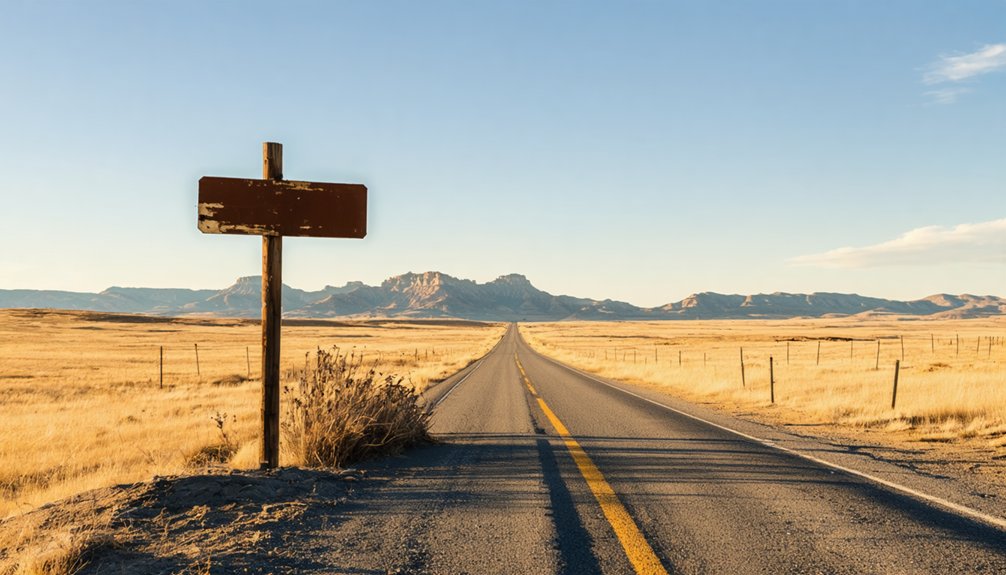
Finding Maurice takes a bit of intentional planning, since it sits within Lawrence County in the western Black Hills corridor rather than along a well-marked tourist route. You’ll want to anchor your route around Lead and Deadwood, two nearby towns where cultural preservation efforts keep Black Hills mining history visible and accessible.
From there, Maurice fits naturally as a short detour rather than a primary stop. Use county road maps or detailed ghost-town guides rather than relying solely on standard navigation apps, which often overlook former town sites absorbed by urban development or industrial use.
The Homestake Mine connection gives you a geographic reference point worth researching before you go. Pairing Maurice with other Lawrence County stops makes your route more rewarding and helps you understand how the broader landscape shifted over time.
What You’ll Actually See at the Maurice Town Site Today
Once you’ve figured out how to reach Maurice, the next natural question is what actually greets you when you get there — and the honest answer is that this isn’t a ghost town frozen in time with crumbling storefronts or weathered wood structures. Modern redevelopment claimed this site long ago.
What you’re really standing near is the Homestake Mine’s power plant footprint — industrial infrastructure that replaced the original settlement entirely.
Here’s what the landscape communicates:
- Cultural preservation gave way to utility and industrial function
- The original town boundaries are effectively invisible today
- No confirmed standing structures mark the former community
- The land itself tells the story of boom, erasure, and repurposing
You’re not sightseeing ruins — you’re reading a landscape that chose survival over nostalgia.
The Best Ghost Towns Near Maurice in Lawrence County
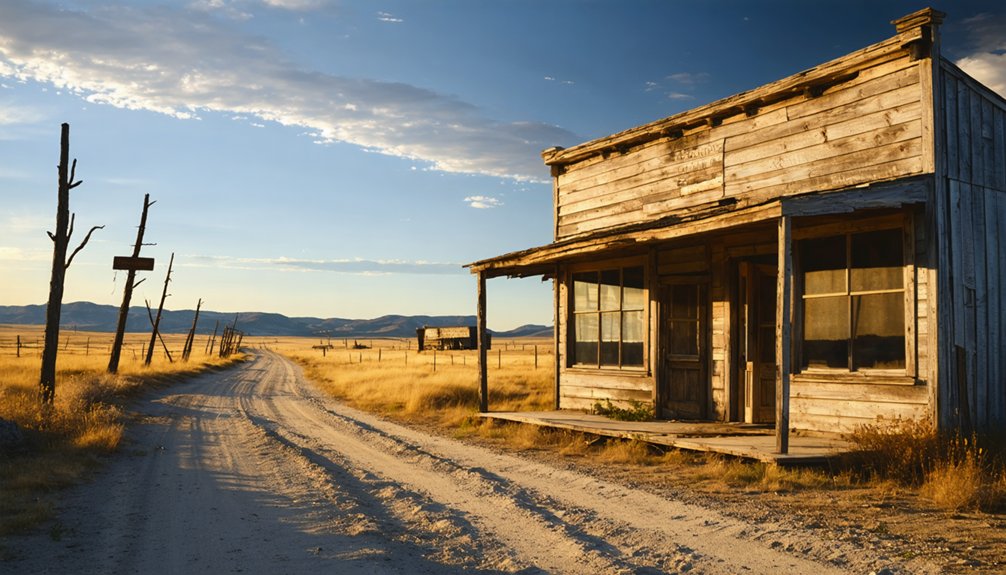
Lawrence County holds far more ghost towns than Maurice alone, and pairing your stop with nearby mining-era sites turns a single visit into a full historical route. Many of these towns rose and fell on the same gold rush economics that shaped Maurice, so you’ll find strong thematic connections as you move through the county.
Planning your route by clustering sites along Lawrence County’s scenic byways lets you cover more ground while building a clearer picture of how Black Hills communities boomed, faded, and transformed.
Nearby Lawrence County Towns
Because Maurice works best as one stop among many, you’ll want to know which other Lawrence County ghost towns deserve a spot on your itinerary. The Black Hills hold remarkable sites where cultural significance runs deep and preservation efforts tell hard, honest stories.
- Carbonate – A silver-rush remnant that whispers of overnight fortunes lost just as fast.
- Galena – Once a thriving mining hub, now a quiet shell carrying real architectural bones.
- Englewood – A railroad town swallowed by time, where you’ll feel the silence pressing in.
- Roubaix – A resort and mining hybrid that shows how communities reinvented themselves desperately before vanishing.
Cluster these stops together, move freely between them, and you’ll piece together the full, unfiltered arc of Black Hills boom-and-bust history.
Mining History Ghost Towns
Mining built the Black Hills and then abandoned them, leaving behind a chain of ghost towns that you can trace directly through Lawrence County’s rugged terrain. Each site carries a story of boom, collapse, and environmental impact that reshaped the land long after miners moved on.
You’ll find former settlements where industrial activity stripped hillsides, redirected waterways, and permanently altered the landscape. Cultural preservation efforts help explain what once stood in places now swallowed by forest or repurposed for infrastructure.
Maurice fits naturally into this pattern, its original footprint replaced by the Homestake Mine‘s power plant rather than left as open ruins. Exploring these mining-era ghost towns gives you a sharper, more honest picture of how the Black Hills were won, used, and ultimately transformed.
Planning Your County Route
Tracing Lawrence County’s ghost towns by route rather than by individual stop turns a loose collection of mining-era sites into a coherent story. Maurice fits naturally into a circuit that connects industrial history with cultural preservation and modern tourism.
Build your route around these four emotional anchors:
- Start at Maurice — see how a town becomes a power plant, invisible but still working
- Push toward Deadwood — feel the weight of boom-era ambition still hanging over every street
- Detour through Lead — watch mining legacy reshape itself into modern identity
- End at a quieter ruin — let the silence of a fully abandoned site complete the contrast
You’re not just driving roads. You’re reading a landscape that refuses to forget what it once was.
Building Your Lawrence County Ghost Town Road Trip Route
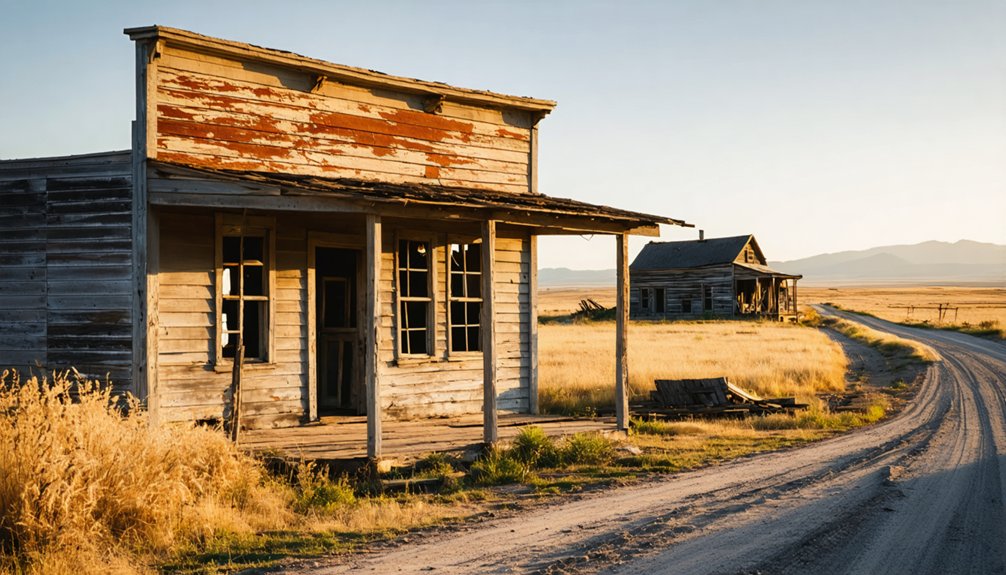
Lawrence County packs one of the densest concentrations of ghost towns in the entire Black Hills, so you’ve already got a strong foundation for a multi-stop itinerary the moment you decide to explore it. Cluster your route around mining history and scenic landscapes, moving between sites that show different stages of boom and decline.
Maurice fits naturally as a quick stop that illustrates industrial reuse, while other nearby towns offer more visible remnants tied to historical preservation efforts. Use county roads to connect stops efficiently, keeping flexibility in your schedule since some sites require short hikes or unmarked turnoffs.
Mixing more accessible landmarks with off-the-beaten-path locations gives your route real depth, letting you experience Lawrence County’s layered story rather than just checking destinations off a list.
Road Conditions, Access, and Seasonal Timing for Black Hills Ghost Towns
Once you’ve mapped out your Lawrence County route, the next thing you’ll want to nail down is how you’re actually going to reach these sites. Black Hills ghost towns carry deep cultural significance, but preservation challenges mean access isn’t always straightforward.
- Spring and fall offer the best windows — summers draw crowds, winters close roads entirely.
- Unpaved forest roads require high-clearance vehicles; don’t assume your sedan handles gravel washouts.
- Some sites sit on private or restricted land — always verify access rights before you drive out.
- Weather shifts fast in the Hills — pack layers, check forecasts, and carry emergency supplies.
Freedom means exploring on your own terms, but smart preparation keeps that freedom from turning into a rescue call.
Where to Stay Near Maurice and the Lawrence County Corridor
Staying close to Maurice means you’re already inside one of the Black Hills’ most historically loaded corridors, and Lawrence County gives you solid lodging options that keep you near the action.
Deadwood sits at the heart of this zone, offering everything from historic hotels to modern stays, all surrounded by cultural preservation efforts that keep the mining era alive.
Lead, just minutes from the Homestake Mine site, puts you directly inside local legends territory where miners’ stories still echo through the streets.
Smaller cabins and campgrounds scatter throughout the corridor if you prefer open skies over town amenities.
Whichever base you choose, you’ll wake up within easy striking distance of Maurice and the surrounding ghost-town circuit that defines this stretch of western South Dakota.
Frequently Asked Questions
Is Maurice, South Dakota Open to Visitors Year-Round?
You can visit Maurice year-round, but it’s not a traditional attraction. You’ll find hidden attractions tied to industrial history, and local legends of mining’s boom-and-bust era await your exploration along this open Black Hills corridor.
Are There Any Entry Fees to Visit the Maurice Town Site?
With over 600 Black Hills historic ghost towns, you won’t pay entry fees to explore Maurice’s town site. You’ll enjoy free photography opportunities while uncovering its fascinating Homestake Mine industrial legacy independently.
Can You See the Homestake Mine Power Plant From Public Roads?
You’ll likely spot the Homestake Mine location and catch glimpses of power plant visibility from nearby public roads, but confirmed access points aren’t well-documented, so explore Lawrence County’s open byways and let your curiosity guide you.
Is Maurice, South Dakota Suitable for Children on a Road Trip?
Maurice works well for kids! You’ll drive through scenic Black Hills landscapes, explore outdoor activities nearby, and stop for local dining along the way — making it an engaging, freedom-filled family detour without overwhelming little ones.
Are There Any Guided Tours Specifically Covering Maurice’s History?
🗺 No dedicated guided tours currently cover Maurice’s historical landmarks, but you’ll uncover local legends by visiting nearby Homestake Mine attractions, where knowledgeable guides connect you to the broader Black Hills mining story surrounding this transformed ghost town site.
References
- https://www.youtube.com/watch?v=PgjxhfJ9yhQ
- https://en.wikipedia.org/wiki/List_of_ghost_towns_in_South_Dakota
- https://blackhillsatvdestinations.com/ghost-towns/
- https://www.travelsouthdakota.com/trip-ideas/abandoned-beauty-ghost-towns-structures-south-dakota
- https://www.powderhouselodge.com/black-hills-attractions/fun-attractions/ghost-towns-of-western-south-dakota/
- https://kids.kiddle.co/List_of_ghost_towns_in_South_Dakota
- https://www.sdpb.org/rural-life-and-history/2023-08-21/some-black-hills-ghost-towns-and-their-origins
- https://www.sdhspress.com/journal/south-dakota-history-2-2/some-black-hills-ghost-towns-and-their-origins/vol-02-no-2-some-black-hills-ghost-towns-and-their-origins.pdf
- https://www.youtube.com/watch?v=iLdeP_SBrJc