Planning a ghost town road trip to Watervale, Michigan means driving scenic M-22 to one of the Great Lakes region’s most remarkably preserved lumber-era villages. Founded in 1892 and nearly abandoned after the Panic of 1893, Watervale’s 16 original buildings still stand across a 12.5-acre National Register historic district. You can actually sleep inside these century-old structures at the Inn at Watervale. Stick around, and you’ll uncover everything you need to experience this living piece of Michigan history firsthand.
Key Takeaways
- Watervale, located at 1244 Watervale Road near Arcadia on M-22, preserves 16 original lumber-era buildings dating from 1892 to 1927.
- The Inn at Watervale operates as a working resort, offering accommodations inside historic boarding houses and cottages with Lower Herring Lake access.
- September is the ideal visit time, balancing good weather, smaller crowds, and full access before the inn closes in October.
- Pair the trip with nearby ghost towns like Fayette and Central Mine for a comprehensive Michigan industrial history road trip.
- Follow M-22 through Onekama and Arcadia for scenic Lake Michigan bluff views before turning onto Watervale Road.
What Made Watervale a Ghost Town in the First Place?
When you trace Watervale’s origins back to the early 1890s, you’ll find a classic Michigan lumber story. Leo F. Hale and the Watervale Manufacturing Company built the settlement around 1892–1893 on Lower Herring Lake’s south shore, complete with a sawmill, post office, general store, and worker housing.
The railroad connected the town to a Lake Michigan pier, making it a functional, self-contained operation.
Then the Panic of 1893 hit. The company went bankrupt, the lumber economy collapsed, and economic decline swept through the region fast. By 1900, Watervale sat nearly empty.
Unlike many similar towns that succumbed to full urban decay, most of its buildings survived. That structural survival is exactly what makes Watervale worth putting on your road trip map today.
How a Doctor Rescued an Abandoned Lumber Village?
When you look around Watervale today, you can thank one man for saving it from complete disappearance. In 1917, Dr. Oscar H. Kraft purchased the nearly abandoned village and began restoring its weathered buildings for family use and guests.
His vision transformed a bankrupt lumber town into a working resort that opened its doors to the public just one year later in 1918.
Kraft’s 1917 Purchase
By 1917, Watervale had sat quietly abandoned for nearly two decades — its sawmill silent, its worker cottages empty, its post office a relic of a boom that never lasted.
Then Dr. Oscar H. Kraft arrived and saw something others had overlooked: potential.
Kraft purchased the entire property and immediately began restoring its weathered structures. Rather than demolishing what remained, he honored the original layout, turning forgotten lumber-era buildings into livable spaces.
His commitment to historical preservation transformed a ghost town into one of Michigan’s most distinctive tourist attractions.
Restoring The Abandoned Village
Though the buildings still stood, Watervale had lost its identity — a frozen skeleton of a town that the lumber economy had built and abandoned in the same breath. Dr. Kraft didn’t demolish what remained; he listened to it.
He restored the boarding house, adapted structures into cottages, and opened the property to guests by 1918.
His approach balanced historical preservation with practical tourism development — keeping original layouts intact while making the village livable again. You can still walk that same footprint today and feel the lumber era beneath your feet.
Kraft’s restoration didn’t sanitize Watervale’s past; it honored it. What could’ve rotted into obscurity became a functioning resort that preserved one of Michigan’s most complete ghost town landscapes.
What’s Still Standing at Watervale Today?
When you visit Watervale today, you’ll find 16 buildings still standing within the 12.5-acre historic district. Many of these buildings date back to the original 1892 lumber-town construction.
You can walk past the restored boarding house, post office, schoolmaster’s house, and several cottages, all of which retain their late-19th-century character along Watervale Road.
The Inn at Watervale continues operating as the heart of the property, giving you a rare chance to stay overnight inside a piece of Michigan’s lumber history.
Original Buildings Still Standing
What makes Watervale genuinely rare among Michigan ghost towns is that most of its original buildings are still standing. Unlike sites swallowed by time, Watervale survived preservation challenges through careful stewardship and adaptive reuse.
Local legends of its lumber-era past feel tangible when you’re walking among structures built in the 1890s.
You’ll find these original buildings still intact:
- Former general store
- Lumber-era post office
- Original boarding house
- Schoolmaster’s house
- Historic worker cottages
The 16 structures within the 12.5-acre historic district date between 1892 and 1927, earning recognition on the National Register of Historic Places.
You’re not viewing ruins here — you’re stepping inside a preserved lumber town that actually survived. That’s something few ghost town stops anywhere in Michigan can honestly offer.
Restored Historic Structures
How well has Watervale held up after more than a century? Remarkably well. When you walk the grounds, you’ll encounter restored structures that reflect both historic preservation efforts and the architectural styles of Michigan’s lumber era.
The boarding house, post office, schoolmaster’s house, and several original cottages still stand in near-original condition — a rare survival story in Michigan ghost town history.
Dr. Kraft’s 1917 purchase set everything in motion, and subsequent stewards have honored that commitment by maintaining the 12.5-acre site‘s integrity. You’re not looking at reconstructions or modern imitations. These are authentic buildings, carefully tended, that tell a direct story about 1890s industrial life.
Visiting Watervale means walking through living history rather than simply reading about what once existed.
The Inn Today
At the center of Watervale’s surviving landscape, the Inn at Watervale continues operating as a working resort — not a museum, not a reconstruction, but an actual living destination where guests still book stays among buildings that date back to the 1890s. Historic preservation kept this place alive, and you’ll feel that commitment the moment you arrive.
Whether you’re chasing local ghost stories or simply craving an escape rooted in real history, the inn delivers:
- Original lumber-era boarding house converted into guest rooms
- Former post office still standing along Watervale Road
- Cottages open through New Year’s Day
- Lakefront access on Lower Herring Lake
- A 12.5-acre historic district surrounding your stay
You’re not visiting ruins — you’re sleeping inside them.
How to Get to Watervale on M-22?
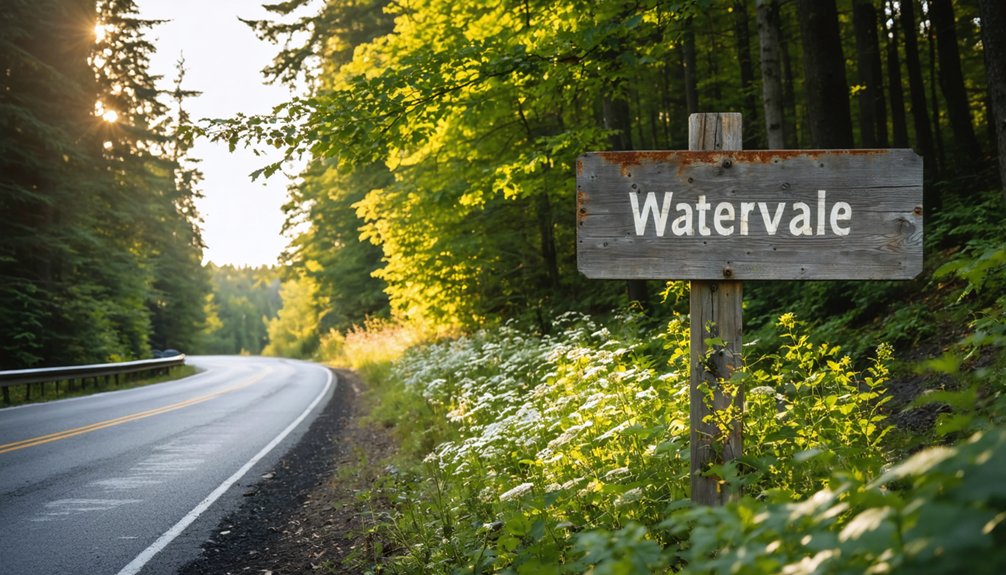
Tucked along Michigan’s scenic Lake Michigan shoreline, Watervale sits just off M-22 near Arcadia, making it a natural addition to any northern Michigan road trip. Follow M-22 through Onekama and Arcadia, then turn onto Watervale Road. The inn’s address is 1244 Watervale Road, so navigation is straightforward.
M-22 itself rewards the drive with scenic viewpoints overlooking Lake Michigan, bluffs, and forested stretches that build anticipation before you arrive. You’re not just reaching a destination — you’re moving through a landscape shaped by the same natural forces that once drew loggers and settlers here.
Once you turn off M-22, Watervale’s historical preservation becomes immediately visible. The original lumber-town footprint lines Watervale Road, offering a rare glimpse of Michigan’s 19th-century industrial past still standing in nearly original condition.
What the Inn at Watervale Actually Offers Guests Today?
When you arrive at Watervale, you’re stepping into a working resort that’s preserved the bones of a 19th-century lumber town. The Inn at Watervale lets you roam freely through history while enjoying modern comfort along Lower Herring Lake’s shoreline.
Here’s what you’ll find waiting:
- Historic cottages and inn rooms converted from original lumber-era structures
- Lakefront scenic viewpoints overlooking Lower Herring Lake and surrounding forest
- The boarding house and post office restored and repurposed for guest use
- Local cuisine served through the inn’s dining offerings using regional ingredients
- Seasonal availability running through October for the inn, with cottages open until New Year’s Day
You’re not just booking a room — you’re occupying a piece of Michigan’s vanished industrial past.
Other Michigan Ghost Towns to Pair With Watervale?
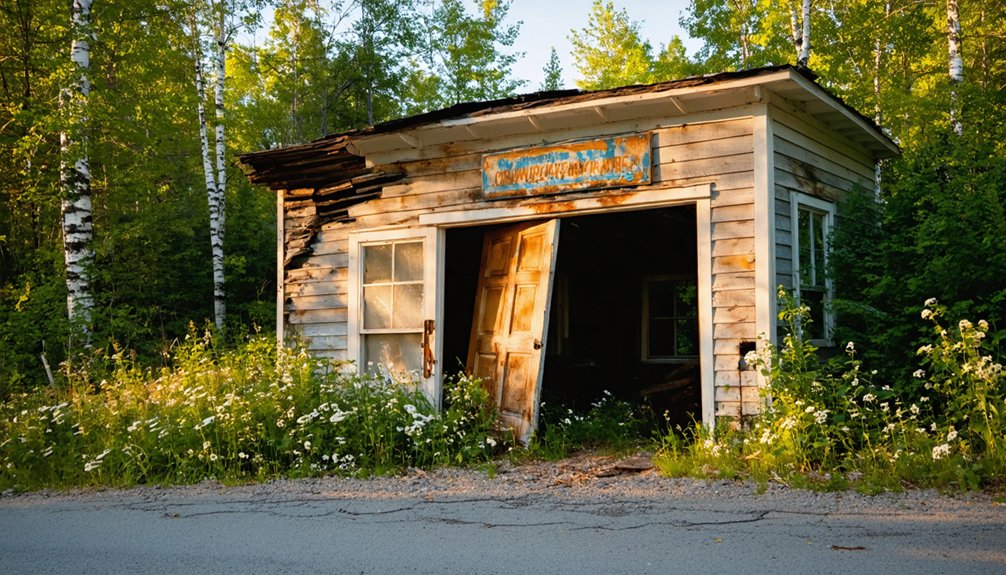
Watervale doesn’t have to be your only stop. Michigan’s Upper and Lower Peninsulas hold several ghost towns worth adding to your route. Fayette, on the Garden Peninsula, offers remarkably preserved iron-smelting ruins overlooking Lake Michigan, plus strong opportunities for outdoor activities like hiking and kayaking.
Fayette’s iron-smelting ruins overlook Lake Michigan — a ghost town worth the detour on any Michigan road trip.
Further north, Central Mine near Copper Harbor tells the story of Michigan’s copper boom through standing structures and a historic church.
Closer to Watervale, the Benzonia area rewards curious travelers with layered regional history.
Between stops, you’ll find local cuisine worth slowing down for — roadside fish shacks, cherry farm stands, and lakeside diners along M-22 define the experience.
String these destinations together, and you’ve built a road trip that’s genuinely your own, moving at whatever pace suits you.
Best Time of Year to Visit Watervale Before It Closes?
Timing your visit matters more than you might think, since the Inn at Watervale closes in October while the cottages stay open through New Year’s Day. To fully experience the cultural significance and architectural styles of this preserved lumber-era settlement, plan strategically:
- Late summer offers warm lake swimming plus full access to all buildings.
- Early September brings smaller crowds while everything stays open.
- October delivers fall color framing the historic structures beautifully before the inn closes.
- Late fall lets cottage guests explore the quiet grounds without summer traffic.
- Winter visits through January reveal the raw architectural styles stripped of foliage.
Your best window is September, when you’ll catch the cultural significance of this ghost-town-turned-resort at its most accessible and atmospheric.
Frequently Asked Questions
Is Watervale Historic District Listed on the National Register of Historic Places?
Yes, it’s listed! You’ll find Watervale Historic District on the National Register of Historic Places, making it a premier ghost town preservation site for your urban exploration adventures along Michigan’s stunning Lake Michigan shoreline.
How Many Historic Buildings Are Preserved Within the Watervale Historic District?
You’ll find 16 buildings caught between ghost town mysteries and vibrant life — historic preservation has kept these 1892–1927 structures standing, where lumber-era silence now echoes alongside laughter, inviting you to explore freedom found in Michigan’s living history.
Who Originally Founded Watervale Before It Became an Abandoned Ghost Town?
Leo F. Hale and the Watervale Manufacturing Company founded this fascinating piece of ghost town history in the early 1890s. You’re exploring one of Michigan’s most compelling abandoned settlements, built around 1892 before bankruptcy left it deserted.
Are Conservation Easements Used to Protect Watervale’s Shoreline and Historic Buildings?
Yes, conservation easements actively protect Watervale’s shoreline, forests, and historic buildings, ensuring wildlife preservation and responsible shoreline management thrive. You’ll experience a landscape where nature and history remain beautifully free from overdevelopment’s reach.
Does the Watervale Historic District Cover a Specific Acreage Along Lower Herring Lake?
You’ll find the Watervale Historic District covers a 12.5-acre linear parcel hugging Lower Herring Lake’s shore. It’s where ghost town attractions meet breathtaking scenic lake views, immersing you in preserved lumber-era history within an intimately scaled, mesmerizing landscape.
References
- https://watervaleinn.com/history/
- https://clevelandmagazine.com/articles/history-lesson-2/
- https://www.facebook.com/groups/1282668961809379/posts/4124934584249455/
- https://www.visitkeweenaw.com/things-to-do/museums-history/ghost-towns/
- https://www.nps.gov/slbe/learn/historyculture/ghosttowns.htm
- https://www.mlive.com/travel/2011/08/watervale_inn_a_lakefront_jewe.html
- https://en.wikipedia.org/wiki/Watervale
- https://en.wikipedia.org/wiki/List_of_ghost_towns_in_Michigan
- https://sah-archipedia.org/buildings/MI-01-BZ4
- https://da.abcdef.wiki/wiki/Watervale