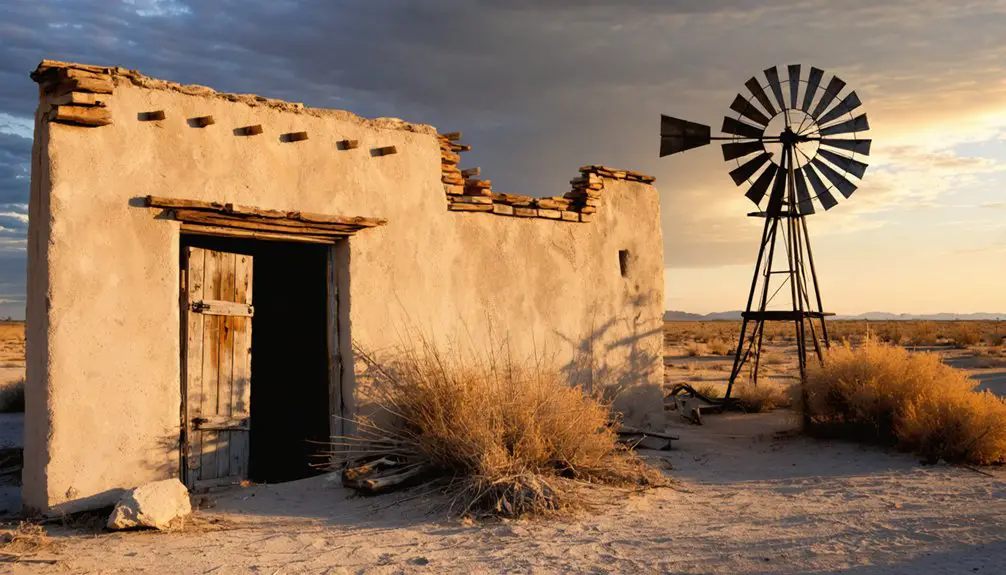
Cora, Texas vanished before the Civil War ended, but you can still find its ghost if you know where to look. Head roughly 16 miles southeast of Comanche into open Comanche County, where the South Leon River once anchored Texas’s earliest frontier ambitions. There’s no fanfare waiting — no markers, no facilities, just honest land and the oldest cemetery in the county. Everything you’ll need to make this trip count is just ahead.
Key Takeaways
- Cora, Texas, sits approximately 16 miles southeast of Comanche along the South Leon River in southeastern Comanche County.
- The ghost town has virtually no remaining structures, making the historic Cora Cemetery the primary point of interest.
- The cemetery is on private property, so visitors must obtain permission before accessing the site.
- Visit during spring or fall, arriving early morning to avoid extreme heat and benefit from better lighting.
- Bring supplies, as the site has no shade, restrooms, or visitor amenities of any kind.
What Was Cora, Texas: and Why Did It Disappear?
Before Comanche had a courthouse square or a name on the map, Cora was already holding Comanche County together. Founded in 1854 as Troy, the town earned its final name honoring Miss Cora Beeman of Bell County after postal officials rejected the original.
By 1857, it was the official county seat, running government from a log cabin courthouse.
Its historical significance lasted barely two years. Boundary shifts in 1858 pushed Cora off-center, and by July 1859, the county seat moved to Comanche.
Indian conflicts slowed resettlement, the post office closed in 1867, and the town simply dissolved.
Local legends fade when towns vanish this completely. You won’t find buildings or markers welcoming you.
What you’ll find is raw Texas land and a story that refused to stay buried.
Where Is the Cora Ghost Town Site and How Do You Reach It?
Knowing where Cora stood is half the journey. The site sits roughly 16 miles southeast of Comanche, hugging the South Leon River in southeastern Comanche County. No historical markers greet you roadside, and local legends carry more of the story than any signpost will.
Cora’s exact location tells only half the story — the rest lives in local legend and quiet river country.
What you’ll find is open country, private property, and a barren stretch where Texas’s frontier ambitions once took root.
Your standard 2WD vehicle handles the drive without trouble, making this an accessible detour for any road tripper chasing forgotten history. Respect the private land boundaries carefully, especially near the cemetery tucked well back from the road.
Plan your visit during warmer months for the clearest access. Pair the stop with a swing through Comanche to see the replica log courthouse and complete the picture.
What Survives at the Cora Townsite Today?
Once you arrive at the Cora townsite, you’ll find almost nothing standing. Local flora has reclaimed this frontier ground completely, swallowing whatever foundations remained after 1880. Don’t expect visitor amenities — there are none. What you carry in, you carry out.
Yet history still breathes here if you know what to look for:
- The cemetery — Comanche County’s oldest, with markers dating from 1859 to 1893
- Unmarked graves — silent reminders of frontier hardship and forgotten settlers
- The South Leon River corridor — the geographic anchor that originally drew settlers here
- Private land boundaries — invisible but critical; respect them completely
The real payoff comes when you pair this stop with Comanche’s town square, where a replica log courthouse keeps Cora’s story alive.
What You Need to Know Before Visiting the Cora Cemetery
The Cora cemetery sits well back on private property, so you’ll need to plan your visit respectfully and secure permission before setting foot near the graves.
Many of the markers have vanished entirely, leaving dozens of frontier settlers in unmarked resting places that date to the county’s earliest days.
Treat this ground carefully — it’s the oldest cemetery in Comanche County and one of the few physical threads still connecting the present to Cora’s brief, turbulent life.
Private Property Access Considerations
Before you chase down this piece of forgotten Texas history, understand that both the Cora townsite and its cemetery sit on private property—you can’t simply pull off the road and wander in. Respecting local privacy and property rights isn’t just courtesy; it’s the law.
Follow these four steps before you go:
- Research the landowner in advance through Comanche County records.
- Contact the owner directly and request written or verbal permission.
- Stay on agreed paths—don’t explore beyond what’s permitted.
- Leave no trace, honoring the sacred ground where markers date from 1859 to 1893.
True adventurers know that freedom comes with responsibility.
Honor the land, honor the history, and you’ll earn the experience Cora deserves.
Unmarked Graves And Preservation
Stepping into the Cora Cemetery means stepping into one of Comanche County’s oldest silences—most of the graves here are unmarked, their occupants unknown, their stories swallowed by a century and a half of Texas weather and neglect.
The few surviving markers date between 1859 and 1893, each one a rare anchor in a sea of forgotten ground.
Local folklore hints at lives buried beneath your feet—frontier settlers, farmers, families who gambled everything on this river valley.
Preservation challenges are real: the site sits on private property, meaning no formal restoration effort guards it.
You carry the responsibility of respectful visitation. Don’t disturb markers, don’t wander carelessly, and recognize that what remains here is fragile, irreplaceable, and still worth protecting.
When to Visit Cora and What Conditions to Expect
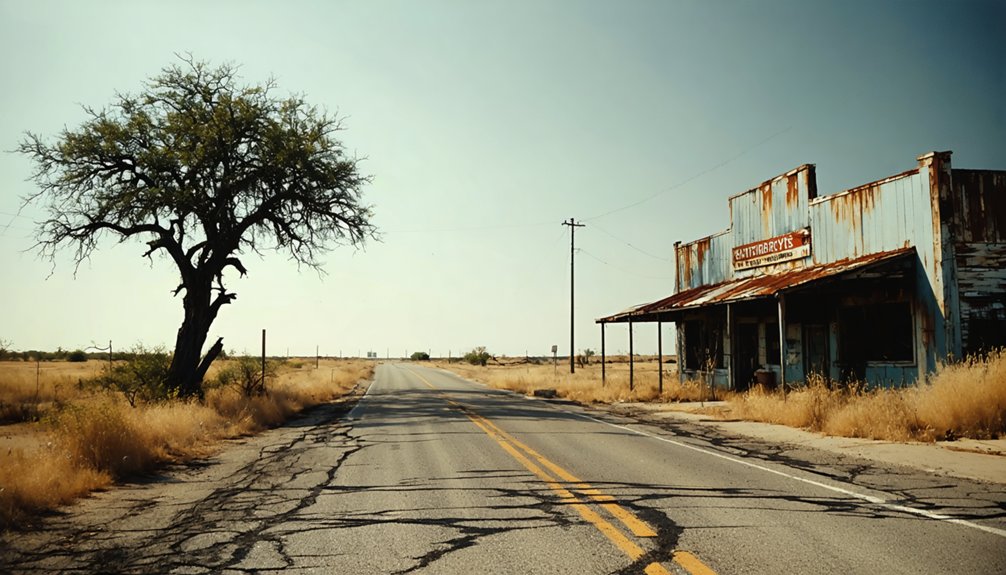
Visiting Cora rewards patience and preparation, since the site offers no shade, no facilities, and no developed access—just open Texas land where a frontier county seat once stood. Local weather and seasonal timing shape everything about your experience here.
Plan smart before you go:
- Visit spring or fall — you’ll avoid brutal summer heat on this exposed, shadeless site.
- Drive a 2WD vehicle — roads here don’t demand anything more rugged.
- Arrive early morning — temperatures rise fast, and you’ll want clear light for photography.
- Respect private property boundaries — the cemetery sits well back, so observe from appropriate distances.
Cora doesn’t welcome the unprepared, but it richly rewards those who arrive ready.
Why Comanche Makes the Right Companion Stop for This Trip
After standing at the barren site where Cora once governed Comanche County, you’ll want somewhere to anchor the full story—and the town of Comanche, just 16 miles northwest, delivers exactly that.
Head to the Comanche square, where a replica of Cora’s original log courthouse stands as a tangible echo of what you just witnessed in an empty field. It’s the kind of contrast that transforms local legends into something you can actually touch.
Ghost stories surrounding vanished county seats hit differently when you’ve walked the ground yourself and then traced the power shift to its destination.
Comanche gives your road trip a genuine narrative arc—from a forgotten river settlement that once held authority to the town that inherited everything Cora lost.
Frequently Asked Questions
Was Cora, Texas Ever Featured in Books or Historical Documentaries?
Like a flame that burns brightest before fading, Cora’s historical significance lives on through literary mentions in Texas county histories and regional ghost town guides you’ll discover when you chase its forgotten story.
Are There Any Descendants of Original Cora Residents Still Living Nearby?
You’ll likely find descendants carrying Cora’s family heritage throughout Comanche County. Ask locals—they’re keepers of local legends. These free-spirited connections to 1854 pioneers still breathe life into the surrounding land you’re adventurously exploring today.
Can You Legally Metal Detect or Artifact Hunt at the Cora Site?
“Look before you leap” — you can’t legally metal detect at Cora without landowner permission. Legal restrictions apply since it’s private property. Always secure consent before pursuing artifact hunting to honor both the law and history.
Has Any Archaeological Excavation Ever Been Conducted at the Cora Townsite?
No documented excavation history exists for Cora’s townsite. You won’t find records of formal archaeological techniques applied here—this forgotten ground remains largely unstudied, leaving its buried secrets waiting beneath the Texas soil for future discovery.
Are There Other Similar Ghost Towns Worth Visiting in Comanche County?
Texas has over 500 abandoned settlements! You’ll find historical ghost towns scattered across Comanche County, each echoing frontier struggles. Explore beyond Cora — you’re chasing freedom across forgotten landscapes where early Texans carved civilization from wilderness.
References
- https://www.texasescapes.com/CentralTexasTownsNorth/Cora-Texas.htm
- https://www.tshaonline.org/handbook/entries/cora-tx
- https://coratexas.com/
- https://www.ghosttowns.com/states/tx/cora.html
- https://en.wikipedia.org/wiki/List_of_ghost_towns_in_Texas
- https://texashistory.unt.edu/ark:/67531/metapth61101/m1/155/
- http://www.texasescapes.com/TRIPS/GreatAmericanLegendTour/ComancheCountyCourthouse/OldCora.htm