You’ll find Millwood, California tucked inside Sequoia National Forest near Hume, once a booming mill town of 2,000 souls that vanished almost without a trace. Follow forest roads off Highway 180 toward Converse Basin Grove, and let GPS coordinates 36° 43.42′ N, 118° 59.517′ W guide you in. Visit between late spring and early fall to avoid closed winter roads. The Boole Tree still stands sentinel over it all—and there’s much more to uncover about this forgotten place.
Key Takeaways
- Millwood, founded in 1891, is a ghost town in Sequoia National Forest where only soil, stone, and the Boole Tree remain.
- Access the site via Highway 180, following signs toward Converse Basin Grove, at GPS coordinates 36° 43.42′ N, 118° 59.517′ W.
- A historical marker installed in 1965 sits at the intersection of Highway 180 and Forest Road 13S97, marking the site.
- Visit between late spring and early fall, as winter snow frequently closes forest roads leading to the area.
- Use Squaw Valley as a base camp, offering nearby lodging and dining for a comfortable day trip.
The Rise and Fall of Millwood, California’s Forgotten Mill Town
Deep in the pine and redwood forests of California’s Sierra Nevada, at just over 5,000 feet elevation, a thriving mill town once hummed with the sounds of saws and industry. Founded in 1891 by the Kings River Lumber Company, Millwood — originally called Sequoia Mills — quickly grew to over 2,000 residents at its peak.
You’d have found two hotels, a post office, and a summer school here. Loggers cleared nearly every giant sequoia, leaving only the legendary Boole Tree standing.
By 1910, operations moved to Hume, and Millwood faded fast.
Today, urban decay has claimed every last structure. Nothing remains except memories embedded in soil and stone. Yet that erasure is exactly what makes wilderness exploration here so hauntingly compelling for free-spirited travelers like you.
How Millwood Went From Logging Boomtown to Ghost Town
The story of Millwood’s collapse is as swift as its rise was dramatic. By 1910, loggers had stripped the surrounding forests nearly bare, exhausting the very resource that built the town. Operations shifted to Hume, and Millwood’s 2,000 residents scattered like sawdust in the wind.
Today, you’ll find nothing standing where hotels, schools, and a post office once hummed with life. The logging history here reads as a cautionary tale — a reminder of what unchecked extraction costs.
Forest conservation wasn’t yet a guiding principle, and Millwood paid the price.
What remains is powerful in its absence. Walking these quiet grounds, you feel both the freedom of open wilderness reclaimed and the weight of choices that shaped California’s wild places forever.
What’s Left to See at the Millwood Ghost Town Today
Although nothing stands where Millwood once thrived, you’ll find the silence itself tells a story worth hearing. Walk the former mill site and let the forest reclaim your imagination — towering pines and rich plant diversity have quietly swallowed what two thousand souls once called home.
The US Forest Service now manages the area as an OHV zone, giving you open terrain to explore freely. Local wildlife moves through undisturbed, indifferent to the lumber empire that once razed this landscape.
Your most powerful reason to visit remains standing tall: the Boole Tree, the lone giant spared by a foreman’s conscience. Touching its ancient bark connects you directly to Millwood’s complicated legacy — a fleeting boomtown that vanished by 1910, leaving only memory and one magnificent tree behind.
How to Get to the Millwood Ghost Town Site
To reach Millwood’s ghost town site, you’ll want to start your route near Hume in the Sequoia National Forest. Keep in mind the area sits at just over 5,000 feet elevation.
You can navigate the forest access roads with a standard 2WD vehicle, following signs toward the Converse Basin Grove area where the old mill town once hummed with over 2,000 souls.
Before you leave the main highway, stop at the historical marker at the intersection of Highway 180 and National Forest Road 13S97 in Squaw Valley, where a 1965 marker quietly anchors the memory of a town that vanished almost without a trace.
Starting Your Route Planning
Nestled within Sequoia National Forest near Converse Basin Grove, Millwood’s ghost town site sits just over 5,000 feet elevation, waiting quietly among the pines.
You’ll want to anchor your route around Hume as a nearby reference point, keeping Highway 180 as your primary corridor through the forest.
Plan your drive during summer, fall, or spring when roads stay accessible and wildlife spotting opportunities peak along the forested stretches.
A standard 2WD vehicle handles the access roads comfortably, giving you freedom to explore without specialized gear.
Build extra time into your itinerary for local dining stops in Squaw Valley before ascending into the forest.
The elevation shift is gradual but meaningful, so arriving with a full tank and a flexible mindset lets you settle into the journey naturally.
Once you’ve set your sights on Millwood, Highway 180 becomes your lifeline through Sequoia National Forest, pulling you deeper into the pines toward the intersection of National Forest Road 13S97.
You’ll spot the historical marker on your right heading west — a quiet sentinel installed in 1965 near Squaw Valley’s post office.
Vehicle preparedness matters here. You’ll only need a 2WD rig, but check your tires, fluids, and fuel before leaving civilization behind.
These mountain roads demand respect, especially when elevation climbs past 5,000 feet.
Forest safety means carrying water, maps, and awareness of seasonal conditions.
Snow closes routes in winter, so summer, spring, and fall offer your clearest windows.
Trust your GPS coordinates — 36° 43.42′ N, 118° 59.517′ W — and let the forest pull you forward.
Finding the Historical Marker
Finding that 1965 marker anchors your whole journey — it’s the physical handshake between the modern road and Millwood’s vanished past. Its historical significance runs deeper than bronze and stone; it’s your first real proof that this lumber empire actually existed.
Pinpoint the marker location at the intersection of Highway 180 and National Forest Road 13S97, near the Squaw Valley post office in Fresno County. If you’re traveling west on Highway 180, watch your right side — you’ll spot it before you expect it. Lock in the GPS coordinates: 36° 43.42′ N, 118° 59.517′ W, and you won’t miss it.
Stand there a moment. Behind you stretches open highway; ahead lies the forest that once swallowed an entire civilization whole.
Best Season to Visit Millwood Without Getting Snowed Out
Sitting at just over 5,000 feet elevation, Millwood gets buried under heavy snow each winter, so you’ll want to plan your visit between late spring and early fall to keep the access roads manageable with a standard 2WD vehicle.
Summer opens the forests completely, letting you wander the ghost town‘s remains under warm, pine-scented skies. If wildflower blooms draw you outdoors, aim for late May through June when the meadows surrounding the old mill site burst with color.
Fall foliage transforms the surrounding Sierra Nevada into something almost cinematic, making September and October equally rewarding.
Spring carries lingering snowmelt, so check road conditions before heading out.
Whatever season you choose, you’re chasing echoes of a vanished lumber town that existed for barely two decades.
Where to Base Yourself for a Millwood Day Trip
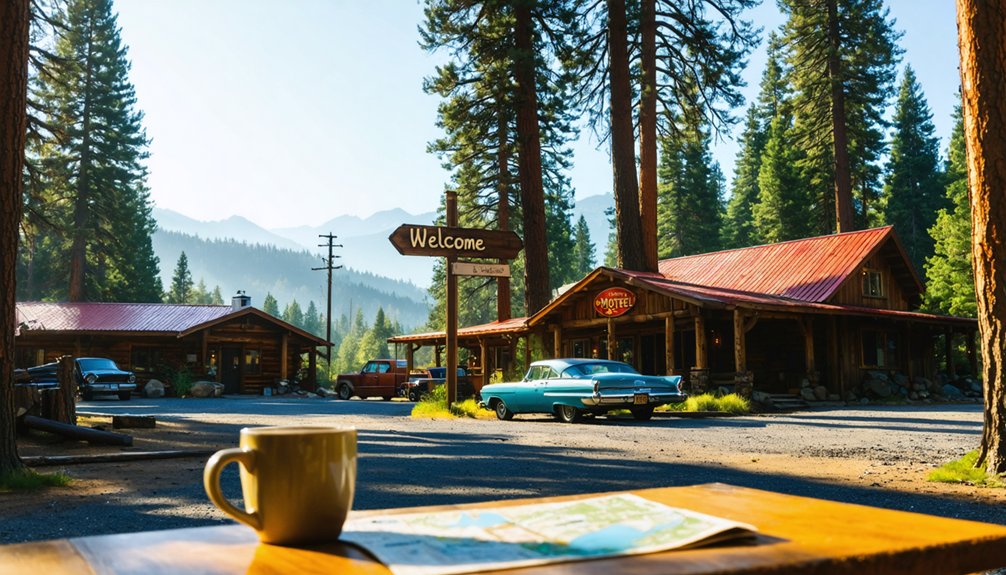
Squaw Valley, tucked along Highway 180 in Fresno County, makes the most practical launching point for your Millwood day trip, putting you within striking distance of both the ghost town site and the historical marker at the Highway 180 and National Forest Road 13S97 intersection.
Squaw Valley sits close enough to Millwood to make every detour feel deliberate rather than accidental.
Nearby lodging options keep you grounded without locking you into rigid schedules, letting you linger at the Boole Tree or push deeper into Sequoia National Forest on your own terms.
Local dining options in the valley offer honest, unfussy meals before you head into the pines.
You’re close enough to Hume for reference points yet free enough to roam.
This stretch of California rewards the unhurried traveler who still remembers when places like Millwood hummed with sawdust and ambition.
Frequently Asked Questions
Was Millwood Ever Officially Designated as a California Historical Landmark?
You’ll find Millwood’s historical preservation recognized through a 1965 marker, but it hasn’t received official California Historical Landmark designation. That landmark designation remains absent, leaving you to discover its nostalgic, forgotten freedom independently.
Are There Guided Tours Available at the Millwood Ghost Town Site?
Like Bodie State Park’s ranger-led walks, Millwood offers no formal guided tour options or visitor amenities — you’ll freely explore its ghost town remains solo, breathing in that nostalgic pine air and discovering forgotten lumber history on your own terms.
Can Visitors Camp Overnight Near the Former Millwood Townsite?
You’ll find camping near Millwood’s haunted silence within Sequoia National Forest’s embrace. Check current camping regulations and secure overnight permits to spend your nights where lumberjacks once roamed freely beneath ancient redwood skies.
Is the Boole Tree Located Within Walking Distance of the Millwood Site?
Imagine hiking where loggers once roamed — the Boole Tree’s location puts it within walking distance of Millwood’s ghost town site, so you’ll freely explore both landmarks, connecting with that raw, vanished world on foot.
Were Any Photographs or Maps of Original Millwood Buildings Ever Preserved?
The knowledge base doesn’t confirm any preserved photography collection or historical preservation efforts for Millwood’s buildings. You’d need to explore Fresno County archives or the US Forest Service for those nostalgic, time-captured glimpses of the vanished town.
References
- https://californiathroughmylens.com/calico-ghost-town/
- https://www.thegoodlifesv.com/story/2022/07/01/history/millwood-and-stagecoaching-to-the-timber/721.html
- https://www.flyingdawnmarie.com/new-blog/silver-city-ghost-town
- https://www.ghosttowns.com/states/ca/millwood.html
- https://en.wikipedia.org/wiki/Millwood
- https://www.hmdb.org/m.asp?m=2979