Planning a ghost town road trip to Molson, Washington puts you face-to-face with one of the Pacific Northwest’s most authentic frontier relics. You’ll explore a free, open-air museum sitting at 3,700 feet elevation, just 1.7 miles from the Canadian border. Visit between Memorial Day and Labor Day for the best access. Start in Oroville, head east through Tonasket and Chesaw, and follow the signs. Everything you need to make the most of your trip is just ahead.
Key Takeaways
- Molson, Washington, is a free open-air ghost town museum best visited between Memorial Day and Labor Day for optimal road access.
- Located 20 minutes from Oroville via US Highway 97, through Tonasket and Chesaw, with signs directing you to the museum.
- Start your visit at the three-story schoolhouse, then explore over a dozen preserved buildings featuring mining tools and horse-drawn machinery.
- Combine Molson with nearby ghost towns Chesaw, Bodie, and Nighthawk for a fuller regional road trip experience.
- Pack food from Oroville before arriving, as no on-site dining exists; arriving before 9 a.m. ensures great photography lighting.
What Makes Molson, Washington a True Ghost Town?
Once a thriving mining boomtown of 300 prospectors, Molson, Washington now sits quietly with only about 30 residents calling it home — and that’s precisely what earns it the ghost town label.
Founded in 1900 during Washington’s gold rush, the town boomed, busted, and eventually faded after the Great Depression stripped away its railroad lifeline.
Molson boomed, busted, and quietly vanished once the Great Depression severed its only railroad lifeline.
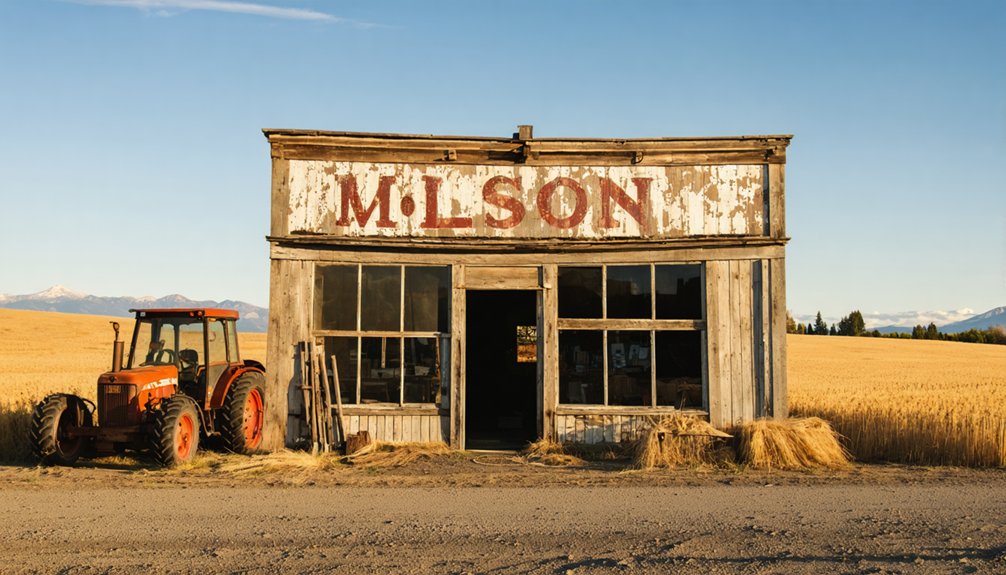
What you’ll find today is an open-air museum frozen in time — over a dozen preserved buildings, horse-drawn machinery, and mining artifacts telling stories of ambition and loss.
Local legends surrounding land disputes that literally split the town in two add a compelling layer to your visit.
Preservation challenges remain real, but dedicated efforts since 1960 have kept Molson’s history visible and free for every curious traveler willing to make the drive.
How Molson Grew From a Gold Rush Camp to an Open-Air Museum
When you visit Molson, you’re stepping into a story that began in 1896, when a gold-rich ore discovery drew hundreds of prospectors to this remote corner of Washington. The town boomed, then busted — land disputes, the Great Depression, and railroad removal gutted the population until only a handful of residents remained.
Today, preservation efforts dating back to 1960 have transformed what could’ve been forgotten ruins into a free, open-air museum where over a dozen original buildings still stand.
Gold Rush Origins
Back in 1896, a gold-rich ore discovery in the remote hills of northeastern Washington set off a rush that transformed a quiet stretch of wilderness into a booming frontier settlement.
Within just a few years, the population exploded from 12 settlers to nearly 300 prospectors chasing their fortunes. The cultural significance of this moment still echoes through local legends passed down by longtime residents.
Three key facts define Molson’s gold rush origins:
- George B. Meacham and John W. Molson officially founded the town in 1900
- A wealthy Canadian family financed the settlement’s early development
- The mining boom eventually gave way to an agricultural community
You’re stepping into a place where ambition, risk, and raw wilderness once collided spectacularly.
Boom-And-Bust Transition
What started as a gold rush camp didn’t stay one for long. By the 1910s, Molson’s population had surged past 1,000 residents, transforming a rough mining settlement into a thriving community.
Then came the hard times. Land disputes in 1909 forced residents to physically relocate, birthing New Molson roughly a mile away.
The Great Depression hit next, and when the railroad disappeared in the 1930s, so did most of the population.
Local legends kept the town’s memory alive long after the crowds left. By 1960, Harry Sherling tackled the preservation challenges head-on, rescuing buildings and artifacts before they vanished forever.
Today, that determination means you can walk freely through over a dozen standing structures that tell Molson’s remarkable boom-and-bust story firsthand.
Preserved Open-Air Museum
Harry Sherling’s 1960 preservation efforts transformed Molson’s weathered remains into something extraordinary: a free-to-visit open-air museum where history stands upright rather than crumbling into the earth.
You’ll roam freely through a dozen authentic structures, discovering stories embedded in every plank and artifact.
Here’s what awaits you:
- Three-story schoolhouse – Now a museum housing mining tools, artifacts, and historical exhibits
- Horse-drawn machinery – Turn-of-the-century equipment displayed exactly where workers once operated it
- Original townsite buildings – Authentic structures preserved since Sherling began his restoration mission
While exploring, watch for local wildlife roaming the surrounding landscape.
For visitor safety, stay aware of aging structures and uneven terrain. No admission fee means you’re completely free to explore Molson’s remarkable open-air history on your own terms.
The Best Time of Year to Visit Old Molson
If you’re planning a trip to Old Molson, timing your visit between Memorial Day and Labor Day is your best bet. The museum operates during these warmer months, giving you full access to its open-air exhibits, historic buildings, and artifacts steeped in cultural significance.
Visit Old Molson between Memorial Day and Labor Day for full access to its open-air exhibits and historic buildings.
Winter snowfall can make the remote roads leading to this corner of Okanogan County difficult or impossible to navigate, cutting off access entirely.
Summer visits reward you with clear mountain views, comfortable temperatures, and the freedom to roam the dozen-plus preserved structures at your own pace.
Come ready to explore local legends of gold rushes, land disputes, and resilient settlers who shaped this community.
With no admission fee required, Old Molson offers an authentic, unhurried experience that fits perfectly into any road trip itinerary.
How to Get to Old Molson From Oroville
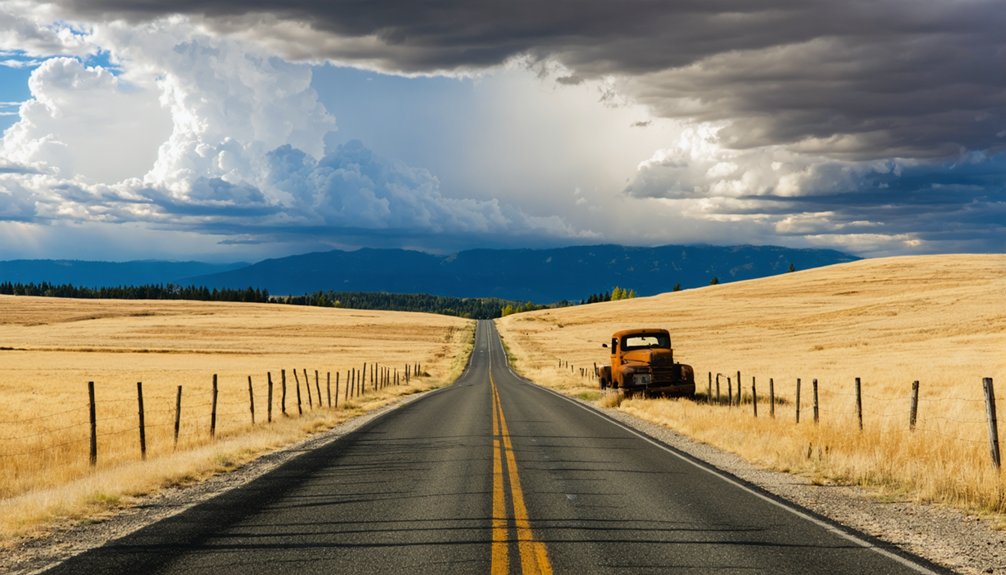
Getting to Old Molson from Oroville is a straightforward 20-minute drive covering just over 15 miles. Before heading out, grab a bite at one of Oroville’s local dining spots to fuel your adventure.
Then follow these simple steps:
- Head east from Oroville on the road toward Chesaw, leaving US Highway 97 behind.
- Watch for scenic viewpoints along the rolling highland terrain as you climb toward the Okanogan plateau.
- Follow the signs to Molson Museum, which guide you directly to the open-air ghost town site.
You’ll arrive just 1.7 miles south of the Canadian border, sitting at nearly 3,700 feet elevation.
The drive itself sets the mood perfectly for exploring Washington’s most fascinating free ghost town.
Every Historic Building Still Standing at Old Molson
When you step into Old Molson, over a dozen historic buildings greet you like a frozen moment in time, preserved through Harry Sherling’s dedication beginning in 1960. Each structure carries deep cultural significance, telling the story of a community that transformed from a gold rush boomtown into an agricultural settlement.
You’ll explore a striking three-story schoolhouse museum packed with mining tools, artifacts, and historical exhibits. Horse-drawn machinery from the turn of the century sits exactly where history left it, reminding you how self-reliant frontier life truly was.
Preservation challenges remain real here — weather, time, and limited resources constantly threaten these fragile structures. Yet they still stand, offering you an unfiltered, honest glimpse into Washington’s rugged past without a single admission fee blocking your way.
Inside the Three-Story Schoolhouse at Molson Museum
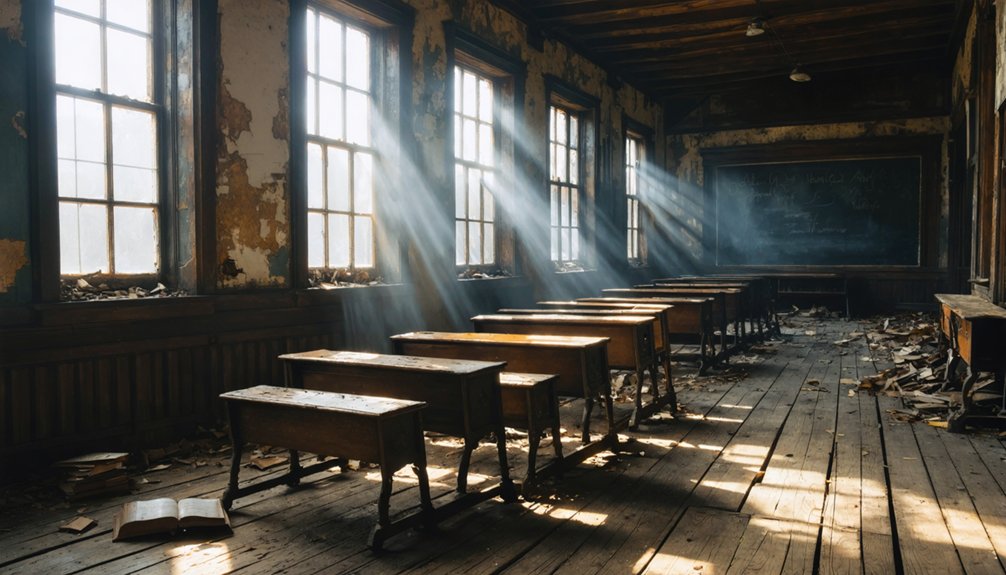
Among all the buildings standing at Old Molson, the three-story schoolhouse commands your attention first. Its historical architecture tells a story of a community that once believed in its own future.
The three-story schoolhouse rises above Old Molson, its weathered walls quietly insisting a community once dared to dream.
Step inside and you’ll find genuine artifacts that carry real cultural significance for the Pacific Northwest.
Here’s what you’ll discover inside:
- Mining tools and equipment dating back to the turn of the century
- Historical exhibits documenting Molson’s evolution from gold rush boomtown to agricultural settlement
- Preserved classroom artifacts reflecting early 20th-century frontier education
You don’t need a ticket or reservation — just show up between Memorial Day and Labor Day. The building stands freely accessible, letting you explore at your own pace without restrictions or guided tours controlling your experience.
Mining Tools, Horse Machinery, and Artifacts on Display
As you explore the museum complex, you’ll come face-to-face with an impressive collection of mining tools that tell the raw, unfiltered story of Molson’s gold rush days. The exhibits showcase authentic equipment used by prospectors who flooded the region after the 1896 ore discovery.
This gives you a tangible connection to that feverish era. You’ll also find horse-drawn machinery from the turn of the century on display, offering a vivid glimpse into how early settlers shifted from mining to agricultural life.
Mining Tools On Display
Stepping into the Old Molson Museum, you’ll find an impressive collection of mining tools, horse-drawn machinery, and historical artifacts that paint a vivid picture of frontier life. These preservation efforts, led by Harry Sherling in 1960, guarantee Molson’s mining history remains accessible to every visitor.
You’ll explore artifacts that tell the story of Washington’s gold rush era firsthand. Highlights include:
- Hand drills and pickaxes used by early prospectors during the 1896 gold discovery
- Ore processing equipment that demonstrates how miners extracted valuable minerals from raw rock
- Horse-drawn machinery dating back to the turn of the century
Each piece connects you directly to the rugged, self-reliant spirit of those 300 prospectors who once shaped this remarkable community.
Horse-Drawn Machinery Exhibits
How did frontier farmers and miners move heavy loads before modern machinery? At Old Molson Museum, you’ll find the answer standing right before you. Horse-drawn machinery from the turn of the century gives you a tangible connection to the region’s working past.
These exhibits carry real historical significance, showing exactly how settlers broke ground, hauled ore, and built a community from scratch. You’re not reading about it — you’re standing next to the actual equipment that shaped daily frontier life.
Thanks to preservation efforts beginning in 1960, these machines survived long enough for you to see them today. Harry Sherling’s dedication ensured that nothing got lost to neglect or time. Walk around each piece, examine the craftsmanship, and appreciate the raw muscle — both human and animal — that built Molson.
Admission, Hours, and Everything Else Before You Go
Before hitting the road, here’s what you need to know about visiting Molson. The museum runs from Memorial Day to Labor Day, and entry is completely free—your kind of destination.
- Hours & Access: Open seasonally; winter snow can limit road access, so plan your visit between late May and early September.
- Getting There: Take US Highway 97 through Tonasket to Oroville, turn right toward Chesaw, and follow signs directly to the museum. It’s roughly 20 minutes from Oroville.
- Local Dining & Lodging Options: Molson itself offers no restaurants or hotels, so arrange local dining and lodging options in Oroville before heading out.
Check molsonmuseums.org for updates before departure, and you’ll arrive fully prepared to explore this remarkable open-air piece of Washington history.
How to Plan a Full Day Around Old Molson Ghost Town
If you’re making the drive out to Molson, arriving early in the morning gives you the best light for photography and lets you explore the open-air museum before the midday heat sets in.
From there, you can extend your trip by swinging through the nearby town of Chesaw or continuing toward Oroville, which sits just 20 minutes west and offers additional local history and amenities.
Pairing Old Molson with a few surrounding stops transforms what could be a quick visit into a genuinely rewarding full-day road trip through one of Washington’s most overlooked corners.
Morning Arrival Tips
Arriving early gives you the best shot at a full, unhurried day at Old Molson Ghost Town, where the museum complex runs from Memorial Day through Labor Day. Hitting the road before 9 a.m. lets you explore over a dozen preserved buildings before crowds arrive and temperatures climb.
Make the most of your morning with these three moves:
- Scout scenic viewpoints along Molson Road before entering the museum grounds — the high-elevation landscape rewards early risers with crisp, clear views.
- Start with the three-story schoolhouse to orient yourself within the town’s history.
- Plan local dining in Oroville for your return trip, since no food services operate on-site.
You’ll cover the open-air museum thoroughly and still have the afternoon completely free.
Nearby Stops Worth Exploring
Once you’ve finished exploring Old Molson’s open-air museum, the surrounding Okanogan Highlands give you plenty of reasons to keep driving.
Head toward Chesaw for local dining at a small rural tavern that serves honest, unpretentious food — exactly what you’d want after a morning of walking dusty ghost town streets.
From there, chase scenic viewpoints along the rolling highland roads, where open rangeland stretches toward British Columbia with almost no development interrupting the view.
Oroville, just 20 minutes west, sits along Osoyoos Lake and offers waterfront stops worth a leisurely afternoon.
If you’re crossing into Canada, the border is less than two miles away.
String these stops together and you’ve built a full day that balances history, wide-open landscapes, and the freedom of an unscripted road trip.
Other Ghost Towns Near Molson to Visit on the Same Trip
Molson isn’t the only ghost town worth exploring in northeastern Washington, and pairing it with nearby abandoned settlements makes for a richer road trip. The region holds local legends tied to gold fever, failed dreams, and frontier grit. Ghost town legends come alive when you explore multiple sites in a single journey.
Consider adding these stops to your itinerary:
- Chesaw – A former mining community just miles from Molson with historic remnants and rural charm.
- Bodie – A quiet, nearly forgotten settlement carrying its own frontier stories deep in Okanogan County.
- Nighthawk – A striking riverside ghost town along the Similkameen River with visible ruins and rich mining history.
Each site adds depth, context, and adventure to your Washington ghost town experience.
Frequently Asked Questions
Is Old Molson Ghost Town Safe for Young Children to Explore?
You’ll find Old Molson Ghost Town generally safe for young children, but take safety precautions around aging structures. Its historic preservation efforts keep the open-air museum family-friendly, letting your kids explore fascinating artifacts and buildings with proper supervision.
Can Visitors Photograph All Buildings and Artifacts Inside Molson Museum?
You’ll love capturing Molson’s rich history! While specific photography policies aren’t documented, the open-air museum’s commitment to historical preservation means you’re free to photograph buildings, artifacts, and horse-drawn machinery throughout your immersive, unforgettable visit.
Are Pets Allowed When Visiting the Old Molson Ghost Town Area?
Like a frontier trailblazer, you’ll want to check pet policies before arriving, as the knowledge base doesn’t specify animal restrictions for Old Molson. Contact molsonmuseums.org directly to confirm whether your furry companions can join your adventure!
Is There Cell Phone Service or Wifi Available Near Old Molson?
Don’t count on cell service or WiFi availability at Old Molson’s remote location. You’ll find yourself blissfully disconnected near the Canadian border, so embrace the freedom, download offline maps beforehand, and fully immerse yourself in this untamed ghost town experience!
Are Restroom Facilities Available On-Site at the Molson Museum Complex?
Like a pioneer preparing for the frontier, plan ahead! The knowledge base doesn’t confirm restroom amenities or facility cleanliness details at Molson Museum. You’ll want to contact molsonmuseums.org directly before your free-spirited adventure begins.
References
- https://en.wikipedia.org/wiki/Molson
- https://www.youtube.com/watch?v=2Saj0oIS4tc
- https://www.islands.com/1988063/washington-off-radar-abandoned-mining-ghost-town-molson-free-visit-history/
- https://www.facebook.com/groups/1279269629692625/posts/1823762688576647/
- https://www.youtube.com/watch?v=Lv0AMQg0hlI
- http://www.ghosttownsusa.com/molson.htm
- https://www.youtube.com/watch?v=nzSjXa5RSTs
- https://www.facebook.com/groups/308494644052837/posts/673294434239521/