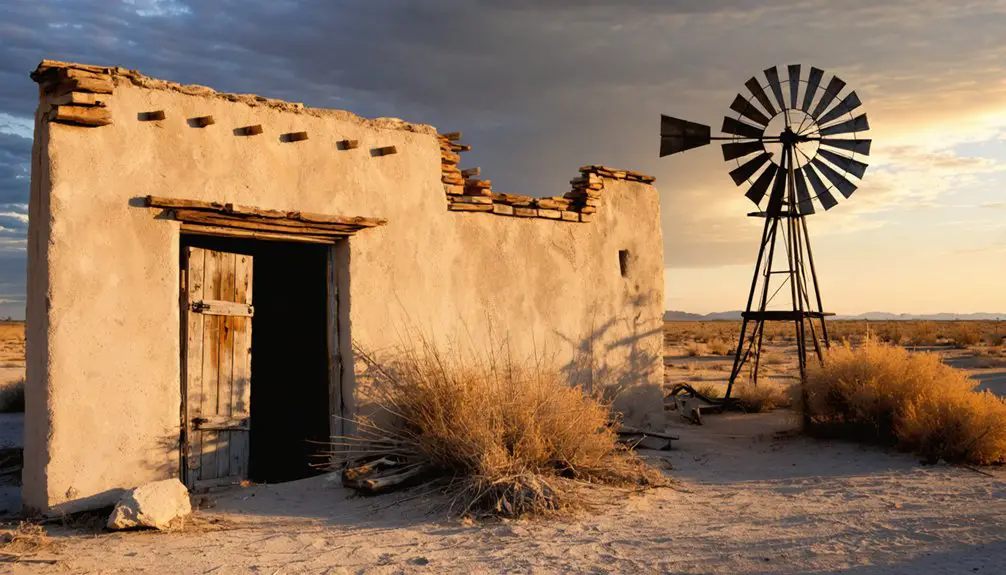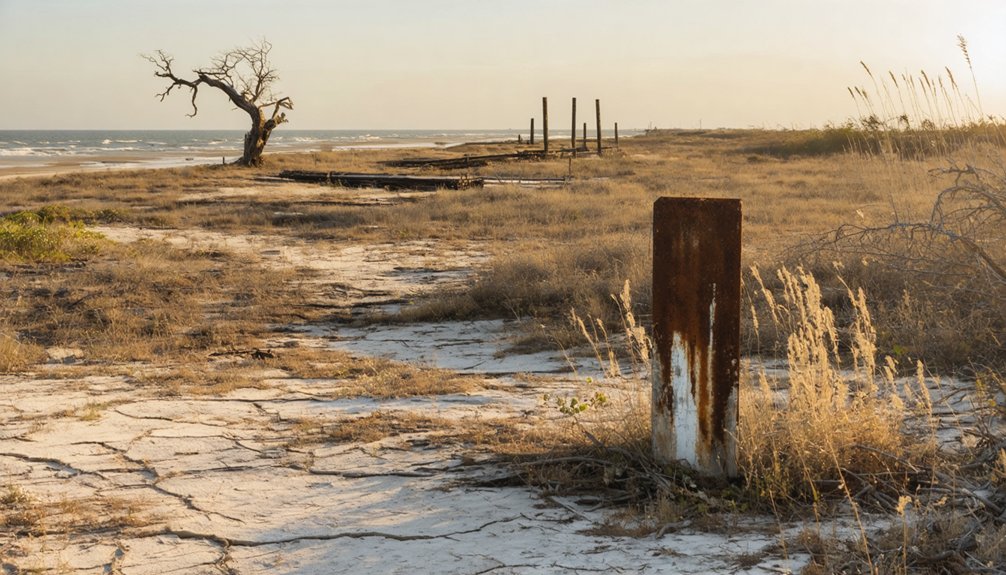
Indianola, Texas was once the state’s second-busiest port, but two devastating hurricanes in 1875 and 1886 erased it from the map. Today, you’ll find underwater ruins, a weathered cemetery, a statue of La Salle, and historical markers where a thriving city once stood. To get there, head south on Texas Highway 316 from Port Lavaca and embrace the remote coastal drive. There’s much more to this ghost town’s haunting story waiting just ahead.
Key Takeaways
- Indianola, Texas, is a submerged ghost town on Matagorda Bay, destroyed by hurricanes in 1875 and 1886, offering a raw, unpolished historical experience.
- Reach Indianola by driving south on Texas Highway 316 from Port Lavaca, enjoying coastal marshlands and scenic bay views along the way.
- Above-water highlights include a La Salle statue, a historic cemetery, and markers commemorating the town’s past as Texas’s second-busiest port.
- No hotels exist at the site; Indianola Beach Park offers free camping, requiring visitors to bring their own supplies for an overnight stay.
- Stop at the Calhoun County Museum in Port Lavaca beforehand for regional historical context that enriches your visit to the ghost town.
The Rise and Fall of Indianola, Texas
Once a thriving Gulf Coast port, Indianola, Texas, rose from humble beginnings in 1844 when Prince Karl of Solms-Braunfels established it as a deep-water landing on Matagorda Bay. Originally called Karlshafen, it became a gateway for European immigrants and eventually rivaled Galveston as Texas’s second-busiest port, boasting 5,000 residents and four newspapers by 1875.
From humble 1844 origins, Indianola grew into Texas’s second-busiest port, rivaling Galveston with 5,000 residents by 1875.
Then nature intervened. A devastating hurricane on September 15, 1875, killed up to 300 people, nearly erasing the town entirely. Residents committed to historical reconstruction, rebuilding their community from the ruins.
Eleven years later, a second hurricane followed by fire delivered the fatal blow on August 19, 1886. By 1887, Indianola was a ghost town.
Today, cultural preservation efforts keep its memory alive through markers, a cemetery, and a statue honoring explorer La Salle.
What’s Left to See at the Ghost Town Site?
Despite Indianola’s dramatic history, visiting today means accepting that nature has reclaimed most of what once stood here. Storms and erosion swallowed the town whole, leaving the Gulf of Mexico covering much of the original city site. You won’t find museums packed with historical artifacts or reconstructed buildings waiting for you.
What you’ll find carries its own haunting power. At low tide, underwater ruins like the old courthouse foundation occasionally emerge from the shallow water, offering a rare glimpse into what was once Texas’s second-busiest port.
Above ground, a striking statue of René-Robert Cavelier, Sieur de La Salle commands the site, alongside a cemetery and historical markers. It’s a landscape that rewards visitors who appreciate raw, unpolished history over curated tourist attractions.
How to Reach Indianola, Texas
Reaching Indianola requires a bit of intentional navigation, but the drive itself sets the mood for what you’ll find when you arrive. Take Texas Highway 316 south from Port Lavaca, letting the coastal landscape slowly shift around you.
The journey to Indianola is half the experience — let the road ease you into its unhurried, coastal rhythm.
Watch for these landmarks along the way:
- Flat marshlands stretching toward the horizon, broken only by wind-bent grasses
- The glittering surface of Matagorda Bay appearing through the tree line
- Small bait shops offering fresh local seafood before you reach the site
- The Indianola Fishing Marina signaling you’re nearly there
- Historic landmarks and roadside markers announcing the ghost town’s edge
There are no hotels waiting at your destination, so plan accordingly. Indianola Beach Park offers free camping, giving you the ultimate freedom to linger as long as you want.
Where to Sleep Near Indianola
Sleeping near Indianola means embracing the same stripped-down spirit that defines the place itself. There aren’t any hotels here, and that’s exactly the point. Indianola Beach Park offers free camping directly on one of Texas’s rare sandy shorelines, letting you wake up to open water and quiet marshland. You’ll park, pitch your setup, and own the experience completely.
Boondocking on public land gives you the freedom to stay close to the historical markers and cemetery without rushing. After outdoor activities like fishing at the Indianola Fishing Marina or exploring the tidal flats, you’ll want a nearby base rather than a long drive back.
Port Lavaca sits just minutes away for local dining and basic supplies, making it your practical anchor while Indianola remains your destination.
Nearby Stops Worth Pairing With the Visit
While Indianola anchors your trip, the surrounding area fills in the larger story. Pair your visit with these nearby stops to round out the experience:
Indianola anchors the journey, but the surrounding stops fill in the story.
- Calhoun County Museum in Port Lavaca – Walk through exhibits that prime you on the region’s deeper history and historic landmarks before heading to the coast.
- Texas Highway 316 scenic drive – Wind through coastal flats toward the Indianola Fishing Marina with sweeping bay views the entire way.
- Indianola Beach Park – Stretch your legs on one of Texas’s rare sandy shorelines.
- Port Lavaca waterfront – Grab local seafood straight off the boat at dockside spots.
- Matagorda Bay overlooks – Watch the same waters that once swallowed an entire civilization.
Each stop adds context, flavor, and freedom to your journey.
Frequently Asked Questions
Is Swimming Safe at Indianola Beach Park for Families With Children?
The knowledge doesn’t confirm beach safety details, but you’ll want to prioritize child supervision at Indianola Beach Park. It’s a free, open coastal spot, so practice smart beach safety and watch your kids closely near the water.
Are There Guided Tours Available at the Indianola Ghost Town Site?
No guided tours are available at Indianola’s ghost town site, but you’ll uncover rich historical insights independently by exploring historical markers, the La Salle statue, and the cemetery, letting your curiosity roam freely through this hauntingly beautiful, forgotten landscape.
What Is the Best Time of Year to Visit Indianola?
Like a window into the past, spring and fall are your best visiting months. Mild seasonal weather from March through May and October through November lets you freely explore Indianola’s haunting remnants comfortably.
Can Visitors Legally Metal Detect or Dig for Artifacts at Indianola?
Before you grab your metal detector, you’ll want to research Indianola’s metal detecting regulations carefully. Artifact hunting rules on Texas historical sites are strict, and you could face serious legal consequences for unauthorized digging or collecting.
Are There Restroom Facilities Available at the Indianola Beach Park Campground?
The knowledge doesn’t confirm restroom facilities at Indianola Beach Park’s campground. When you’re planning your camping amenities checklist, you’ll want to contact Calhoun County directly to verify available restroom facilities before embracing this free, liberating coastal boondocking experience.
References
- https://en.wikipedia.org/wiki/Indianola
- https://www.texasmonthly.com/travel/indianola-ghost-town-matagorda-bay/
- https://www.youtube.com/watch?v=v2JfTPg4z6k
- https://www.statesman.com/story/news/history/2024/03/19/indianola-texas-history-1900-hurricane-la-salle-german-immigrants/72921311007/
- https://www.facebook.com/TexasInspiration/posts/indianola-located-on-matagorda-bay-in-calhoun-county-texas-is-one-of-the-states-/996865972652075/
- https://www.facebook.com/groups/2713517748825101/posts/2850578635119011/
- https://www.youtube.com/watch?v=cp1goa6sVDg