Monson, New Hampshire, is one of New England’s most fascinating forgotten places—a colonial settlement abandoned in the 1700s that’s now reclaimed by forest. You’ll find cellar holes, crumbling stone walls, and interpretive signs spread across 200 preserved acres on the Hollis and Milford town line. It’s free to visit, uncrowded, and pairs beautifully with nearby towns like Milford, Amherst, and Nashua for a full southern New Hampshire day trip. There’s far more to this ghost town than you’d expect.
Key Takeaways
- Monson Center, located on the Hollis-Milford town line off Adams Road, is a free, preserved 200-acre ghost town with trails and interpretive signs.
- The site features cellar holes, stone walls, and the Gould House museum, with no reconstructed structures remaining.
- Monson was abandoned due to poor soil, harsh winters, farming challenges, and internal governance disputes among early settlers.
- Nearby towns Hollis, Milford, Amherst, and Nashua offer dining, historic architecture, and rural scenery for a full road trip loop.
- The trip suits independent explorers seeking uncrowded, authentic New England history combined with local seasonal dining and scenic back roads.
What Was Monson, New Hampshire’s First Inland Settlement?
Before New Hampshire had any inland towns to speak of, Monson was already taking shape. In 1735, six settlers from Massachusetts and Nova Scotia purchased the land, and by 1737, families had moved in, cleared the forest, and built what became one of early settlement history’s most remarkable examples of colonial architecture and community planning.
You’re looking at New Hampshire’s first inland colonial settlement — a place that predates most of the region’s established towns. Incorporated in 1746, Monson carved out its own identity far from the coast, governed by figures like Thomas Nevins, Joshua Bailey, and Dr. John Brown.
It was independent, self-sufficient, and ambitious. For anyone who values the freedom to build something from nothing, Monson’s origin story hits differently.
Why Did Monson Become a Ghost Town?
You might expect a clear-cut reason for Monson’s abandonment, but history doesn’t offer one tidy answer.
Harsh colonial conditions — poor soil, limited resources, and brutal New England winters — made survival a constant struggle for early settlers.
Layered on top of that, governance disputes and conflicts over community decisions, like where to build a meetinghouse or church, fractured the town’s unity and hastened its collapse.
Harsh Colonial Living Conditions
Though historians haven’t pinpointed a single cause for Monson’s abandonment, harsh colonial living conditions likely played a major role in driving settlers away. The land itself worked against them — poor soil made farming a constant struggle, and limited natural resources stretched every survival strategy thin.
You have to imagine what daily life looked like: carving a settlement out of dense New Hampshire wilderness, enduring brutal winters, and watching harvests fall short year after year. Colonial hardships like these wore communities down slowly, eroding the will to stay.
When the rewards didn’t match the sacrifice, families made the difficult choice to leave. Monson’s story reflects a reality many early settlers faced — freedom on the frontier came at a steep, often unsustainable price.
Governance Disputes And Conflict
Beyond the brutal land and weather, Monson also fractured from within. Political disputes tore at the community’s foundation, and disagreements over land ownership and civic decisions pushed neighbors apart.
Historians aren’t entirely certain what triggered the final collapse, but several conflicts likely compounded over time:
- Disputes over where to build the meetinghouse, schoolhouse, or church
- Tensions rooted in political greed and local governance power struggles
- Unresolved land ownership disagreements among founding families
- Competing visions for the town’s future direction and resources
These internal fractures made an already difficult situation unbearable. When a community can’t agree on its own center—literally or figuratively—it loses its reason to stay.
Monson’s residents eventually scattered, absorbed into surrounding towns, leaving only cellar holes behind.
What’s Left to See at Monson Center Today?
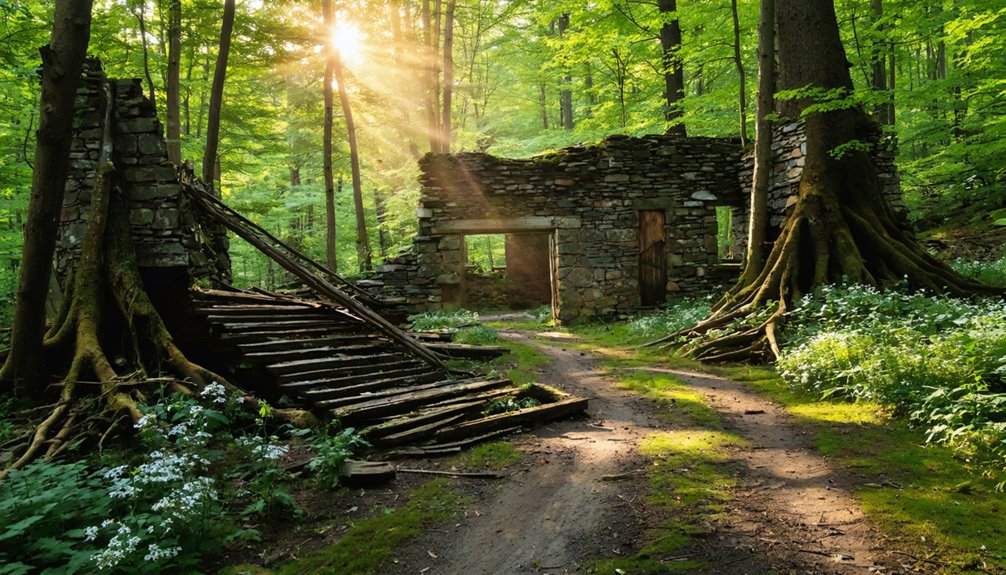
While Monson Center won’t dazzle you with standing structures or a reconstructed village, it offers something perhaps more compelling — a quiet, forested landscape where you can still trace the outlines of a colonial community that vanished over 250 years ago.
Monson Center won’t dazzle you — but it will quietly haunt you with the outline of a world long gone.
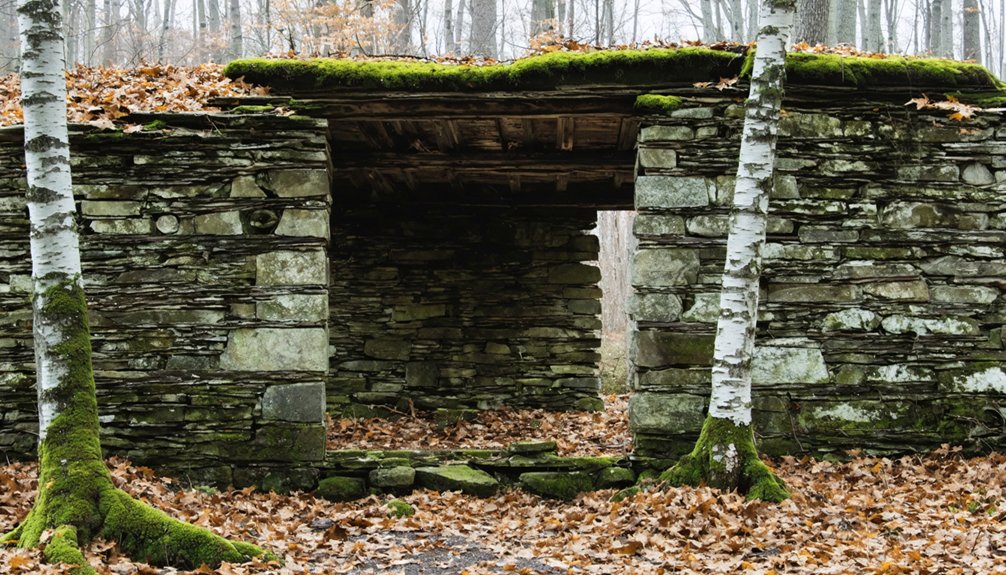
You’ll walk past cellar holes, stone walls, and trail traces that serve as archaeological remains of the original village layout. Interpretive signs and a kiosk help you identify former homesteads and understand what once stood there.
The restored Gould House functions as a small museum, housing historical artifacts connected to Joseph Gould, Monson’s clockmaker and civic leader.
A small parking area off Adams Road gives you easy trail access across roughly 200 preserved acres — enough space to genuinely feel the weight of this forgotten place.
How to Get to Monson Center in Hollis and Milford
Getting to Monson Center is invigoratingly straightforward once you know where to look. Head to Adams Road along the Hollis and Milford town line in southern New Hampshire. A small parking area marks your entry point into this site of remarkable archaeological significance.
From there, you’re just a short walk from colonial history worth protecting.
- Park at the designated lot off Adams Road
- Follow the trail toward the kiosk and interpretive signage
- Watch for stone walls and cellar holes marking former homesteads
- Visit the Gould House, a standing symbol of historical preservation
You won’t find a reconstructed village waiting for you. Instead, you’ll find quiet forest trails threading through two centuries of layered history, completely on your own terms.
Stop at the Gould House Before You Hit the Trails
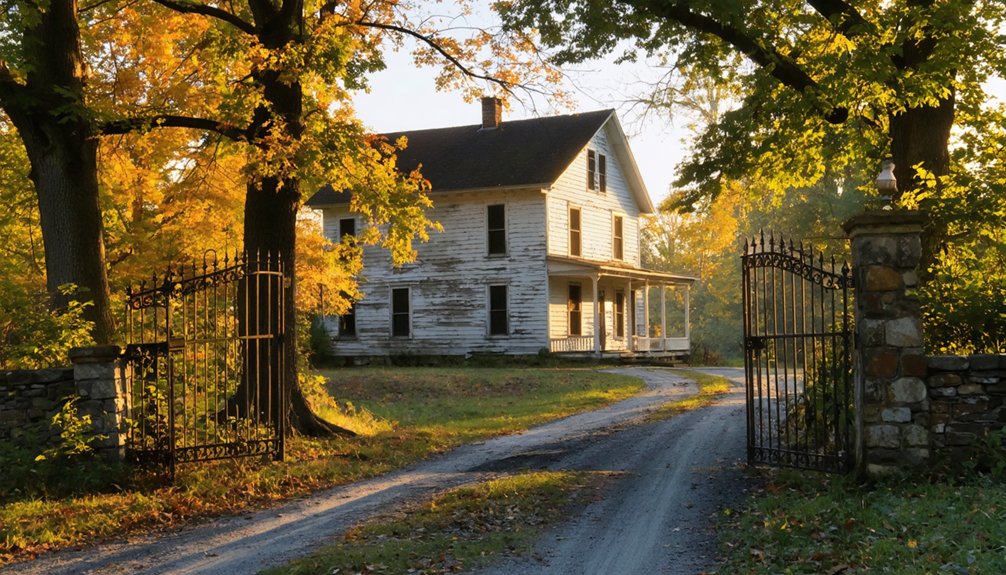
Before you set off down the trails, make a point to stop at the Gould House — it’s the one standing structure on the site and doubles as a small museum that grounds everything you’re about to walk through. This restored colonial settlement architecture gives you a tangible reference point before the cellar holes and stone walls start telling their own stories.
Joseph Gould was no ordinary resident. He served as selectman, constable, and pound keeper, and he built clocks — a detail that makes historical artifact preservation here feel deeply personal rather than purely academic.
Walking through the house connects you to the actual people who carved this settlement out of the wilderness. Don’t skip it. What you learn inside sharpens everything you’ll see once you’re out on the trails.
Walk the Monson Center Trails and Find the Cellar Holes
Once you step away from the Gould House and onto the trail system, the landscape itself becomes the exhibit. Monson Center’s trails wind through roughly 200 acres of forest, connecting you directly to one of New England’s most compelling archaeological sites. Keep your eyes low — the cellar holes are subtle but unmistakable.
The landscape itself becomes the exhibit — 200 acres of forest where cellar holes quietly rewrite history.
Watch for these historical artifacts as you walk:
- Stone walls marking former property boundaries
- Cellar depressions where colonial homes once stood
- Trail traces following original village pathways
- Interpretive signs identifying specific homesteads
There’s no crowds, no admission fee, and no guided schedule. You move at your own pace through land that’s been quietly holding its secrets since 1770. That kind of freedom is rare.
What to Pair With Monson on a Southern New Hampshire Day Trip
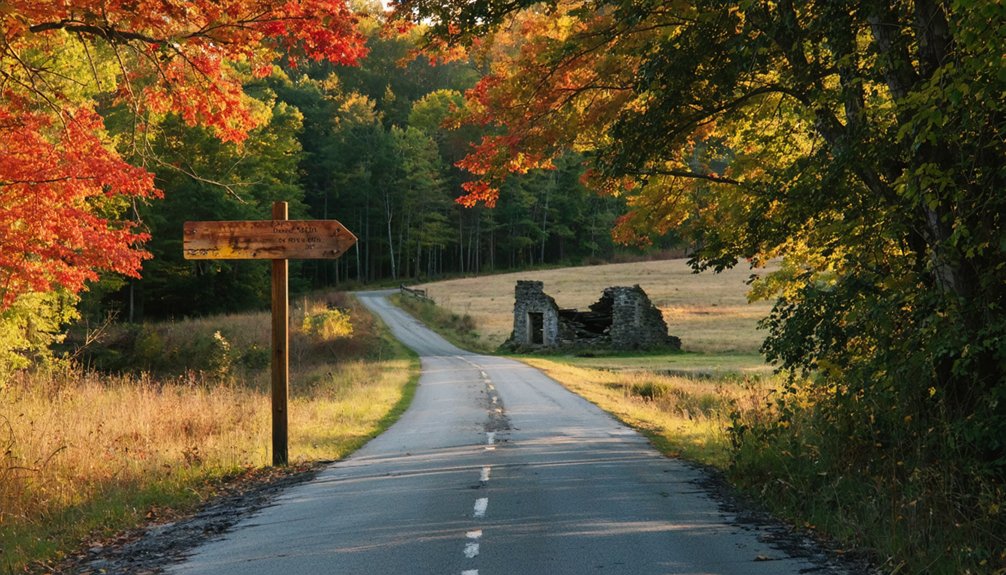
Monson Center sits in the heart of southern New Hampshire, putting you within easy reach of the charming downtowns of Milford and Hollis. Both are worth a slow wander after your hike.
You’ll find locally owned cafés, farm stands, and casual eateries in Milford’s town center that make for a satisfying post-trail lunch stop.
Round out your day by exploring the antique shops and scenic back roads that connect these small towns, turning a single historic site into a full regional itinerary.
Nearby Towns Worth Visiting
Southern New Hampshire packs a surprising amount of charm into a small radius, and a few nearby towns make natural companions to a Monson ghost town visit. Each destination adds a distinct layer to your day without stretching your drive.
- Milford – Stroll its classic town oval and spot colonial architecture dating back to the 1700s.
- Hollis – A quiet, rural town with orchards, back roads, and a strong preservation ethic.
- Nashua – Offers restaurants, shops, and a walkable downtown for a post-hike meal.
- Amherst – Features historical artifacts at its local historical society and a beautifully preserved village green.
Together, these towns turn a single-site stop into a full southern New Hampshire loop worth taking your time through.
Local Dining Stops
After working up an appetite on Monson’s trails, you’ll find the surrounding towns ready to deliver. Milford and Hollis both offer solid dining options without the tourist markup. Milford’s downtown has a walkable mix of cafes, casual eateries, and local spots worth exploring. You’re not locked into a chain restaurant experience here — local cuisine drives the scene, from scratch-made comfort food to seasonal menus that reflect New England’s agricultural roots.
Nashua sits just a short drive south and expands your choices considerably, offering everything from classic diners to internationally inspired plates. If you’re keeping it simple, grab a coffee and a sandwich before hitting the trails, then reward yourself with a proper sit-down meal after. Southern New Hampshire makes that easy.
Frequently Asked Questions
Is Monson Center Open Year-Round to Visitors?
You can explore Monson Center year-round! Trek through its forested trails, discover historical exhibits, and soak in scenic viewpoints across 200 acres of preserved colonial history whenever adventure calls you there.
Is There an Admission Fee to Visit Monson Center?
You won’t need to empty your wallet — Monson Center’s free to visit! You’ll roam trails, discover historical artifacts, and seize stunning photography opportunities without spending a single cent. Pure, unbridled freedom awaits you there.
Are Dogs Allowed on the Monson Center Trails?
The knowledge base doesn’t confirm dog leash policies, but Monson Center’s pet friendly trails welcome well-behaved dogs. You’ll want to check with local authorities to make certain you’re following current guidelines before your visit.
How Long Does a Typical Visit to Monson Center Take?
Like a journey through time, you’ll typically spend 1–2 hours exploring Monson Center. You can wander the trails, discover historic landmarks, and soak up photography opportunities among the cellar holes and stone walls at your own pace.
Is Monson Center Suitable for Young Children or Strollers?
Monson Center isn’t ideal for strollers, as you’ll navigate uneven forest trails and cellar holes. It’s manageable for older kids, but child-friendly amenities are minimal—pack sturdy shoes and embrace the rugged, adventurous spirit of this historic ghost town!
References
- https://www.forestsociety.org/property/monson-center
- https://www.unionleader.com/nh/arts_and_ent/settlers-may-have-abandoned-monson-center-in-1770-but-its-a-pretty-ghost-town-today/article_d0c655ef-a73e-57db-a736-bd509e9f3a9e.html
- https://nutfieldgenealogy.blogspot.com/2022/12/a-walk-through-abandoned-monson-new.html
- https://en.wikipedia.org/wiki/Monson
- https://www.nhmagazine.com/the-mystery-of-monson/
- https://www.youtube.com/watch?v=LO__zPGtXiI
- https://www.youtube.com/watch?v=OEKQKJZpxho
- https://thefrogandpenguinn.blogspot.com/2021/07/a-nh-ghost-town.html
- https://www.youtube.com/watch?v=ep1QOcZe9Y4