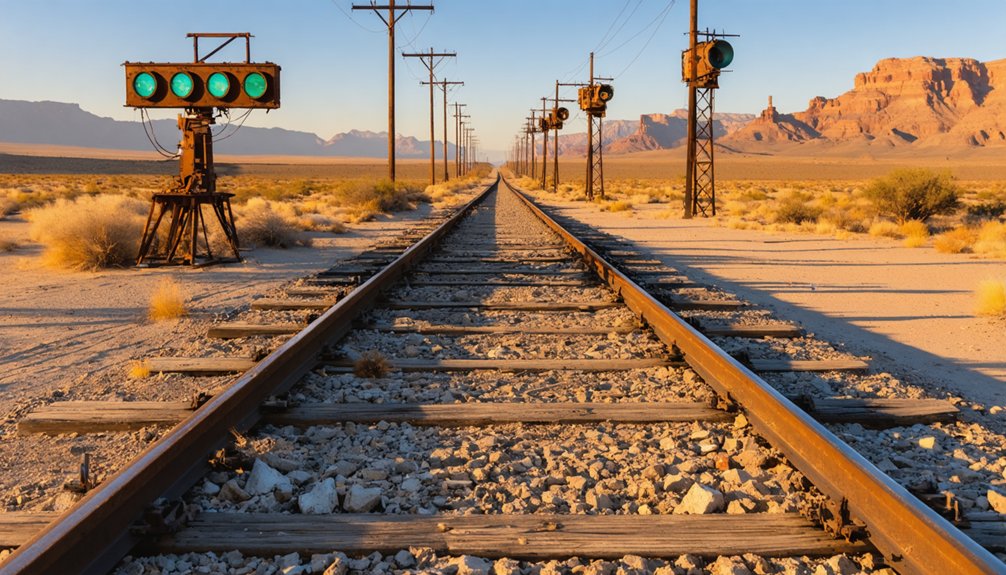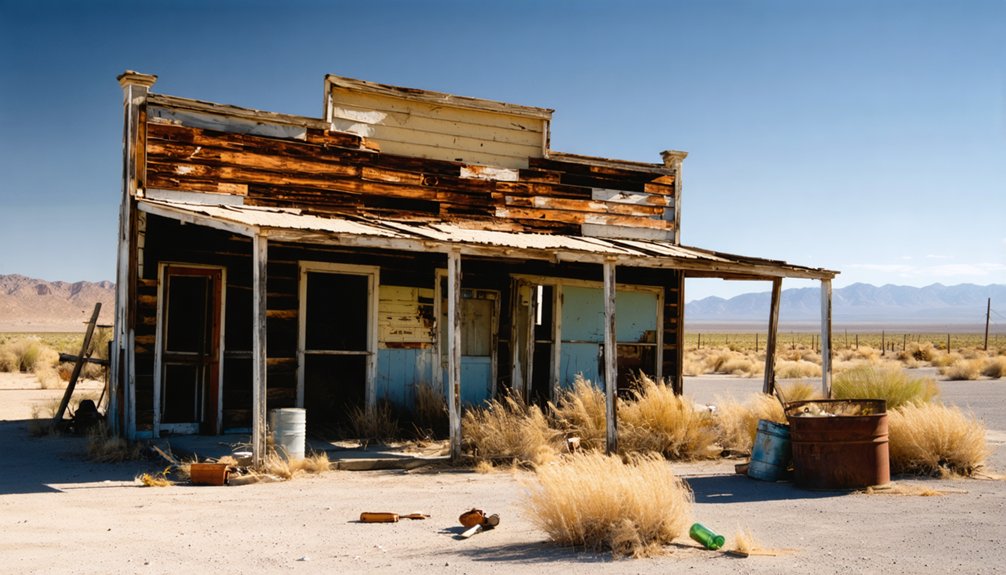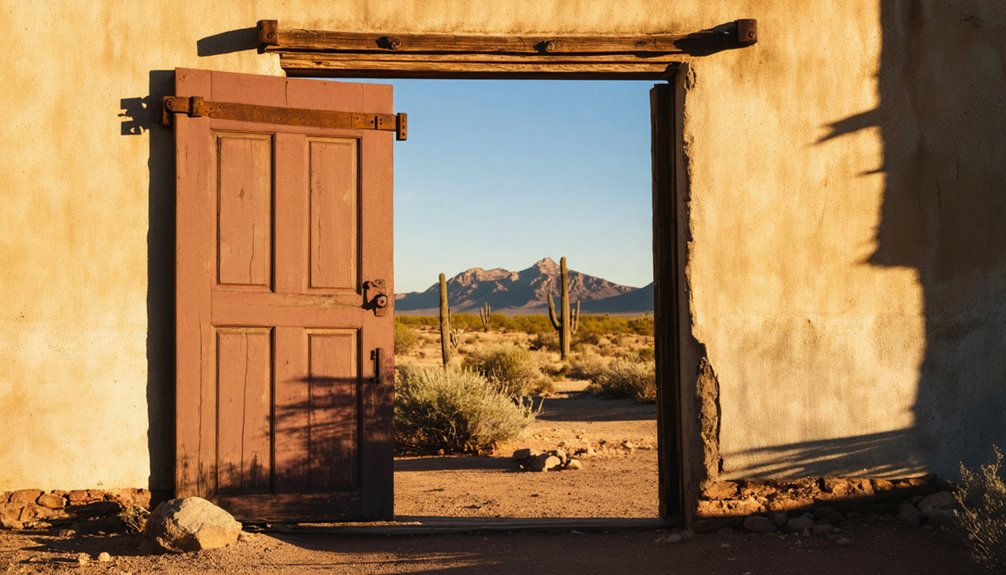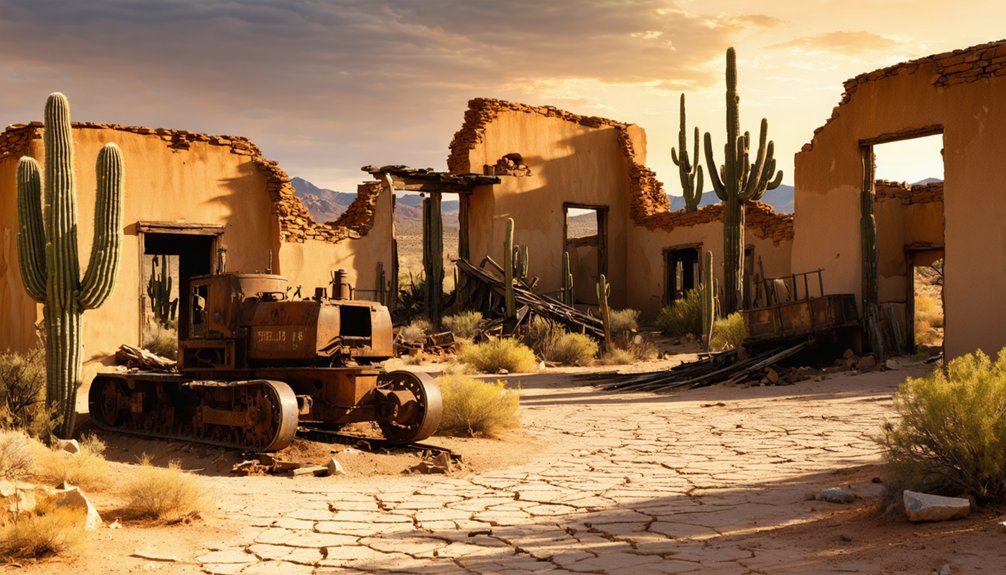
Planning a ghost town road trip to Reymert, Arizona means trading smooth pavement for rugged desert tracks in Pinal County, about five miles southwest of Superior. You’ll need a 4WD vehicle, plenty of water, and sun protection before you set out. The best time to visit is October through March, when cooler temperatures make exploring the crumbling kilns, stone foundations, and scattered ruins far more manageable. Stick around—there’s much more to uncover about this fascinating Sonoran Desert relic.
Key Takeaways
- Reymert is located five miles southwest of Superior, Arizona, in Pinal County, requiring a 4WD vehicle with good ground clearance to access.
- Visit between October and March for cooler temperatures, better wildlife activity, and more comfortable exploration of the desert ruins.
- Pack extra water, sun protection, sturdy boots, and a detailed map, as cell service is unreliable in this remote area.
- Visible ruins include two stone kilns, scattered foundations, and miners’ walls, most likely belonging to the DeNoon milling site, not original Reymert.
- Leave all artifacts undisturbed, avoid entering unstable structures, and inform someone of your plans before heading out.
What Is Reymert and Why Visit?
Tucked into the Sonoran Desert about five miles southwest of Superior, Arizona, Reymert is a ghost town in Pinal County that traces its roots back to a silver mining boom in the late 1880s. Named after newspaper editor and mining entrepreneur James DeNoon Reymert, the town once supported scores of workers drawn by mineral extraction opportunities in the surrounding hills.
Today, the site offers something rare: unfiltered access to Arizona’s industrial past amid striking desert landscapes. You won’t find manicured trails or interpretive signs here. Instead, you’ll explore stone foundations, crumbling kilns, and scattered ruins on your own terms.
If you’re chasing authentic history and wide-open spaces far from tourist crowds, Reymert delivers exactly the kind of rugged, self-directed adventure you’re looking for.
Where Exactly Is Reymert, Arizona?
Reymert sits in Pinal County, Arizona, roughly five miles southwest of Superior in the heart of the Sonoran Desert. The surrounding desert landscape is rugged and unforgiving, shaped by heat, rock, and decades of mining history that carved deep into the surrounding hills.
You’ll find the site near the old Reymert Mine, with a related milling area called DeNoon sitting close by. Getting there means traversing old pavement, dirt roads, and terrain that demands a 4WD vehicle. No highway signs point the way, and no visitor center greets you on arrival.
That raw, off-the-beaten-path quality is exactly what makes this destination worth seeking out. If you value genuine freedom and exploration over polished tourist experiences, Reymert’s remote location delivers exactly that.
Reymert vs. DeNoon: What’s the Difference?
Once you’ve got your bearings on where Reymert sits, it helps to sort out a detail that trips up a lot of visitors: Reymert and DeNoon aren’t the same place, even though people often use the names interchangeably.
Reymert and DeNoon are two distinct sites — but most visitors arrive not knowing that.
Reymert was the mining town, built around silver extraction and tied to a post office that opened in 1890.
DeNoon was the separate milling and smelting operation nearby.
Understanding this distinction matters for mining history enthusiasts because the ruins you’ll actually walk through — those striking stone kilns — likely belong to DeNoon, not Reymert proper.
The original Reymert townsite was bulldozed in the late 1970s.
Ghost town preservation being what it is, what survives tells only part of the story, so knowing which name refers to what helps you read the landscape accurately.
How Did Reymert Go From Boomtown to Ghost Town?
Silver brought Reymert to life in the late 1880s, drawing miners, entrepreneurs, and eventually about 150 people into a remote stretch of Pinal County desert. The operation later shifted toward manganese production, keeping activity alive through sporadic bursts until the 1950s. Once the ore ran thin, workers left, and the town quietly unraveled.
Mining history rarely has a clean ending, and Reymert’s was particularly rough. A Phoenix-based company bulldozed most of the remaining structures in the late 1970s, erasing what little historic preservation might’ve protected.
You won’t find a preserved main street or restored buildings waiting here. What you’ll find instead are kilns, stone foundations, and the honest silence of a place that boomed hard, faded fast, and got bulldozed before anyone could save it.
Who Was James DeNoon Reymert?
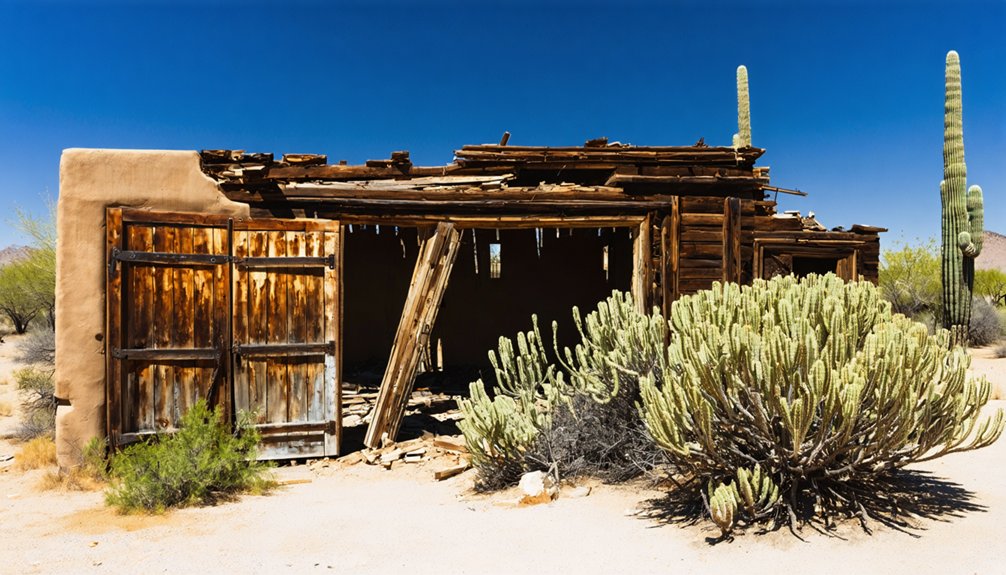
When you look into the name behind this ghost town, you’ll find a fascinating character who wore many hats. James DeNoon Reymert was a newspaper editor who ran the *Pinal Drill* in nearby Pinal City before turning his ambitions toward mining entrepreneurship.
His dual career in journalism and mining shaped both the town’s founding and the identity it carried until its decline.
Reymert’s Founder And Namesake
He founded the town that bears his name in the late 1880s, establishing a post office by June 6, 1890.
The settlement grew into a small but active boomtown, complete with smelters, cabins, and roughly 75 workers.
Desert exploration today lets you walk the same ground this ambitious founder once developed, connecting you directly to his legacy.
Newspaper Editor Turned Miner
You can almost picture him trading ink-stained hands for ore-dusted ones, building a boomtown surrounded by saguaros and desert flora stretching toward the horizon.
His vision attracted dozens of workers and sustained a post office, smelters, and cabins.
Reymert’s dual legacy — journalist and mining entrepreneur — shaped this remote Pinal County settlement into something worth exploring, even in its ghost town form today.
What Ruins Can You Still Find at Reymert Today?
Although much of Reymert was bulldozed in the late 1970s, you’ll still find compelling remnants scattered across the desert site. The most striking survivors are two stone and brick processing kilns, standing as powerful symbols of the area’s mining history against the backdrop of dramatic desert landscapes.
Beyond the kilns, you’ll discover stacked stone foundations spread across the terrain, hinting at the cabins, smelters, and structures that once defined this small boomtown. Some explorers report finding miners’ walls, fireplaces, and additional rock foundations beyond the main kiln area.
Keep in mind that private mining activity can shift site conditions, so what’s accessible may vary. Bring water, wear sturdy boots, and treat every crumbling wall as a fragile piece of Arizona’s past.
What Vehicle Do You Need to Reach Reymert?
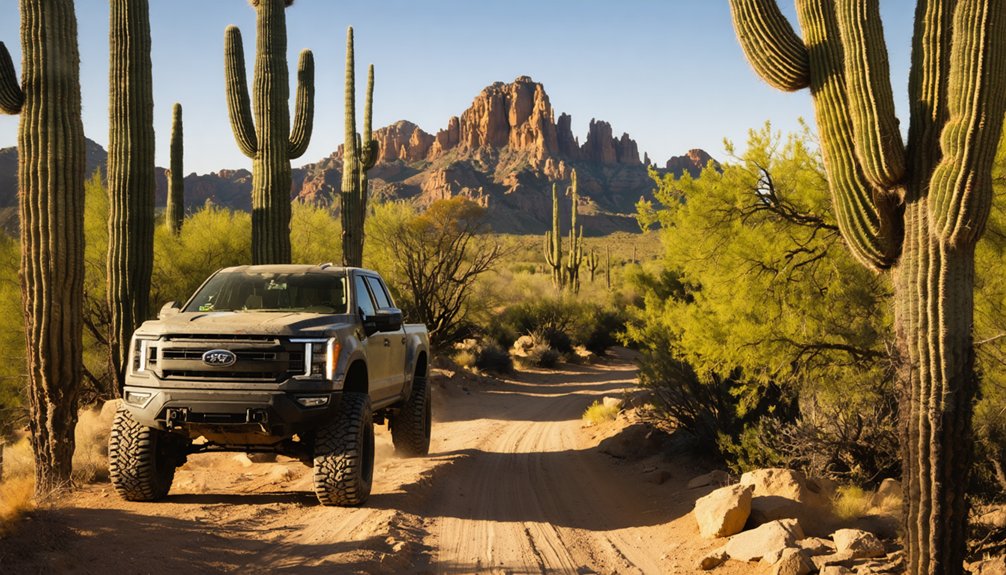
You’ll want a 4WD vehicle to reach Reymert, since the rough dirt roads leading to the site will punish anything less capable.
Pack extra water, sun protection, and a first-aid kit, because the Sonoran Desert heat turns a minor inconvenience into a serious danger fast.
Visiting in fall or winter keeps temperatures manageable and makes the drive far more enjoyable than a summer attempt ever would.
Road Conditions Require 4WD
Getting to Reymert isn’t as simple as punching an address into your GPS and cruising down a paved highway. The route combines stretches of old deteriorating pavement with rugged dirt roads that shift between rough and nearly impassable depending on recent weather.
You’ll encounter washouts, loose rock, and uneven terrain that a standard sedan simply can’t handle. A true 4WD vehicle with solid ground clearance isn’t optional here — it’s essential.
The reward for making the effort is direct access to surviving mining history, including stone foundations and processing kilns that stand as rare historical artifacts of Reymert’s silver-mining past.
Come prepared with a full tank, extra water, and a reliable vehicle, and you’ll reach one of Arizona’s most authentic and overlooked ghost town destinations.
Gear Up for Desert
Reaching Reymert demands more than an adventurous spirit — it demands the right vehicle. You’ll navigate old broken pavement, rutted dirt roads, and terrain that’ll punish anything less than a capable 4WD. Don’t attempt this trip in a sedan or low-clearance SUV — you’ll regret it fast.
Pack water for every person in your group, and pack more than you think you’ll need. The Sonoran Desert doesn’t negotiate.
Bring sun protection, sturdy boots, and a detailed map since cell service is unreliable out here.
You’re heading into territory rich with historical artifacts, crumbling kilns, and stone foundations tied to local legends of silver rushes and boomtown ambition. Respect what remains, take nothing, and let the desert show you what survived.
When Is the Best Time to Visit Reymert?
Because Reymert sits in the heart of the Sonoran Desert, timing your visit makes all the difference between a memorable adventure and a miserable slog through triple-digit heat. Fall and winter are your best windows, roughly October through March, when temperatures stay manageable and the desert actually rewards exploration.
Timing your Reymert visit right means everything — aim for October through March and let the desert actually work in your favor.
During these cooler months, you’ll notice desert flora like saguaro and palo verde looking their sharpest.
And local wildlife becomes far more active and visible along the trail. Javelinas, hawks, and jackrabbits tend to move freely when the sun isn’t punishing everything in sight.
Summer visits aren’t impossible, but they demand serious preparation and an early start. The ruins aren’t going anywhere, so there’s no reason to fight the heat.
Plan smart, go in the cool season, and enjoy the site fully.
What to Pack Before Visiting Reymert
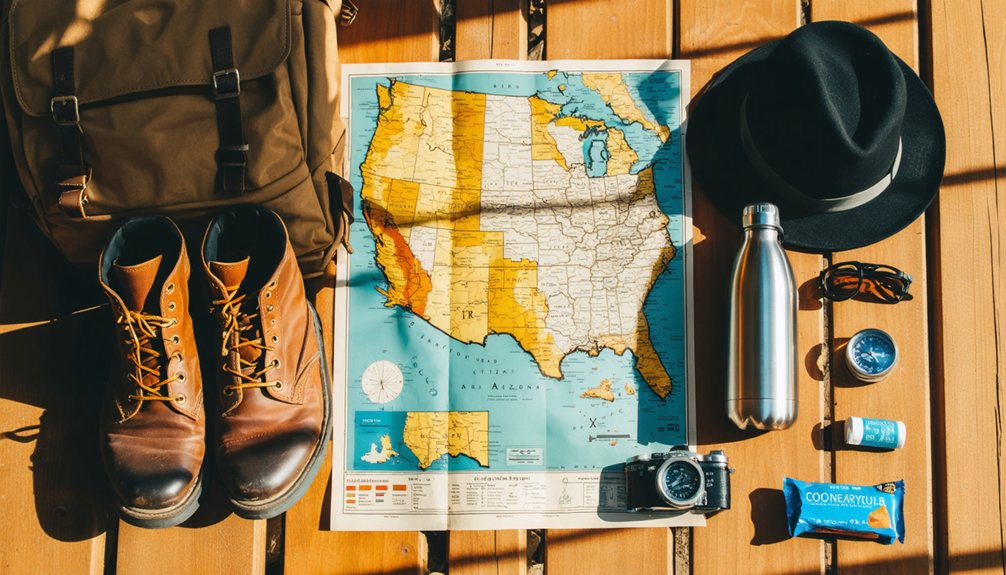
Packing right for Reymert means treating this trip like the desert expedition it actually is, not a casual afternoon stroll. The Sonoran Desert doesn’t forgive poor preparation, so load up smartly before heading out.
- Water and sun protection — Carry more water than you think you’ll need, plus sunscreen, a wide-brim hat, and UV-blocking layers.
- Sturdy boots and navigation tools — Uneven stone foundations and scattered ruins demand ankle support; bring a paper map since cell service is unreliable.
- Camera, not tools — Photograph historical artifacts freely, but leave everything untouched; preservation efforts depend on visitors respecting what little remains.
You’re visiting a fragile, largely unprotected site, so your responsibility is to explore without disturbing it.
Stay Safe While Exploring Reymert’s Remote Ruins
Reymert’s remoteness is part of its appeal, but it’s also what makes safety planning non-negotiable. You’re exploring crumbling stone foundations and weathered kilns far from emergency services, so tell someone your plans before heading out.
The more remote the adventure, the more essential your safety plan becomes.
Watch your footing around unstable ruins, and never enter deteriorating structures. The Sonoran Desert heat turns lethal fast, so carry more water than you think you’ll need and visit during fall or winter.
You’ll need a 4WD vehicle to handle the rough terrain confidently. Respect historical artifacts exactly where you find them — removing anything is illegal and erases the story for future explorers.
Local legends give this site its character, but staying alert to real physical hazards keeps your adventure from turning into an emergency.
Frequently Asked Questions
Is Reymert Located on Private Property or Public Land?
Reymert’s land status isn’t clearly defined, but you’ll encounter active private mining activity there. Tread carefully when exploring this site—Reymert history and ghost town preservation depend on respectful visitors honoring any posted boundaries they find.
Are There Any Guided Tours Available at the Reymert Site?
You won’t find formal guided tour options at Reymert, so you’re free to explore independently. Discover historical artifacts like stone kilns and foundations on your own terms, embracing the raw, unfiltered adventure this remote ghost town offers.
Can You Camp Overnight Near the Reymert Ghost Town Ruins?
You won’t find official campground options or overnight permits at Reymert’s ruins. You’re exploring raw Sonoran Desert terrain, so you’ll need to research nearby dispersed camping on public lands for your adventure.
Has Reymert Ever Been Featured in Films or Documentaries?
Oddly, no famous documentaries or historical filming locations include Reymert—yet you’ll find its crumbling kilns just as cinematic as any screen backdrop, waiting silently for you to discover their raw, untamed story firsthand.
Are There Nearby Ghost Towns Worth Visiting Alongside Reymert?
You’ll find hidden history and abandoned structures at nearby ghost towns like Pinal City and Superior’s historic district. These sites complement Reymert perfectly, letting you explore Arizona’s rugged, forgotten past across one unforgettable, freedom-filled desert road trip.
References
- https://www.youtube.com/watch?v=NOPqYRj1WOc
- https://en.wikipedia.org/wiki/Reymert
- https://www.boldcanyonoutdoors.com/2020/06/15/explore-the-reymert-denoon-arizona-ghost-town/
- https://www.ghosttowns.com/states/az/reymert.html
- https://en.wikipedia.org/wiki/List_of_ghost_towns_in_Arizona
- https://azgw.org/pinal/ghosttowns.html
- https://www.youtube.com/watch?v=ShmHgdGA9uE
- https://www.linkedin.com/posts/paul-marsh-9b824860_reymert-named-after-james-denoon-reymart-activity-7010600017900040192-sYG9